-
-
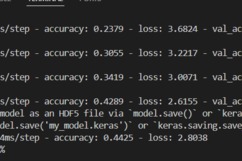
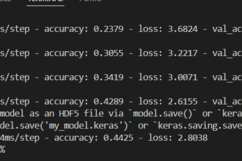
MushAI: Achieving 44% accuracy, our cutting-edge AI transforms mushroom identification, making foraging smarter and safer!
What inspired us
The inspiration for MushAI came from the growing demand for safe and sustainable foraging practices . With the surge in interest around foraging wild mushrooms for food and medicinal purposes, we realized the potential dangers of misidentification, leading to health risks. MushAI was born out of the desire to make mushroom foraging safer, reliable, and accessible to everyone—from hobbyists to professional mycologists. By combining AI with real-time image recognition, we saw an opportunity to revolutionize the foraging experience and protect people from potential harm while promoting the wonders of fungi.
What we learned
During the development of MushAI, we dived deep into the world of computer vision, learning how powerful AI can be when integrated with real-world problems. We honed our skills in training machine learning models to identify mushrooms with accuracy and speed. Along the way, we became more proficient in data augmentation, optimizing neural networks, and utilizing vector search techniques like FAISS to accelerate search results. Most importantly, we learned that innovation requires constant adaptation—whether it's refining our training process or tweaking our model to tackle unique challenges like class imbalance or low-resolution images. Every obstacle led to a breakthrough, reinforcing our belief that AI can indeed be a powerful ally for safer, smarter, and more sustainable ecosystems.
How we built the project
Building MushAI was an ambitious process. We started by collecting a rich dataset of various mushrooms and then trained our convolutional neural network (CNN) model using a pretrained ResNet50 architecture. This powerful architecture allowed us to extract meaningful features from images of mushrooms and embed them in a multi-dimensional space. We optimized our dataset using techniques like augmentation to create a diverse training set, ensuring that MushAI could handle various environmental conditions. We also integrated FAISS (Facebook AI Similarity Search) to power the vector search engine, enabling users to quickly compare their mushroom images against a robust database of known species. This vector search is one of the highlights of MushAI, ensuring rapid and reliable identification with minimal lag. In the final steps, we deployed our model on the cloud, making it accessible and scalable. MushAI is not just a one-time project; it's a continuously learning system that improves with each new mushroom added to the database.
Challenges we faced
One of the main challenges we encountered was managing the vast variability in mushroom species. Mushrooms can look drastically different based on environmental factors, which posed a challenge in maintaining the accuracy of our model. Overfitting was another hurdle we had to overcome. We adjusted our network architecture and implemented dropout layers to avoid overfitting and ensure better generalization across unseen mushroom species. Another technical challenge was optimizing the FAISS search for speed without compromising accuracy. Ensuring that MushAI could return precise results quickly was critical for its real-time functionality, so we spent considerable effort fine-tuning this aspect. Despite these challenges, we remained focused on our mission to make mushroom foraging safer and more enjoyable for all. MushAI is a testament to the power of collaboration, innovation, and persistence in tackling real-world issues with cutting-edge AI technology.
Built With
- cloud
- cnn
- computervision
- dataaugmentation
- faiss
- javascript
- python
- resnet50
- tidbcloud
- vectorsearchtechnique


Log in or sign up for Devpost to join the conversation.