-
-

Welcome Page
-

Museum Gallery Page
-
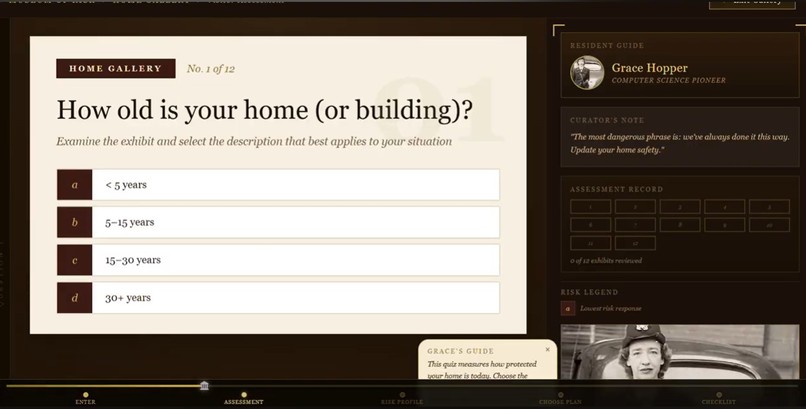
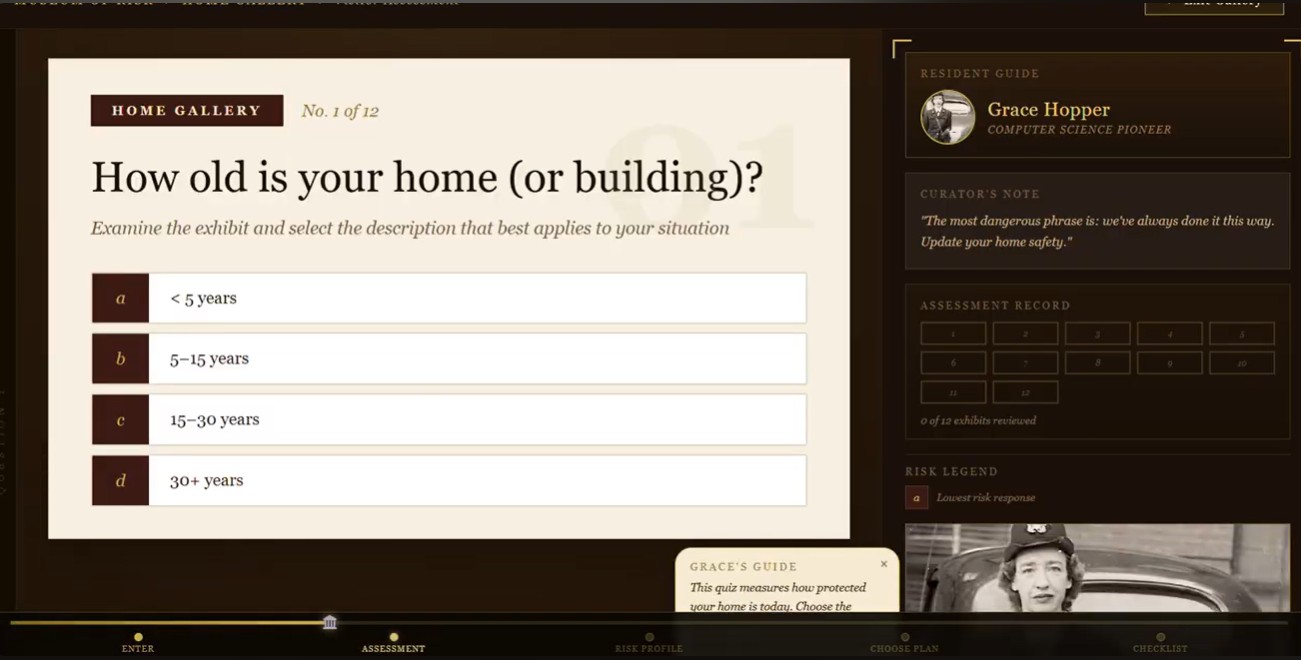
Quiz Page
-

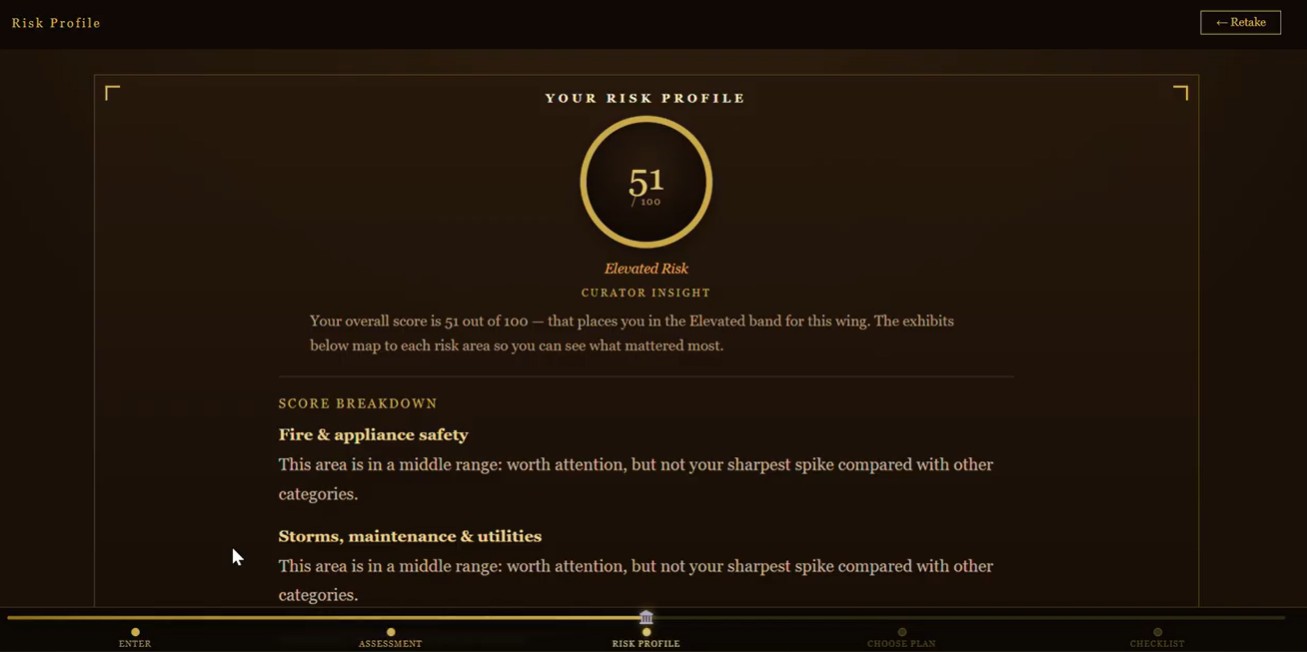
Risk Profile Page
-
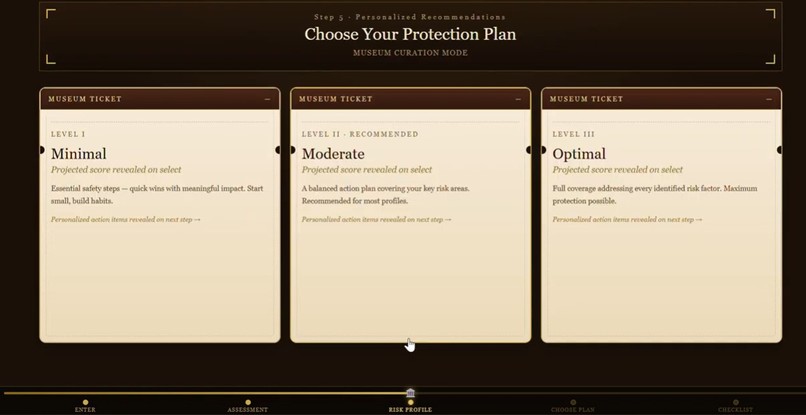
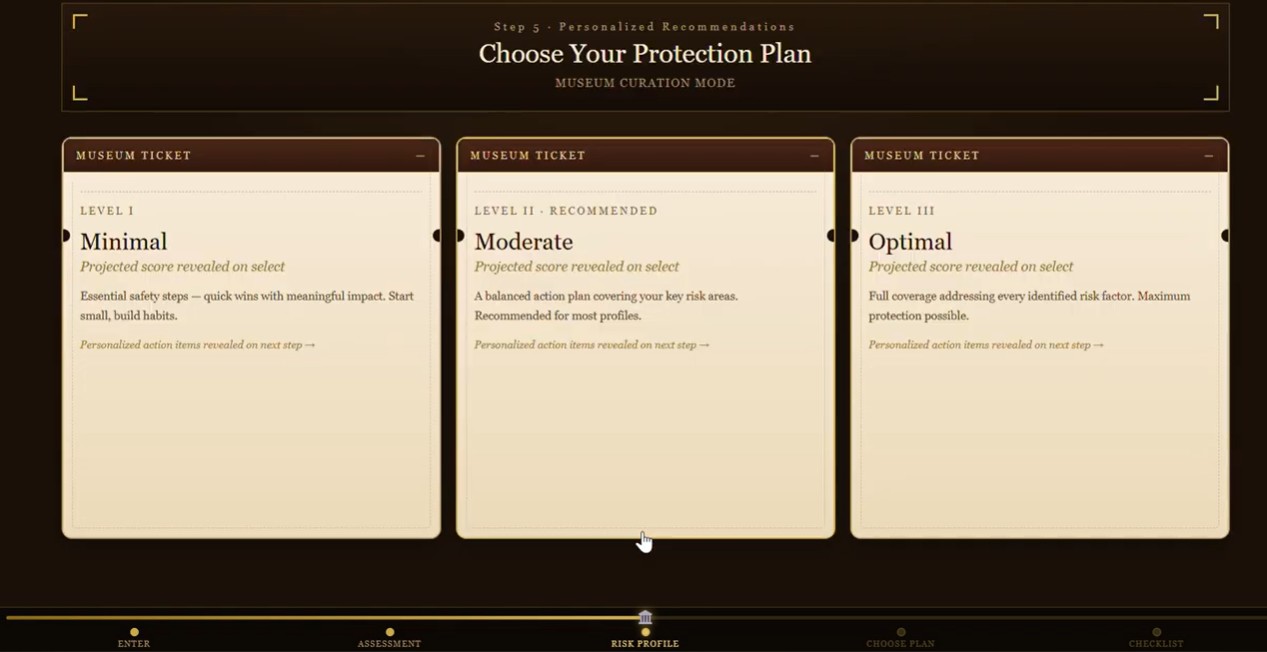
Protection Plan Page
-
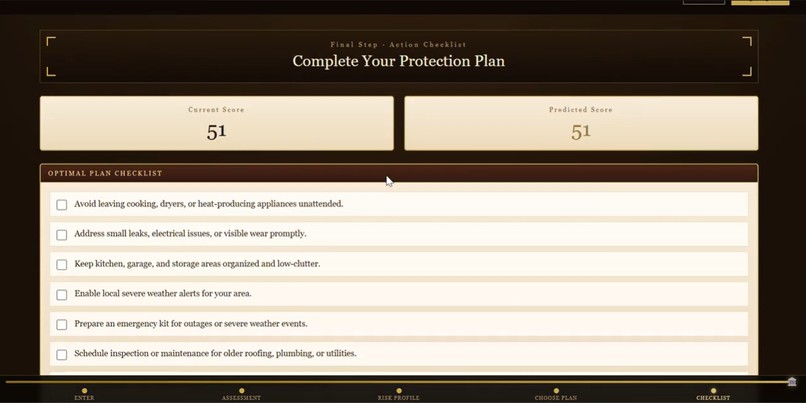
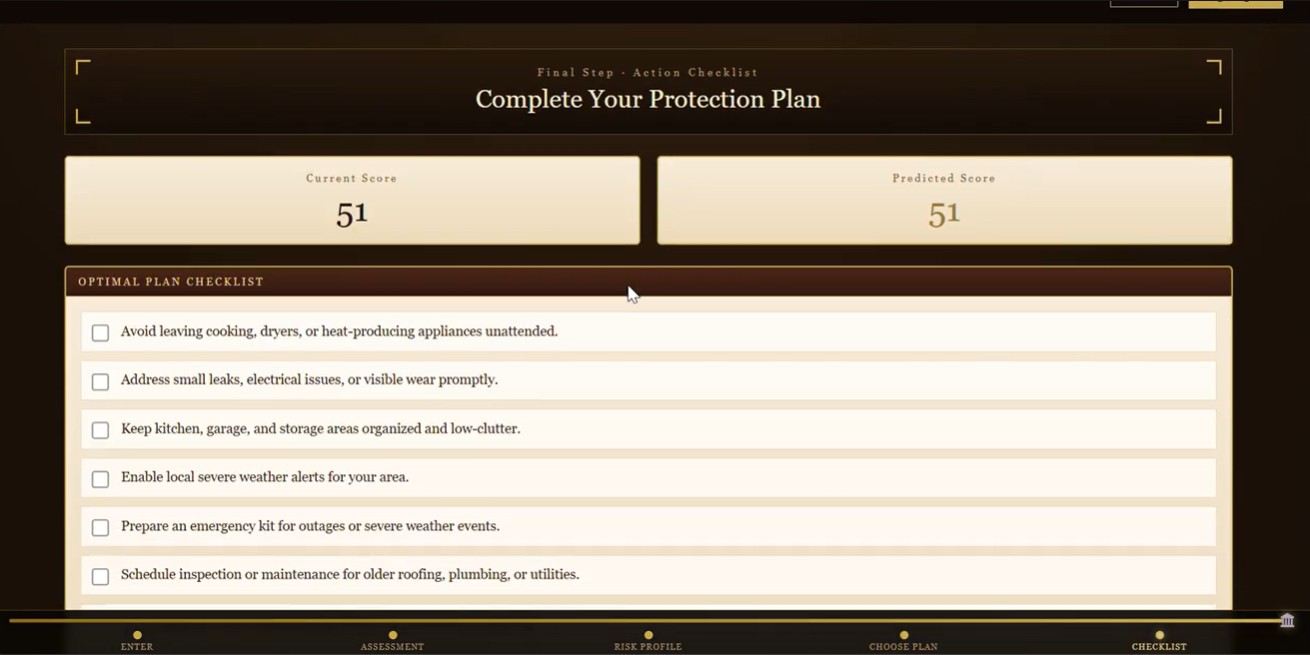
Action Checklist Page


Inspiration
Most people only think about risk after something goes wrong. We wanted to make risk visible and actionable, so users can understand it, improve it, and prevent problems before they happen.
What it does
Our project is a personalized risk assessment platform that helps users understand and reduce their risk in auto, home, or life categories. Users take a short quiz to receive a risk score along with insights into what factors contribute to it. Based on their results, they can explore targeted areas and choose a protection plan with actionable steps to improve their score. As they complete these steps, they track progress, earn badges, and build safer habits over time.
How we built it
For the frontend, we used React, JavaScript, HTML, CSS, for the interactive, gamified UI. For the 3-D aspect, we used React Three Fiber and for the 3-D Sculptures, we used publicly available models from Sketchfab. For the backend, we used Python and Flask for the backend logic, Gemini API for the risk score and its explanation, and Supabase for user authentication and the database.
Challenges we ran into
We ran into challenges implementing the Supabase database. Furthermore, because of the complexity of our project, we spent a lot of time adjusting and diagramming the layout of the website, design elements, and database schemas to fit the time constraints and experience levels of each team member.
Accomplishments that we're proud of
Despite the limited time frame, we managed to create a unique and creative 3D gamified UI. Additionally for backend, we managed to integrate both a database and an LLM in a robust system.
What we learned
We learned how to do 3D modeling for the landing page and how to integrate Gemini API to provide insights into the risk score.
What's next for Museum of Risk
We plan to add a Weather API to provide real-time weather and climate data of a user's region to improve the risk score.


Log in or sign up for Devpost to join the conversation.