About the Project
Inspiration
Most text-to-image systems today rely heavily on prompt engineering and trial-and-error. While powerful, this approach is often unpredictable and difficult to integrate into real production workflows where consistency, reproducibility, and professional control are essential.
What inspired this project was FIBO’s core idea: moving from natural language guessing to structured, deterministic JSON control. The possibility of explicitly defining camera angle, field of view, lighting, and color palette felt much closer to how creative professionals actually work.
We wanted to explore what a real production-oriented tool could look like if AI image generation behaved more like a controllable rendering pipeline than a black box.
What We Built
We built a JSON-native frame generation platform powered by Bria FIBO.
The application allows authenticated users to:
- Enter a visual prompt
- Control professional parameters such as camera angle, FOV, lighting, and color palette directly from the frontend
- Generate frames using structured JSON rather than fragile prompt tuning
- Store and retrieve generated frames per user
The frontend exposes these controls through an intuitive UI, while the backend translates them into deterministic FIBO-compatible JSON, ensuring that the same inputs always produce consistent results.
This approach demonstrates how FIBO can be used not just for image generation, but as a reproducible visual system suitable for real-world creative workflows.
How We Built It
The project follows a clean, production-ready architecture:
Frontend
- UI controls (sliders, selectors) for camera, lighting, FOV, and color palette
- Sends structured JSON payloads to the backend
Backend (Flask + PostgreSQL)
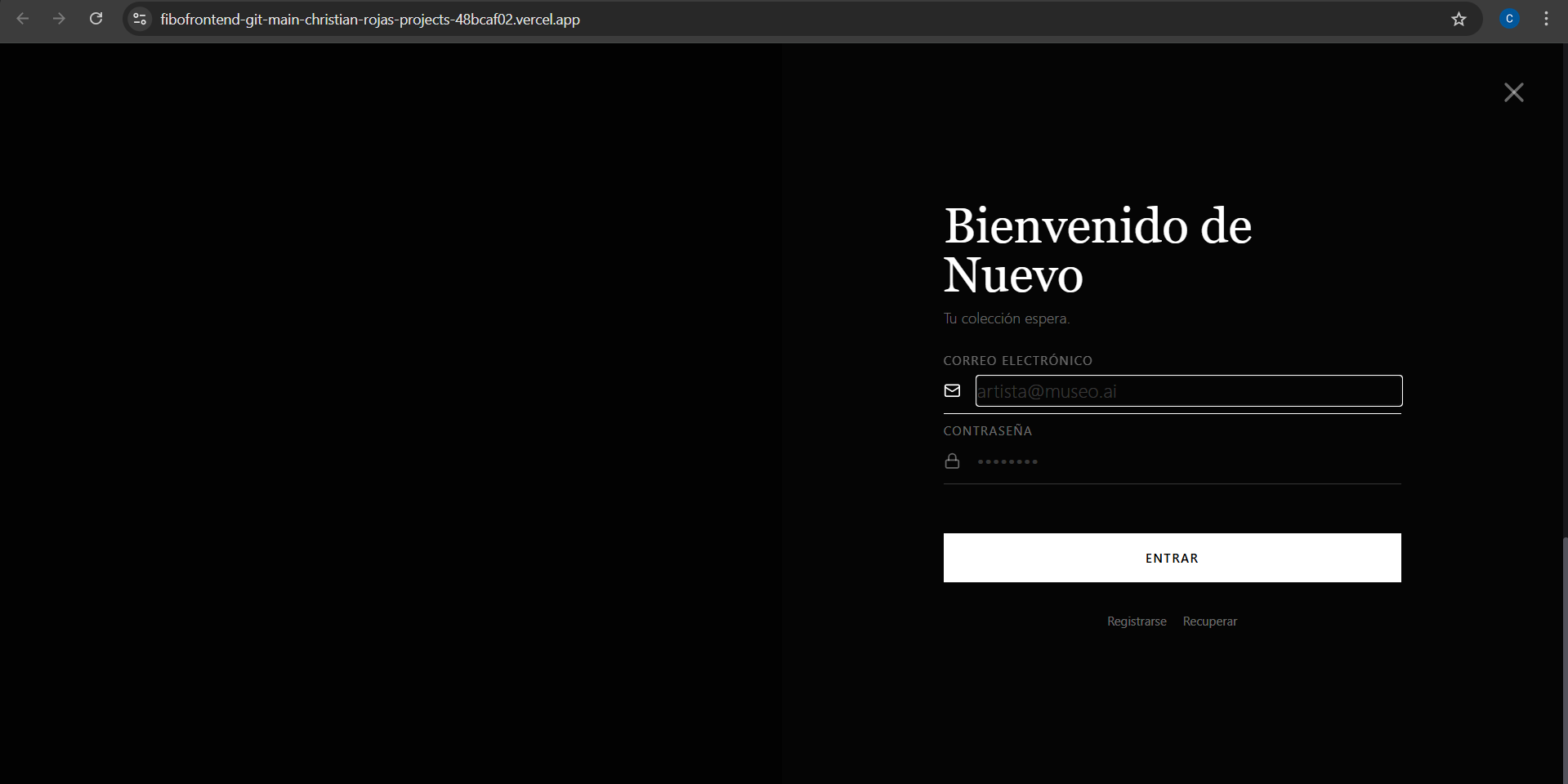
- User authentication (register & login)
- JWT-protected endpoints
- Validation of generation parameters
- Frame generation via Bria FIBO
- Storage of generated frames and metadata
FIBO Integration
- JSON-native generation
- Explicit parameter control (camera, lighting, composition)
- Deterministic outputs suitable for reproducible workflows
The system was designed with scalability in mind, making it easy to evolve into batch generation, agent-based pipelines, or integration with professional creative tools.
Challenges We Faced
One of the main challenges was designing a clear and intuitive mapping between UI controls and FIBO’s structured parameters. Unlike traditional prompt-based systems, this required thinking carefully about how each parameter affects composition and how to expose that control without overwhelming the user.
Another challenge was balancing flexibility and validation — ensuring that user-defined parameters remain expressive while still producing reliable, high-quality results.
Finally, integrating authentication and persistence added complexity, but it allowed us to demonstrate a more realistic, production-grade application rather than a simple demo.
What We Learned
This project reinforced the idea that the future of AI-generated visuals is controllability, not prompt cleverness.
We learned that:
- Structured JSON dramatically improves reproducibility and trust in AI outputs
- Professional parameters (camera, lighting, FOV) unlock workflows that text prompts alone cannot
- FIBO’s design enables AI systems to behave more like creative tools than generative toys
Most importantly, we learned how AI image generation can evolve into a reliable component of real production pipelines.
Future Work
Looking ahead, this project could be extended with:
- HDR / 16-bit color space support
- Batch and timeline-based frame generation
- Agent-driven scene creation
- Deeper integration with creative tools such as Blender or Unreal Engine
This hackathon was an opportunity to explore what’s possible when AI generation becomes structured, controllable, and production-ready.

Log in or sign up for Devpost to join the conversation.