-
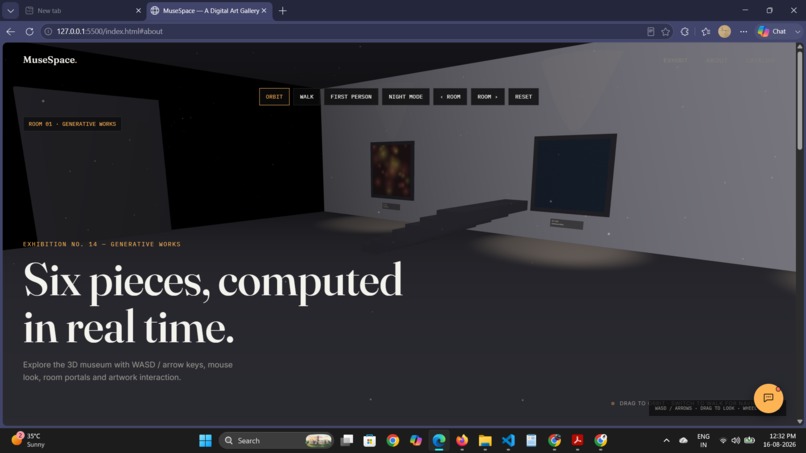
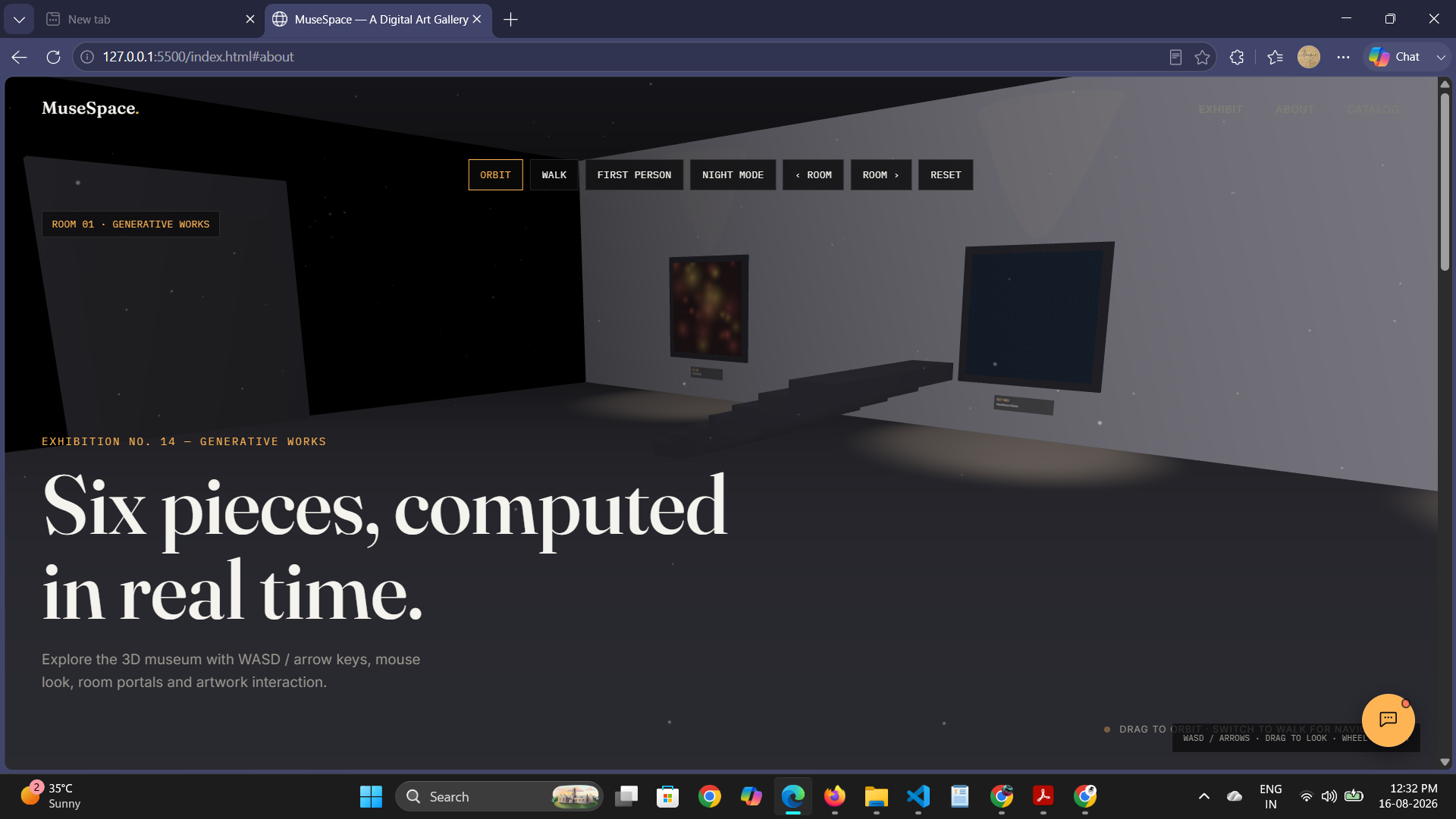
3D interface
-
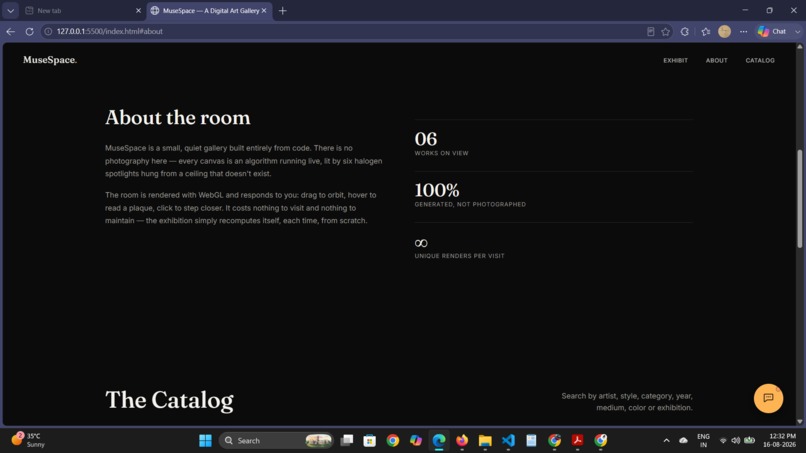
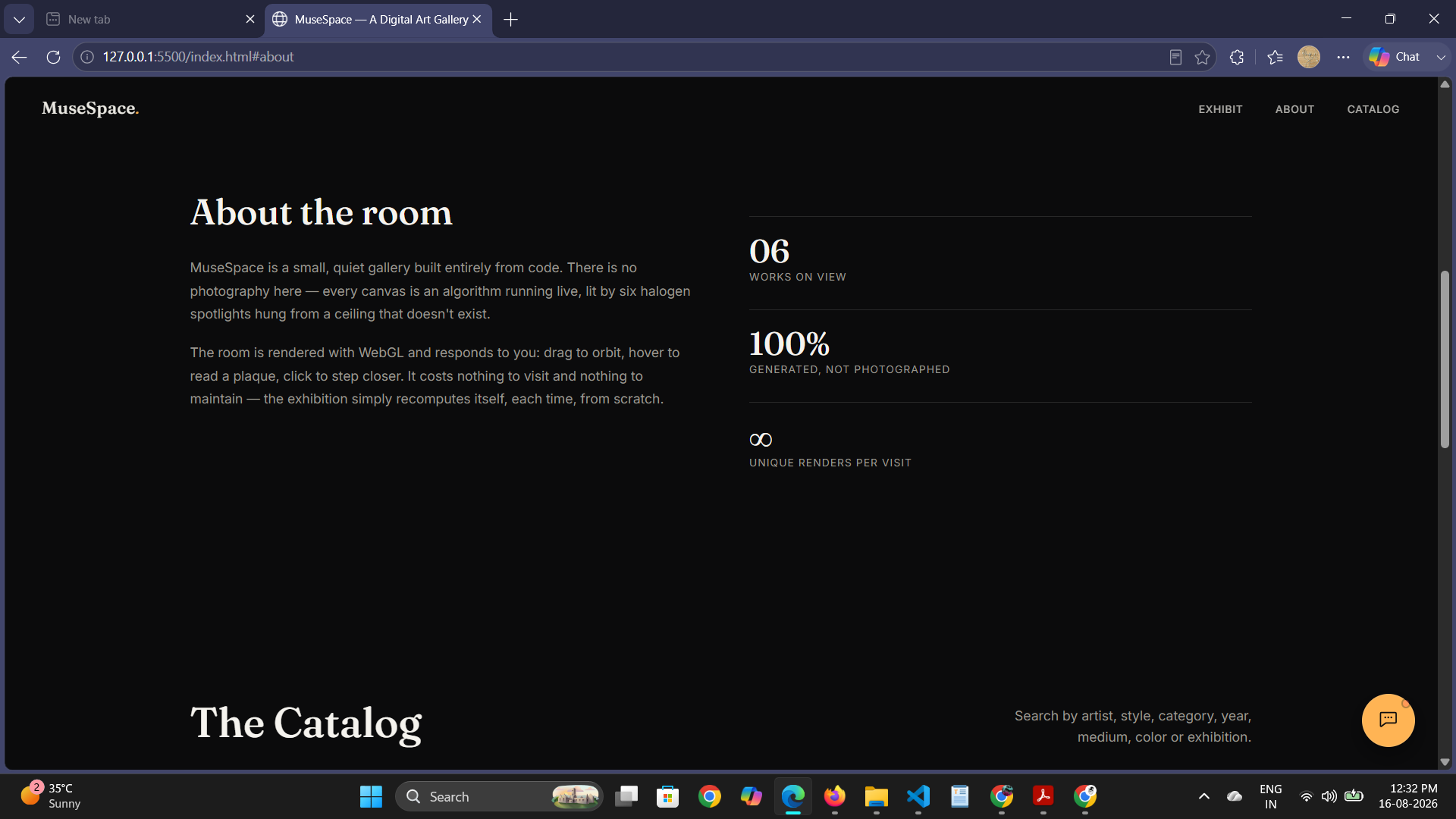
about section
-
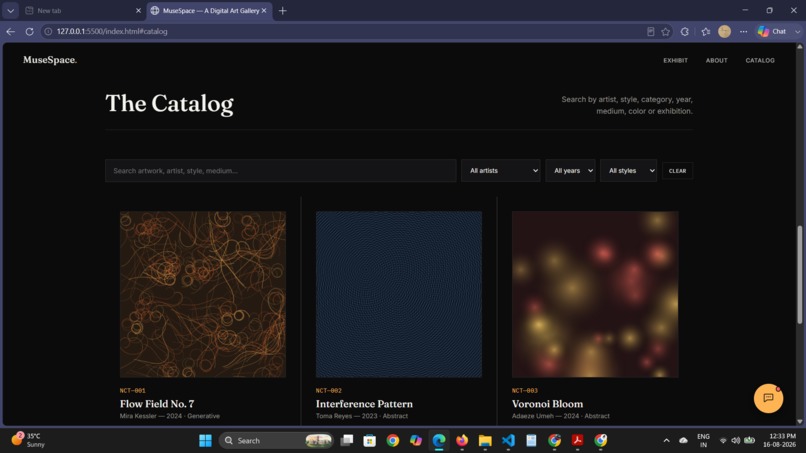
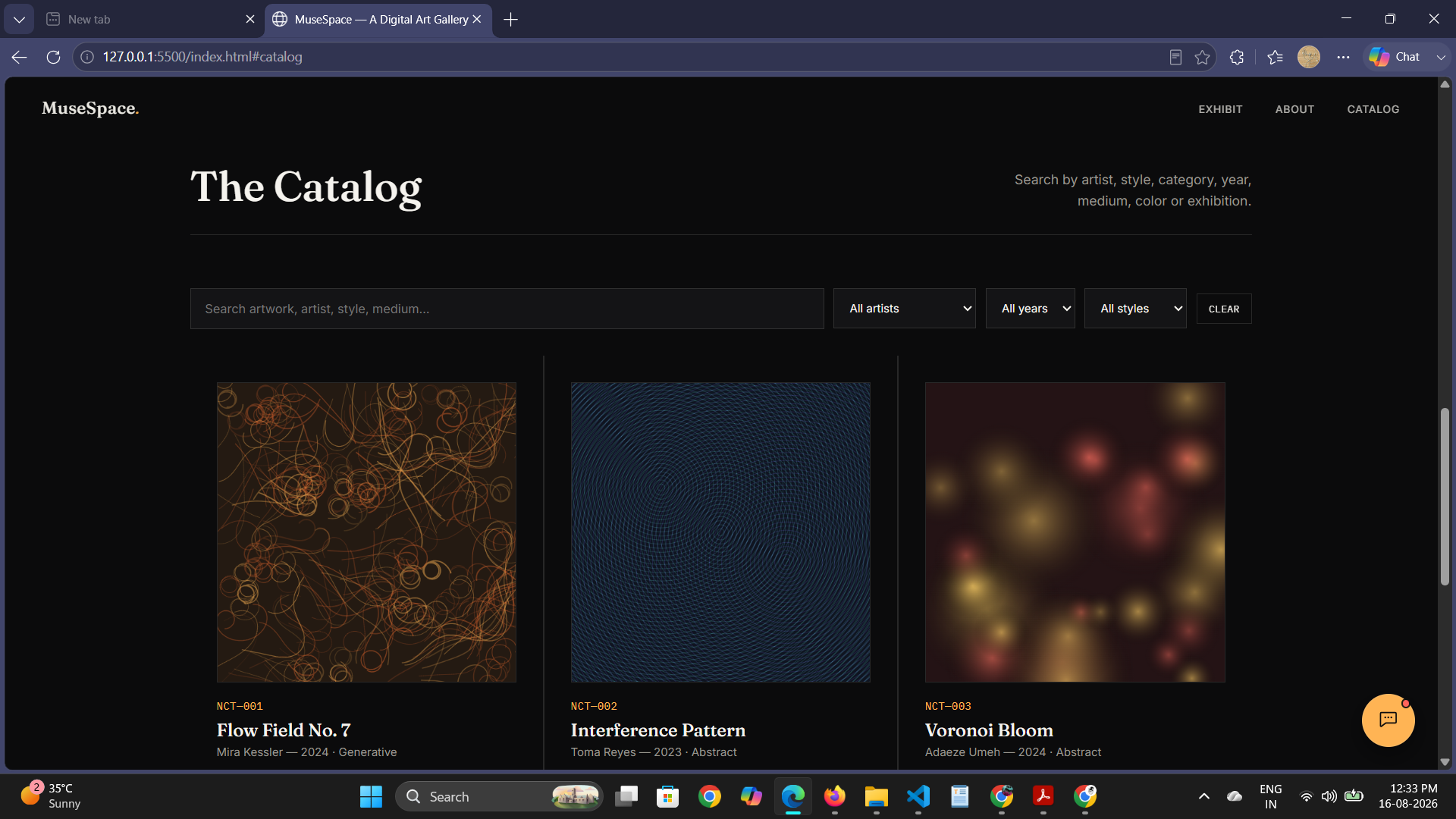
catalog section
-
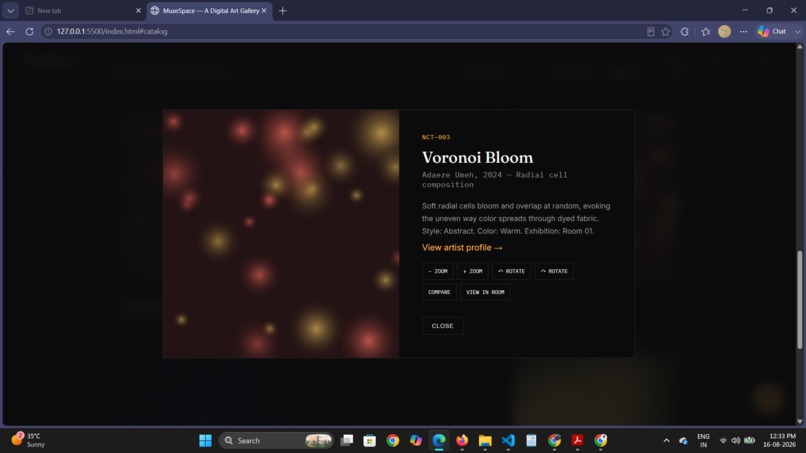
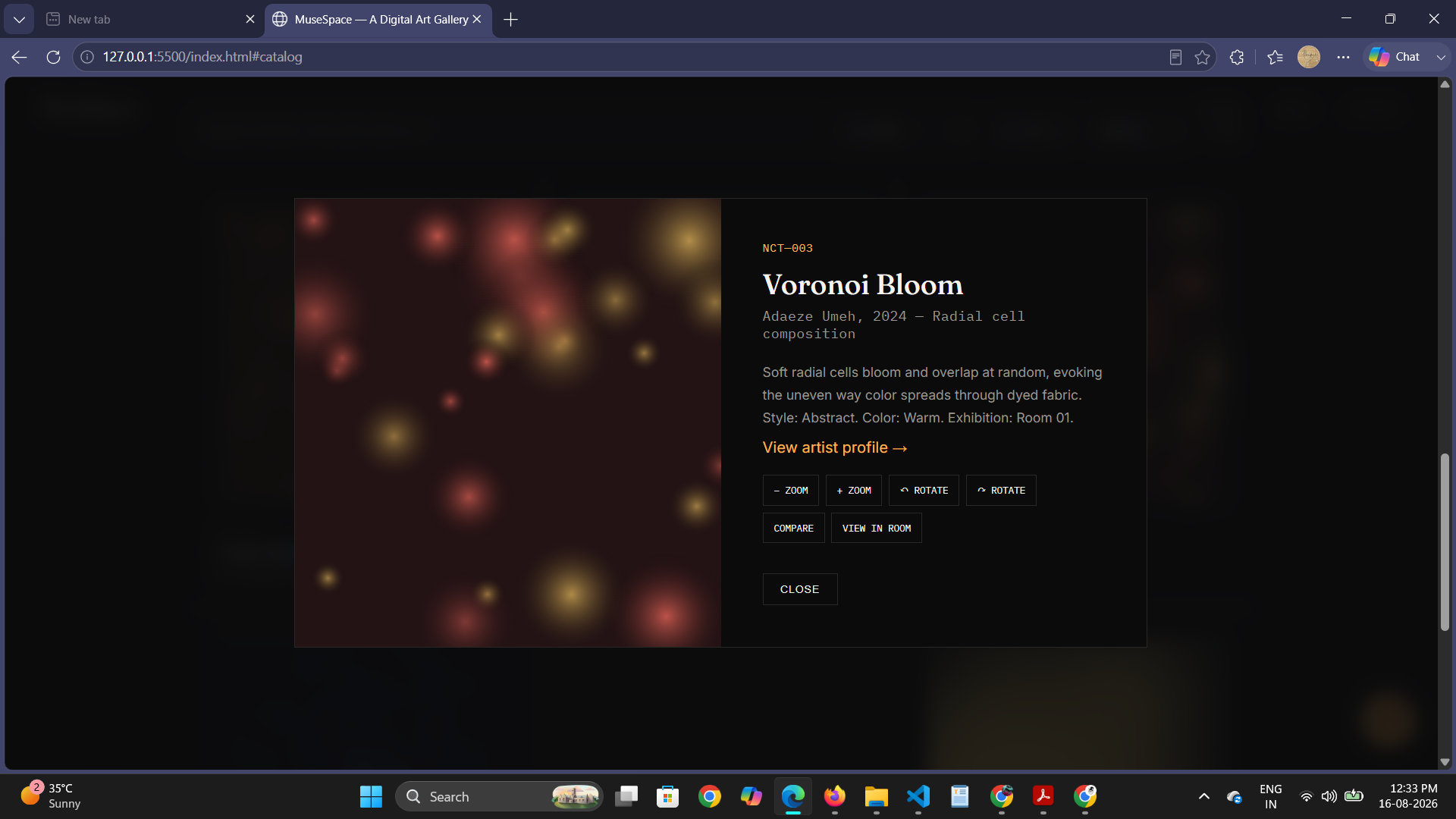
artwork and its details
-
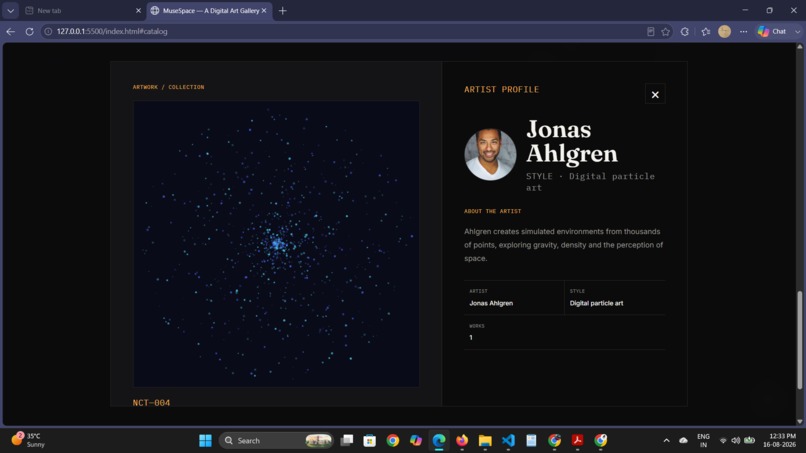
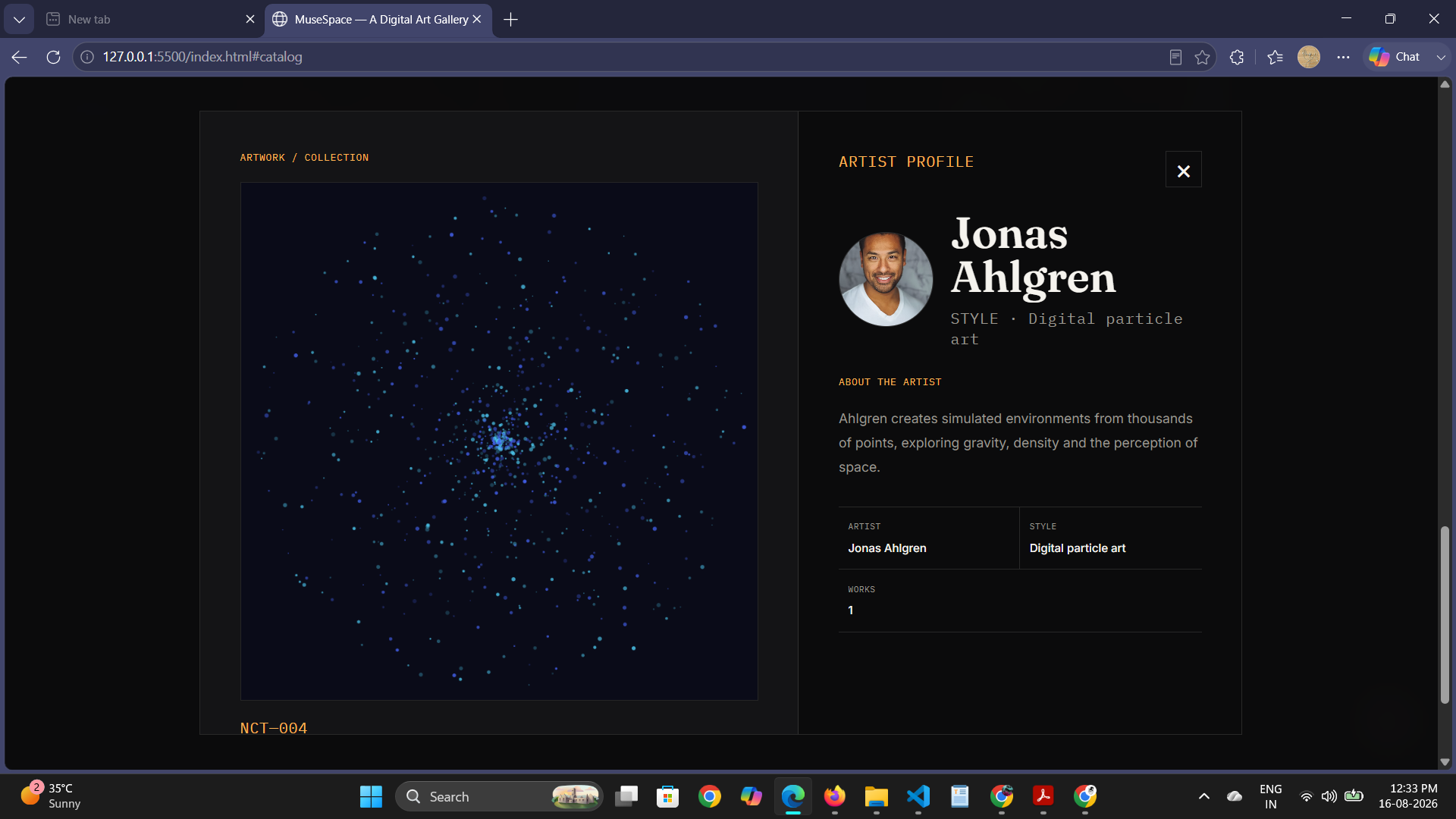
artist profile along with the artwork
-
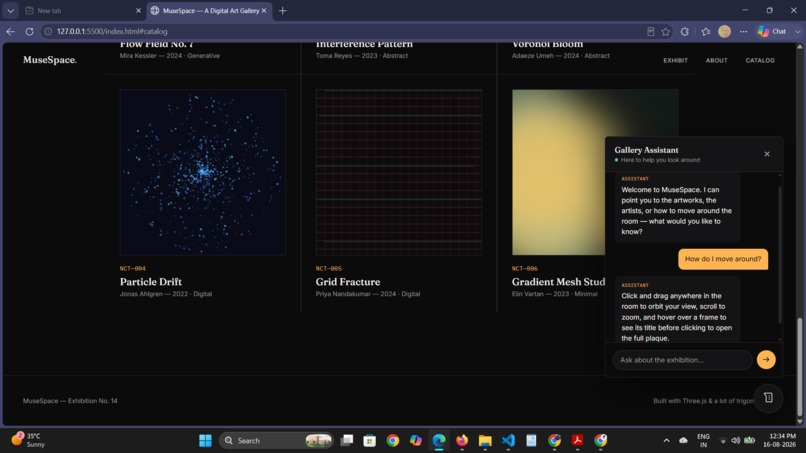
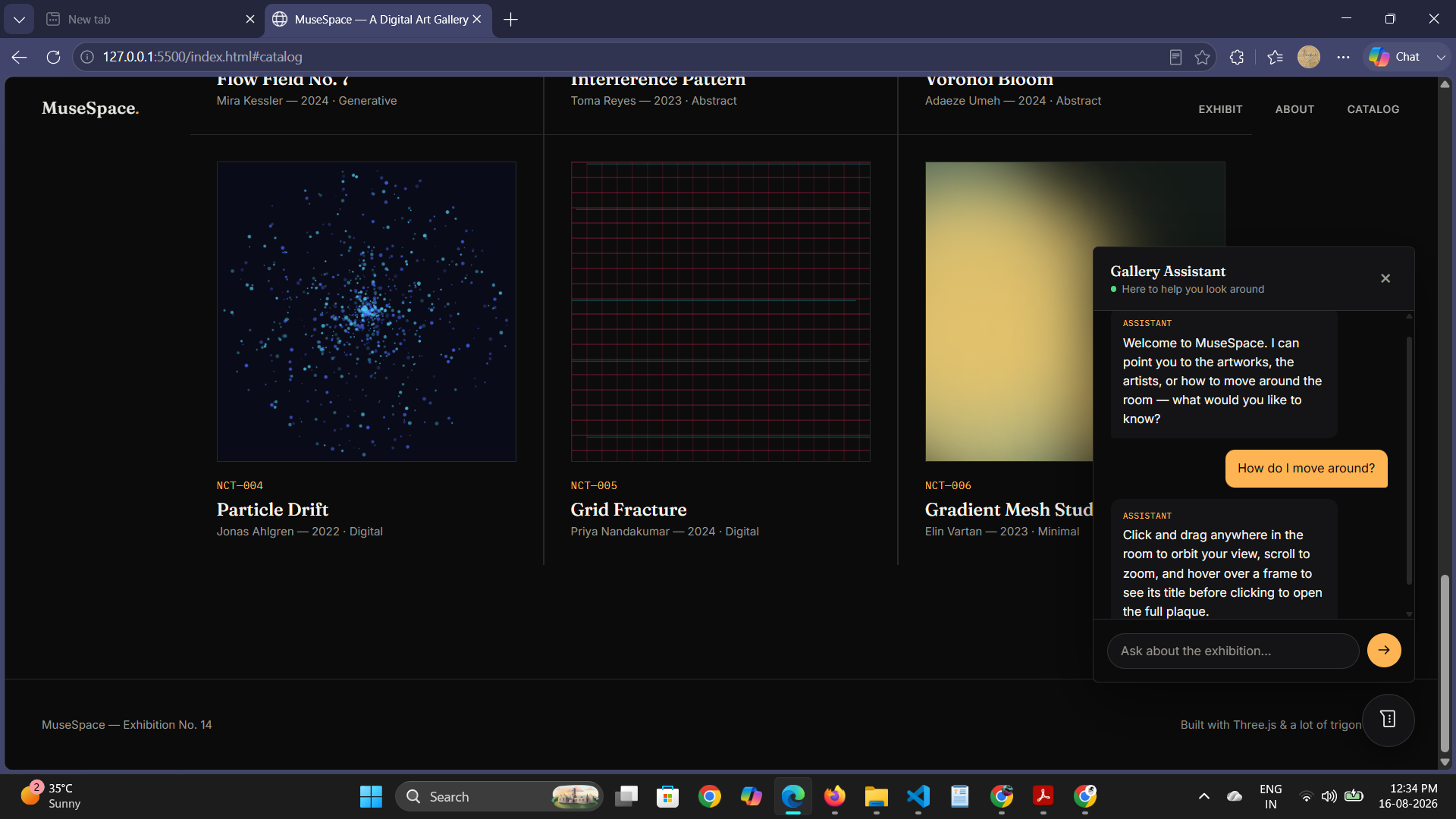
chatbot assistance
Inspiration
Art should not just be seen — it should be experienced.
MuseSpace was inspired by the idea of breaking the boundaries of traditional art galleries and bringing art into an interactive digital world. Instead of simply viewing artworks on a screen, visitors can step into a 3D gallery, explore different spaces, discover artists, interact with artworks, and get assistance from an AI-powered chatbot at their own pace. The vision is to make art more immersive, accessible, and engaging, allowing anyone to experience the feeling of walking through a gallery from anywhere while having a virtual assistant to guide them through their journey.
What it does
MuseSpace provides an interactive 3D art experience where users can explore a virtual gallery, move through different spaces, discover artworks, learn about artists, and interact with the art in a more engaging and immersive way. It also includes a chatbot assistant that helps visitors navigate the gallery, learn more about artworks and artists, and get quick answers to their questions, making the overall gallery experience more interactive and user-friendly.
How I built it
I built MuseSpace using HTML, CSS, and JavaScript, combining modern web design with interactive 3D elements to create a virtual gallery experience. I also implemented an AI-powered chatbot assistant to provide users with interactive guidance and information while exploring the gallery. I used AI tools such as Claude and ChatGPT to assist with ideation, development, debugging, feature implementation, chatbot integration, and refining the overall user experience.
Challenges I ran into
One of my biggest challenges was keeping the website simple while still making it visually impressive and interactive. With so many possibilities for 3D features and chatbot interactions, I had to carefully choose features that enhanced the experience without making the website unnecessarily complicated or difficult to navigate. Another challenge was designing the chatbot assistance so that it felt like a natural part of the gallery experience rather than an additional feature that distracted users from exploring the artwork.
Accomplishments that I'm proud of
I am proud of vibe-coding a beautiful and interactive website while successfully implementing 3D features and chatbot assistance. I transformed the traditional concept of an art gallery into an immersive digital experience where users can explore virtual spaces, discover artworks and artists, interact with the gallery, and receive assistance from a virtual chatbot guide.
What we learned
I learned how to use vibe coding with the help of AI tools to turn ideas into functional features more quickly. I also gained experience in combining HTML, CSS, JavaScript, 3D interactions, and AI-powered chatbot assistance to create a visually engaging and interactive web experience. Most importantly, I learned how AI can be used not only to generate code but also as a creative development partner for brainstorming, problem-solving, debugging, and improving user experiences.
What's next for MuseSpace
The next step for MuseSpace is to make the platform fully dynamic by adding a backend and database. This would allow me to create a more responsive and personalized experience while enabling features such as user accounts, artwork purchases, artist profiles, artist interactions, favorites, exhibitions, and real-time gallery content. I also plan to make the chatbot more intelligent and personalized, allowing it to provide detailed information about artworks and artists, recommend artworks based on user interests, guide visitors through exhibitions, and answer questions about purchasing and interacting with artists. Ultimately, I want MuseSpace to evolve from a 3D virtual gallery into a complete digital art ecosystem where visitors can explore, connect with artists, get AI-powered assistance, and discover or purchase artwork.
Built With
- chatgpt
- claude
- css3
- html5
- javascript
- netlify
- three.js
- webgl

Log in or sign up for Devpost to join the conversation.