Inspiration
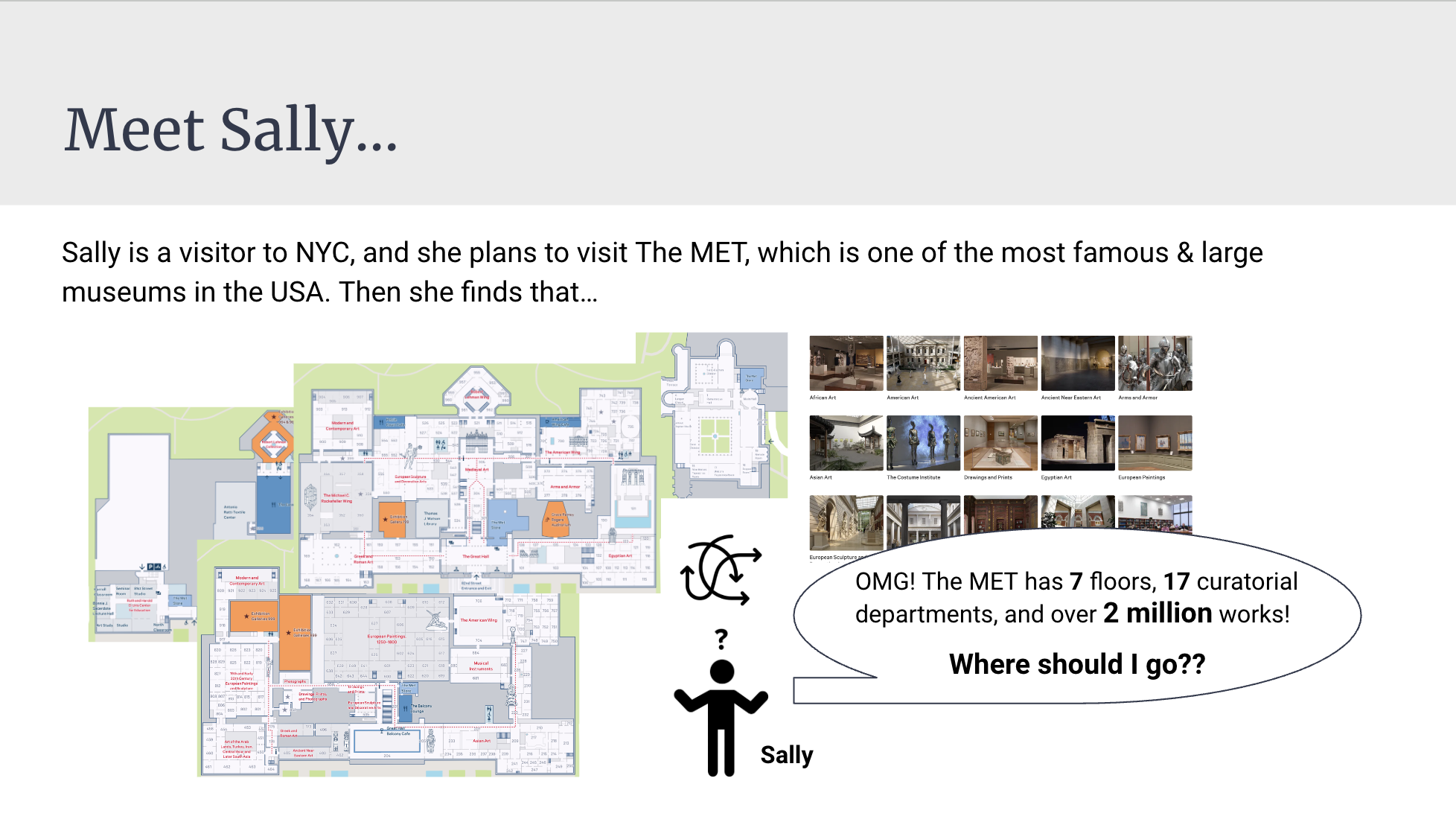
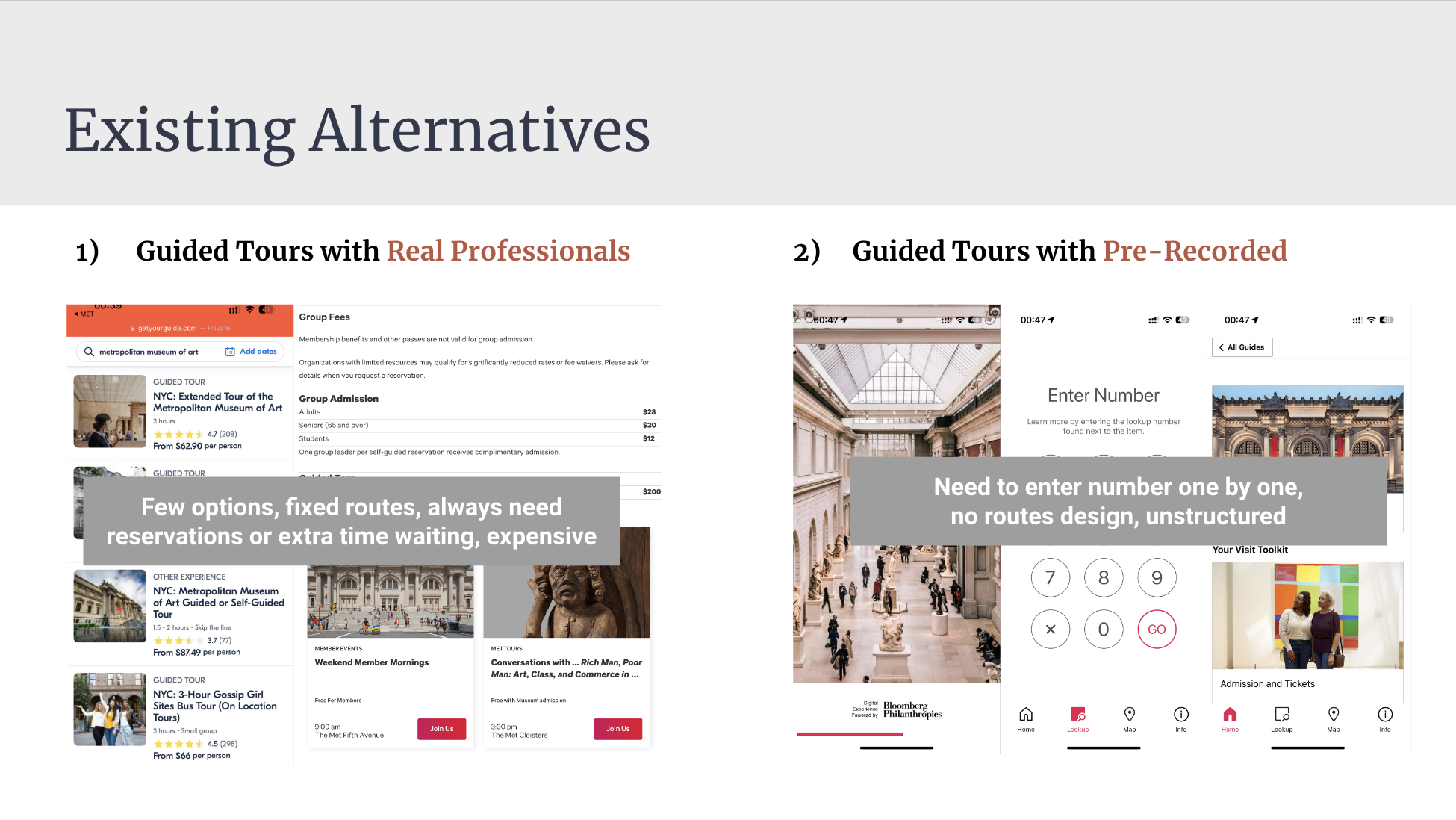
As dedicated museum aficionados—one of us even majored in museology—we're drawn to the local museums in every city we visit. The Metropolitan Museum of Art, with its seven expansive floors and over 3,000 artworks, can be overwhelming. The initial sense of being lost, the questions about where to begin, the curiosity about the stories behind each piece, and the related collections all pose a challenge when navigating the Met. The guided tours didn't match our schedule, and the museum's QR code system felt impersonal and static. We craved a better way to explore.
What it does
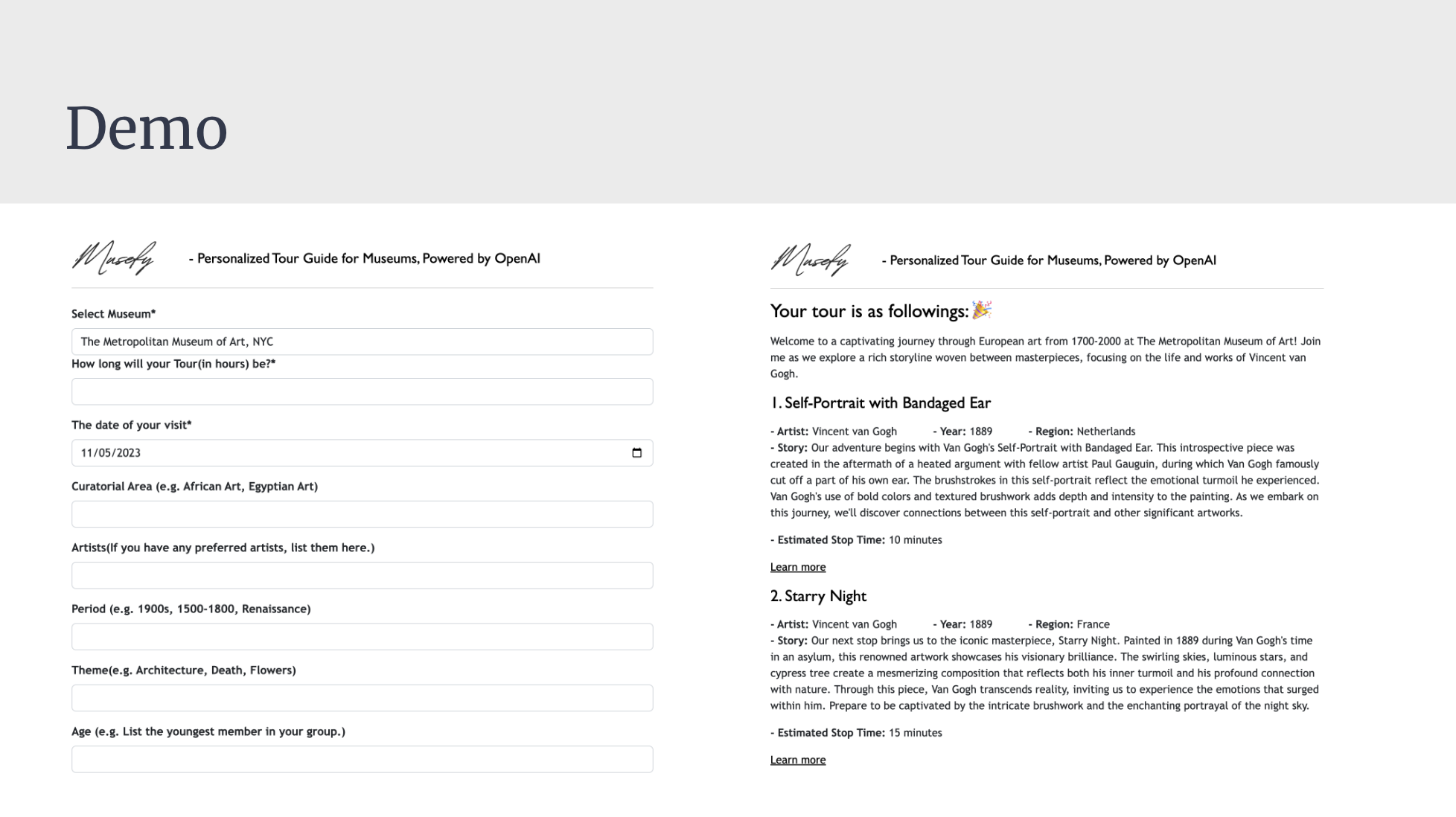
Our innovative platform leverages the power of GPT to create museum tours that are tailored to your personal interests, completely free of charge. No matter what draws you—be it Renaissance art, ancient artifacts, or modern expressions—our AI guide offers a bespoke cultural journey. Enter your preferences and mood-based themes, and your customized guide springs to life, suggesting a pathway through the museum that promises to captivate and enlighten, beginning with one piece and intuitively connecting to the next.
How we built it
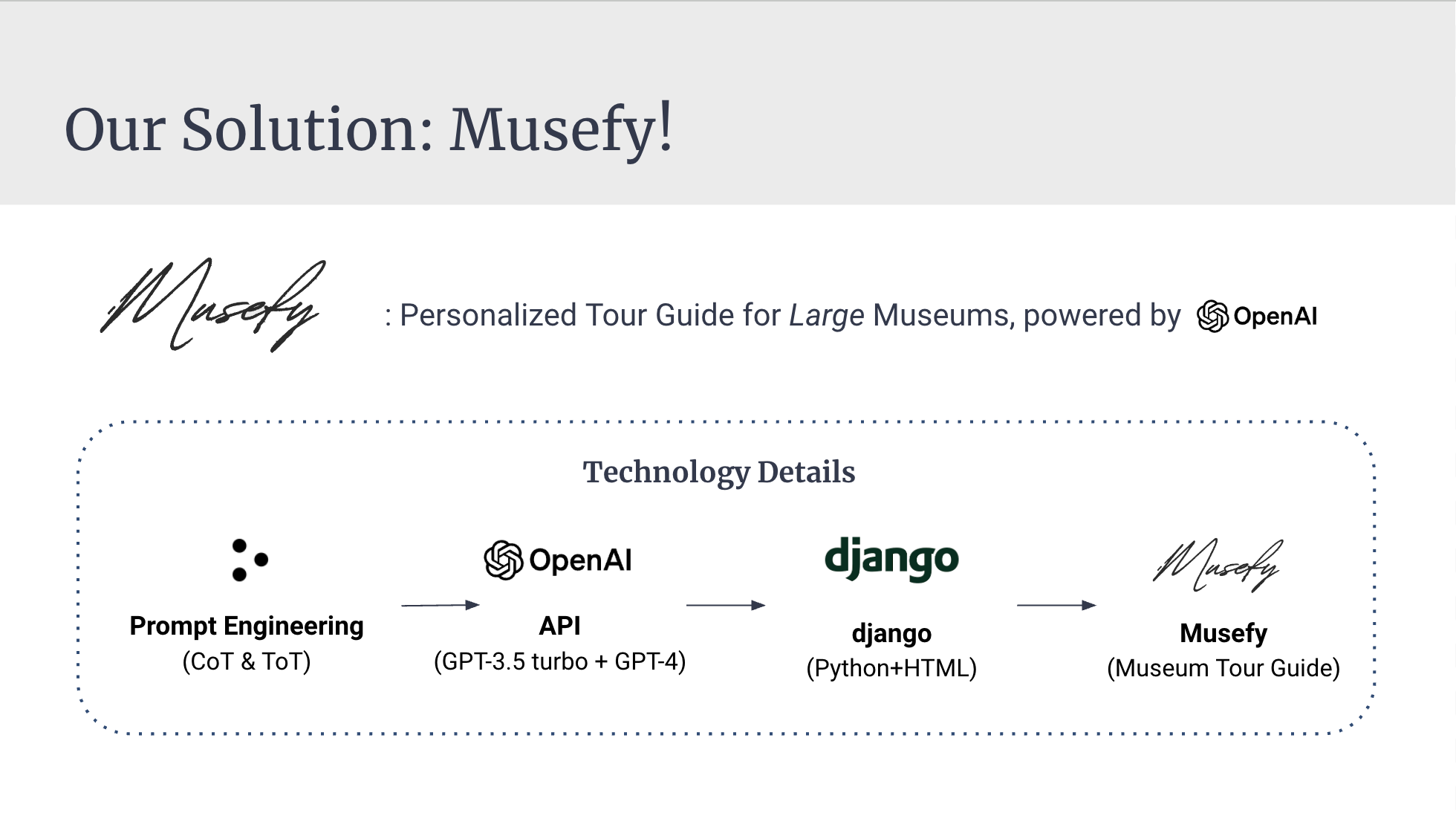
Inspired by AI-powered travel planners with both impressive and improvable features, we set out to solve our museum navigation issues. We embarked on prompt engineering, delving into models like Chain-of-Thought and Tree of Thoughts, crafting a secret, 1000-word prompt that, when fed into the OpenAI API, returned a textual starting point. Through meticulous refinement, we transformed this into a structured, json-like output, which we then parsed and seamlessly integrated into our platform.
Challenges we ran into
Integrating GPT's responses into our website posed a significant hurdle. We needed to transform lengthy string outputs into distinct sections across our platform, requiring careful json parsing and handling of escape characters. Additionally, our extensive prompts meant slower API response times, around five minutes for generation.
Accomplishments that we're proud of
We built our entire platform in just one day, writing our source code from the ground up in Django. We implemented LangChain and maximized GPT's capabilities—from creating logos and refining marketing plans to polishing code. Our team's synergy was evident as we distributed tasks, ensuring everyone was engaged and capitalizing on individual strengths. We embraced horizontal learning to keep the entire team informed.
What we learned
We deepened our understanding of various models and API parameters like temperature settings. Our foray into prompt engineering has equipped us with skills that will aid us in future endeavors. Moreover, we've learned how to bridge the gap between AI technology and tangible products, finding OpenAI's API to be both cost-effective and powerful.
What's next for Musefy
Q1 aims to finalize a scalable MVP. In Q2, we plan to establish private databases and seek partnerships. By Q3, we aspire to train our specialized museum AI model, further enhancing Musefy's capabilities.

Log in or sign up for Devpost to join the conversation.