-
-
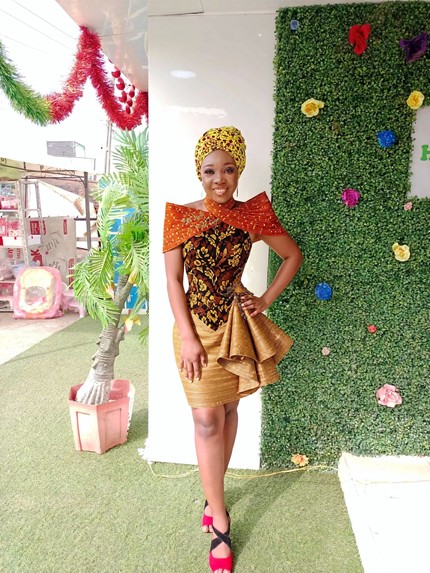
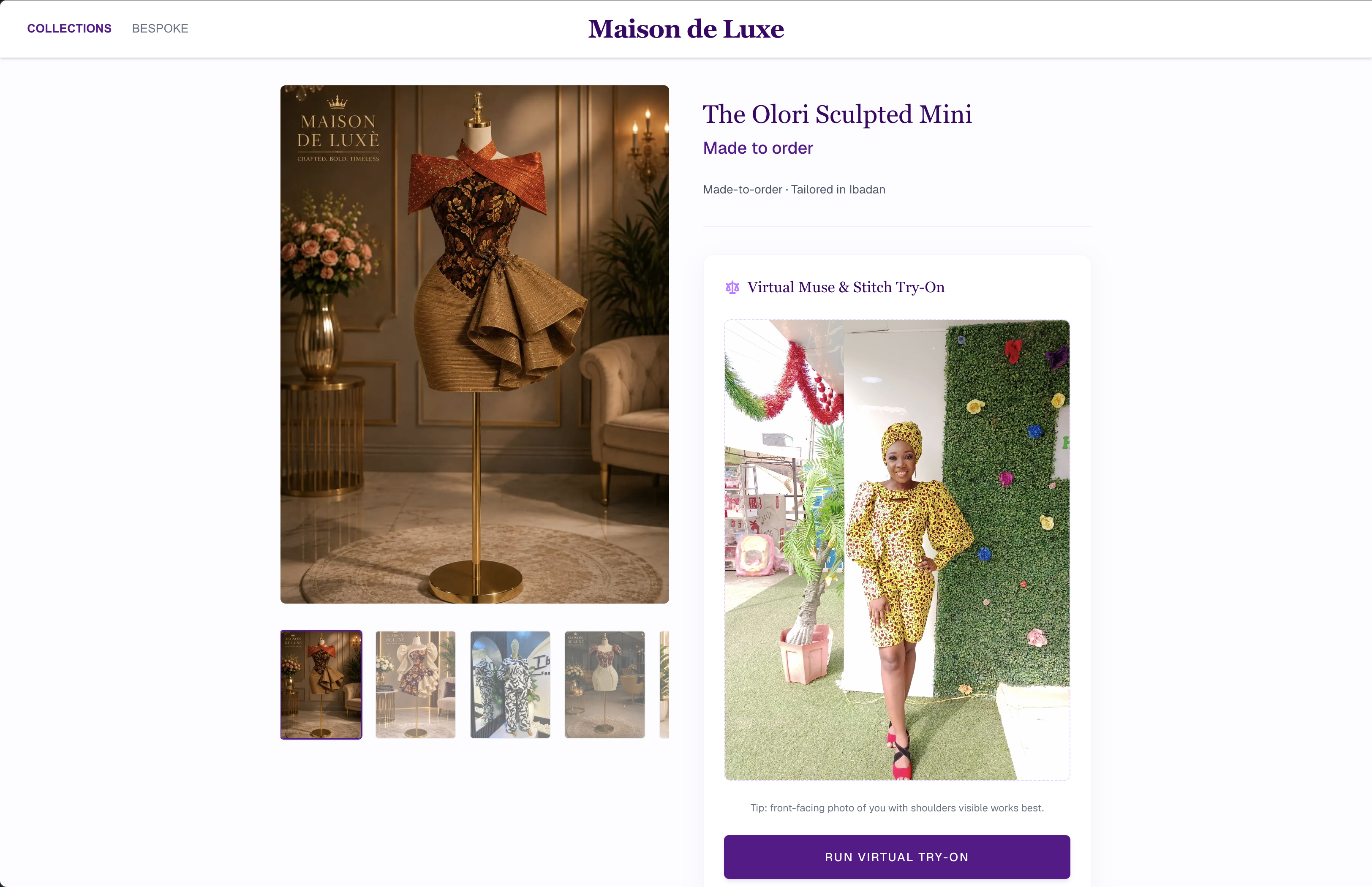
The Virtual Try on Generated
-
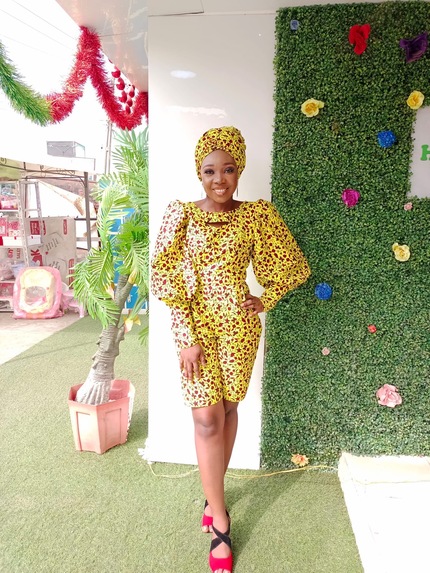
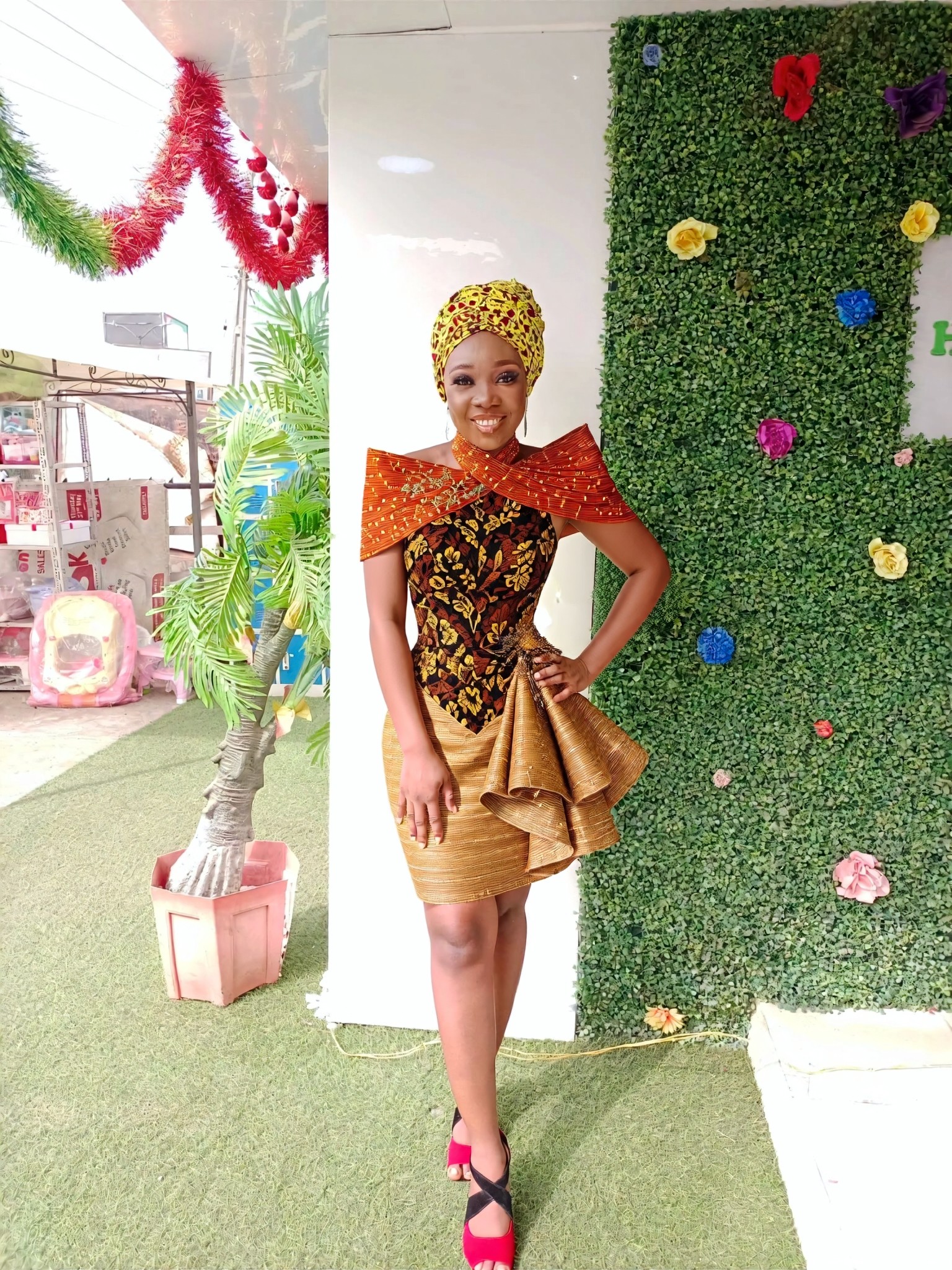
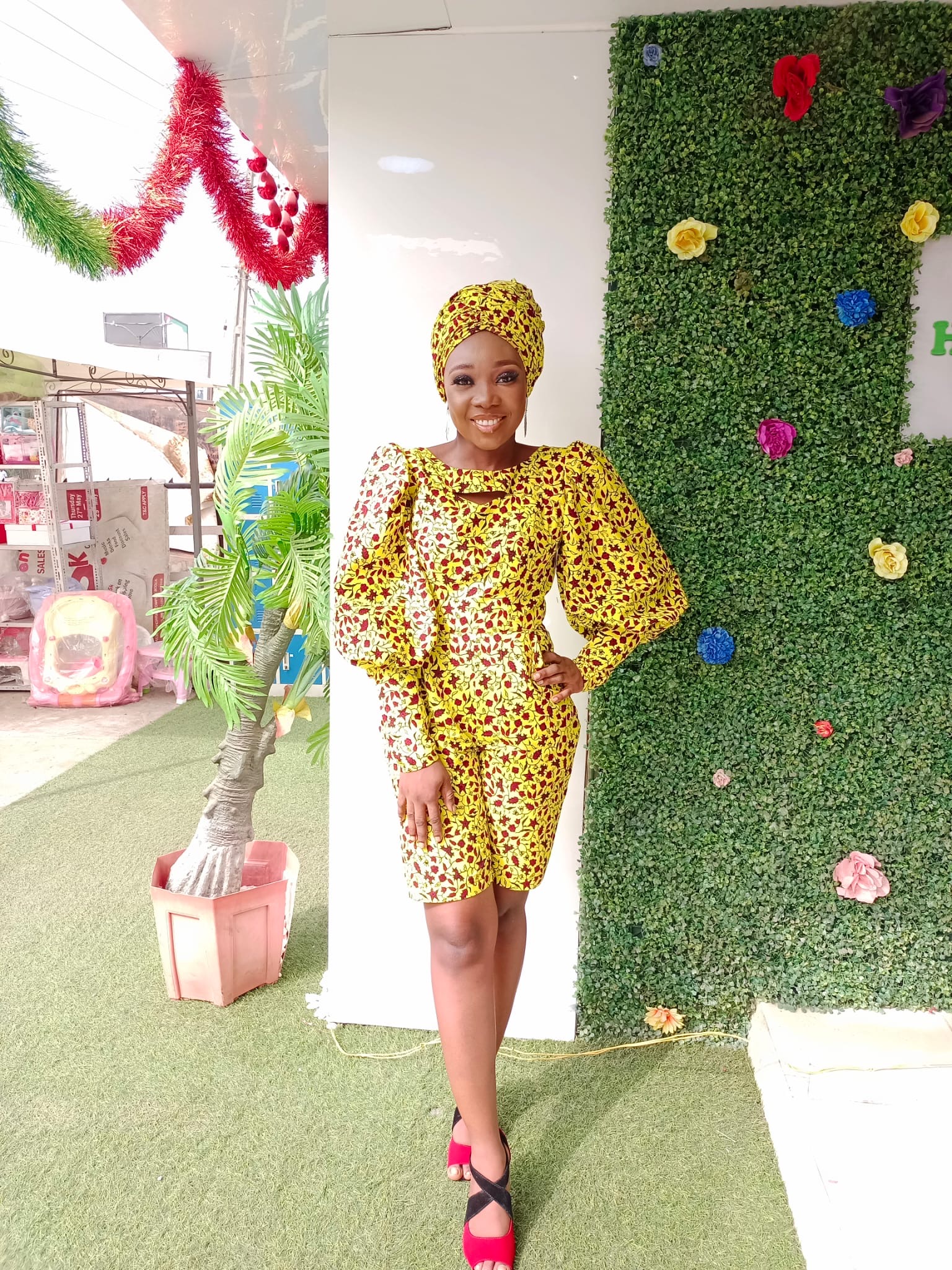
Wife's full body picture
-
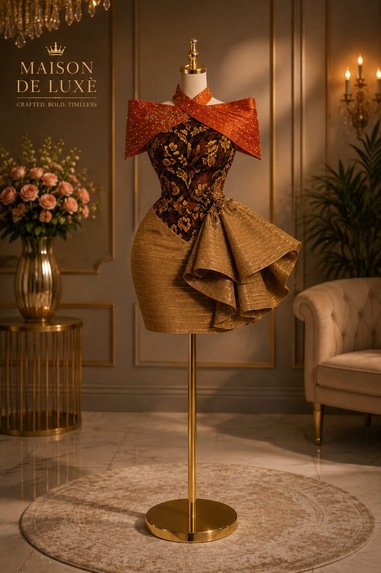
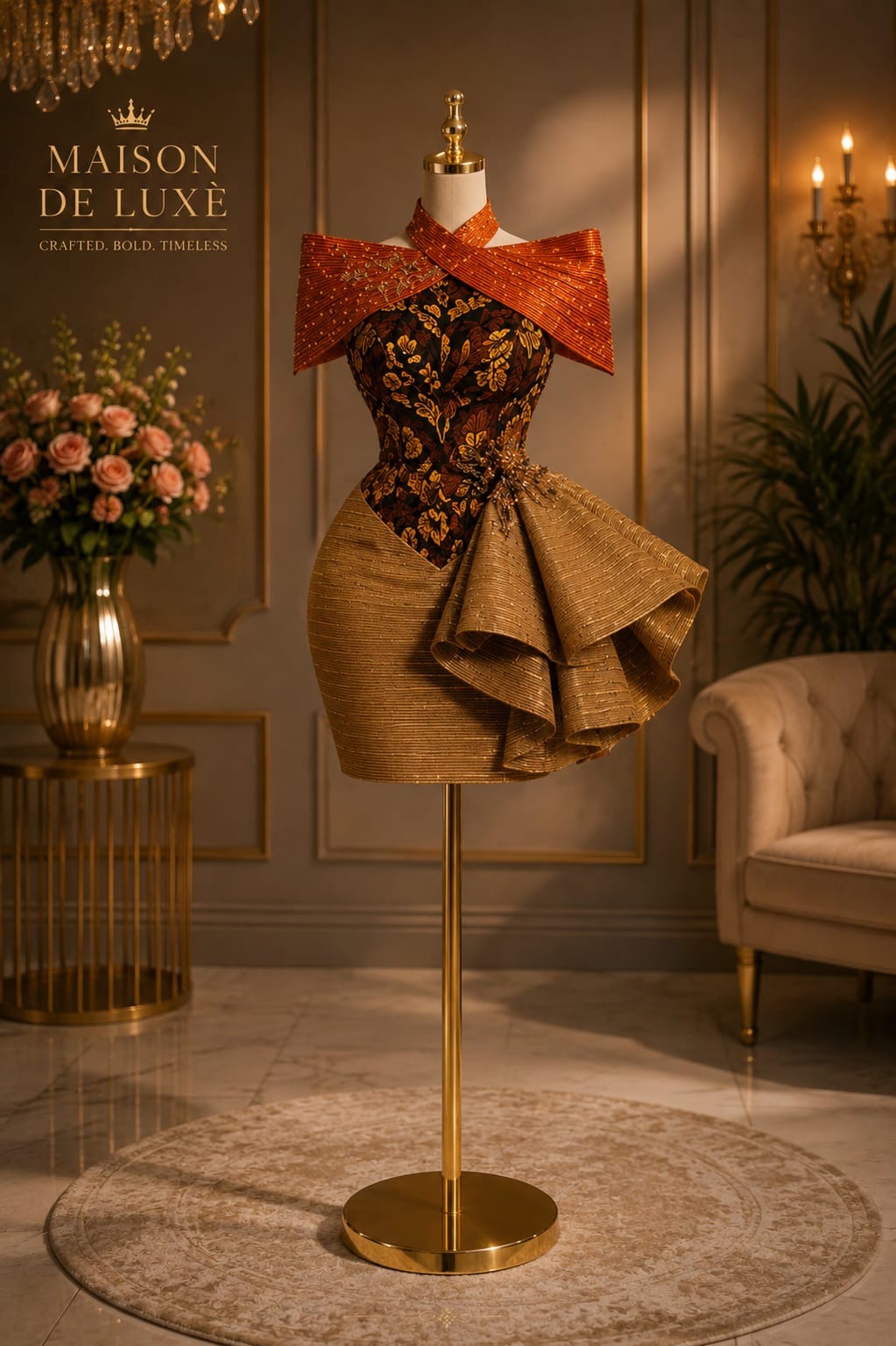
The Design to be tried on
-
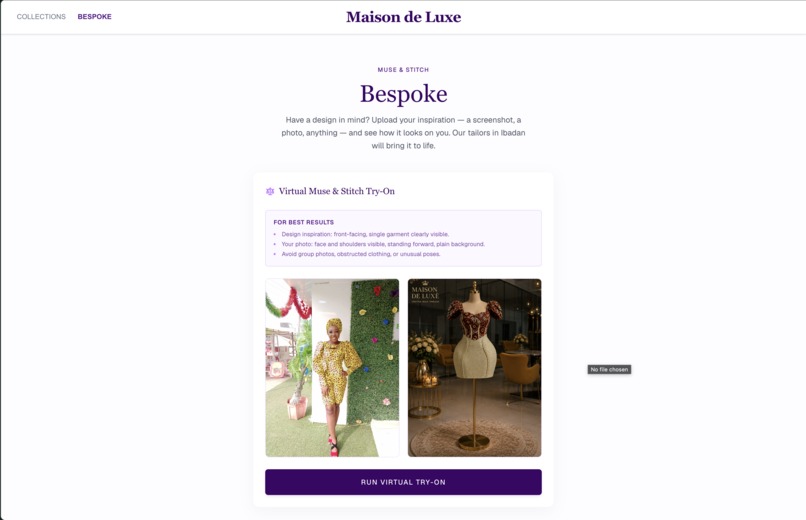
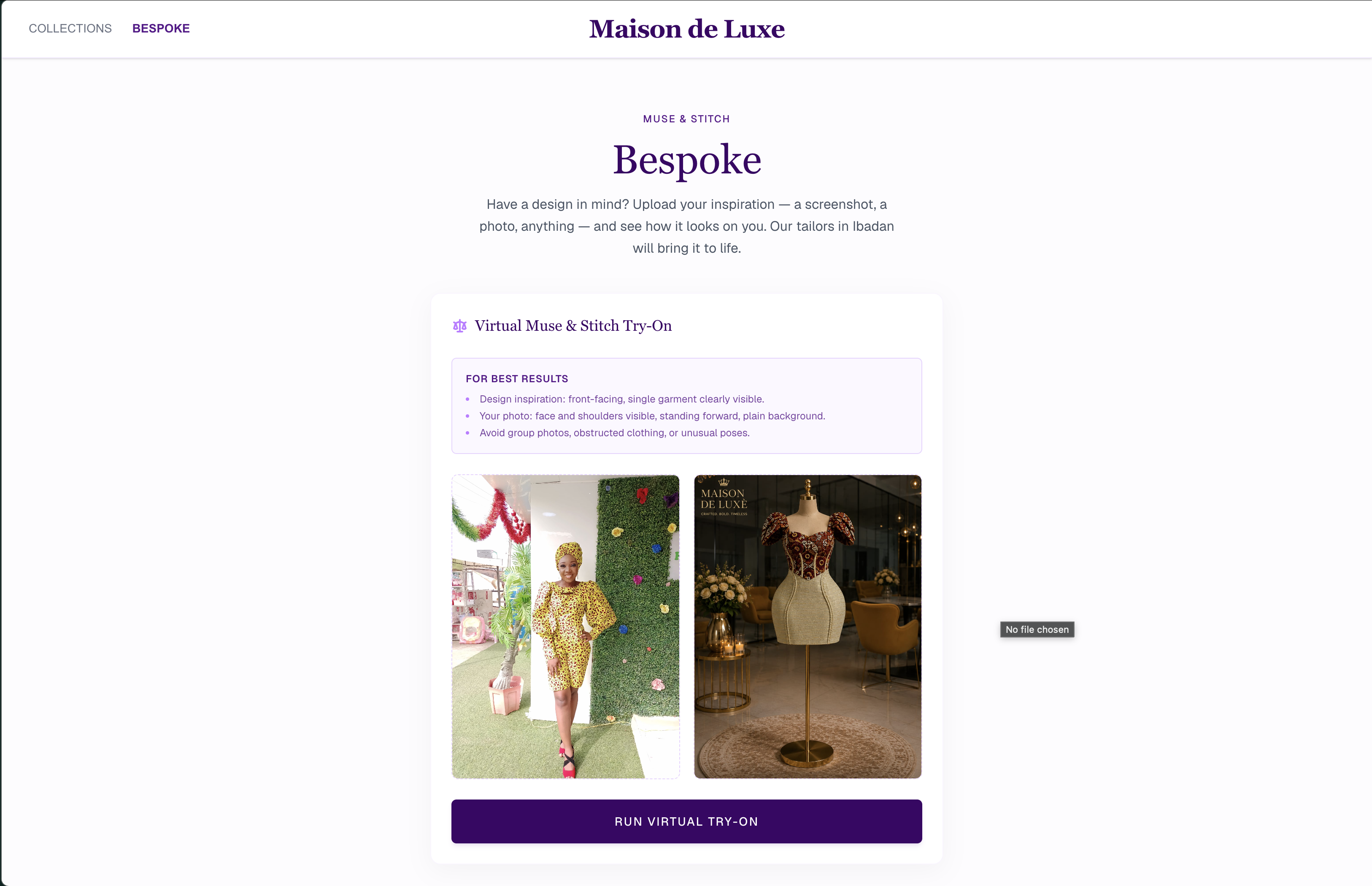
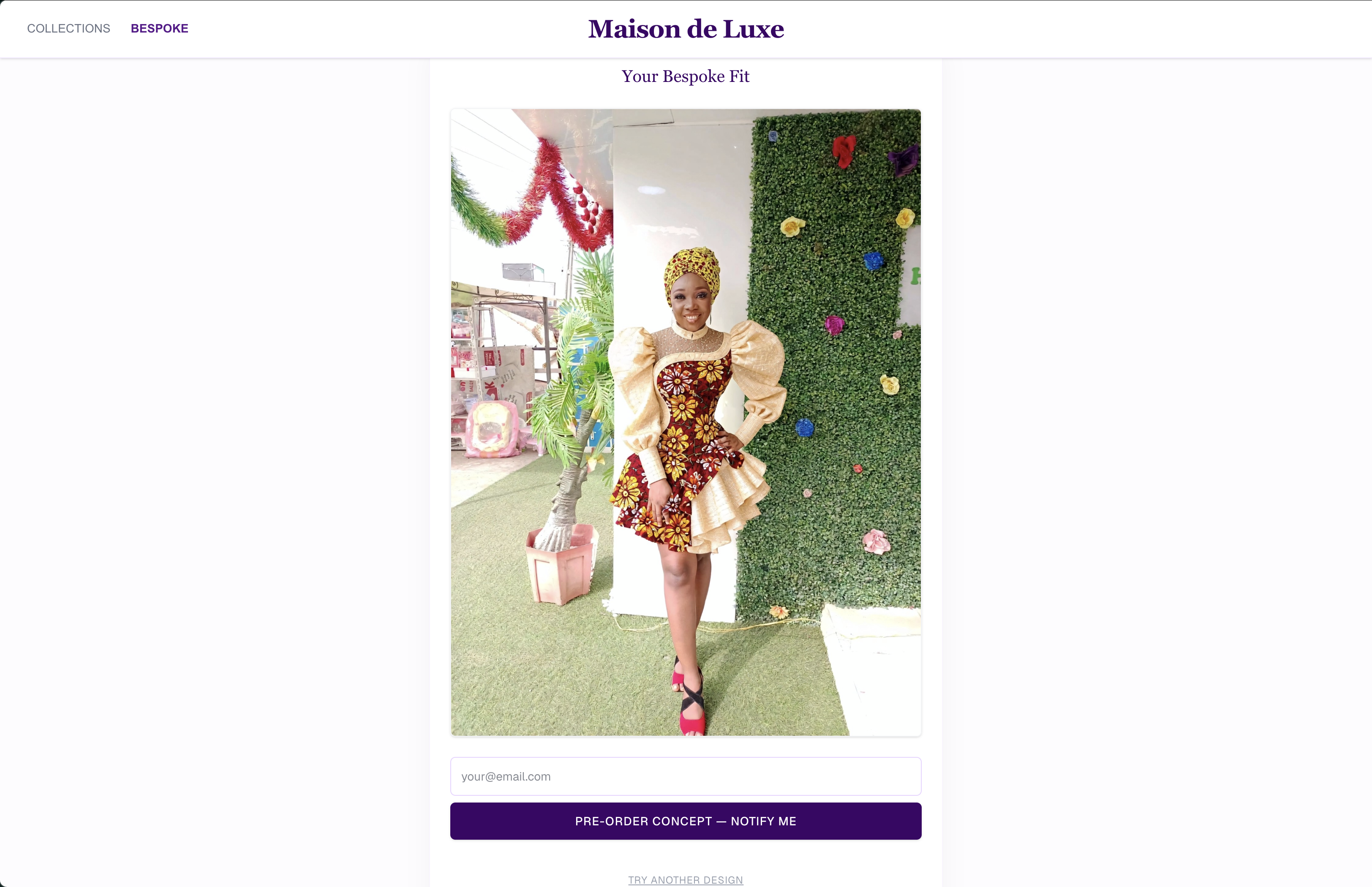
The bespoke route with my wife on the left and a design on the right
-
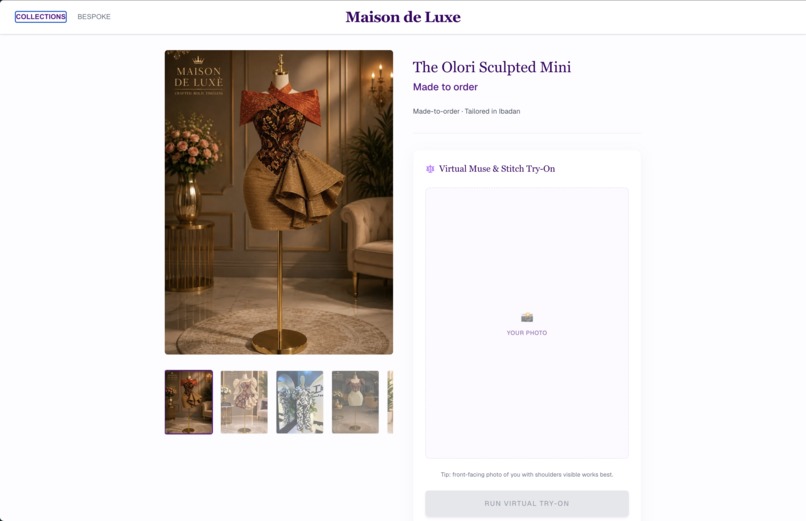
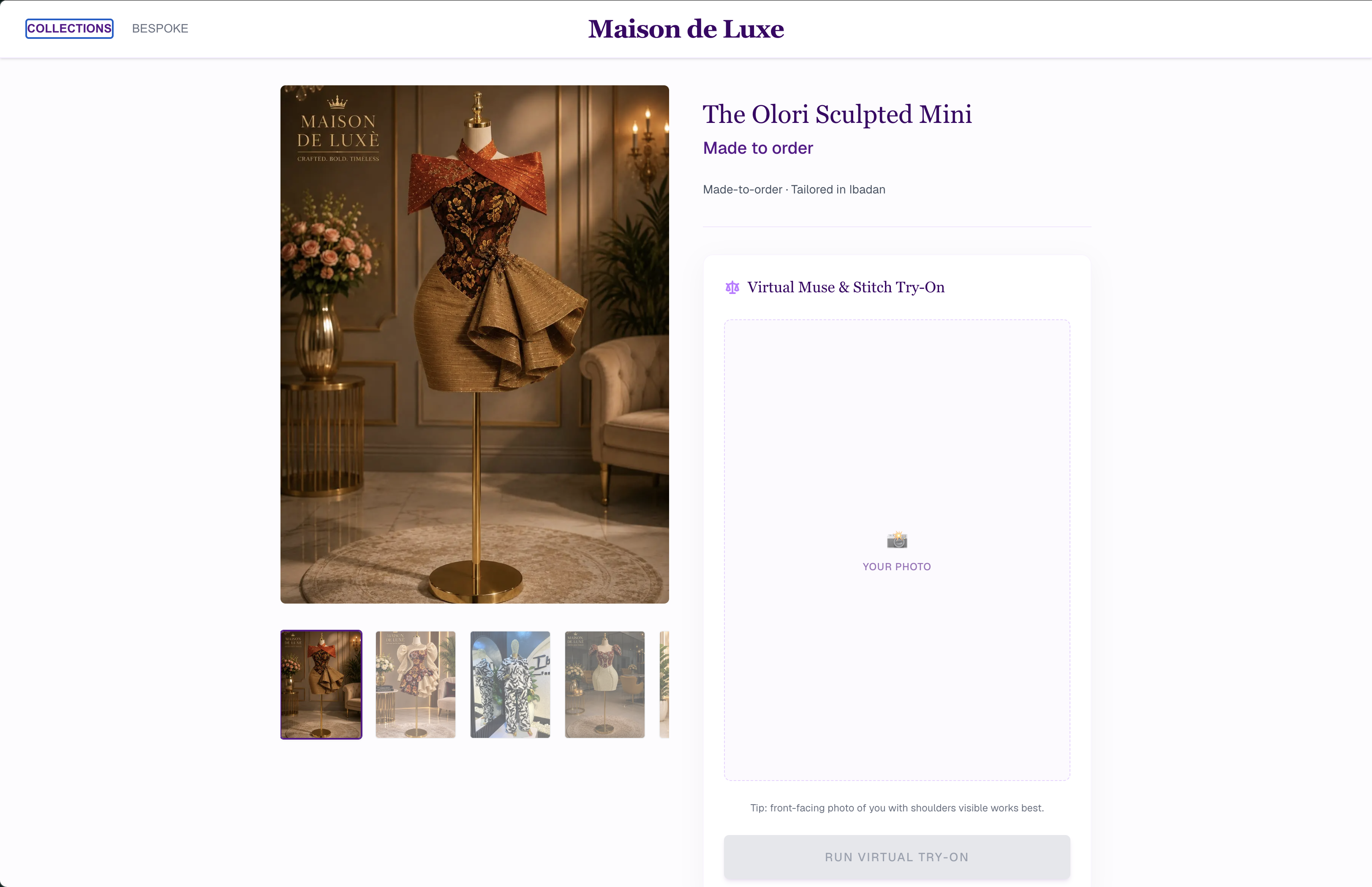
The design on the left with the input on the right for uploading an image
-
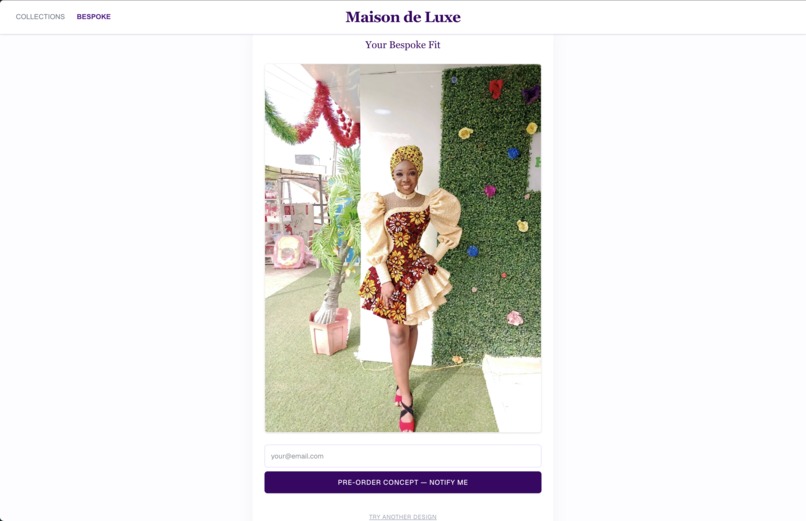
My wife in the virtual try on from the bespoke route
-
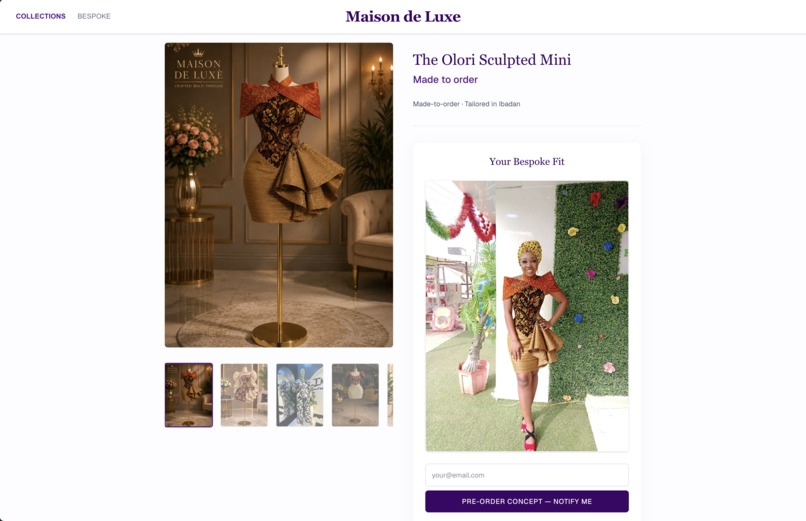
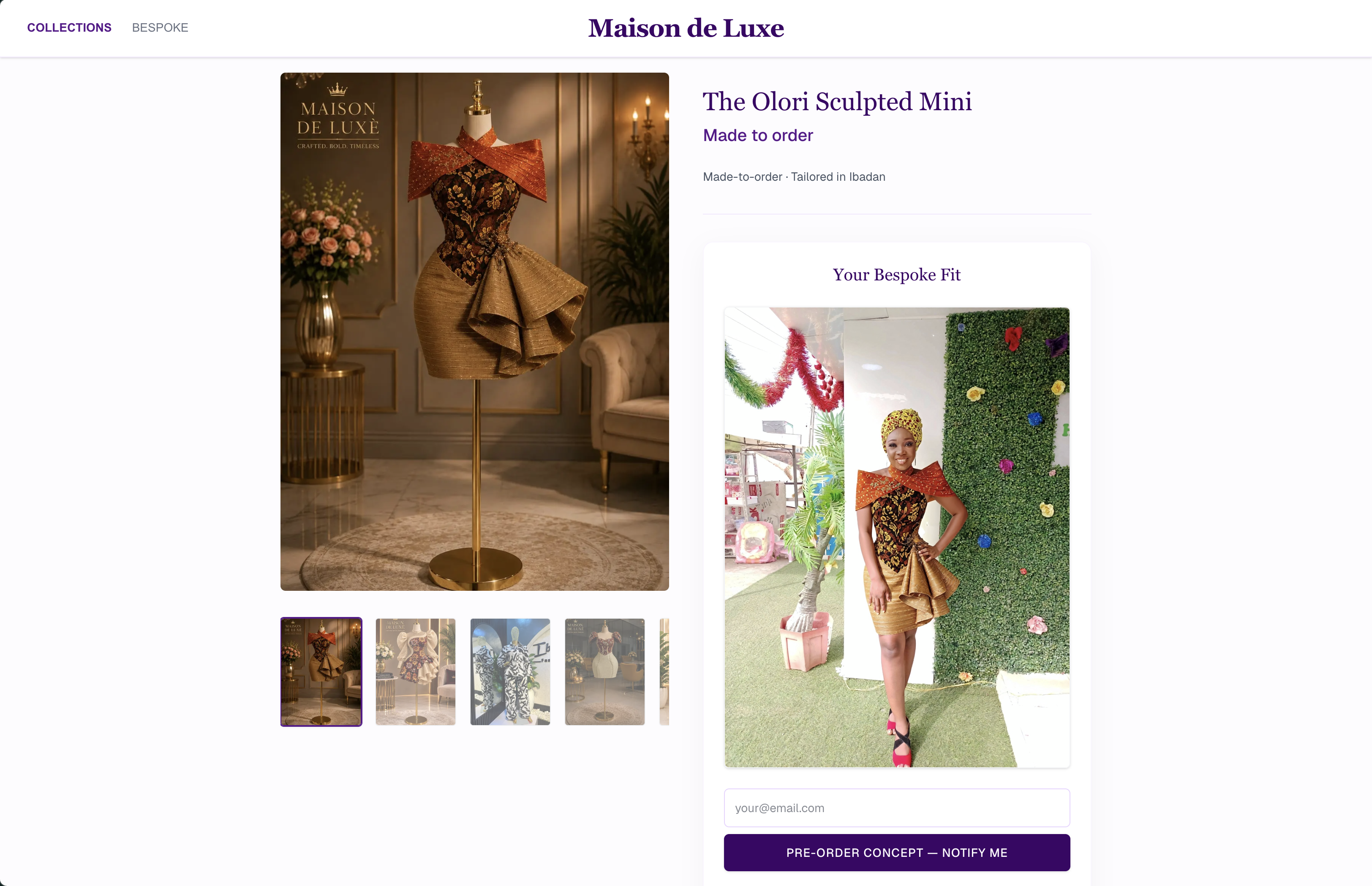
The preselected design rendered on my wife(right)
-
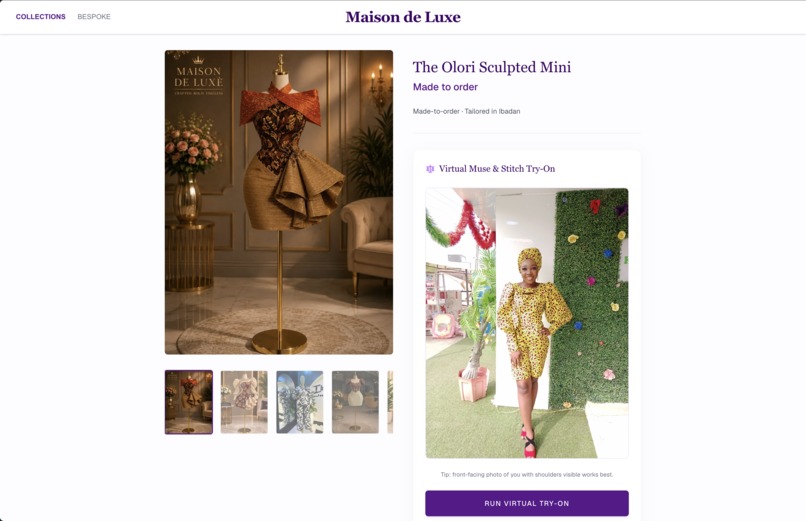
Preselected design on the left and my wife on the right
Inspiration
My wife has a biochemistry degree but has always loved fashion. She can't sew or design clothes herself, so she runs Maison de Luxe by sourcing designs online and having tailors in Nigeria bring them to life. The entire business has lived on WhatsApp: orders, photos, negotiations, everything through DMs, with her WhatsApp status doubling as her gallery. That works, but it caps how far the business can grow, and it means her UK customers commit to Nigerian imports without ever seeing how the piece will look on their own body. Muse & Stitch is the response to both problems.
What it does
Muse & Stitch is Maison de Luxe's first-ever website. It shows customers the pieces Shalom has in stock and the original designs she has conceived but not yet produced. Customers upload a photo of themselves and use YouCam's AI Clothes API to see how each piece looks on their own body before ordering. For in-stock pieces, they can reserve directly; for made-to-order concepts, they pre-commit, and our tailoring partner in Ibadan begins production, which means Shalom only makes what customers have already agreed to buy.
The Bespoke flow extends this further: any customer can upload their own design inspiration a screenshot, a Pinterest save, anything- and see it rendered on themselves, and commission it made-to-order.
How we built it
The app was built with Next.js (App Router), TypeScript, and Tailwind CSS, deployed on Vercel. The virtual try-on is powered by YouCam's AI Clothes v4 API, with the app orchestrating photo uploads, task creation, and polling for results. All product data is real, in-stock garments and Shalom's original designs, not stock imagery.
Challenges we ran into
The biggest constraint was time. I joined the hackathon partway through the window, and I had to balance building with a full-time warehouse job, so scope discipline mattered more than ambition. Every feature had to earn its place. I ended up cutting size selection, a real checkout flow, and an AI design-generation tool, all good ideas, all deferred to post-hackathon to make sure the try-on flow itself was solid and shipped.
The other real challenge was inventory. Shalom's business runs on WhatsApp, so we didn't have a library of properly shot product photos to feed the API. We photographed what she had and adapted the pitch around real constraints instead of pretending to have a bigger catalogue.
Accomplishments that we're proud of
Shalom has her first website. She can now show her collection outside WhatsApp for the first time, and every made-to-order concept she lists is protected from the inventory risk that has always constrained small importers; she only produces what a customer has already committed to buy. Personally, I'm proud of shipping a working, deployed, mobile-tested product on a compressed timeline while working full-time.
What we learned
That AI's real value in a small-business context isn't replacing skills. It's compressing the gap between an idea and a validated commitment. Shalom doesn't need to become a designer or a photographer; she needs a way to let her customers see something before it's made. The YouCam API turned out to be exactly that primitive.
Technically, I learned how quickly a scope-disciplined MVP beats an ambitious half-finished one. Every feature I cut this week made the demo fit into scope.
What's next for Muse & Stitch
Immediate next steps: real Stripe checkout for both in-stock reserves and made-to-order pre-commitments (already scoped, deferred from this week). A proper size selection or measurement input flow tied to our tailors' production sheets. Formspree or a real email service behind the Notify Me capture so we can actually reach customers who reserve.
Bigger next: expanding the collection as Shalom's inventory grows, and eventually opening the Bespoke platform to other small West African fashion importers who face the same "can't design, can't afford returns" problem she does. Muse & Stitch is deliberately built as a platform (separate from Maison de Luxe as a brand), so this optionality stays open.
Built With
- nextjs
- tailwindcss
- typescript
- youcamapi

Log in or sign up for Devpost to join the conversation.