-
-
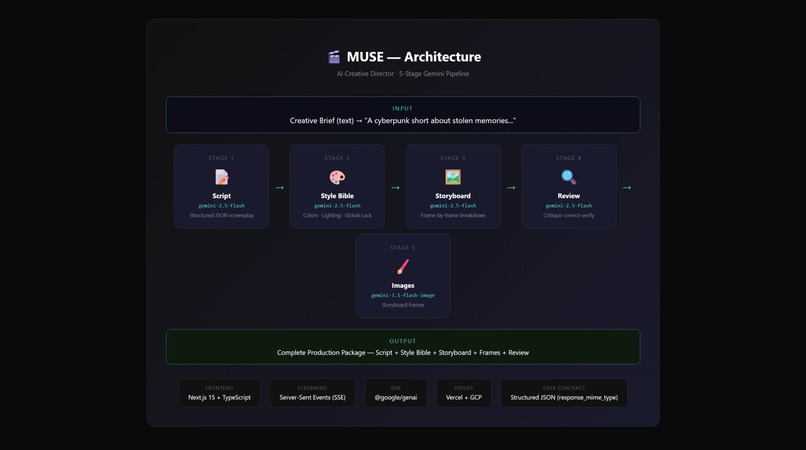
Architecture Diagram
-
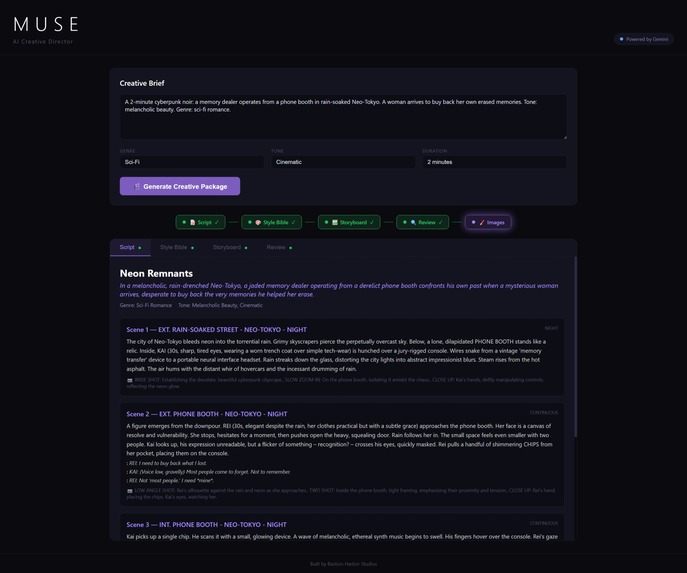
Script
-
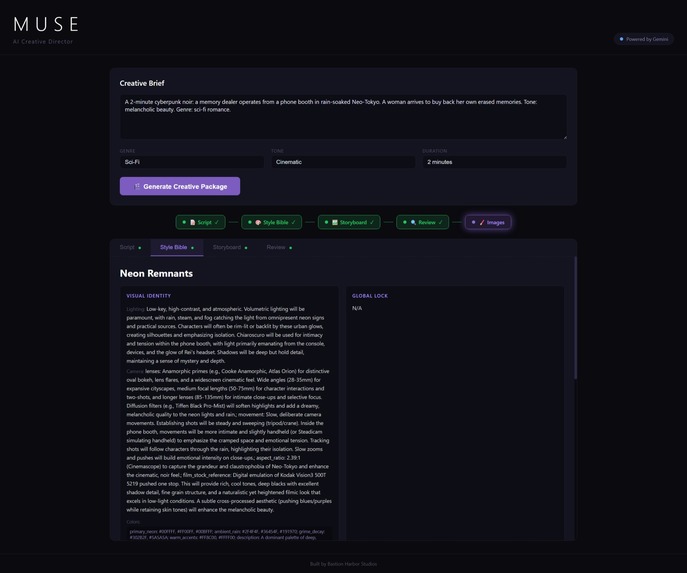
Story Bible
-
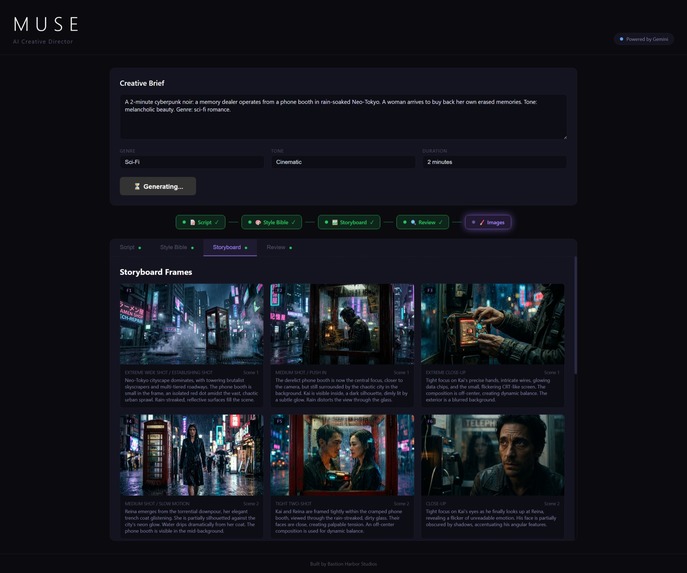
Storyboard
-
Final Review
Every filmmaker starts with a vision. But turning that vision into a production-ready package — script, storyboards, style bible, shot list — takes days or weeks of pre-production work. Solo creators and small teams are especially bottlenecked here. We asked: what if an AI could do the creative direction work in minutes, not weeks?
I built MUSE because we live this problem every day. Bastion Harbor Studios has shipped 250+ generative AI projects across short films, branded content, and interactive installations. We know the gap between "great idea" and "production-ready package" — MUSE closes it.
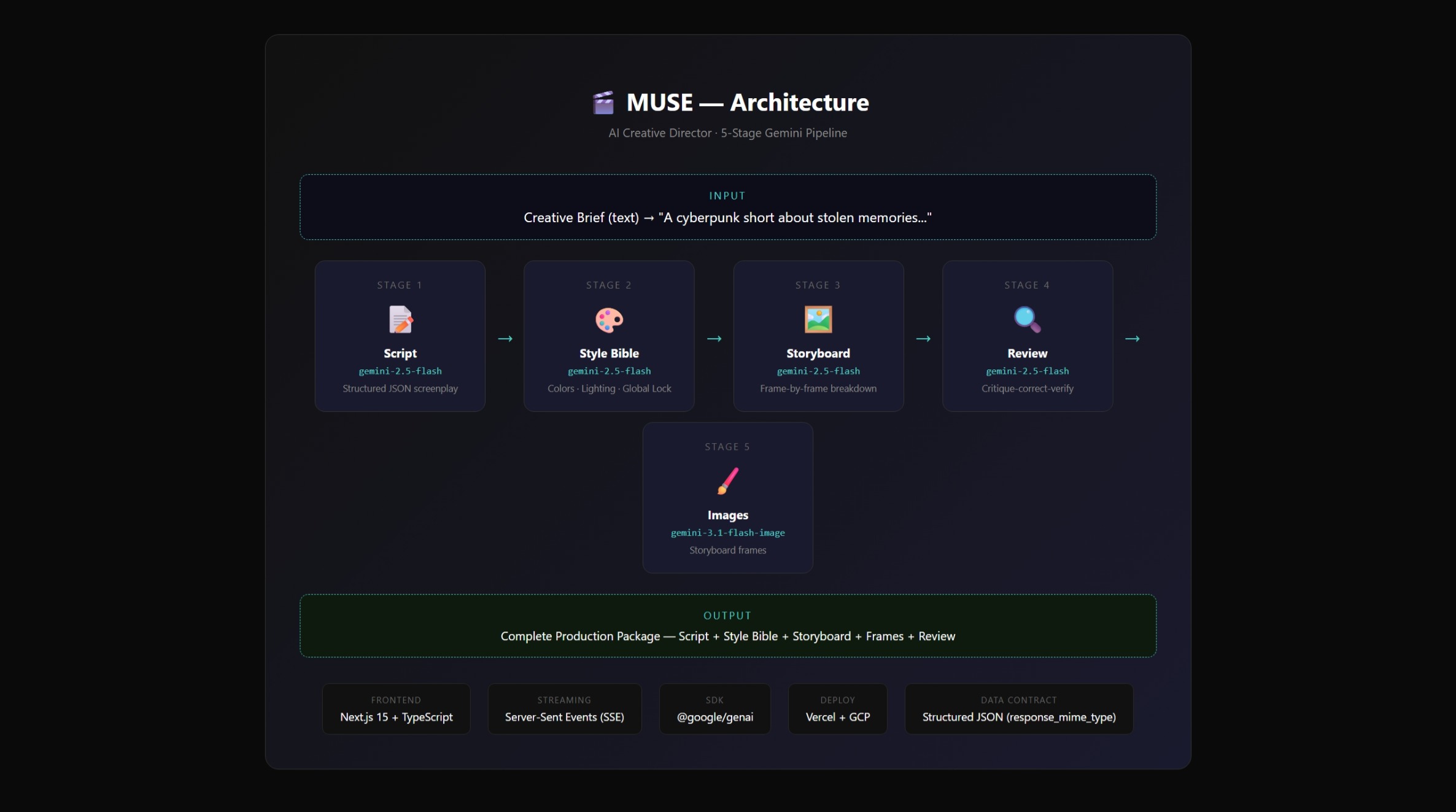
MUSE is an AI Creative Director that takes a creative brief and produces a complete production package:
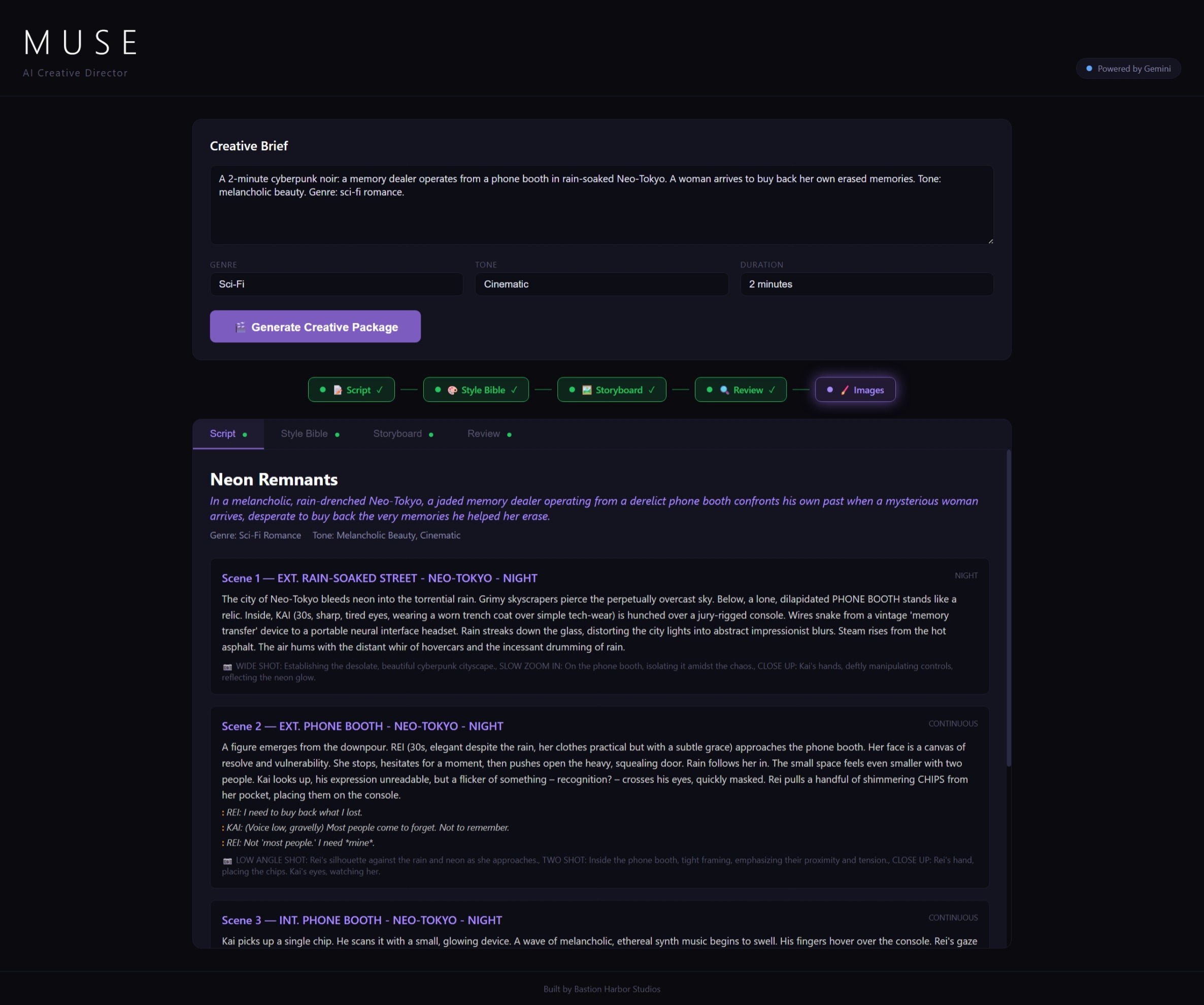
- Script — Structured screenplay with scenes, dialogue, camera notes, and emotional beats
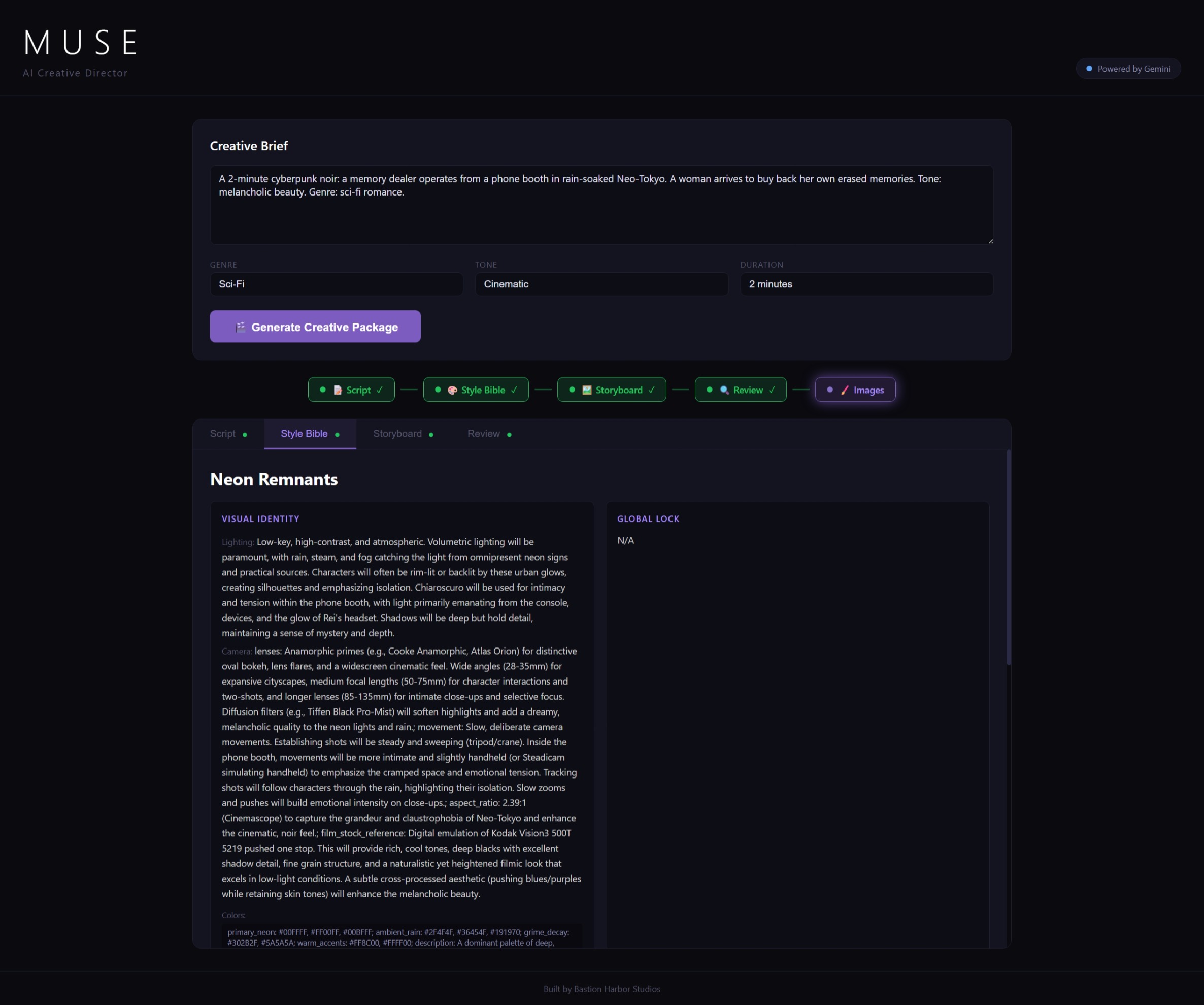
- Style Bible — Comprehensive visual direction: color palette (hex codes), lighting style, camera choices, film stock references, and a Global Lock string for generation consistency
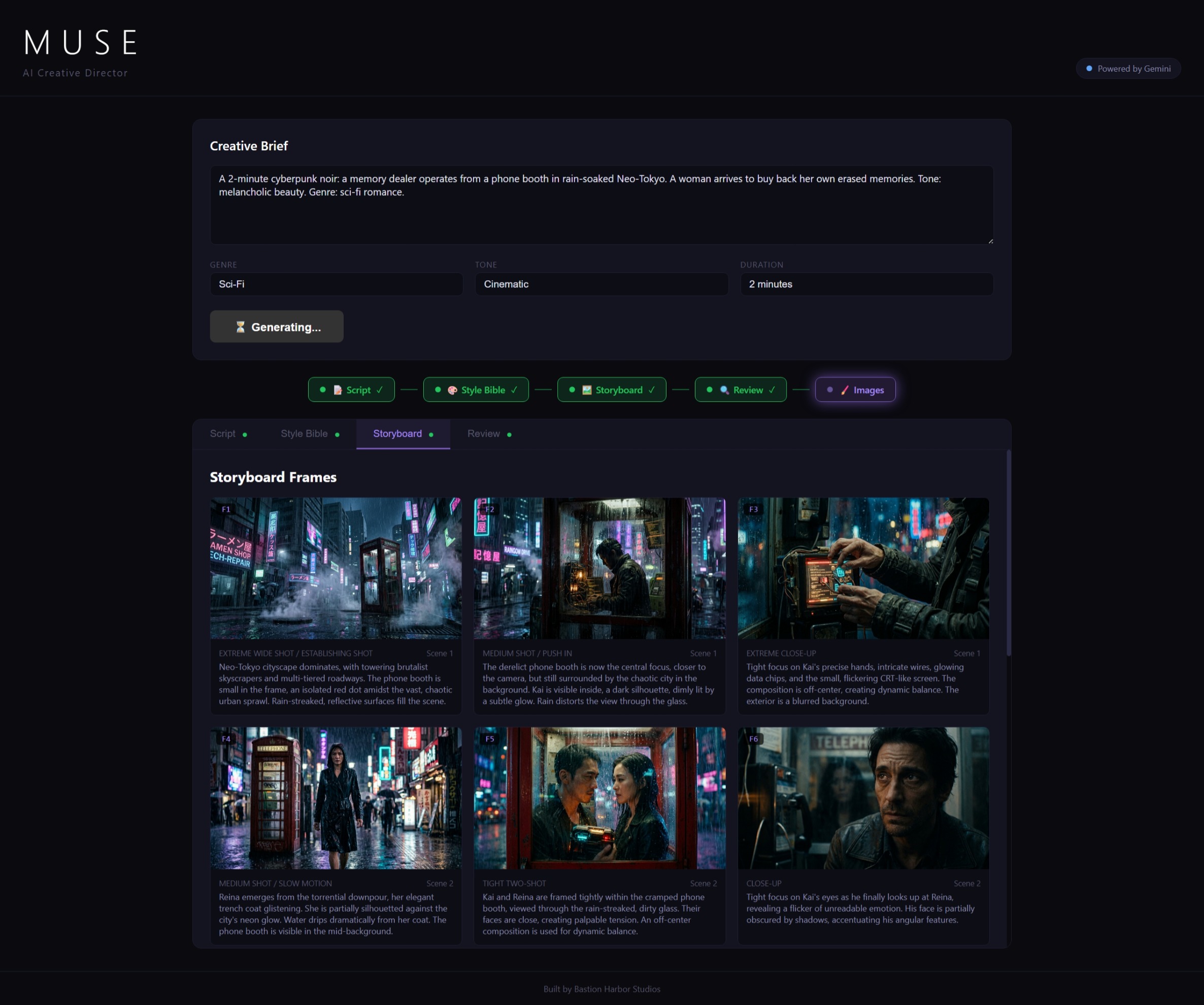
- Storyboard — Detailed frame-by-frame breakdown with composition notes, camera movements, and AI-optimized image prompts
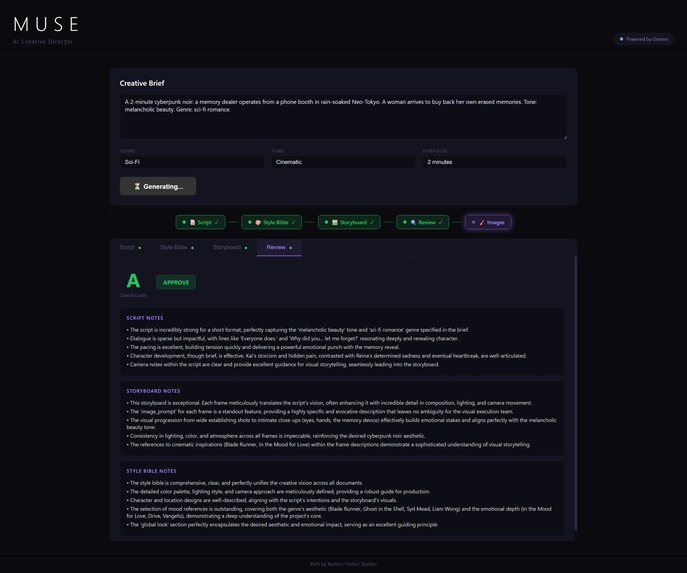
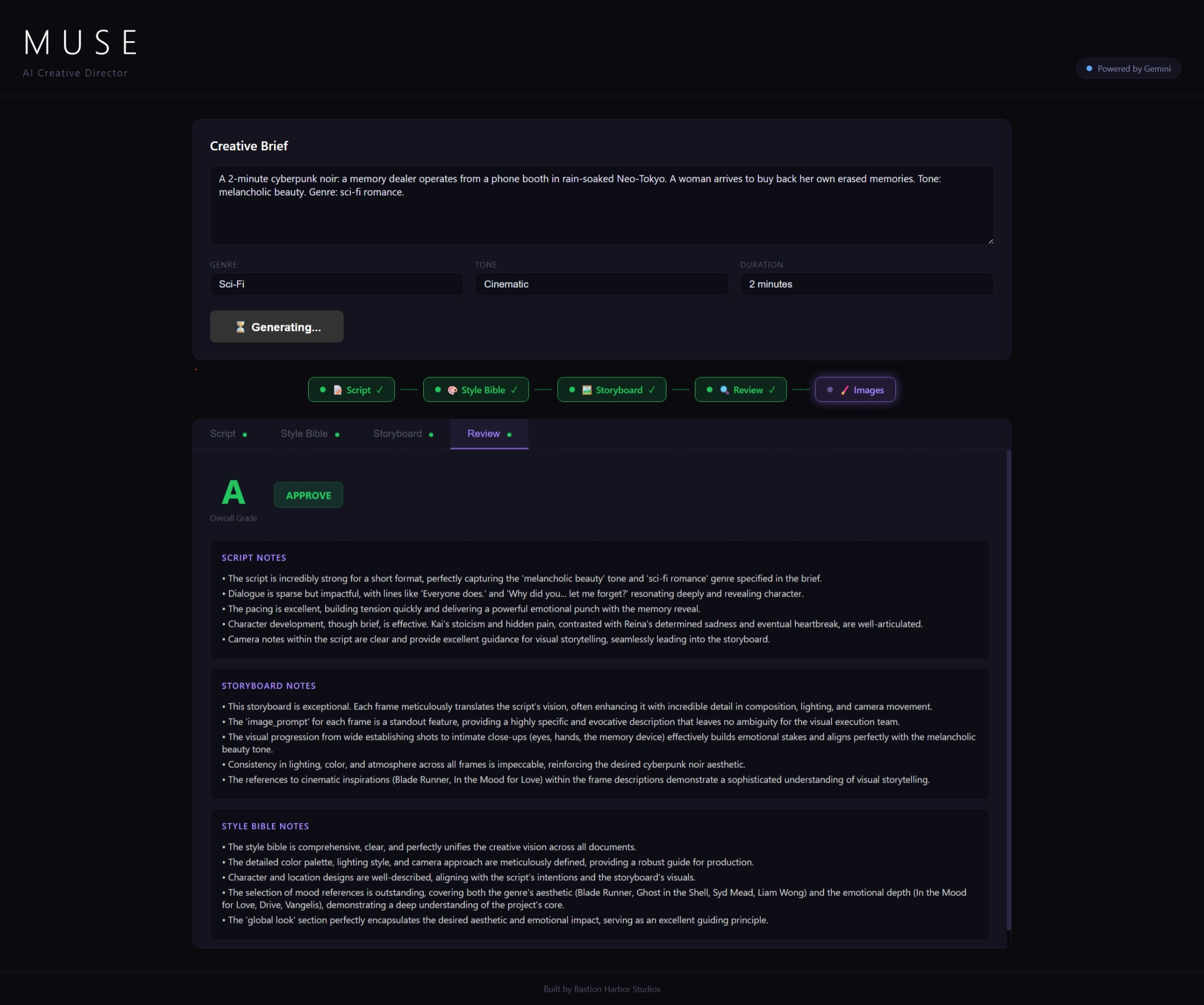
- Creative Review — Multi-round AI critique that evaluates the package for coherence, quality, and creative merit
- Storyboard Images — AI-generated storyboard frames for every shot, styled to match the style bible
The entire pipeline runs end-to-end from a single text brief. No manual intervention required.
How I built it
- Frontend: Next.js 15 + TypeScript — dark cinematic UI with real-time pipeline visualization
- Backend: Next.js API routes calling Gemini directly via
@google/genaiSDK - Text Generation: Gemini 2.5 Flash for script, style bible, storyboard, and creative review (structured JSON output)
- Image Generation: Gemini 3.1 Flash Image Preview for storyboard frame generation
- Pipeline: 5-stage sequential pipeline with structured JSON contracts between stages. Each stage receives full context from all prior stages. Style bible includes a "Global Lock" string appended to all image prompts for visual consistency.
Challenges I ran into
- JSON reliability across 5 stages required careful prompt engineering +
response_mime_type: "application/json" - Style consistency across storyboard frames solved via the "Global Lock" technique
- Serverless timeouts handled by streaming stage completions via SSE for real-time progress
What I learned
- Gemini's structured JSON output is remarkably reliable for multi-stage pipelines
- Multi-round AI critique significantly improves output quality — the agent catches issues humans miss
- Separating text and image models allows optimizing each domain independently
What's next for MUSE
- Voice-driven creative direction via Gemini Live API
- Video generation integration (Kling 3.0, Veo 3.1)
- Spatial Consistency Engine for environmental coherence across shots
- On-chain agent discovery via ERC-8004
Built With
- gemini-2.5-flash
- gemini-3.1-flash-image-preview
- google-genai
- next.js
- tailwind-css
- typescript
- vercel

Log in or sign up for Devpost to join the conversation.