
Inspiration
Well we were looking for ideas and checked out the hardware room. They only had the Muse headband so we decided to try and come up with ideas for how we could use it. We thought of how the waves measured by the headband could be mapped to sound frequencies, and so we came up with the idea for muse-ic.
How it works
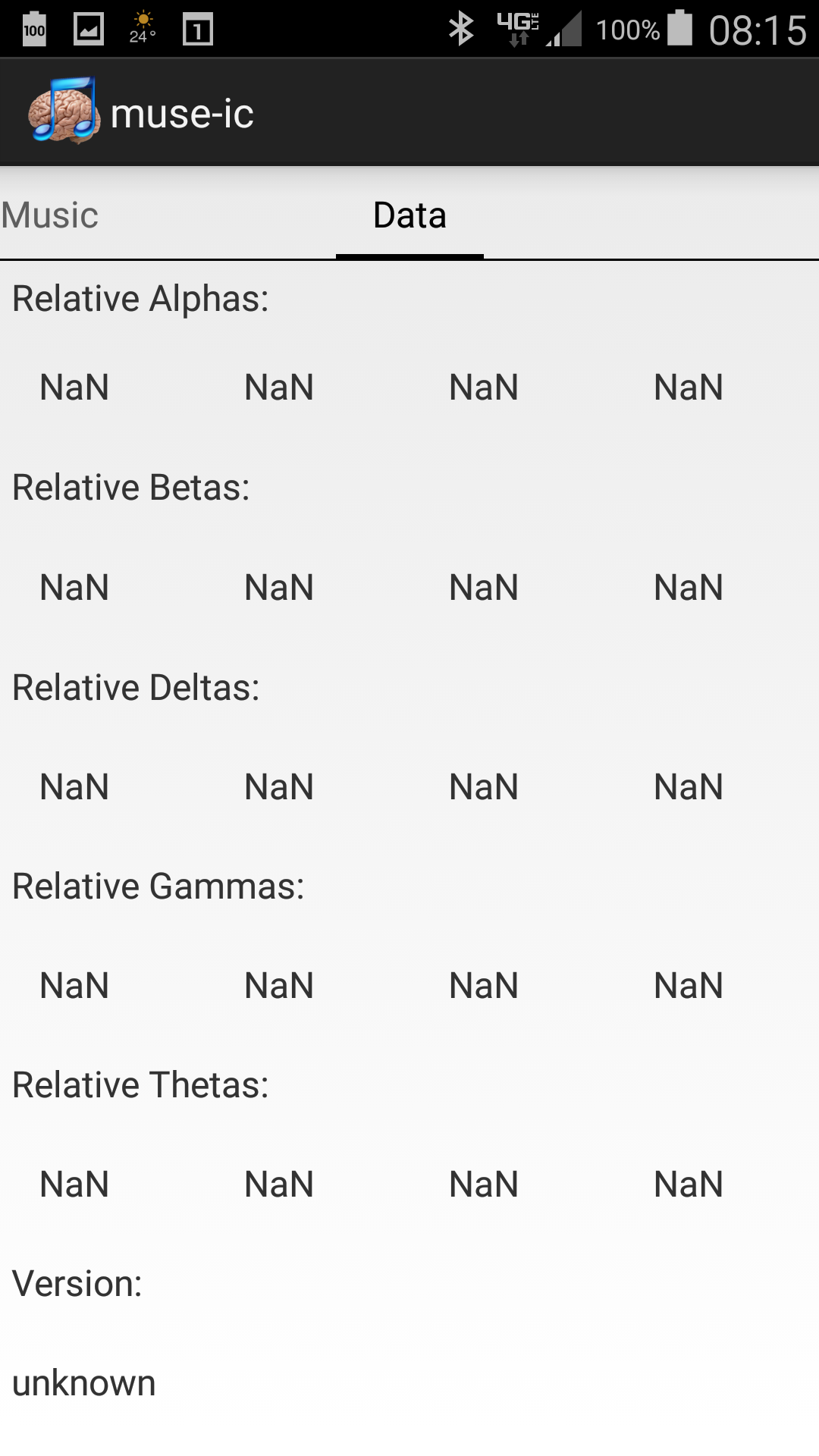
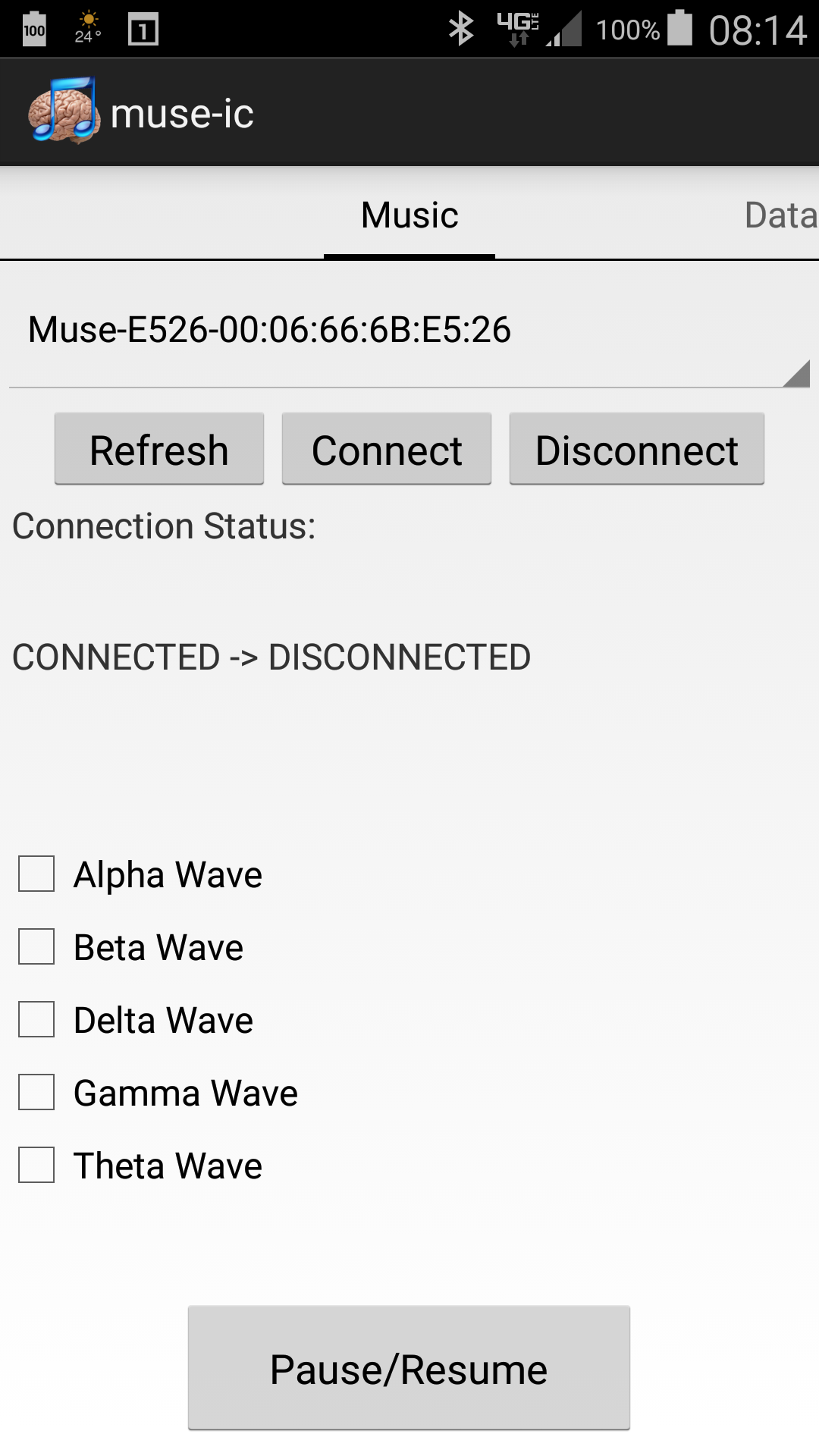
The headband's sensors first must pick up the electrical impulses in the brain and then send data packets to the Android device over Bluetooth. Once on the device, the packet is decoded, then the data is analyzed, converted into notes, and finally the sounds are played according to the music's timing. Data from the packets is also available to viewed on the Android device, as well as several different settings and options.
Challenges I ran into
We had never really worked with Android apps before, which provided a considerable challenge to overcome in thirty-six hours. It was also quite challenging to find a way to convert the brain waves into sounds in a way that sounded at least like something approximating music.
Accomplishments that I'm proud of
Doing what we did with virtually no prior Android knowledge is something we're definitely proud of.
What I learned
We learned a lot about Android programming, application design, and even some neuroscience.
What's next for muse-ic
A more refined layout and more options such as different instruments, adjustable timing, and different musical scales.

Log in or sign up for Devpost to join the conversation.