-
-
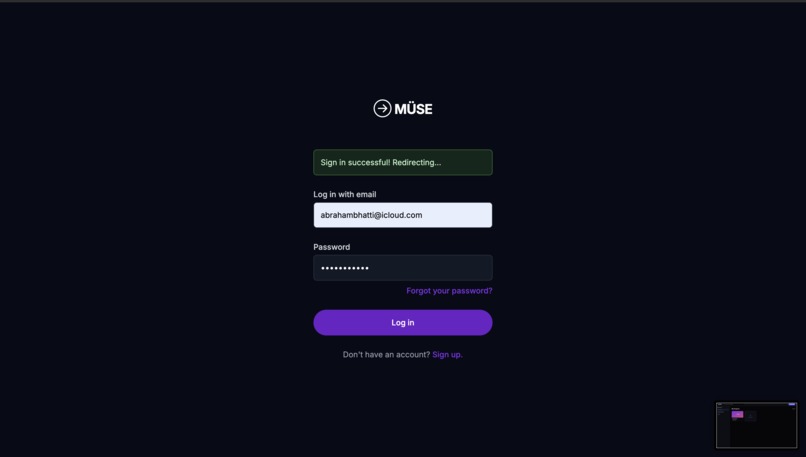
Simple log in page for user friendly experience
-
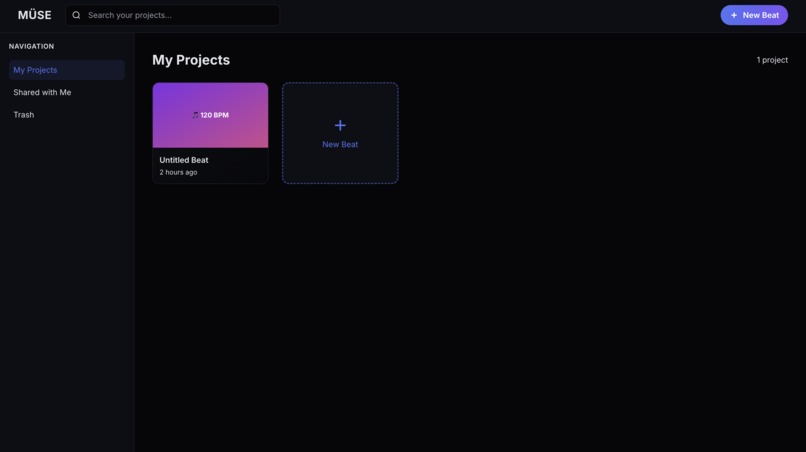
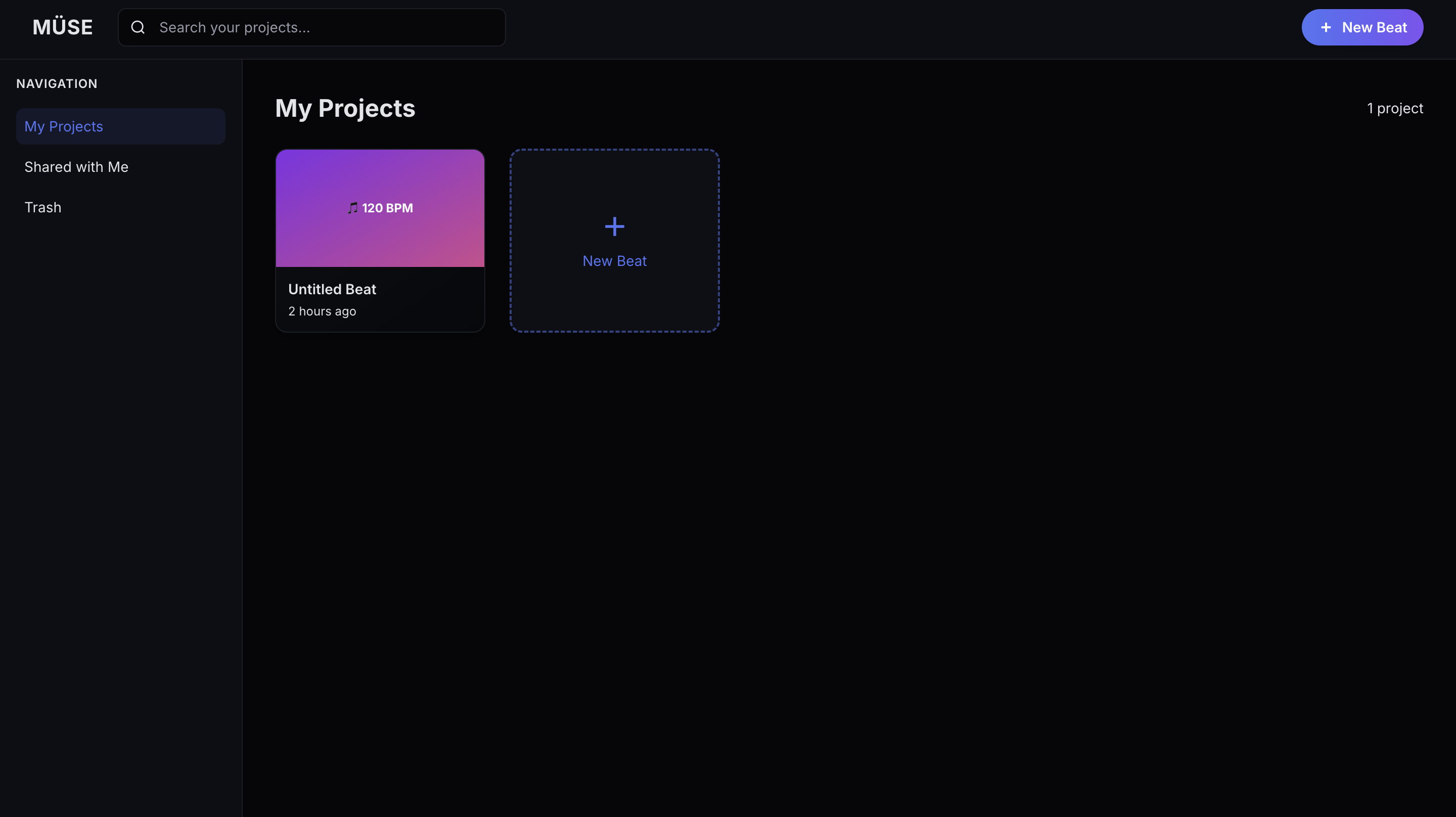
Gallery for personal and shared songs

Inspiration
As a musician, I’ve always loved songwriting and have been fascinated by how music is created. Playing songs with my friends showed me that sharing this passion with others is an experience like no other. When I pitched the idea of a collaborative music platform to my friends, we realized how much creativity could come from making and sharing music together. That’s what inspired us to build MÜSE, a space where musicians can collaborate, experiment, and grow together.
What it does
MÜSE brings all the essentials of a digital music workspace into one place. You can use samples from different instruments, record your own vocals or sound effects from your microphone, and upload any song or MP3 file, where our AI can split it into separate instrument tracks. Essentially, it lets you use any song as a sample and isolates its sounds for remixing or editing. On top of that, MÜSE connects creators together, allowing users to share open-source beats and projects so others can collaborate on them. Think of it as Google Docs meets TikTok, but for making music.
How we built it
We combined several APIs and models to bring MÜSE to life. The core music workspace was built with JavaScript libraries like Tone.js, and real-time collaboration was handled using Y.js. Our backend runs on AWS, which manages user authentication/log ins, saved projects, and networking. Initially, we used Spotify’s Basic Pitch to convert MP3s into MIDI files. To pull different instruments and samples from songs, we developed and fine-tuned a model to split any MP3 into multiple WAV files. These WAV files would then be organized by frequency range to identify different instruments, which we then converted into editable MIDI tracks, letting users tweak every part of the song directly in the editor.
Challenges we ran into
Getting our MVP for the music creation workspace to work smoothly was definitely tougher than we expected. At one point, even small UI changes caused the entire program to crash. We also ran into multiple issues with GitHub versioning, which made collaboration tricky, and had issues with our AWS deployment and backend integration multiple times. Balancing the social media and technical aspects of the app also took a lot of effort.
Accomplishments that we're proud of
We’re super proud of getting our MP3-to-MIDI feature working, especially when we managed to isolate vocals and instruments from a full song. That moment felt like a miracle and gave us a huge morale boost. We were also proud of how quickly we bounced back after early challenges, finishing our MVP ahead of schedule and even starting work on advanced features earlier than planned.
What we learned
We learned how valuable planning is. Mapping out our UI and identifying our key APIs before diving into coding saved us countless hours later. This made us realize how important it was for us to document this information before diving into our project, especially when working on such an intricate project with so many different features.
What's next for MÜSE
Next, we want to make the music creation workspace even more powerful and intuitive. This includes adding a wider variety of instruments, more advanced controls, and improving the UI to be beginner-friendly without sacrificing creative depth. We also plan to grow the social side of MÜSE by adding features like liking, commenting, and sharing tracks to encourage collaboration and community. Ultimately, we want MÜSE to become a welcoming space where anyone, from beginners to seasoned musicians, can experiment, connect, and create something amazing together.
Built With
- along-with-other-libraries.-the-frontend-uses-react
- amazon-web-services
- and-the-aws-sdk
- decucs
- express.js
- html/css
- node.js
- python
- react
- redis
- socket.io
- vite
- y.js
- yjs


Log in or sign up for Devpost to join the conversation.