-
-
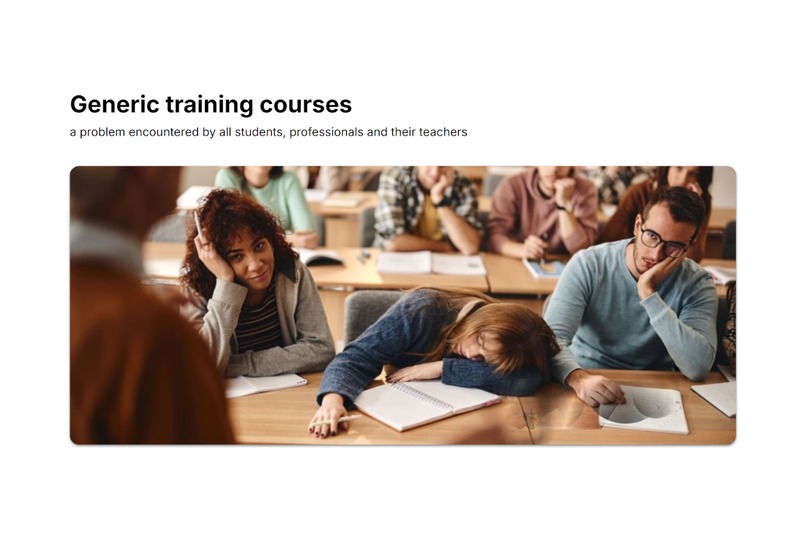
1/5 - Generic training courses
-
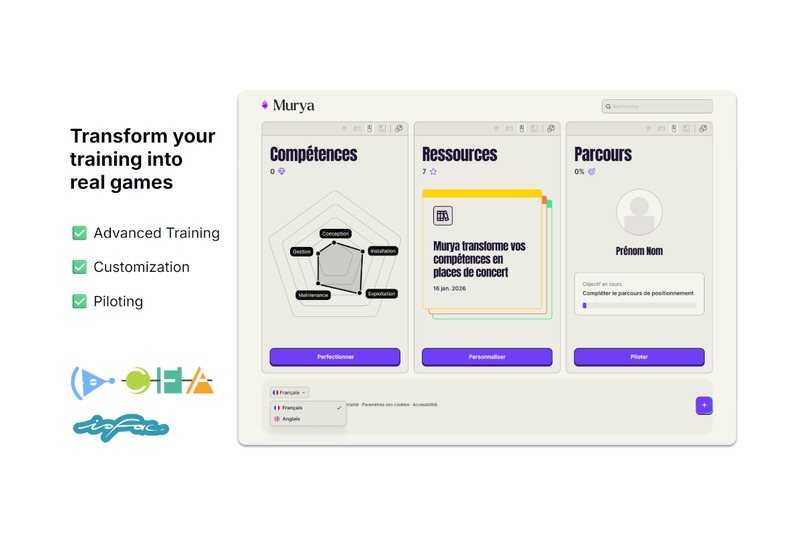
2/5 - Transform your training into real games
-
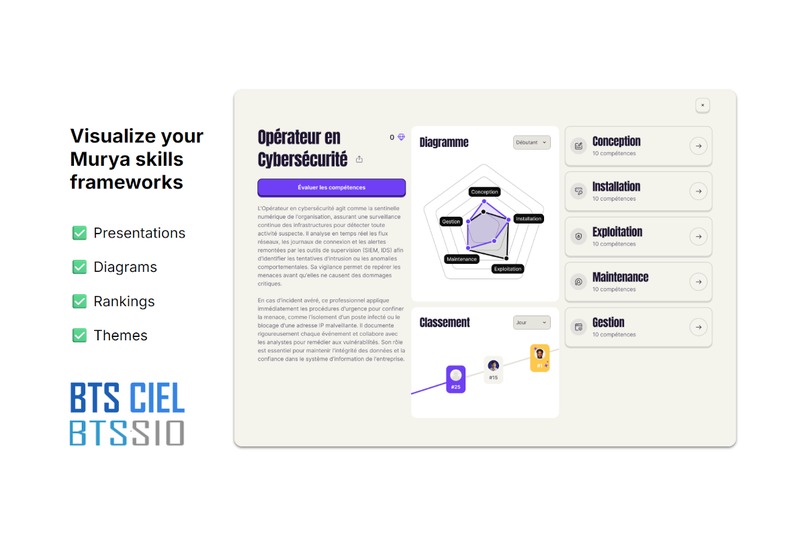
3/5 - Visualize your Murya skills frameworks
-
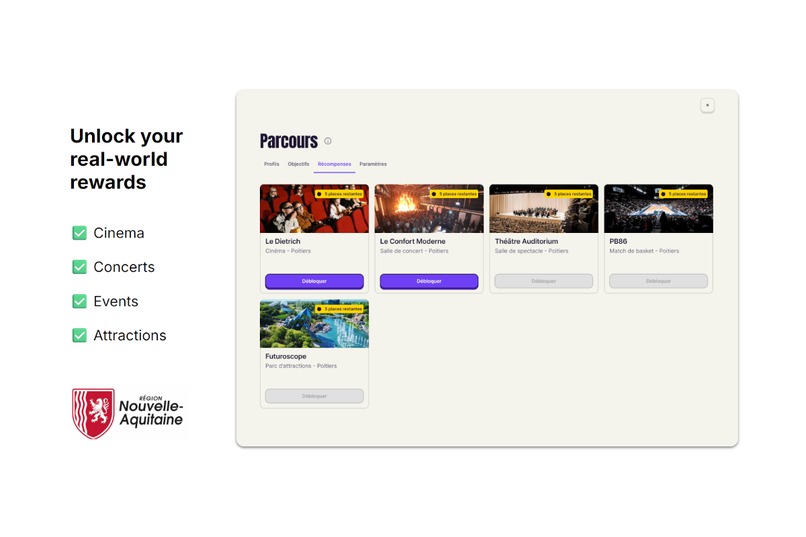
4/5 - Unlock your real-world rewards
-
5/5 - Murya Custom Intelligence


Inspiration
After 10 years of experience in the EdTech sector, our team realized a painful truth : students are often bored by generic training, and teachers struggle to maintain engagement. We wanted to break the cycle of passive learning. We asked ourselves: What if learning technical skills could directly unlock real-life fun? This inspired Murya—an app where mastering cybersecurity concepts isn't just about grades, but about earning a seat at the cinema or a concert.
What it does
Murya is a gamified educational companion that connects academic progress with cultural rewards. Gamified Skill Tracking : Students visualize their progress in real-time through dynamic radar charts. Daily Micro-Learning : The app pushes daily interaction through quizzes and challenges to keep students engaged. Smart Recommendations : Based on performance, Murya suggests specific resources—articles, podcasts, or videos—to fill skill gaps. Cultural Rewards : This is our unique twist. As students progress, they earn currency to unlock real tickets for local cultural venues.
How we built it
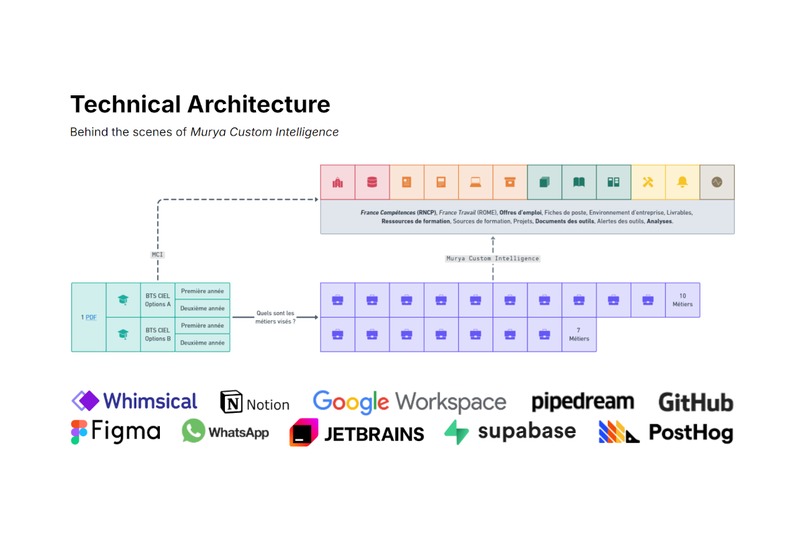
We built Murya using a modern, scalable stack designed for rapid iteration. Design : We used Whimsical and Figma to prototype a high-fidelity user experience focused on "Privacy by Design". Backend & Data : The app leverages Supabase for the database and Pipedream for workflow automation. The Intelligence : We developed Murya Custom Intelligence (MCI). This engine ingests massive institutional data and uses AI to structure it into digestable learning paths and quizzes tailored to specific degrees or jobs. Analytics : Integrated PostHog to track user retention and engagement loops.
Challenges
The biggest challenge was translating rigid government competency frameworks into fun, bite-sized mobile content. We had to ensure the "MCI" engine could accurately parse technical requirements (like cybersecurity protocols) and convert them into engaging quiz formats without losing educational value. Additionally, balancing the "gamification" economy so rewards feel earned but attainable was a complex design task.
Accomplishments
Local Cultural Integration : We are proud to have integrated real-world venues into a learning app. Data Sovereignty : Achieving a Certified 100% Hosted in France label with Google Cloud Platform to guarantee data privacy for students. The "Radar" UI : Successfully visualizing complex skill sets in a simple 5-branch diagram that makes "leveling up" in real life feel like a video game.
What we learned
We learned that motivation is extrinsic before it becomes intrinsic. By providing tangible rewards (concerts, movies), we can hook students into the learning process until they start enjoying the mastery of the subject itself. We also deepened our knowledge of integrating AI (via our MCI system) to automate the tedious work of curriculum mapping.
What's next for Murya
We are moving fast towards a real-world pilot: February 2026: Launching the beta test with students and apprentices in partner establishments. Expansion : We plan to expand the "MCI" to cover other trade sectors beyond IT and Cybersecurity. Metric Validation : We will be closely monitoring our 4 key KPIs: Activation (onboarding), Retention (daily quizzes), Reaction (resource usage), and Loyalty (reward redemption).
Built With
- figma
- flutter
- github
- google-gemini
- gsuite
- jetbrains
- node.js
- notion
- pipedream
- postgresql
- posthog
- prisma
- supabase
- typescript
- whimsical

Log in or sign up for Devpost to join the conversation.