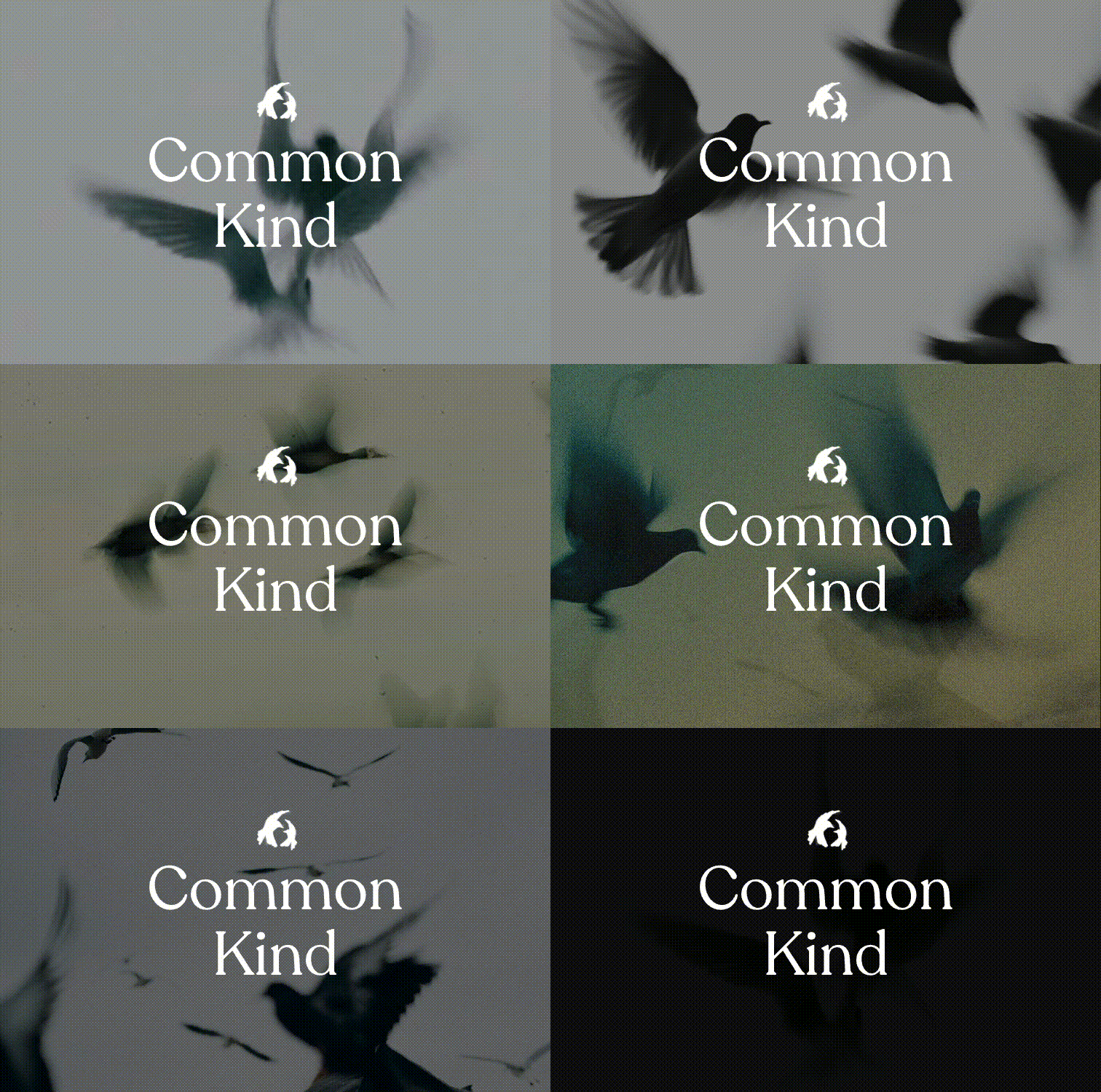
Despite our differences, our "common sense" shows that we want to connect and belong.
Every culture and individual has their own rhythm. It's the collection of unwritten rules and shared assumptions that they navigate by instinct. For the traveler, digital nomad, or international student, this common sense can often be invisible, leading to social dissonance and cultural confusion.
Inspiration
We were inspired by purer concepts of "common sense" rather than the way the term is often used today. For example, the Aristotelian concept of koinē aisthēsis defined common sense not as a set of facts but rather as a sensory judge that weaves data into a unified perception. In many East Asian cultures, common sense also involves nunchi (the art of reading the room) or kyuki o yomu (reading the air). These are somatic and intuitive skills that perceive the social space of a room.
Since these elements can be very different or even invisible to those from other cultures or upbringings, we wanted to build a tool that amplifies and attunes this sense-making ability for those navigating unfamiliar spaces.
What it does
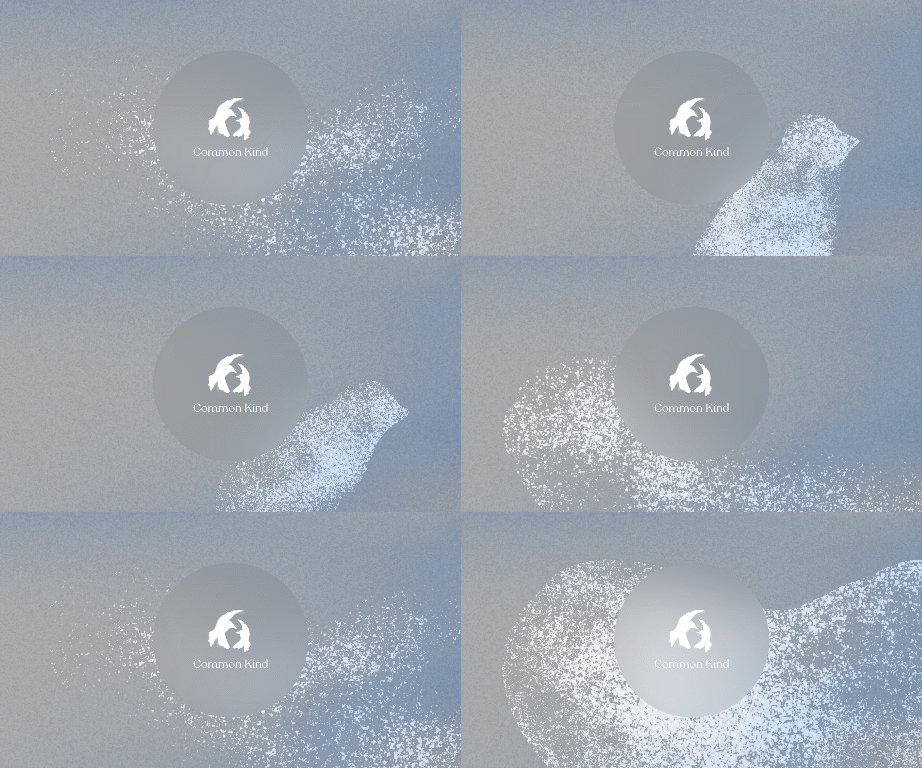
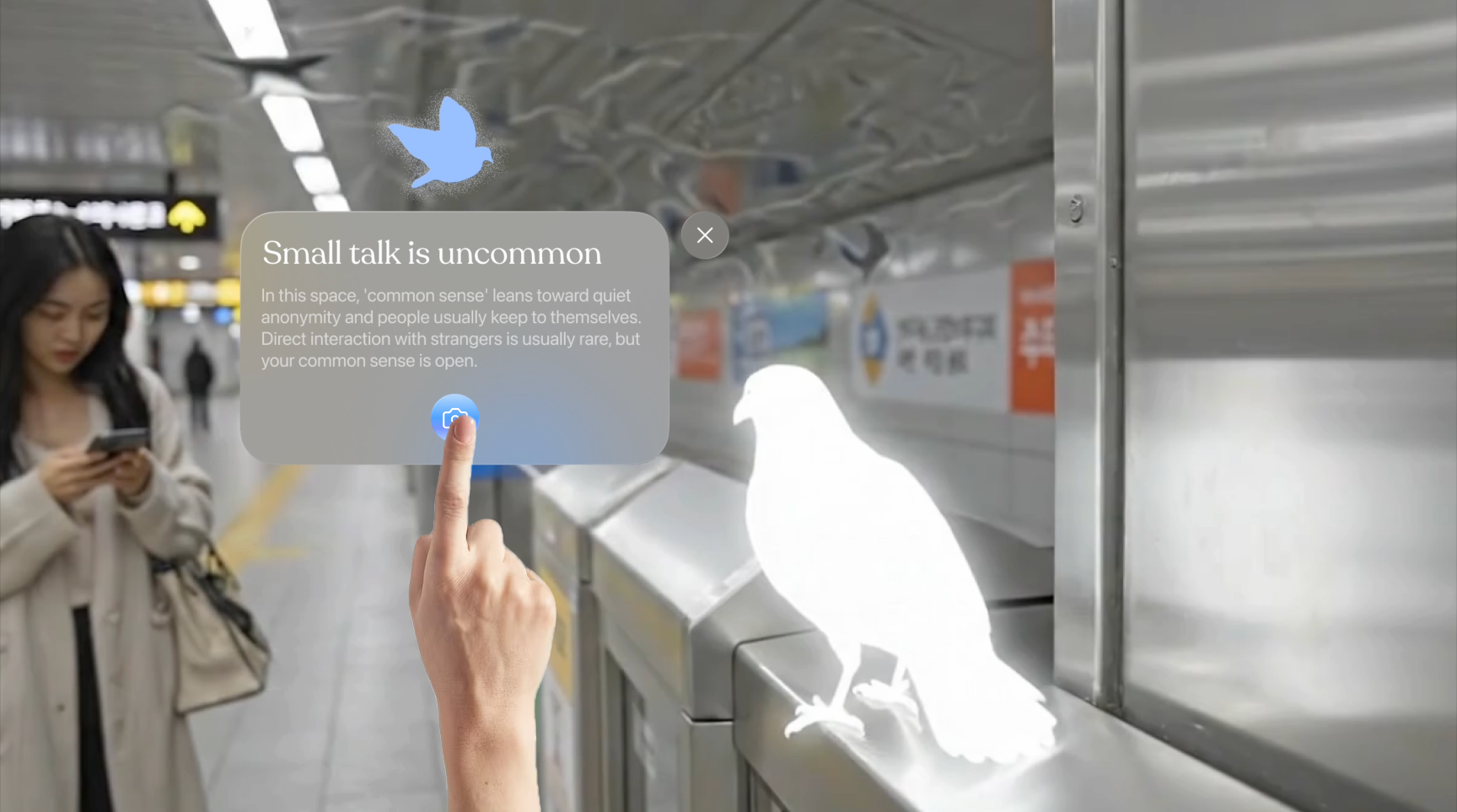
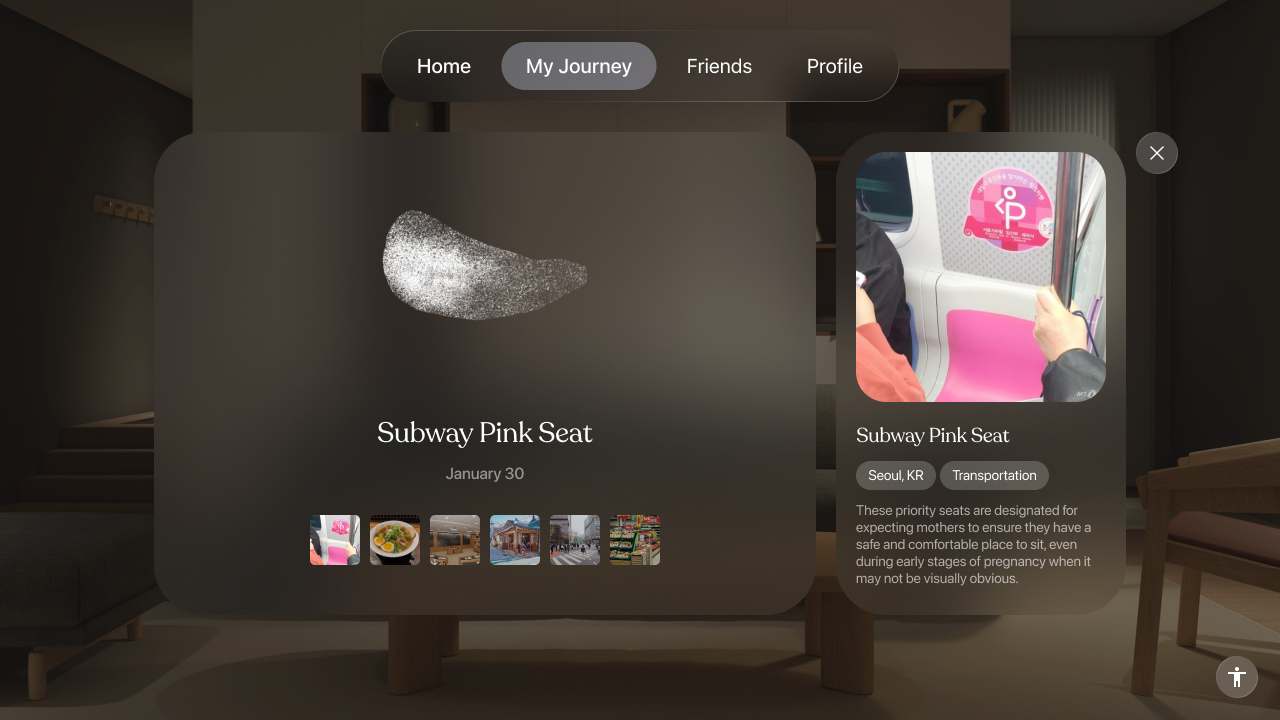
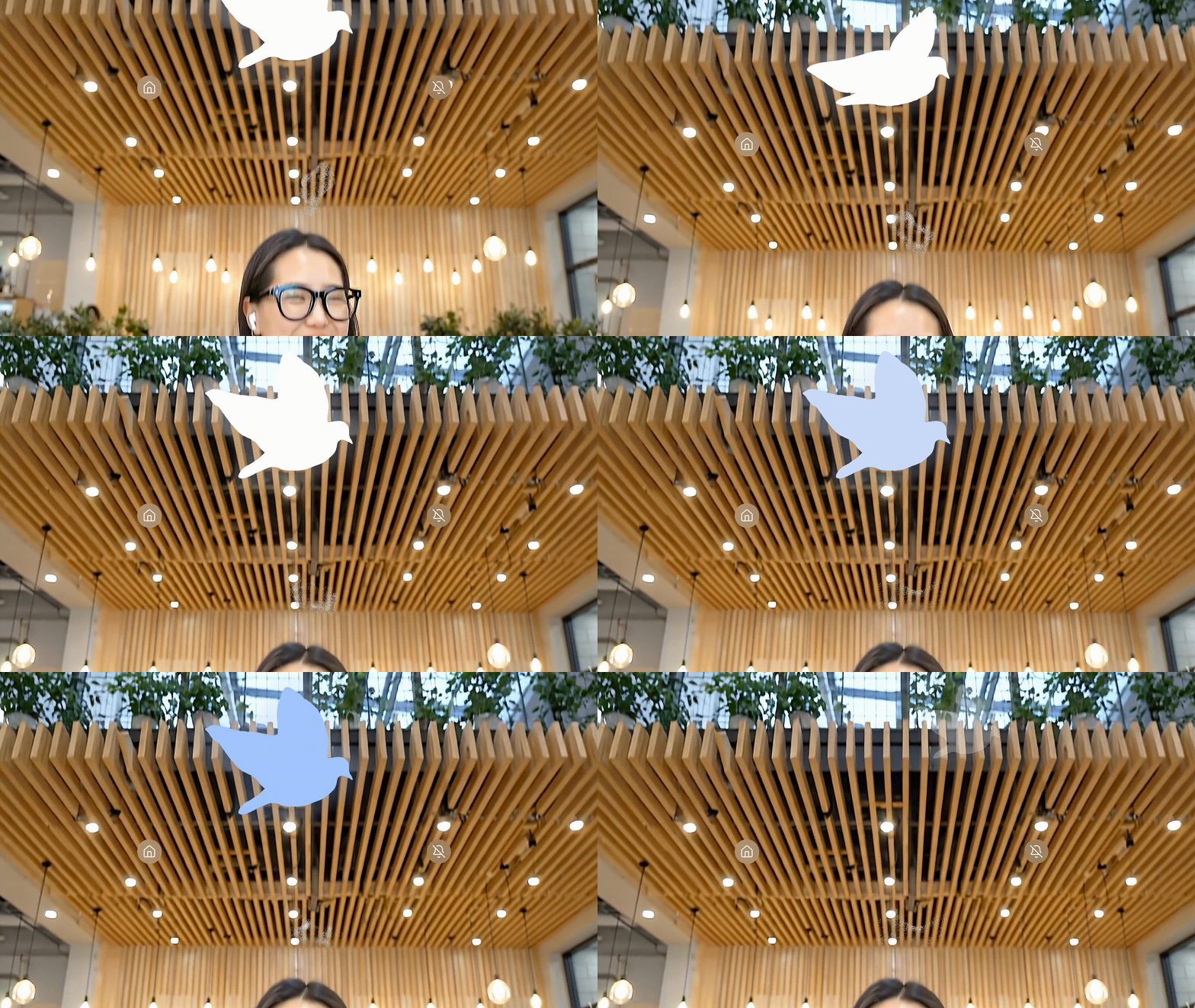
Common Kind is an AR platform that translates unspoken social norms into tangible signals. When users look up into the sky, it displays a visual pulse illustrating the user's rhythm as airbrushed, generative murmurations.
Why we cared
Many digital tools try to optimize behavior through notifications, metrics, or prescriptive advice. We wanted to explore a different approach-- so Common Kind is intentionally non-prescriptive.
Instead of telling users what to do, it provides sensory cues and information that helps them decide whether to harmonize with the surrounding rhythm or embrace their own personal resonance. Shifting attention toward the present moment and the shared atmosphere of a space, we encourage awareness, curiosity, and human conversation.
Mixing craft with technology
We primarily used Figma Design to build our design. Various illustrations were also hand-made using Procreate and Procreate Dreams. We also utilized Figma Make for screen and widget design, as well as a variety of other AI tooling, including Claude and Gemini for some image generation. Most of our prototype's videos were generated with a mix of our real-life photography and Google Veo/Flow assistance.
Designing for AR environments
We chose AR design to provide companionship support as well as to bring more of an unobstrusive experience to users. However, designing the AR product in a 2D screen pushed us to think creatively in how to prototype and design the experience and navigation. The current 2D AI layout tools available did not consider the spatial experience as fluently as we would have liked, leading us to generate different spatial movements, layouts, and on-the-go situations and think about hand-made layout design in a 3D space.
What we learned
This project taught us that belonging is a sensory and somatic experience, not just purely mental or physical. We realized that cultural fluency isn't just about memorizing rules but also about sensing the knowledge of a space. We learned how to balance craft with generation for motion design-- specifically, our murmuration metaphor of bird flocks-- to represent the fluid, non-binary nature of social spaces. Lastly, we learned that the most effective wellness tools are those that provide agency, allowing the user to remain the protagonist of their own story.


Log in or sign up for Devpost to join the conversation.