-
-
-
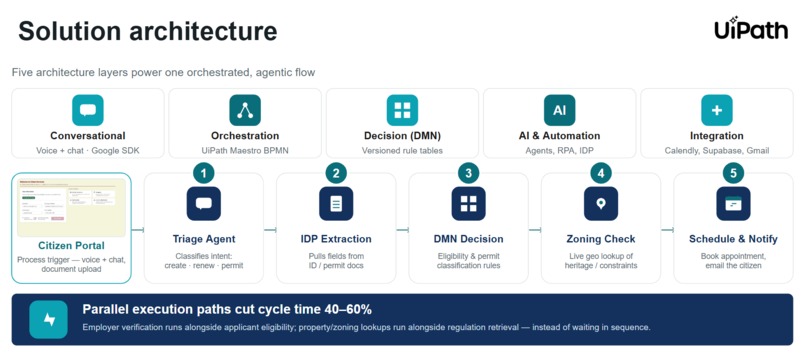
Process Architecture
-
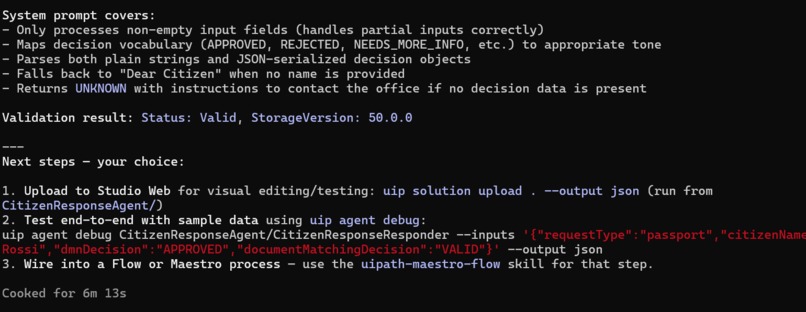
Claude Coding Agent
-
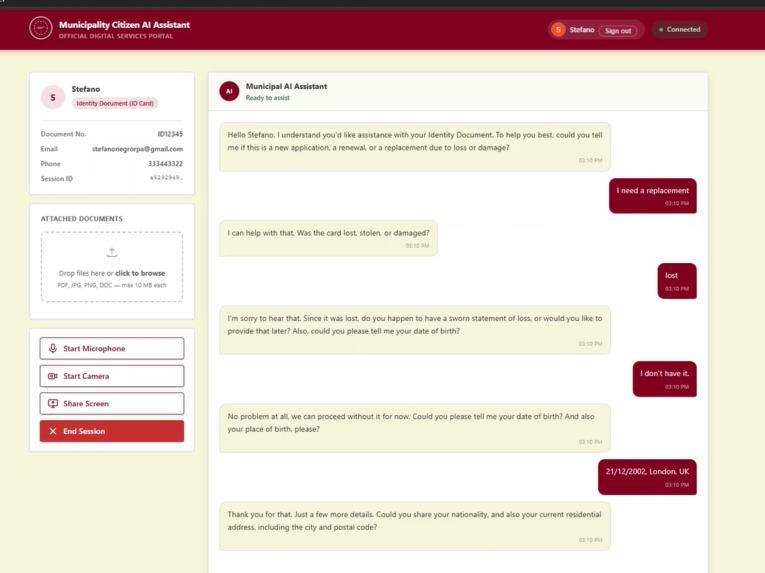
Chatbot Assistant with vocal responses
-
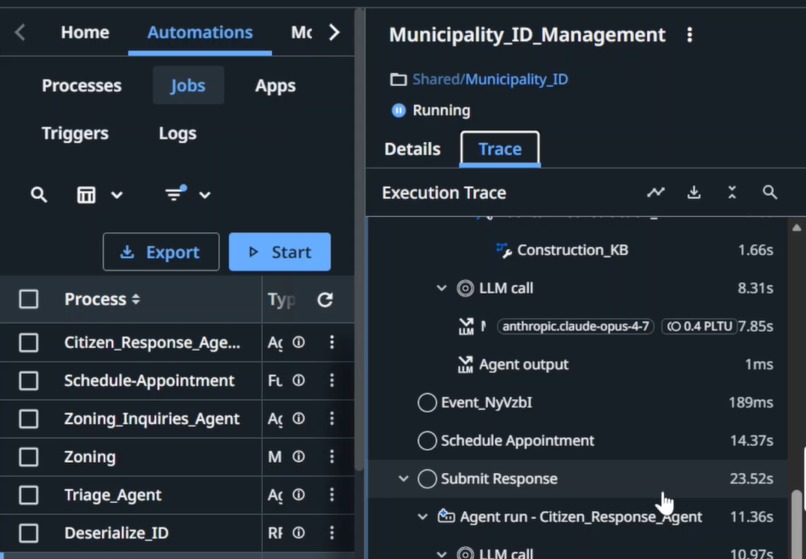
Backend Maestro Process
-
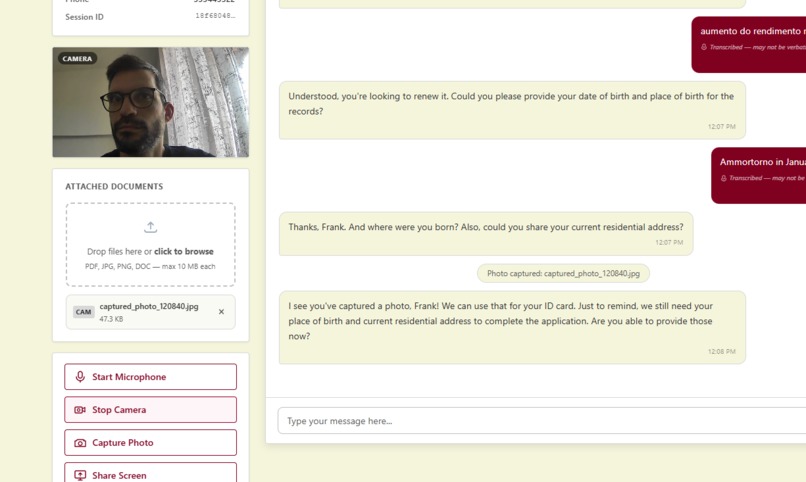
Chatbot Assistant with Video detection
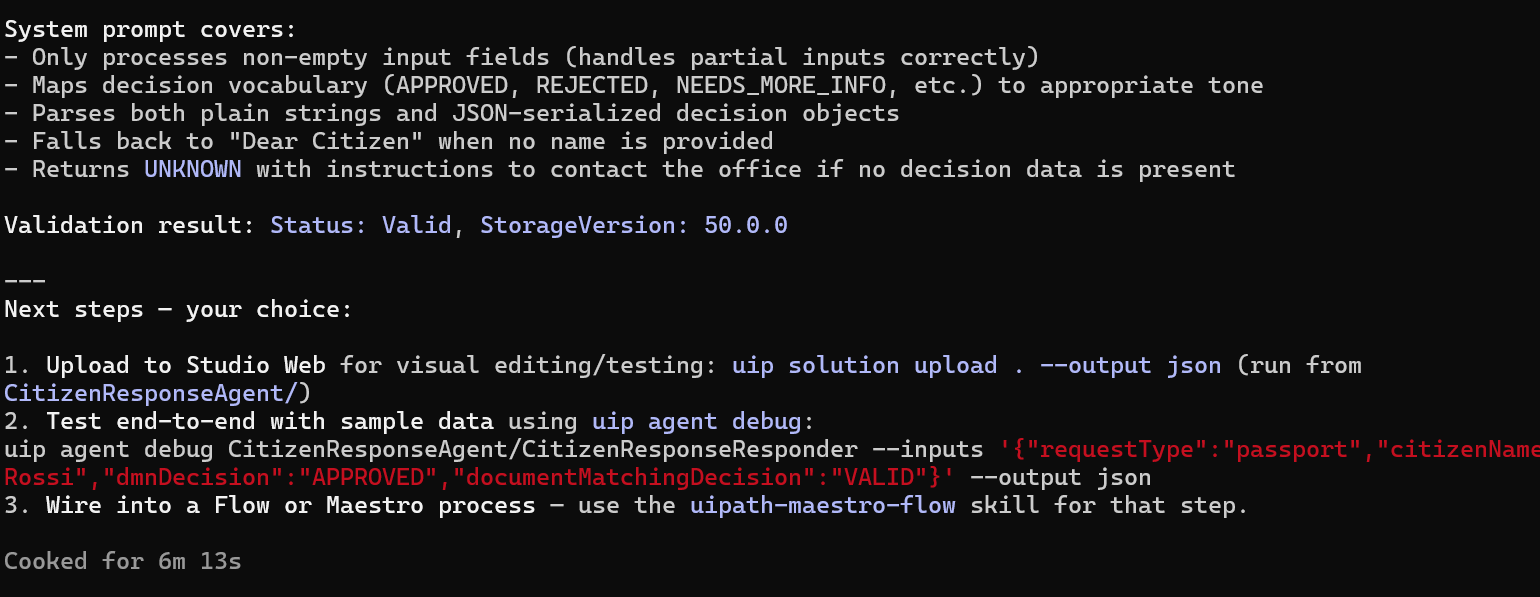
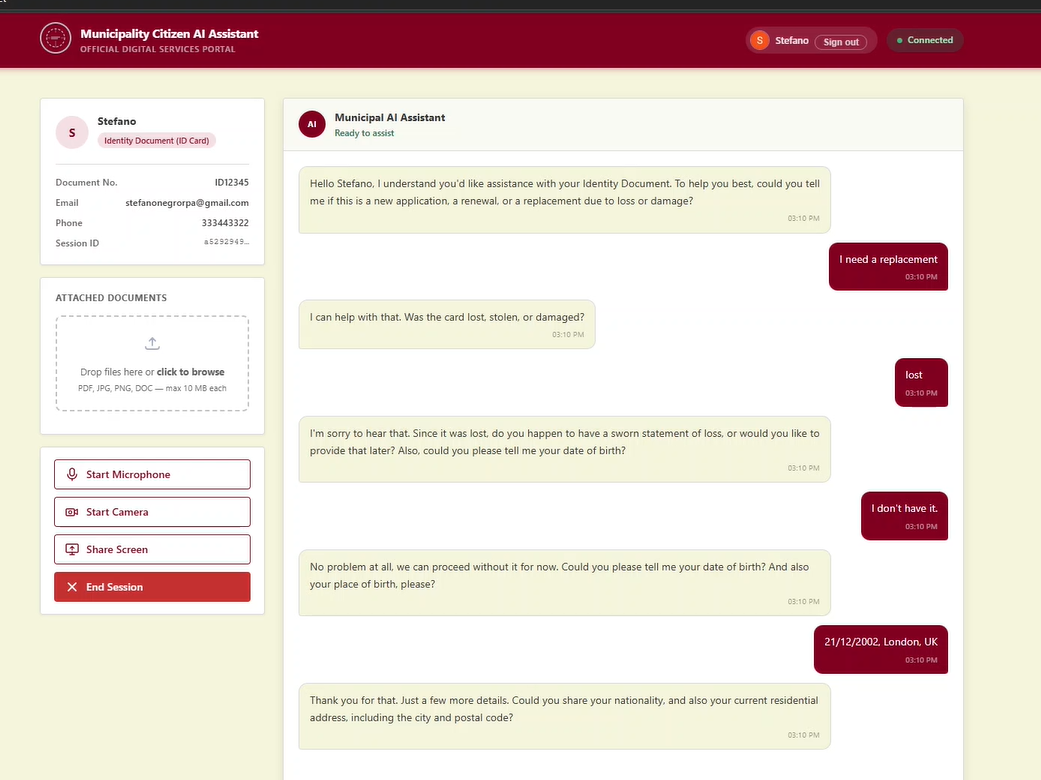
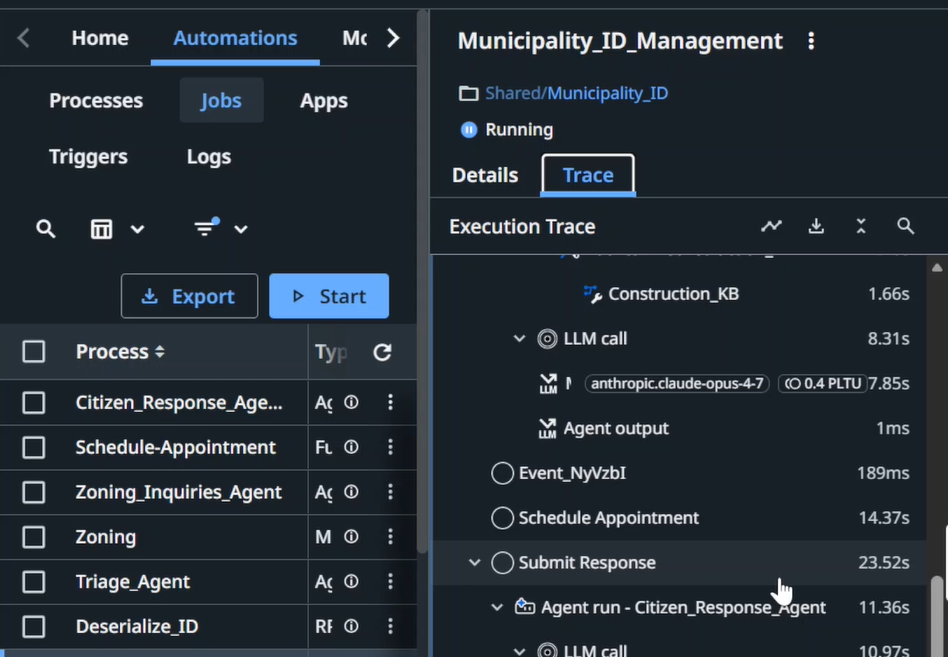
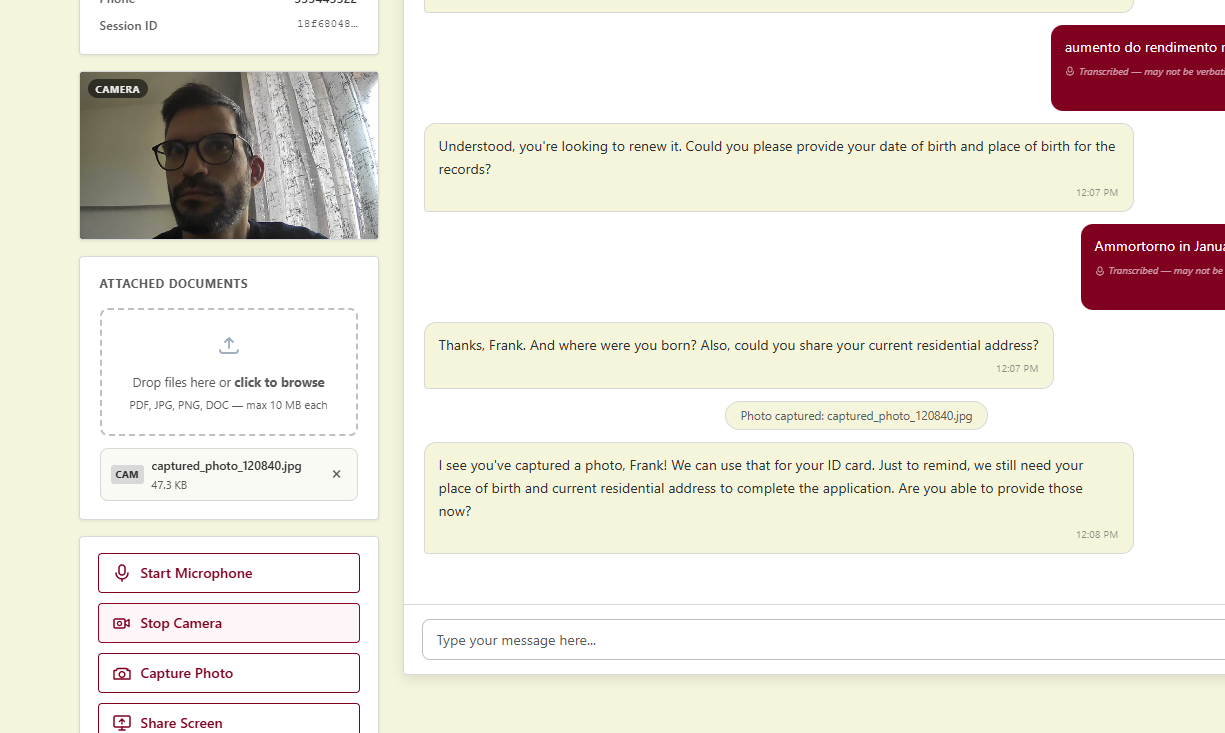
Demo Video: https://vimeo.com/1205498143
Inspiration
Municipal governments around the world share a common challenge: delivering essential citizen services at scale while operating under resource constraints, regulatory complexity, and increasing public expectations for digital-first experiences.
Citizens applying for many different request routinely encounter fragmented processes, unclear documentation requirements, and extended waiting periods with no visibility into application status. A single permit application may require interactions with multiple departments, manual cross-referencing of regulatory databases, and repeated in-person visits, increasing the delay and friction.
On the administrative side, municipal staff spend the majority of their working hours on repetitive intake tasks, manual data entry, and fielding procedural inquiries, causing often long and unpredictable resolution times.
In the Era of AI and Agentic capabilites, we asked ourselves: What if a citizen could interact directly and anityime with intelligent system, capable of handling specific inquiries and assist the citizen on the whole request, from gathering data to booking an appointment?
This question became the foundation of the Municipality AI Assistant.
What It Does
The Municipality AI Assistant is an end-to-end intelligent automation platform that transforms citizen service delivery across three high-volume domains:
Identity Document Services (national ID and passport) covering new applications, renewals, and stolen/lost documents with automated eligibility determination and appointment scheduling.
Work Permit Processing managing the full lifecycle from applicant intake and employer verification through eligibility assessment.
Construction Permit Management handling permit classification (notification, standard review, full committee review), zoning and building code compliance checks, and a pre-application feasibility assessment that gives citizens.
The system serves as a 24/7 conversational interface that citizens interact with via web chat, with video/audio capabilities. The agent will be able to automatically detect the language and adapt, retrieve and extract data from documents, gather screenshot or snapshots. Behind the conversation, a sophisticated orchestration layer coordinates AI agents, RPA bots, decision engines, document understanding models into seamless end-to-end processes.
How We Built It
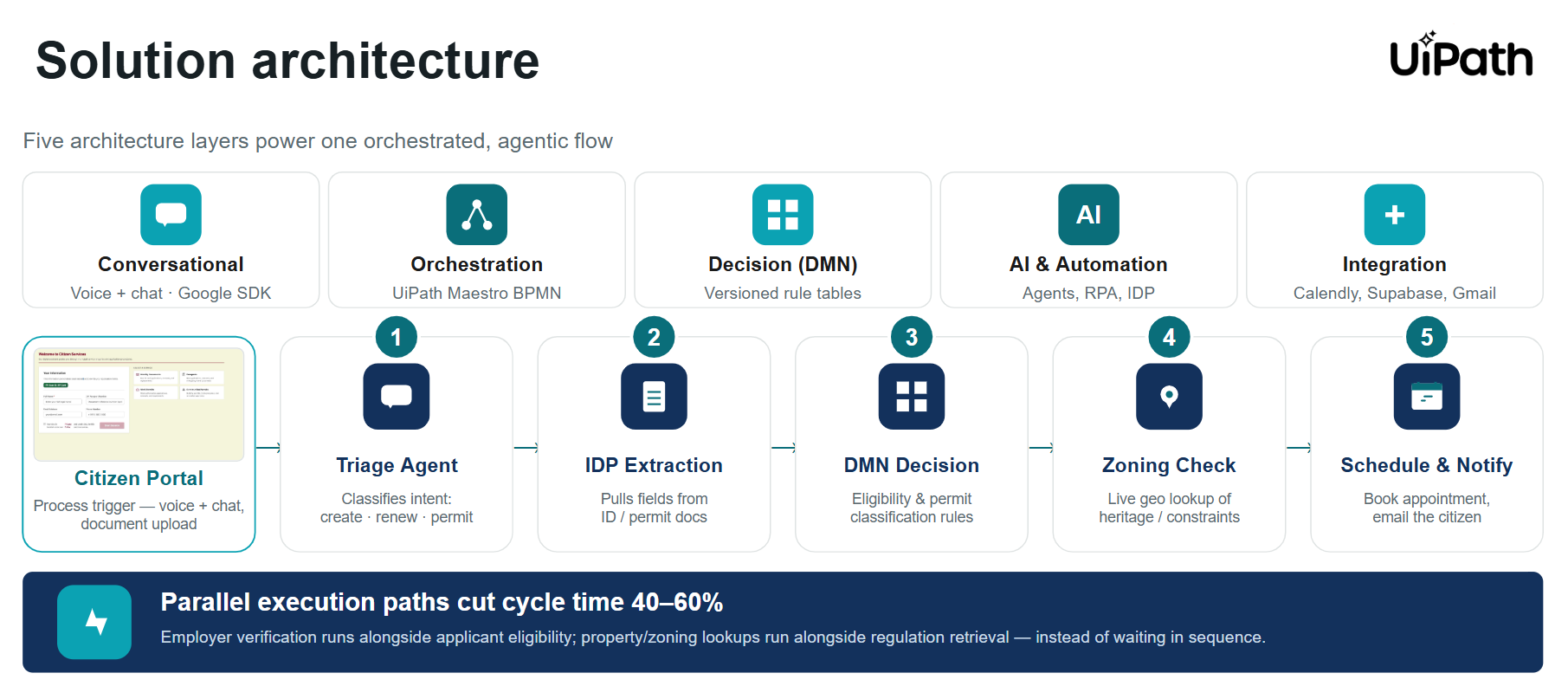
The architecture follows a modular, layered design that separates concerns between conversational AI, process orchestration, decision logic, and system integration.
Orchestration Layer
UiPath Maestro, which orchestrates each service domain as a set of BPMN process models. Each domain (ID/passport, work permits, construction permits) has its own process definition with clearly defined states, transitions, parallel execution paths, and exception handlers. Maestro manages long-running cases that span days to months, maintaining persistent case state and ensuring process continuity.
Decision Layer
All regulatory logic is externalized into DMN (Decision Model and Notation) decision tables. We designed two primary decision tables for the ID/passport domain alone.
This approach ensures that when regulations change, updates are confined to the decision tables while the process models remain untouched.
AI and Automation Layer
AI Agents built in UiPath Agent Builder handle conversational interactions, intent classification, entity extraction, and response generation. The agents leverage large language models through UiPath's AI Trust Layer.
RPA Bots (unattended robots) performing data retrieval, form pre-filling, and application submission.
Intelligent Document Processing (IDP) models trained on municipal document formats handle document classification, data extraction and verification.
Integration Layer
External API integrations extend the system's capabilities:
Calendly API for automated appointment scheduling with location preference handling (in-person and virtual).
Supabase API for keeping track of different users' session and ensure data continuity.
Notification services for multi-channel citizen communication (email notifications). \end{itemize}
Challenges We Ran Into
Country-agnostic design under country-specific regulations. Every municipality operates under different laws, form templates, and inter-agency structures. Abstracting this into a configurable framework required extensive regulatory analysis and careful separation of concerns between what the process does and what the rules say.
JavaScript runtime limitations in UiPath. UiPath's coded automation JavaScript engine is a sandboxed .NET-hosted runtime with TypeScript-strict type inference. It lacks standard web APIs and rejects dynamic property assignment on object literals. This required restructuring API integration logic to use UiPath's native HTTP Request activities for network calls and confining JavaScript to data transformation, or migrating entirely to Python coded automations using only standard library modules.
DMN Preview status. Usage of DMN within Maestro still lack accuracy and does not always execute. It was necessary to execute them through a dedicated RPA process in order to handle the correct responses.
Accomplishments That We're Proud Of
True country-agnostic architecture. The system can be deployed to any municipality worldwide by configuring DMN decision tables and connecting to local government systems, without modifying a single BPMN process model. The separation between process logic and regulatory logic is complete.
Pre-application feasibility assessment. Before even calling the maestro process, the Chabot uses dedicated API calls to the IDP process in order to expedite the data extraction and asking the user for confirmation regarding the extracted data, and for further missing data.
Comprehensive DMN decision framework. The ID/passport domain alone contains 16 production-ready decision rules across four interconnected tables, covering every combination of document type, age bracket, residency status, urgency level, and issuance history. This level of regulatory encoding provides full transparency.
End-to-end process coverage. The system handles the complete lifecycle from initial citizen contact through document validation, eligibility assessment, form submission, appointment booking, status tracking, and proactive notification.
What We Learned
The value is in orchestration, not conversation. While the conversational AI interface is what citizens see, the true complexity and value lies in the process orchestration layer, managing long-running cases, coordinating parallel verification paths, enforcing SLA compliance, and handling the exception paths that represent the majority of real-world scenarios.
Document validation is the highest-leverage automation point. Incomplete or incorrect document submissions are the single largest source of processing delays and repeat citizen visits in municipal services. AI-powered document validation at the point of upload eliminates this bottleneck entirely.
Parallel execution paths dramatically reduce cycle time. Running employer verification alongside applicant eligibility checks (work permits) or property lookups alongside regulation retrieval (construction permits) consistently reduced intake processing time by 40--60% compared to sequential execution.
What's Next for Municipality AI Assistant
The current implementation establishes the foundational architecture and demonstrates full-domain coverage across three permit categories. The roadmap focuses on expanding capability, reach, and intelligence:
Expanded domain coverage. Extending the architecture to additional municipal services: business licensing, vehicle registration, vital records (birth, marriage, death certificates), and tax assessment appeals, each following the established pattern of BPMN process models with externalized DMN regulatory logic.
Multi-municipality deployment. Piloting the system across municipalities in different countries to validate the country-agnostic architecture in production. Each deployment requires only jurisdiction-specific DMN tables and RPA bot configurations for local government systems.
Citizen identity wallet integration. Supporting decentralized digital identity standards (eIDAS 2.0, mobile driver's licenses) to enable fully digital identity verification without document uploads, further reducing friction and processing time.
Open-source DMN template library. Publishing a repository of country-specific DMN decision tables contributed by municipalities and legal experts, creating a shared knowledge base that accelerates deployment for new jurisdictions and reduces the regulatory analysis effort for each implementation.


Log in or sign up for Devpost to join the conversation.