-
-
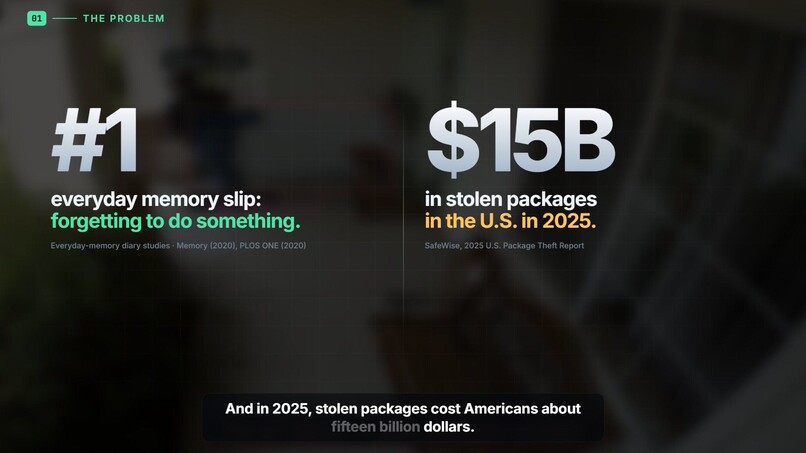
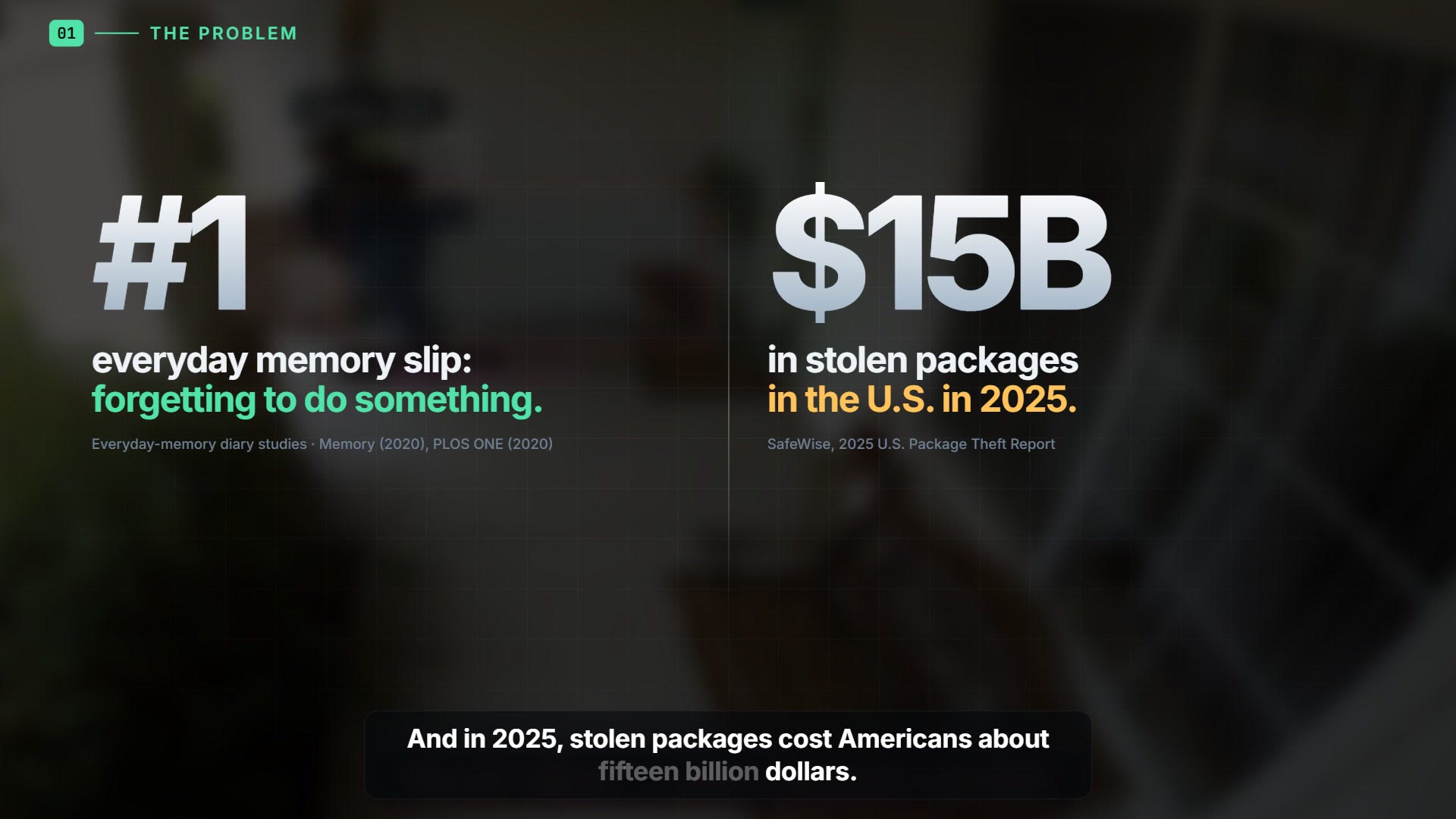
The problem: forgetting to do something is the #1 everyday memory slip.
-
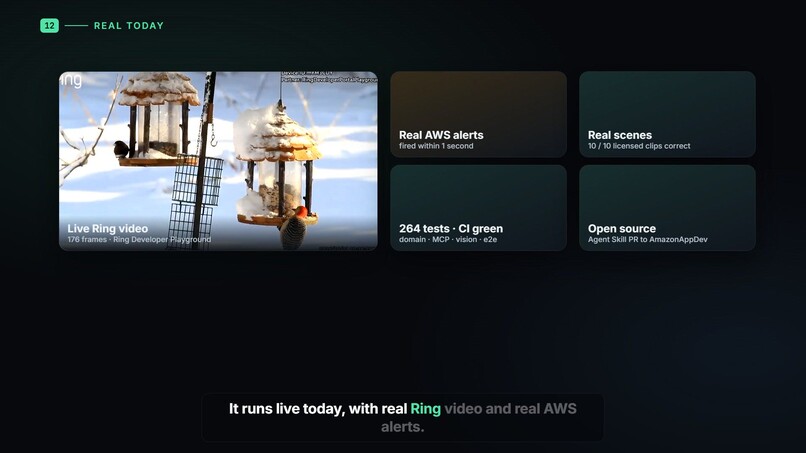
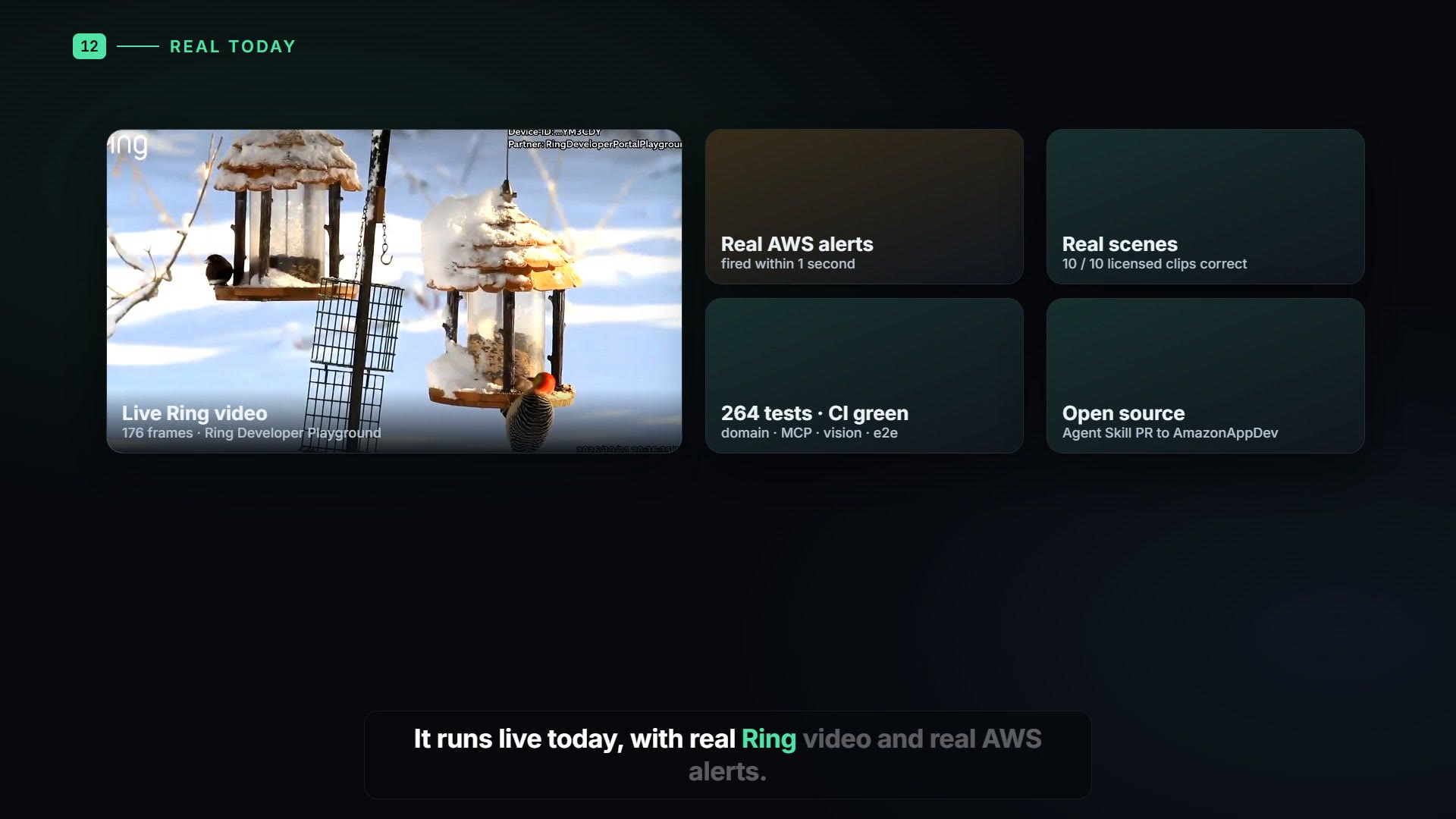
Real today: live Ring video from the Ring Developer Playground, real AWS alerts, open-source Agent Skill.
-
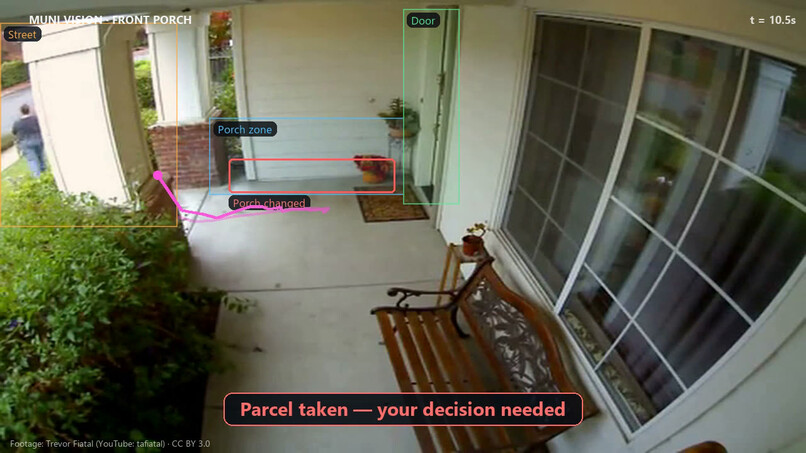
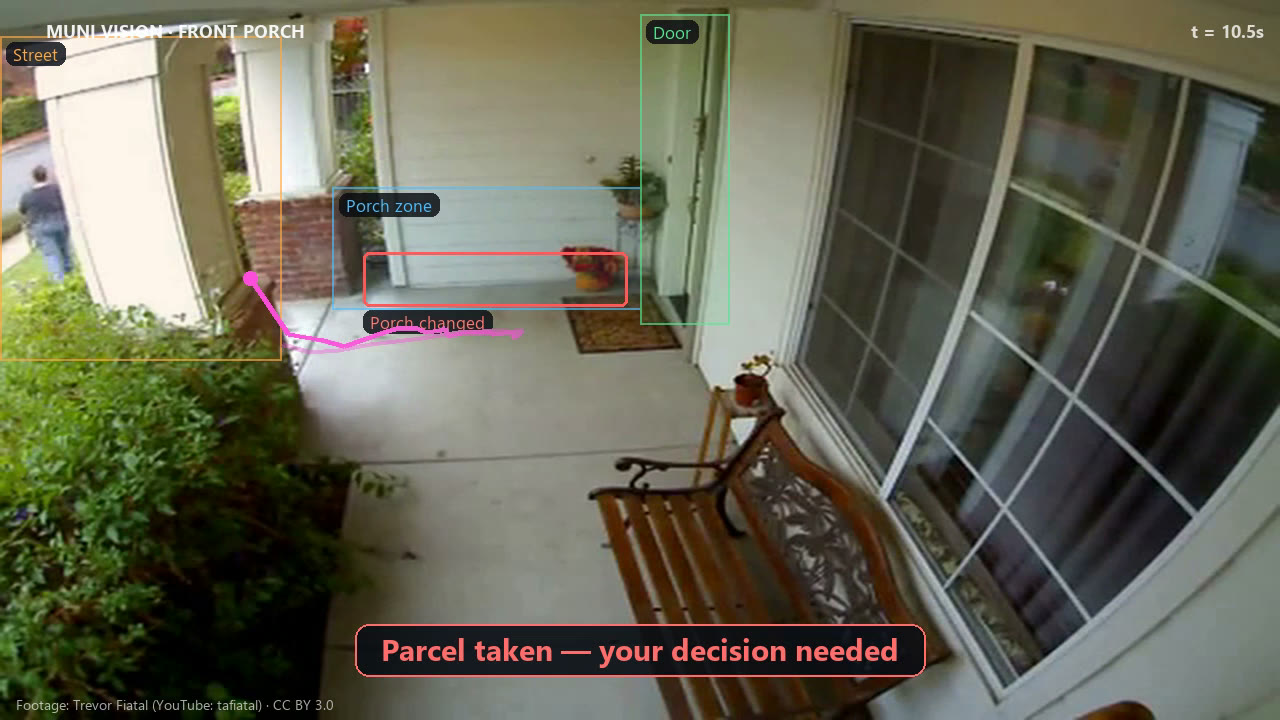
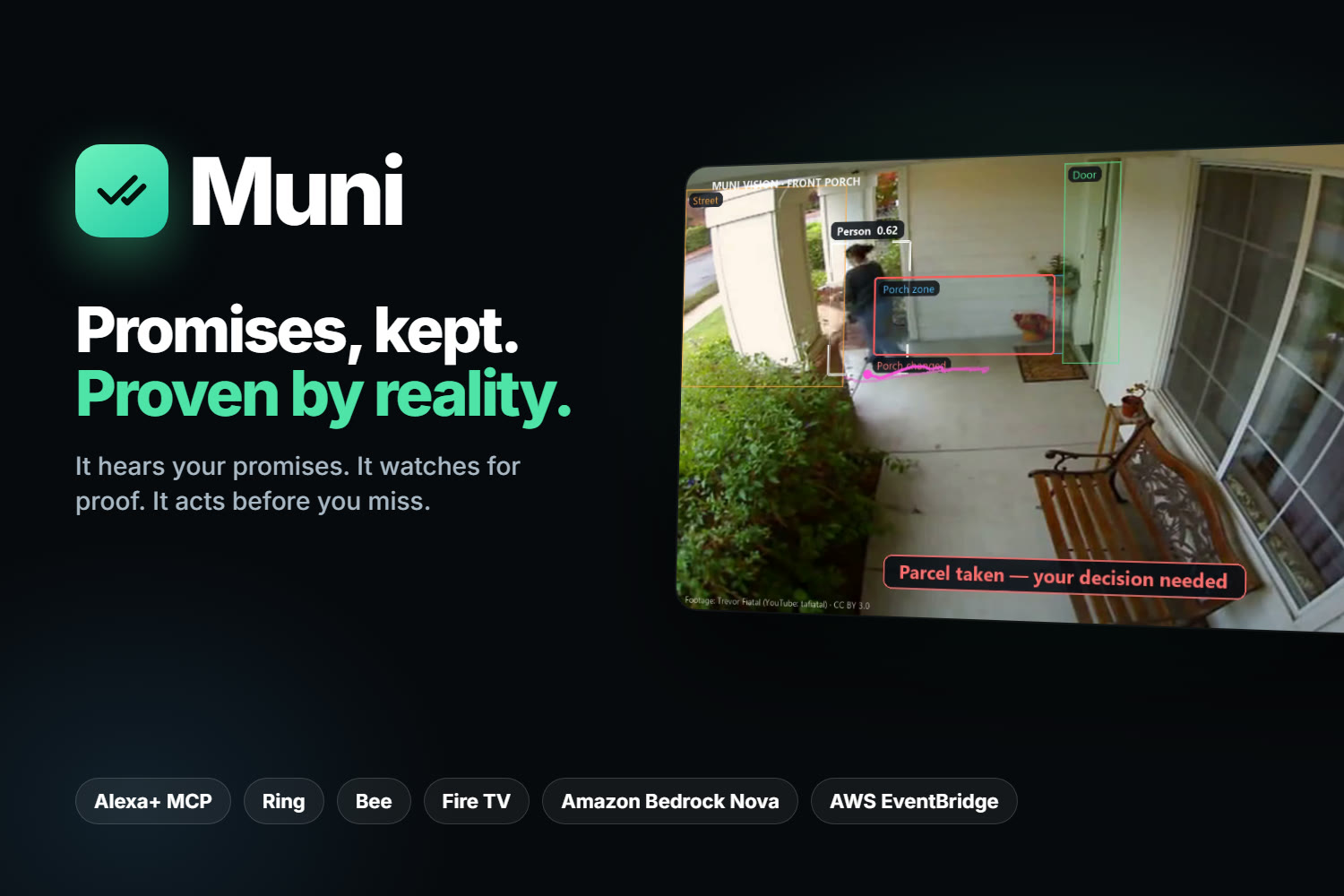
A parcel leaves the porch: Muni tracks it, saves evidence and asks you. Nothing is reported without your OK.
-
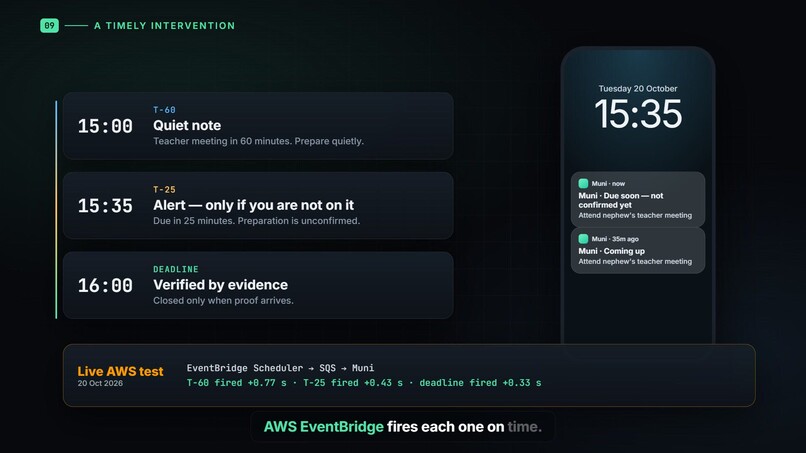
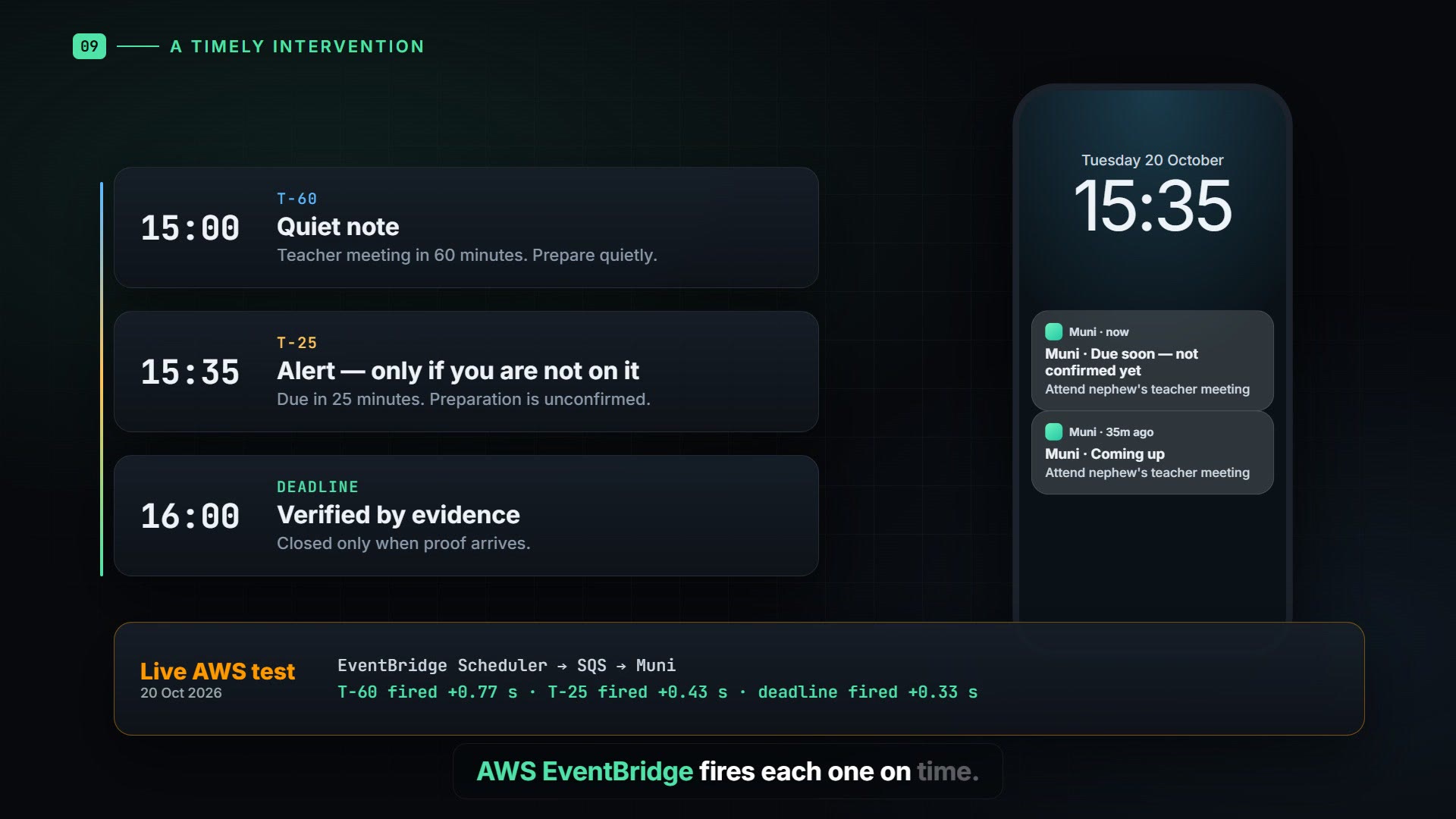
Real AWS EventBridge schedules: quiet note at T-60, alert at T-25 only if you are not on it.
-
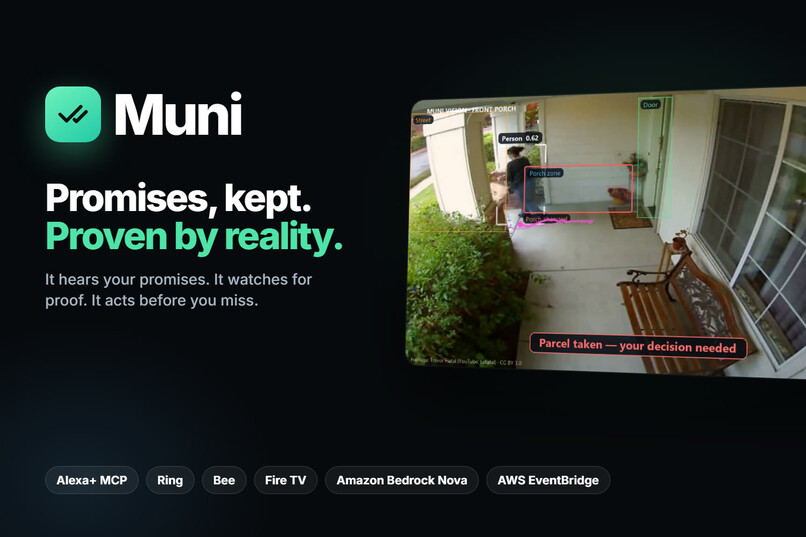
Muni: promises, kept. Proven by reality.
-
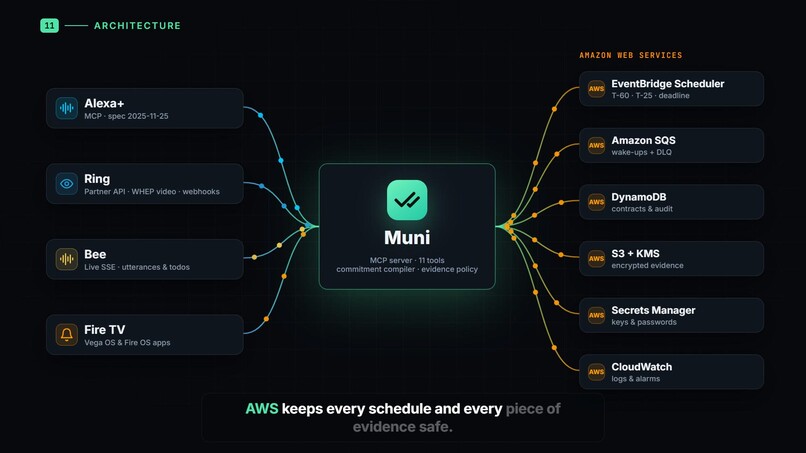
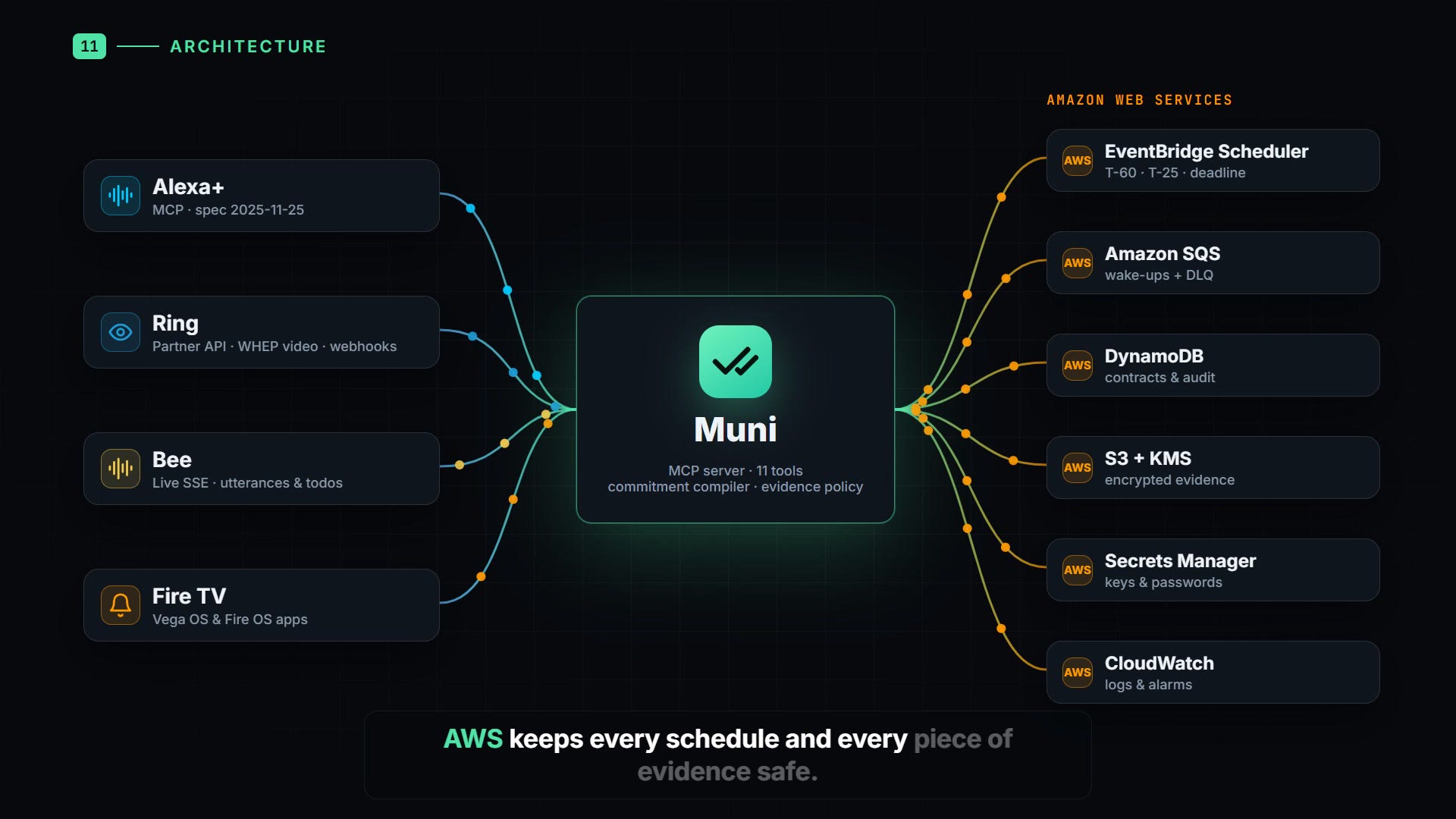
Architecture: Alexa+, Ring, Bee and Fire TV into Muni's MCP server; AWS keeps schedules and evidence.
-
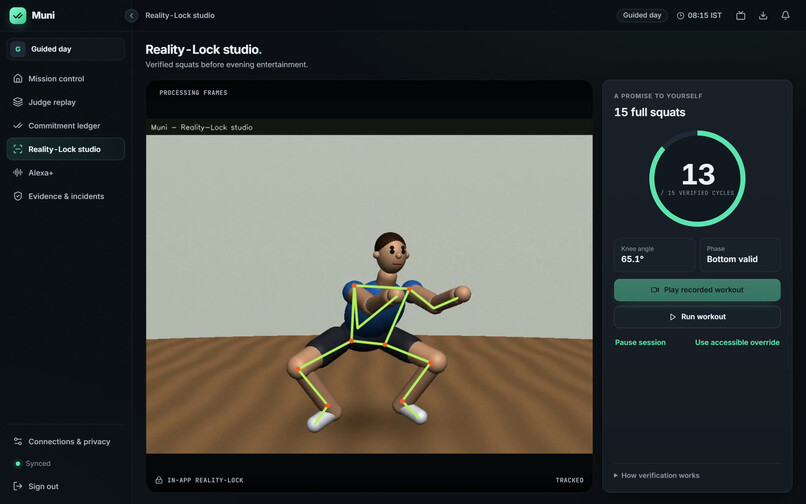
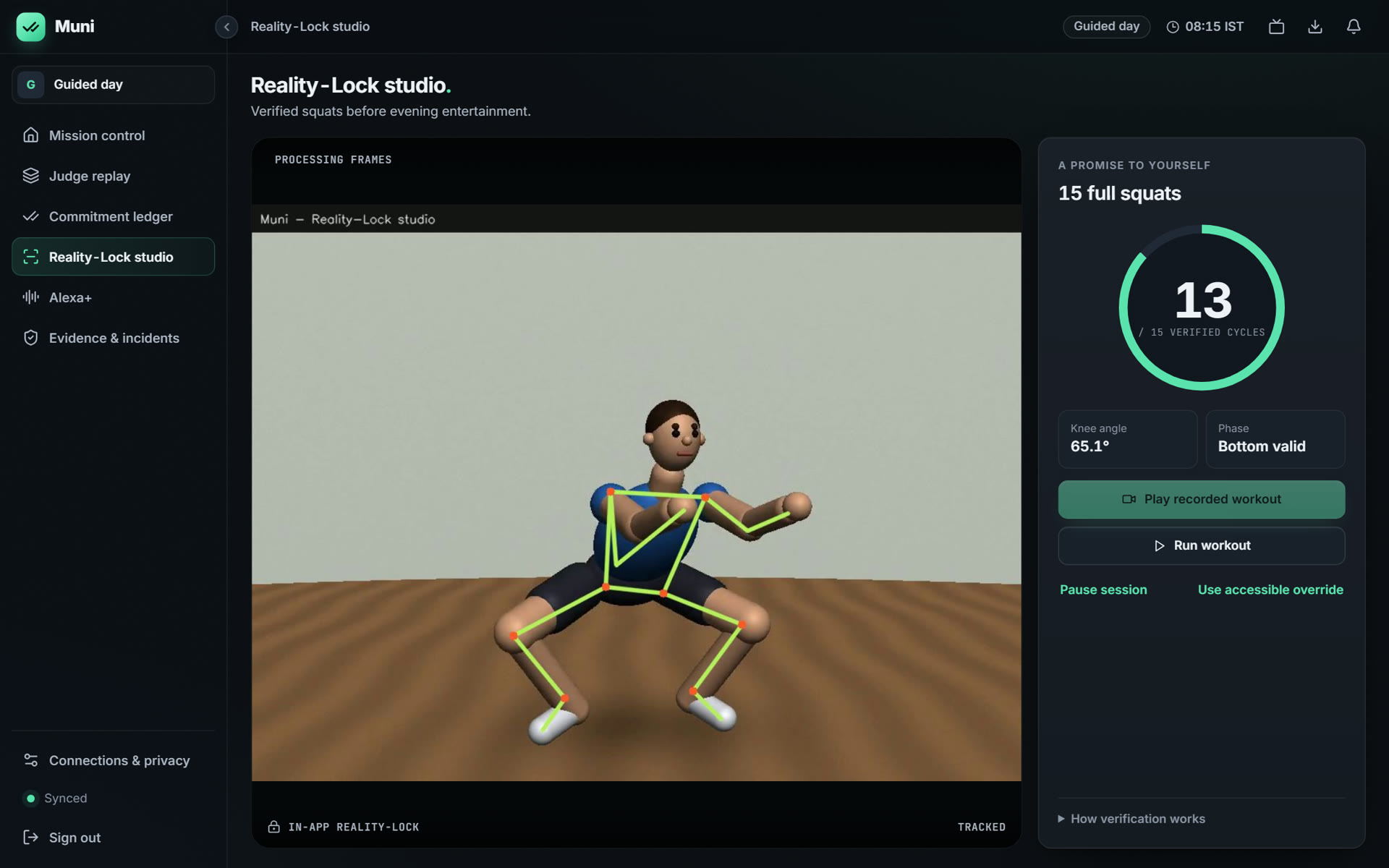
Fire TV Reality-Lock: MediaPipe counts each full squat. 15 unlocks your evening.
-
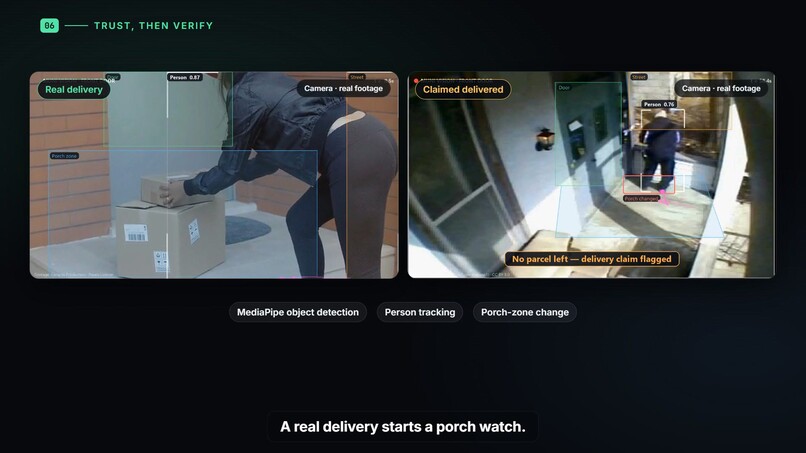
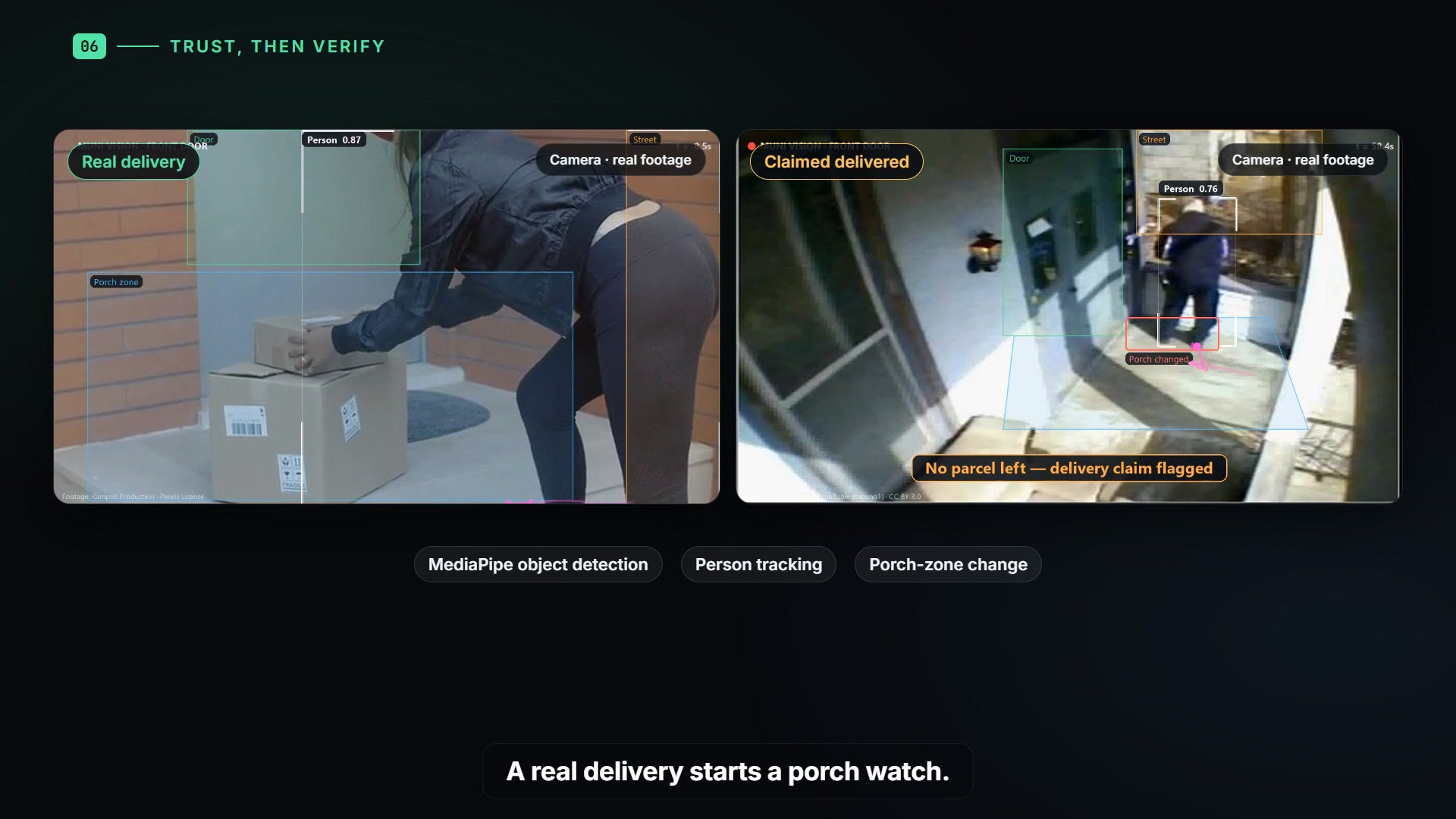
Trust, then verify: a real delivery vs. a courier's false "delivered" claim, on real footage.
-
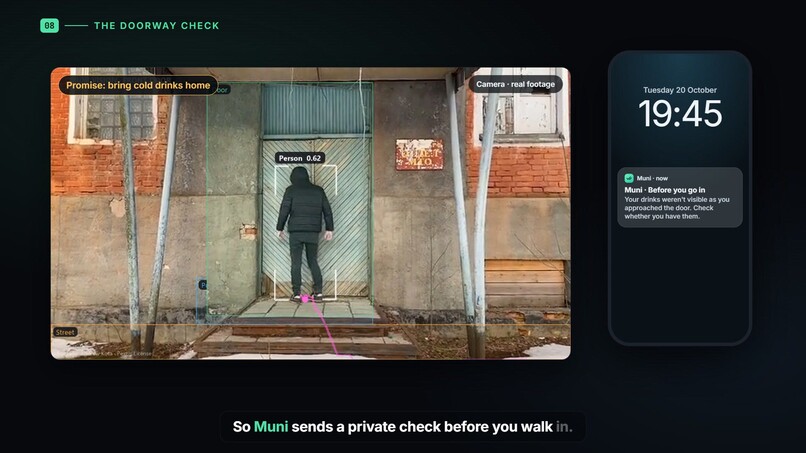
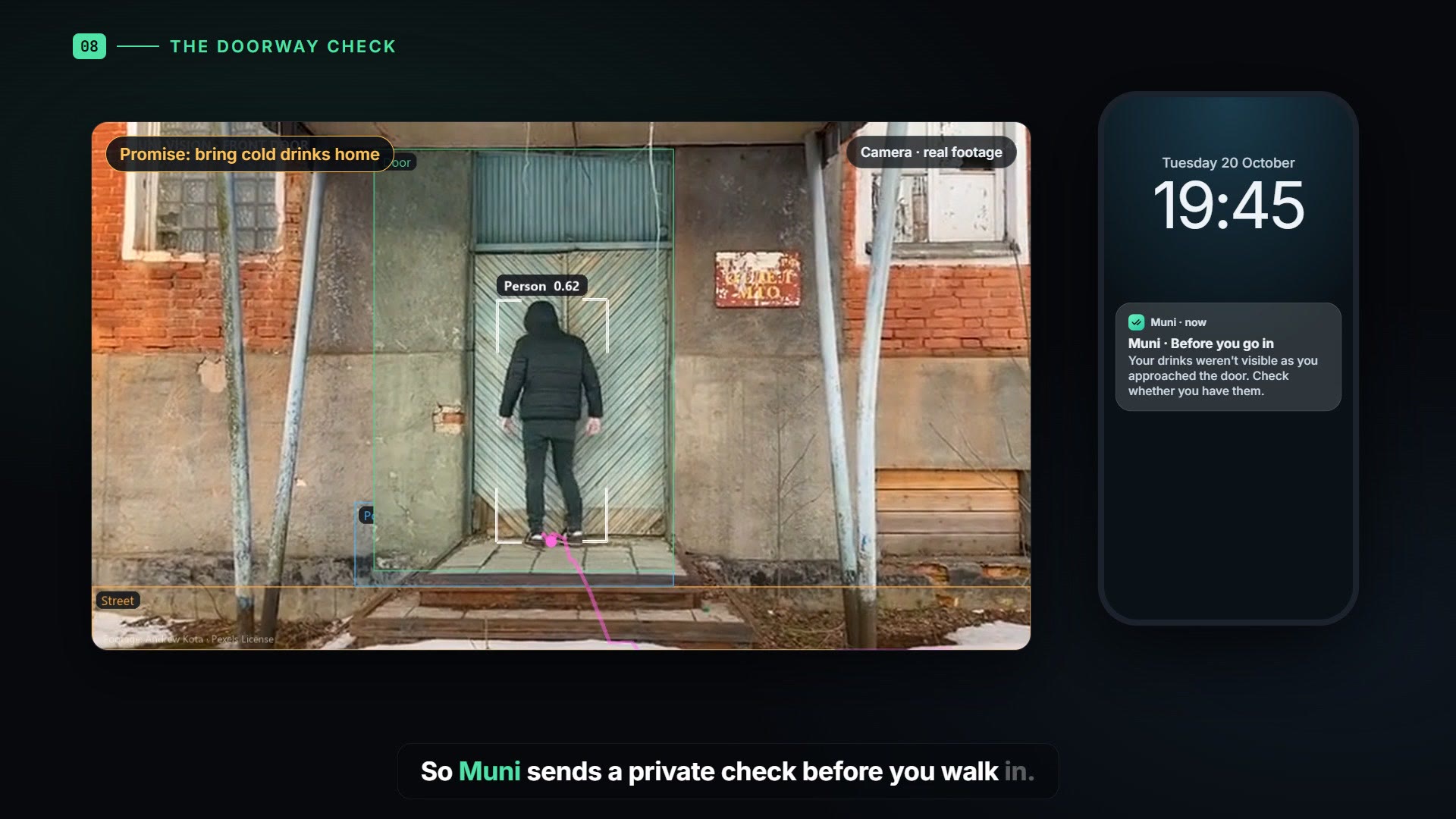
The doorway check: drinks not seen, so you get a private reminder. No blame.
-
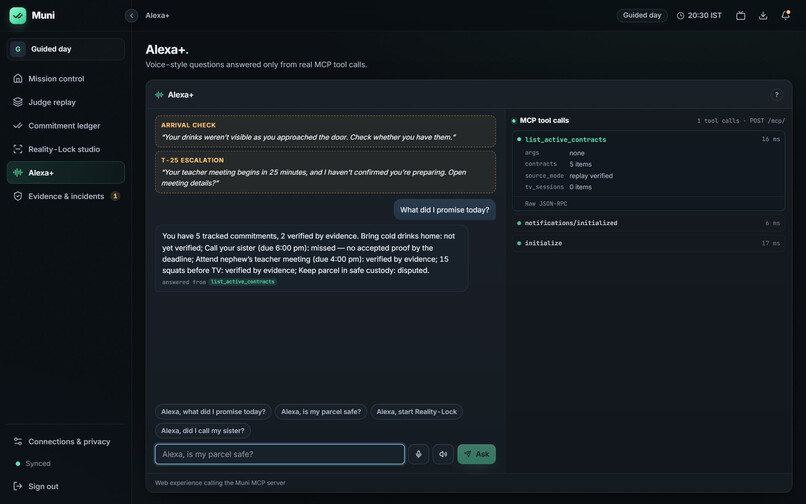
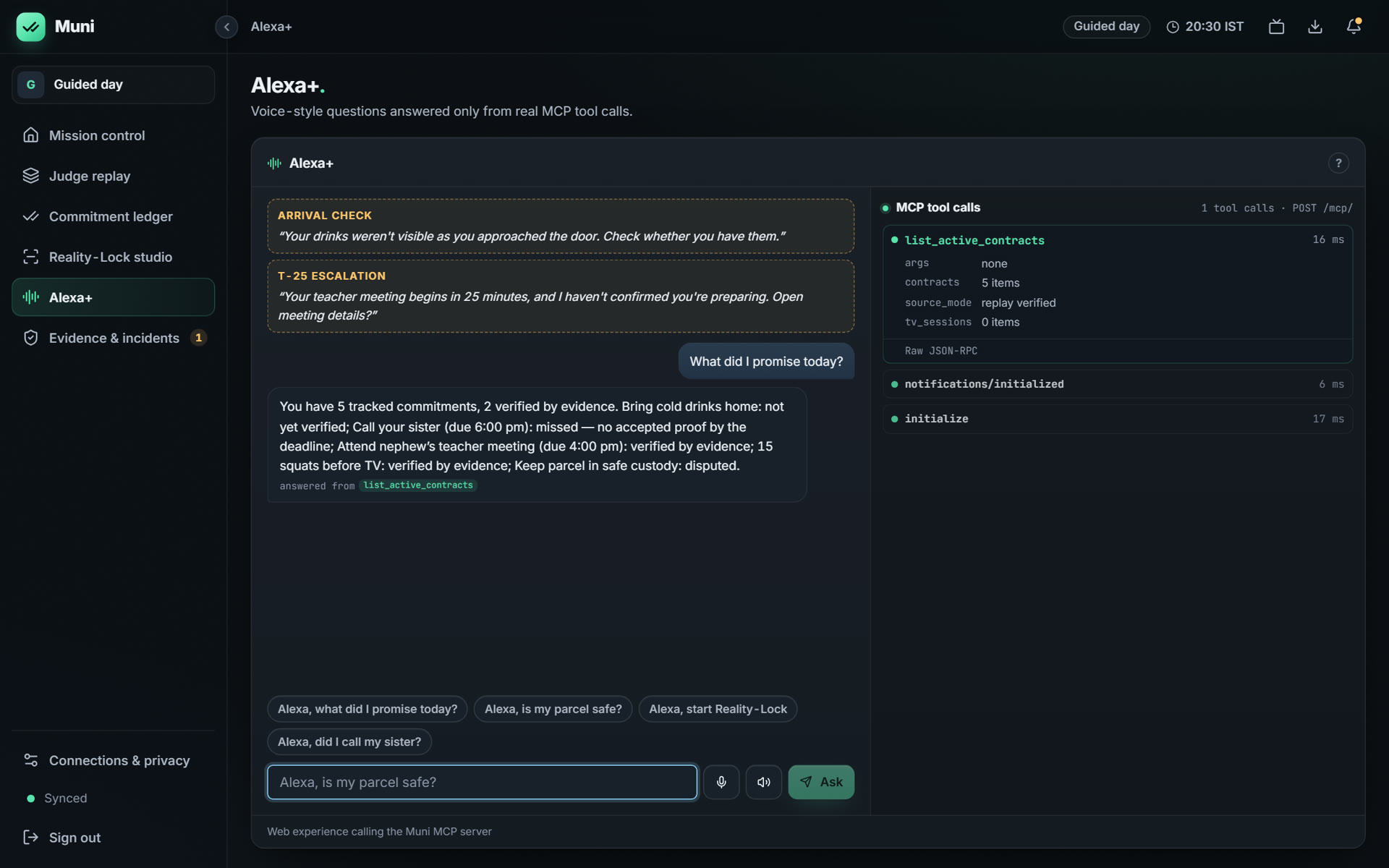
Alexa+ answers "what did I promise today?" from real MCP tool calls, shown live.
-
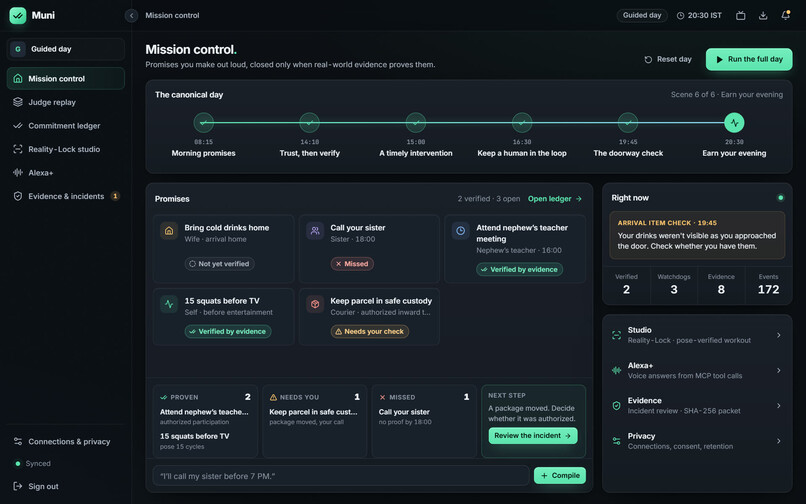
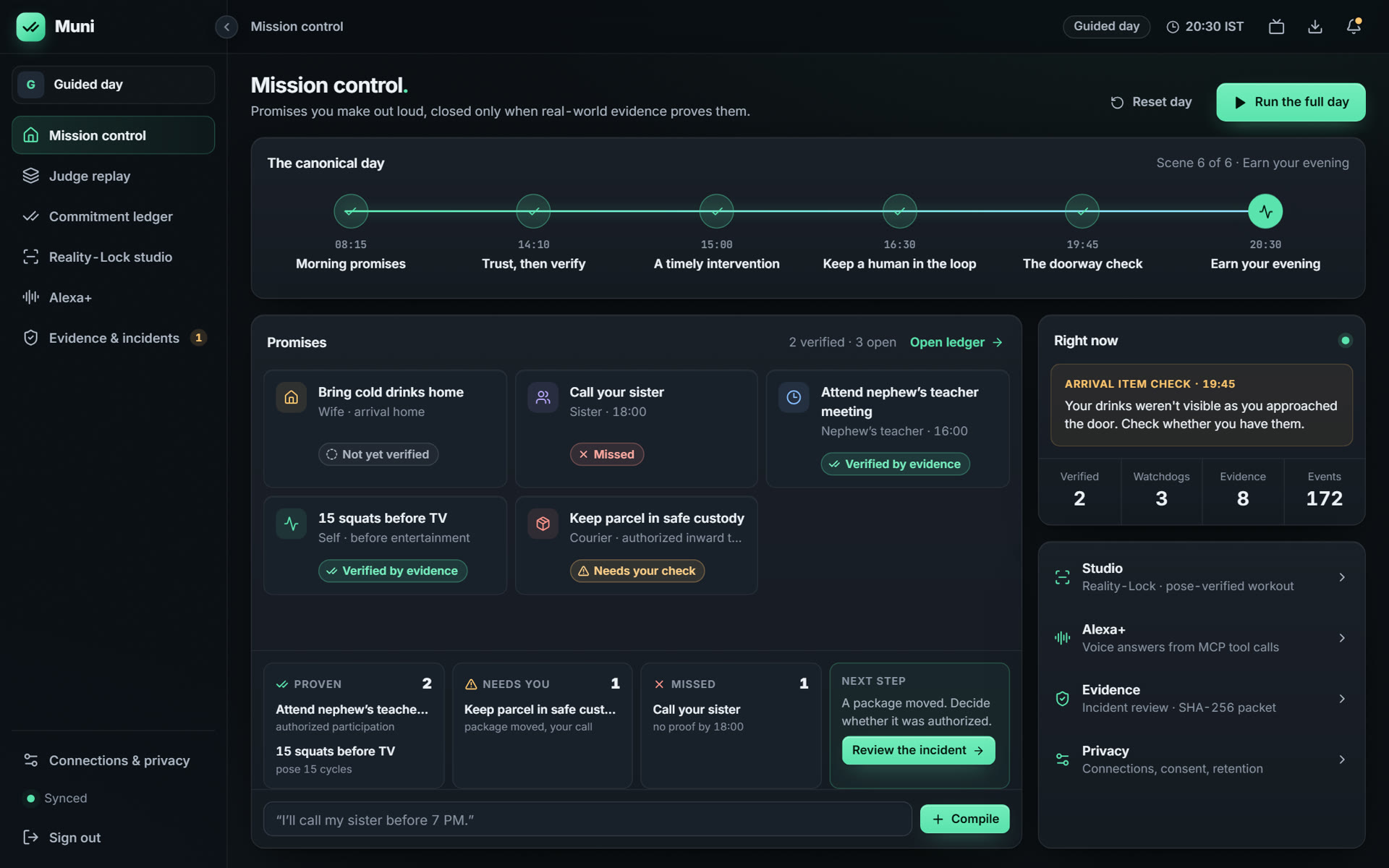
Mission control: every promise as a contract, closed only by real evidence.
-
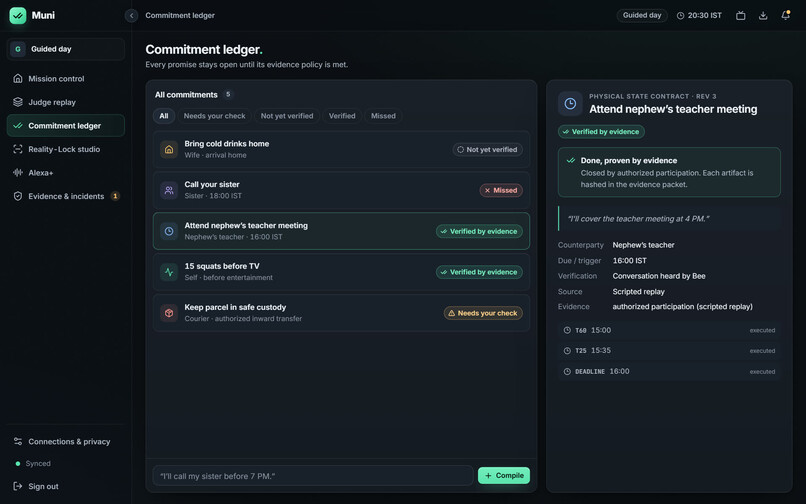
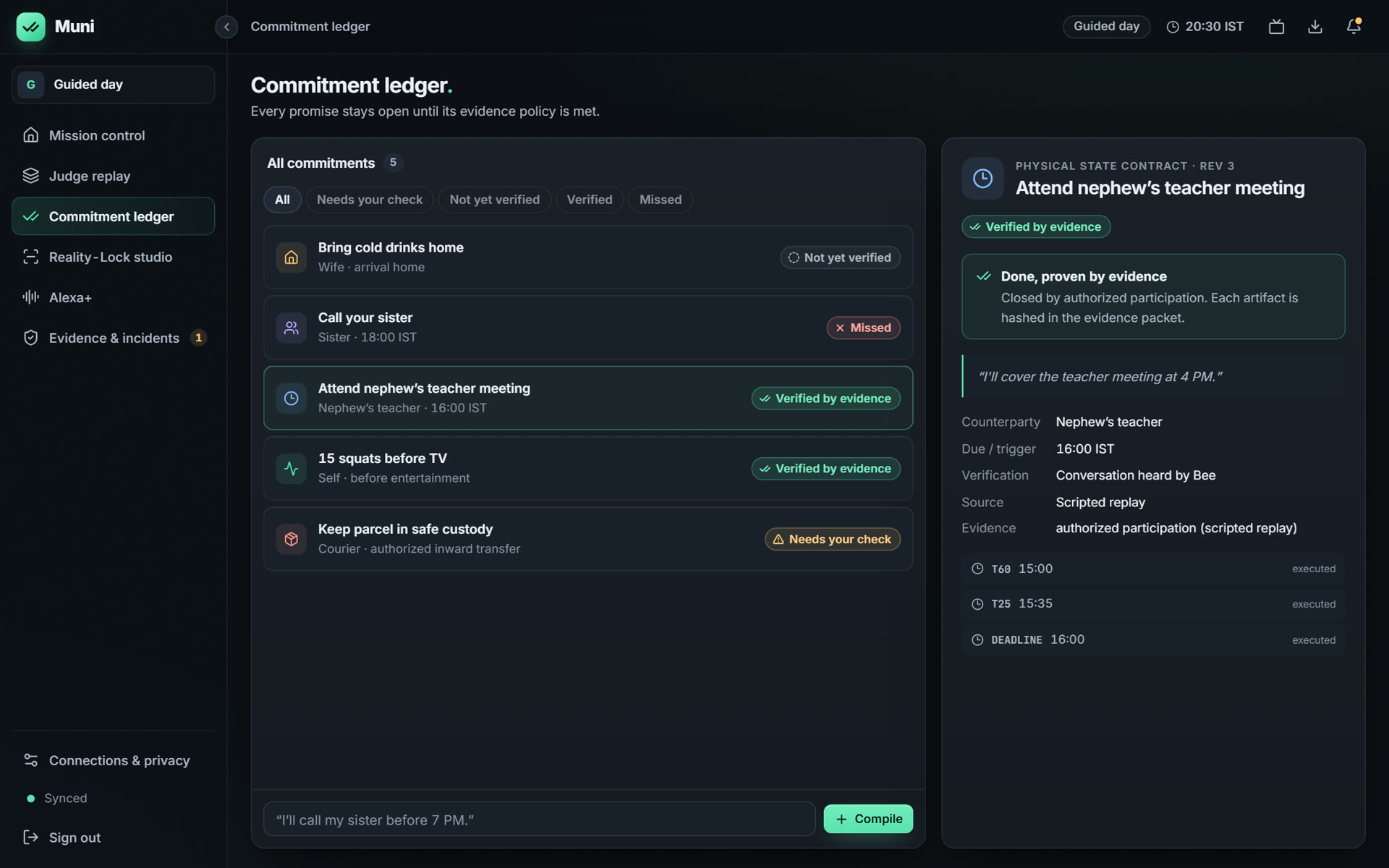
Commitment ledger: the teacher meeting closed only after attendance evidence arrived. T-60 and T-25 ran on time.
Inspiration
I make small promises all day. "I'll call Amma tonight." "I'll pick up the medicine." "I'll be at the teacher meeting at 4." Many of them slip. Some I remember too late.
My phone has reminders. But a reminder only knows that it fired. It does not know if I made the call. A courier app says "delivered". That does not mean the parcel is on my porch. A model can return completed=true. That is not proof either.
So I built the opposite of a reminder app: a system that hears what I promise, watches the real world, and marks a promise done only when evidence shows it happened.
What it does
Muni is a commitment keeper for the home. You do not open an app. You do not ask it to save anything. It works in the background.
- It hears promises. Muni listens through Bee and Alexa+. Small talk is ignored. "I'll call Amma at 7 tonight" becomes a contract with a deadline. A family member's "can you pick up the medicine?" waits for your OK. "Every Monday" becomes a recurring promise.
- It watches for proof. A contract closes only when the evidence matches its policy: Ring camera vision for deliveries and the front door, pose tracking on Fire TV for workouts, a conversation record for calls, or your own confirmation. Your confirmation is always shown as "Confirmed by you", never as sensor proof.
- It acts before you miss. One hour before a deadline: a quiet note. Twenty-five minutes before: an alert, but only if you are not already on it. These are real AWS EventBridge schedules.
- It starts its own agents. When a parcel is left at the door, Muni starts a porch watch agent by itself. If someone carries the parcel toward the street, it saves the clip, a person crop and a SHA-256 manifest, and asks one question: was this family? Nothing goes to the police unless you approve the exact packet.
- It does not accuse. You promised to bring drinks and you walk up with empty hands? You get a private "check before you go in". "Not seen" is never "forgot".
- Fire TV Reality-Lock. You promised 15 squats before TV. The camera counts full squat cycles. 14 stays locked. 15 unlocks your evening. Half squats, frozen frames and replayed loops add nothing.
- Alexa+. Ask "what did I promise today?" and Alexa+ answers from Muni's MCP server. Each answer shows the tool calls behind it.
Try it: https://100-49-183-59.sslip.io, press Try Muni live. No account needed. Every visitor gets a private copy of a full day.
How I built it
- The brain: a Python FastAPI service with the official MCP Python SDK: Streamable HTTP, protocol
2025-11-25, 11 tools (compile_ambient_commitment,spawn_watchdog_subagent,evaluate_deadline_escalation,dispatch_police_evidence_dossier,bridge_ring_camera_to_firetv, plus read-only state tools). - Commitment compiler: rules first. It parses deadlines (tonight, by the 5th, day after tomorrow, after lunch), triggers (when I get home, before TV), recurrence, counterparty and how to verify. It refuses injection text and negations. When the rules find nothing in a sentence that still sounds like an intention ("the car needs servicing this weekend, I'm on it"), Amazon Bedrock Nova Lite reads it and returns strict JSON that I validate. Nova can propose a contract. It can never verify one, and low-confidence readings wait for the owner.
- Ledger: AES-GCM encrypted SQLite (WAL). Append-only events with one trace ID from the spoken sentence to the screen. Terminal states never go back. A transactional outbox replicates to DynamoDB and S3 (SSE-KMS).
- Scheduling: every T-60, T-25 and deadline job is an EventBridge Scheduler
at()schedule → SQS (with a dead-letter queue) → reconciler. In a live test the three jobs fired +0.77 s, +0.43 s and +0.33 s after schedule. - Ring: Partner API for devices, capabilities, event history and HMAC-signed webhooks. WHEP live view is decoded on the server with aiortc. Verified on the Ring Developer Playground device (176 distinct 720p frames) and relayed into Reality-Lock.
- Bee: live SSE stream (
new-utterance,todo-created) plus todo backfill. Event shapes mirror the official bee-cli. - Vision: MediaPipe EfficientDet with IoU tracking and porch-zone change detection: 10/10 licensed real doorstep and CCTV clips classified correctly. MediaPipe Pose counts squat cycles.
- Fire TV: a React Native for Vega app, run on the Vega Virtual Device, and a Fire OS APK with full D-pad navigation. An Android TV emulator runs a 33-step D-pad journey in CI on every push.
- AWS: CloudFormation, EC2 managed through SSM (no SSH), Secrets Manager, CloudWatch.
- Quality: 280 backend tests, 7 Playwright browser journeys, the emulator journey and a container replay run in GitHub Actions on every push.
Challenges I ran into
- Bee needs hardware first. I could not get developer access without a Bee device or an Apple Watch running Bee, so I tested on a device borrowed from a friend. The stream event shapes are not documented, so I read them from the bee-cli source.
- Ring tokens last 30 minutes, and a live view lasts 30–60 seconds. So Muni is event-driven, and it shows coverage gaps honestly instead of labelling old video as live.
- Public MCP hosting. The MCP SDK rejected my public host with
421 Invalid Host headeruntil I set allowed hosts and origins. - Bedrock said "Operation not allowed" on my first AWS account, with no reason. It worked on a second account.
- "I did it" is not proof. The state machine took the most rewrites: a spoken claim moves a promise to awaiting your confirmation, never straight to done.
Accomplishments that I'm proud of
- Nothing in Muni is marked done without evidence, and every state carries an honest source label.
- Eleven AWS services live in production: Bedrock Nova, EventBridge Scheduler, SQS, DynamoDB, S3, KMS, Secrets Manager, CloudWatch, EC2, Systems Manager and CloudFormation.
- Real AWS escalations that fire within one second of schedule.
- Real Ring video, decoded on the server and counted by the same pipeline Fire TV uses.
- One click for judges: no password, a private copy of the day for each visitor.
- An open-source Agent Skill for Amazon's community skills collection: https://github.com/AmazonAppDev/devices-agent-skills/pull/16
What I learned
- An evidence policy is a product feature, not a backend detail. People trust "not verified yet" more than a green tick that lies.
- MCP fits physical-world actions well: small tools, explicit inputs, every call on record.
- Rules first and a model second is cheap, fast and explainable. The model handles the long tail.
What's next for Muni
- A native Alexa+ connection to the MCP server
- Always-on Ring watching with longer-lived tokens
- Shared households: promises made to you, each with its own proof
- More proof types: bins at the curb, medicine taken, homework done
Built With
- alexa
- amazon-bedrock
- amazon-cloudwatch
- amazon-dynamodb
- amazon-eventbridge
- amazon-nova
- amazon-sqs
- amazon-web-services
- aws-cloudformation
- aws-kms
- aws-secrets-manager
- bee
- fastapi
- fire-tv
- mediapipe
- model-context-protocol
- python
- react
- react-native
- ring
- sqlite
- typescript
- vega-os
- webrtc


Log in or sign up for Devpost to join the conversation.