Inspiration
Rates of patient nonadherence to therapies average around 50%, particularly among those with chronic diseases. One of my closest friends has Crohn's disease, and I wanted to create something that would help with the challenges of managing a chronic illness. I built this app to provide an on-demand, supportive system for patients to manage their symptoms and find a sense of community.
What it does
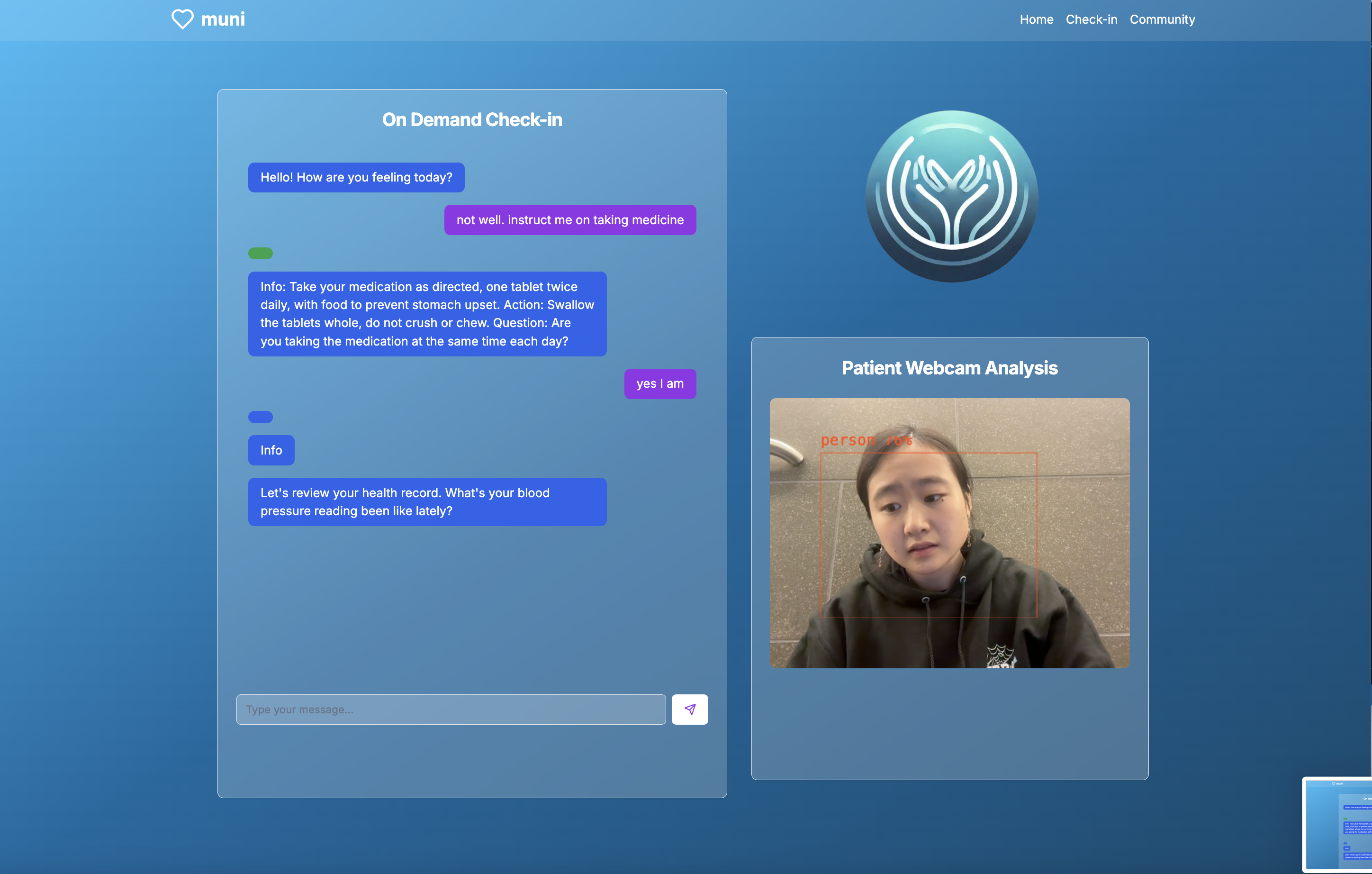
The app allows users to have on-demand check-ins with a chatbot. The chatbot provides fast inference, classifies actions and information related to the patient's condition, and flags when the patient’s health metrics fall below certain thresholds. The app also offers a community aspect, enabling users to connect with others who have chronic illnesses, helping to reduce the feelings of isolation.
How we built it
We used Cerebras for the chatbot to ensure fast and efficient inference. The chatbot is integrated into the app for real-time check-ins. Roboflow was used for image processing and emotion detection, which aids in assessing patient well-being through facial recognition. We also used Next.js as the framework for building the app, with additional integrations for real-time community features.
Challenges we ran into
One of the main challenges was ensuring the chatbot could provide real-time, accurate classifications and flagging low patient metrics in a timely manner. Managing the emotional detection accuracy using Roboflow's emotion model was also complex. Additionally, creating a supportive community environment without overwhelming the user with too much data posed a UX challenge.
Accomplishments that we're proud of
✅deployed on defang ✅integrated roboflow ✅integrated cerebras
We’re proud of the fast inference times with the chatbot, ensuring that users get near-instant responses. We also managed to integrate an emotion detection feature that accurately tracks patient well-being. Finally, we’ve built a community aspect that feels genuine and supportive, which was crucial to the app's success.
What we learned
We learned a lot about balancing fast inference with accuracy, especially when dealing with healthcare data and emotionally sensitive situations. The importance of providing users with a supportive, not overwhelming, environment was also a major takeaway.
What's next for Muni
Next, we aim to improve the accuracy of the metrics classification, expand the community features to include more resources, and integrate personalized treatment plans with healthcare providers. We also want to enhance the emotion detection model for more nuanced assessments of patients' well-being.


Log in or sign up for Devpost to join the conversation.