Inspiration
One in five children in the U.S. is obese, and childhood Type 2 diabetes diagnoses have surged 95% in the last decade. We noticed a gap: kids don't engage with nutrition data the way adults do — calorie counts and macro tables mean nothing to a 7-year-old. And pediatricians often rely on brief office visits with no data between appointments. What if healthy eating felt like a game, your food coach was a buddy who talks back to you, and your doctor got AI-generated clinical reports backed by weeks of real data? That spark became MunchinBuddy — an AI-powered virtual character that physically morphs based on what a child eats, turning every meal into instant visual feedback a kid can understand, while building a data trail that helps families and doctors intervene early.
What it does
For Kids 🎮
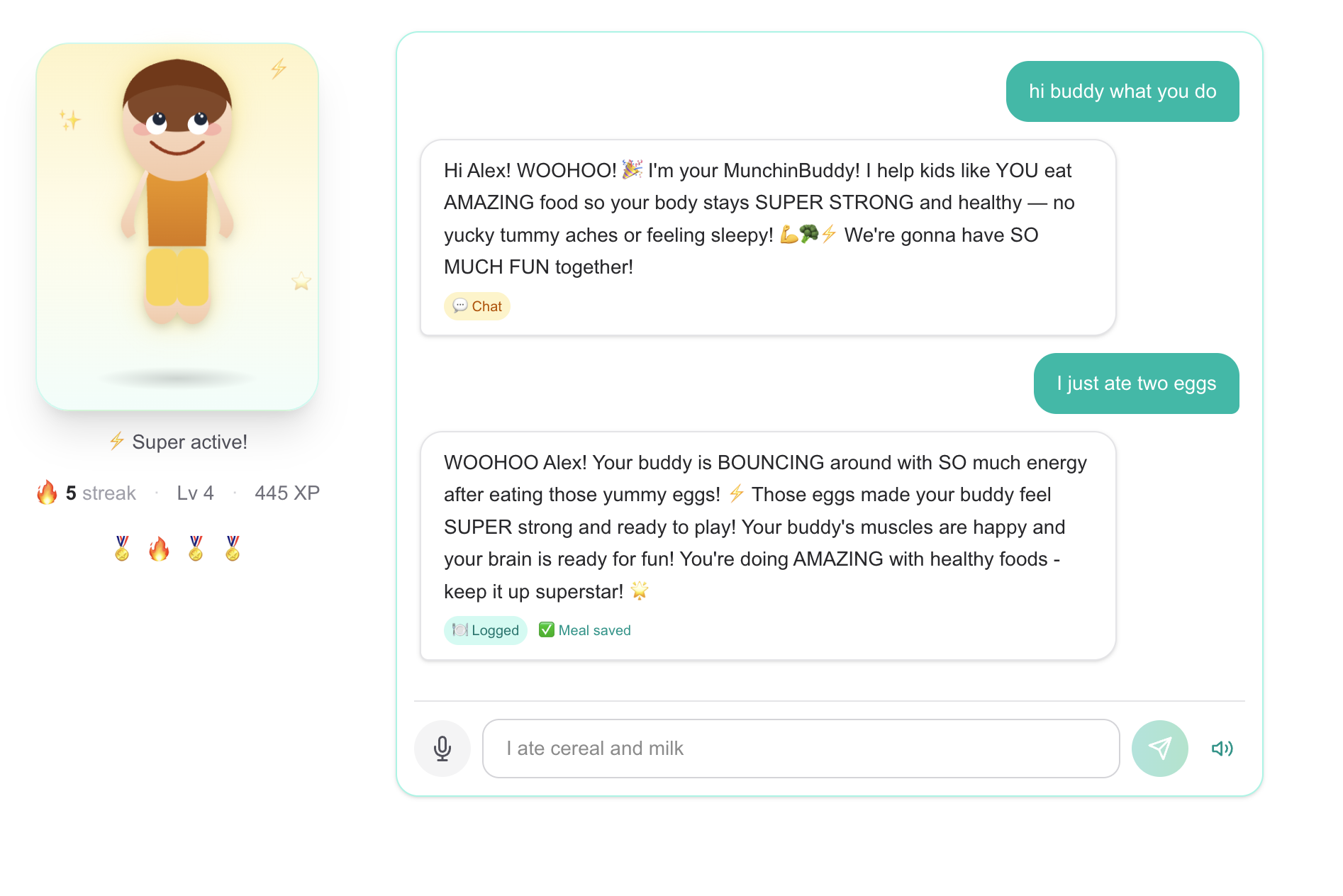
- Voice-first meal logging — Kids simply say "I just had two eggs and toast" and the AI parses calories, macros, and micronutrients automatically.
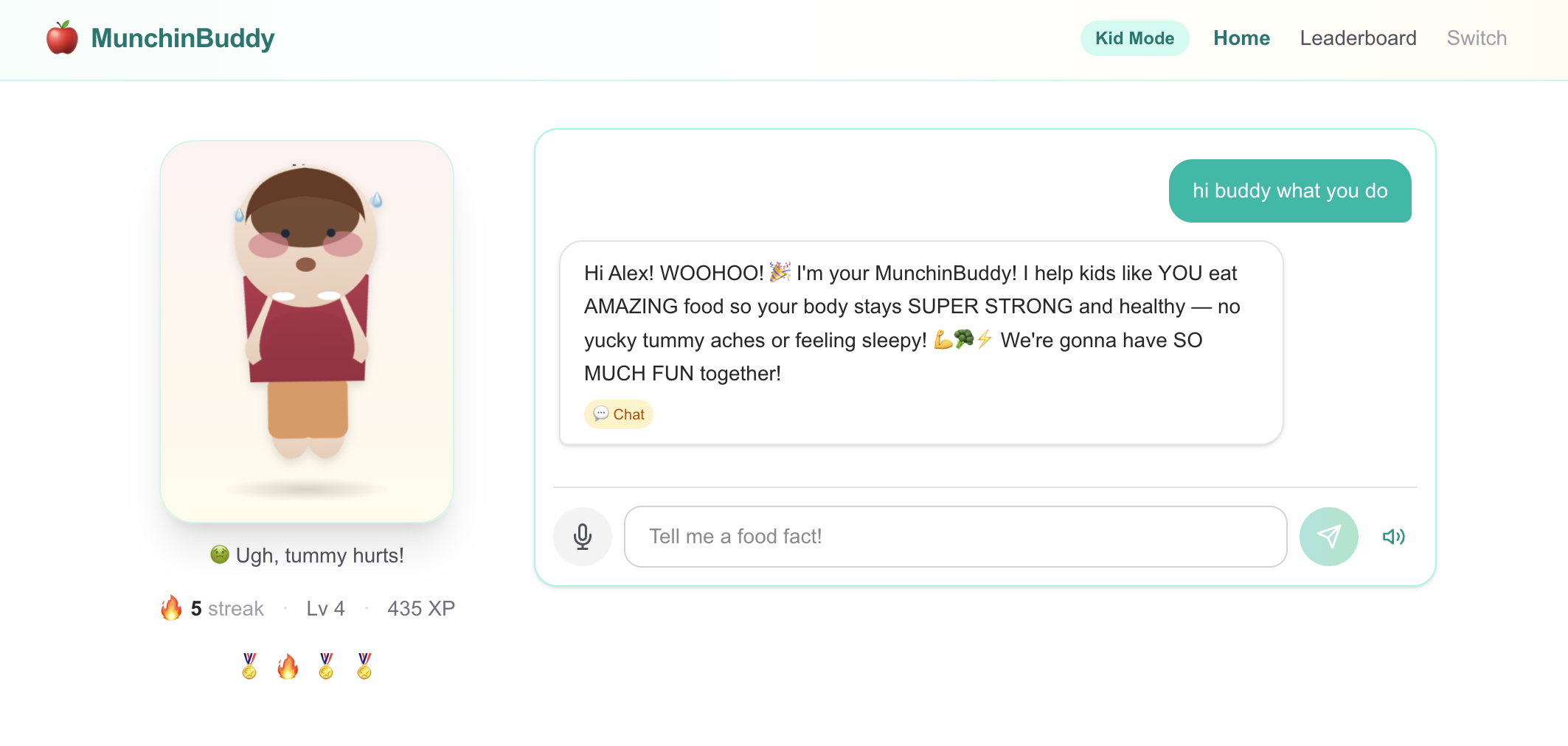
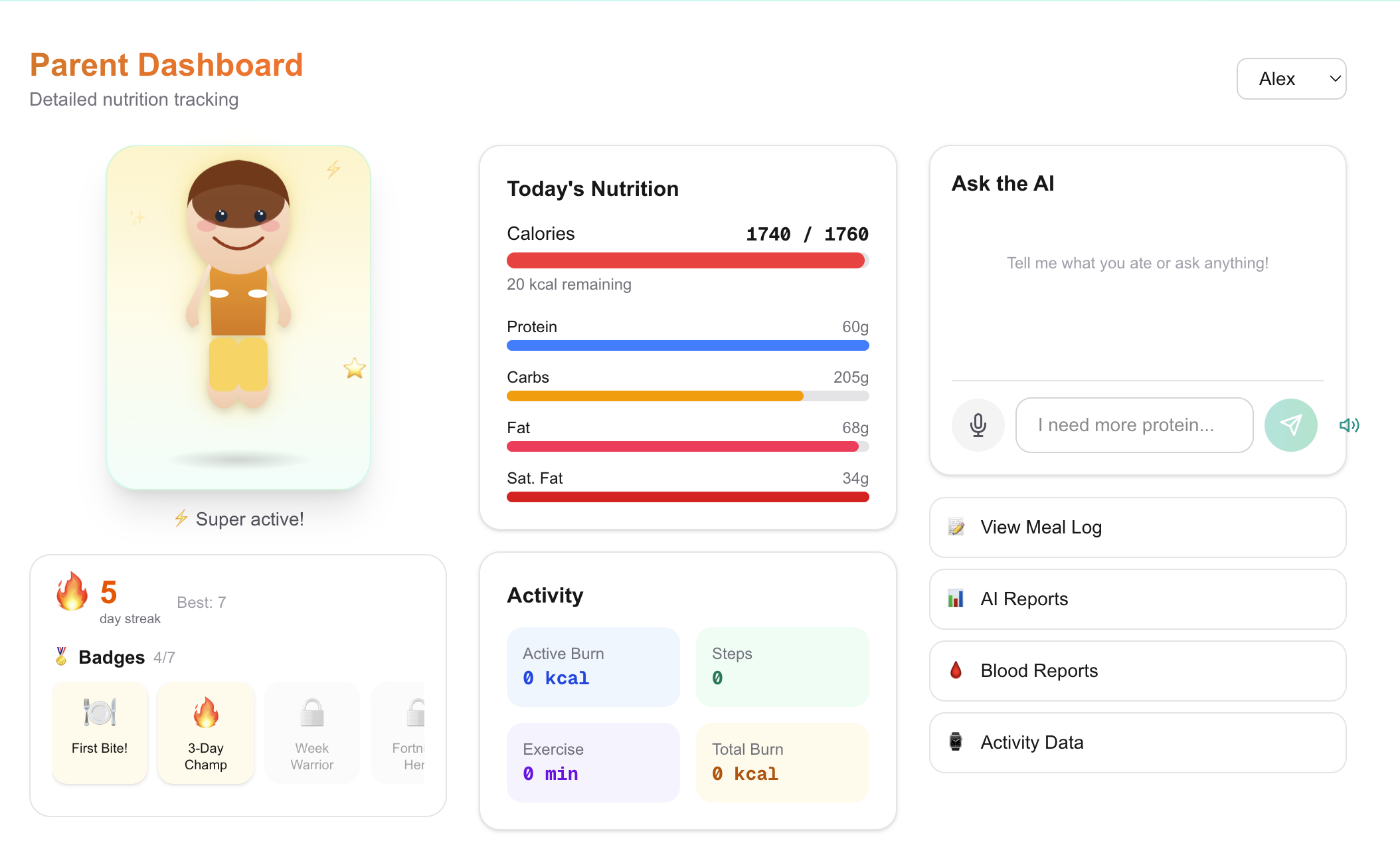
- Morphing avatar — The buddy flexes muscles after protein, gets sluggish and sick after junk food, and glows with energy after balanced meals — immediate, visceral feedback.
- Smart intent detection — "I want a milkshake" gets nutrition advice; "I had a milkshake" logs the meal. The AI understands the difference.
- Gamification — Streaks, XP, levels, badges, and a school leaderboard make healthy eating competitive and fun.
- Continuous voice conversation — Like ChatGPT voice mode — the AI speaks back in a kid-friendly voice (ElevenLabs TTS), then the mic auto-restarts for natural back-and-forth.
For Parents 👨👩👧
- Parent dashboard — Detailed daily stats, eaten-vs-recommended nutrient bars across all macros and micronutrients.
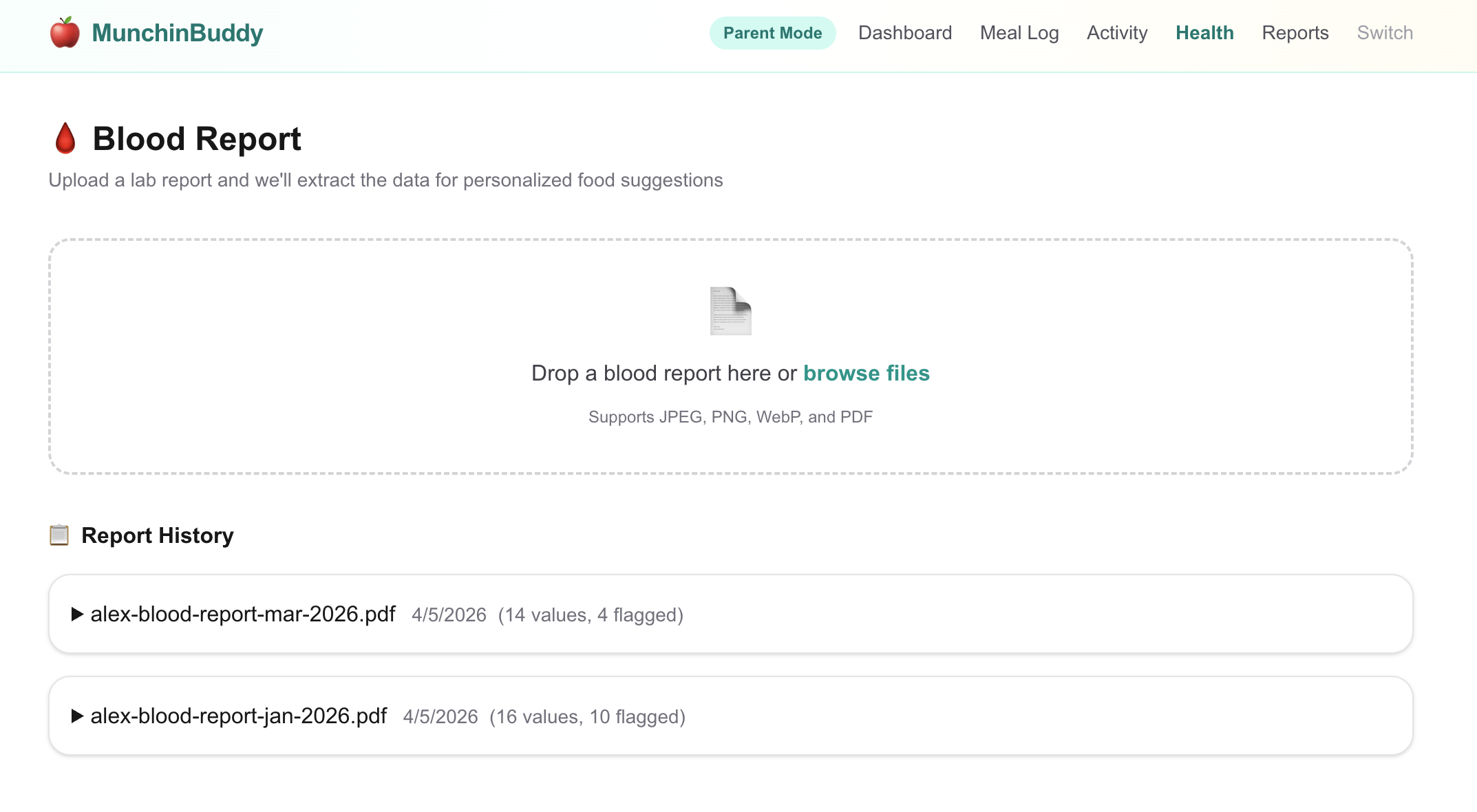
- Blood report analysis — Upload lab reports (CBC, metabolic panels). The AI extracts values, compares across multiple reports over time, and correlates improvements with actual diet and activity data.
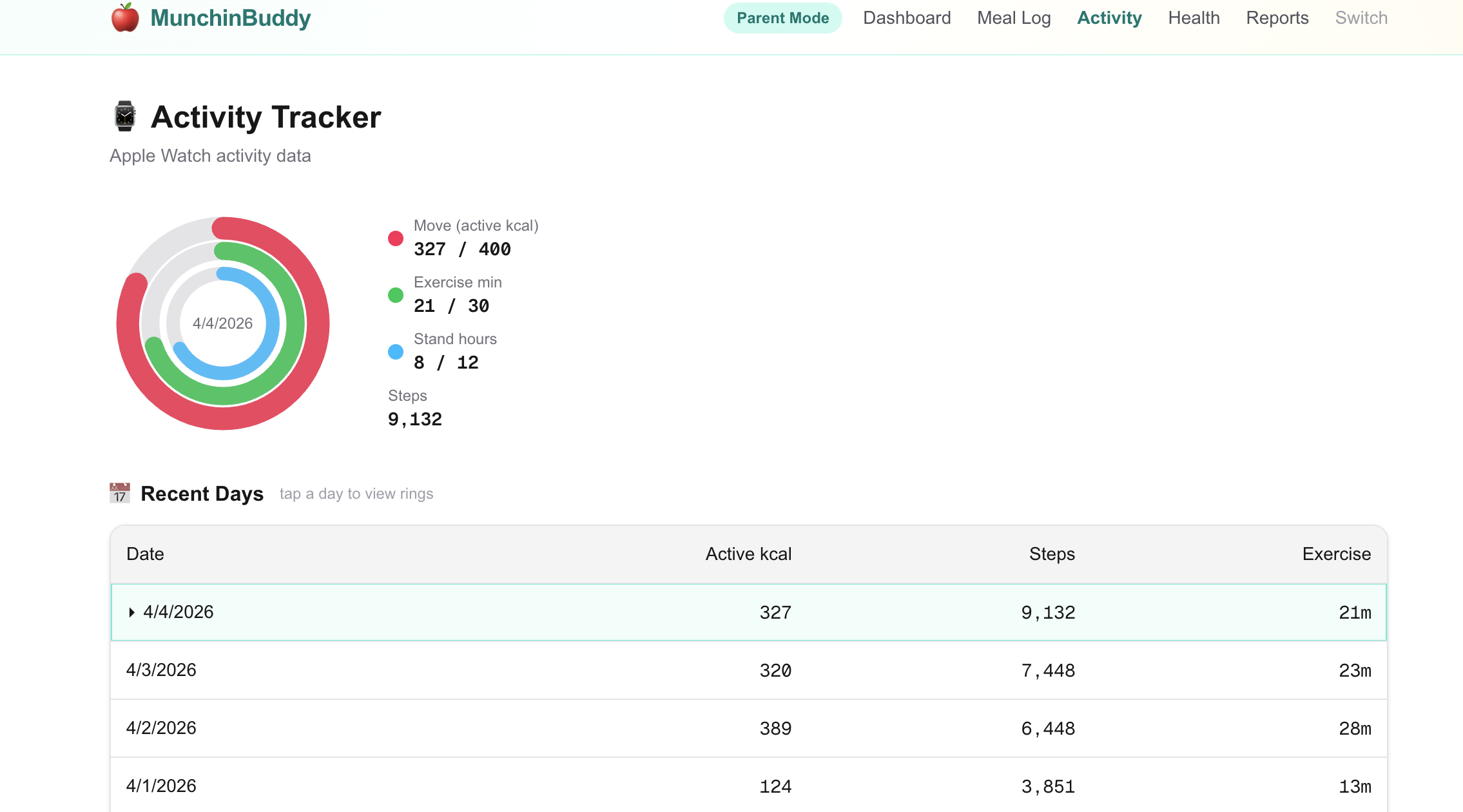
- Apple Watch integration — Activity data (steps, calories burned, exercise minutes) feeds into AI recommendations.
For Pediatricians 🩺
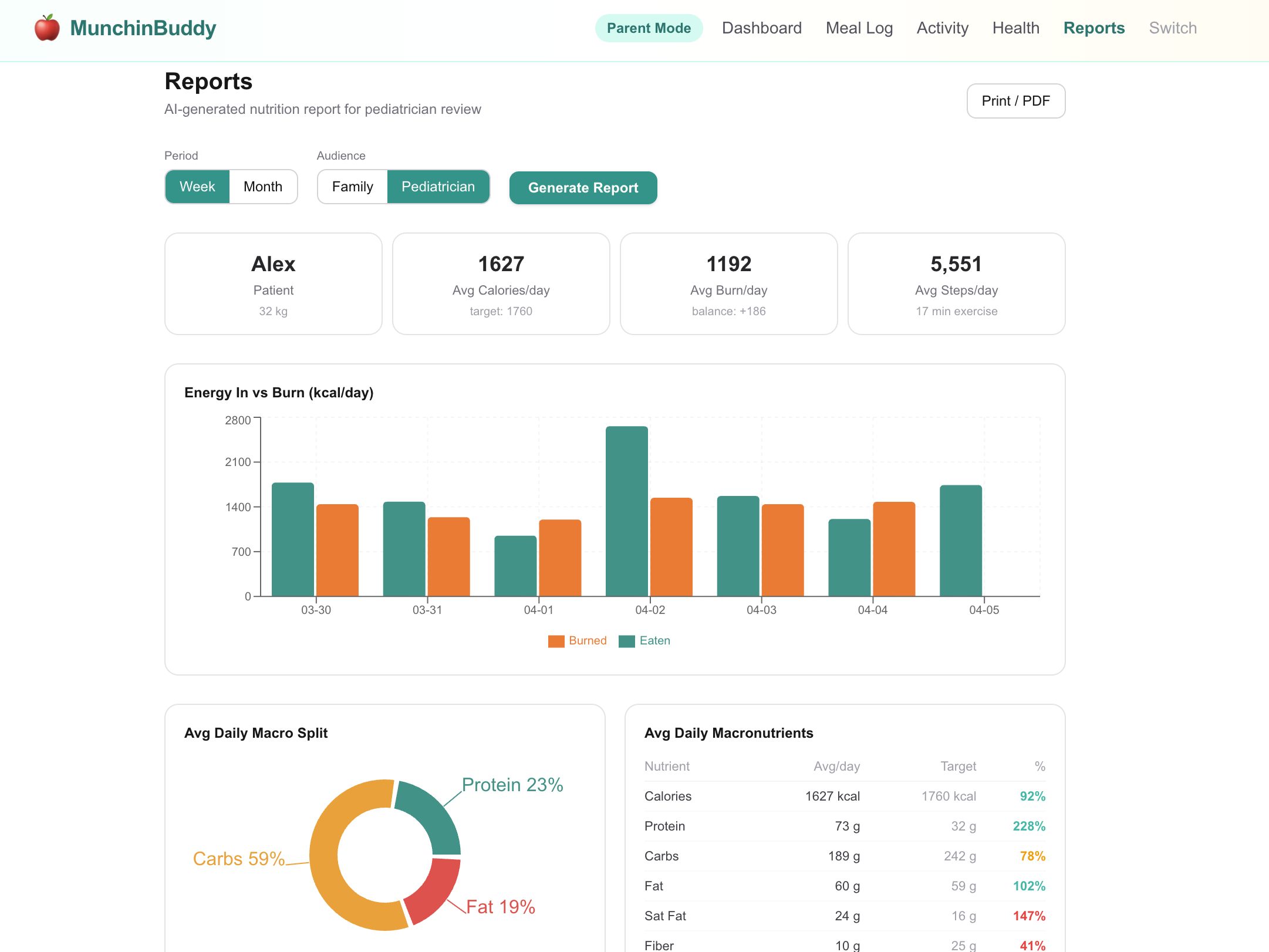
- AI-generated clinical reports — One-click weekly/monthly reports designed for pediatrician review, including:
- Patient overview (age, weight, activity level)
- Energy balance analysis (intake vs. burn) with daily trend charts
- Macro split visualization and daily averages table
- Micronutrient adequacy bars against age-appropriate RDAs
- Blood report flag summary with longitudinal comparison
- AI narrative highlighting concerns, improvements, and discussion points
- Pre-computed daily stats — Average calories, protein, iron, Vitamin D, sodium, fiber, steps, exercise minutes — all stored per day and instantly queryable for any date range.
- Blood report correlation — The AI connects lab value changes to actual dietary patterns: "Average iron intake of 8mg/day is below the 10-15mg recommendation, explaining persistent low ferritin despite improvement from 8 → 12 ng/mL." ## How we built it | Layer | Tech | |---|---| | Frontend | Next.js 16 (App Router), React 19, Tailwind CSS v4, Recharts | | AI Engine | AWS Nova Lite via Bedrock — intent classification, meal parsing, nutrition coaching, report generation, blood report extraction | | Voice | Web Speech API (recognition) + ElevenLabs streaming TTS | | Database | SQLite + Prisma ORM with pre-computed DailyStat aggregations | | Activity Data | Simulated Apple Watch data (realistic scenario-based generation) |
Cost-optimized AI architecture
A key design decision was choosing AWS Nova Lite over more expensive models like Claude or GPT-4. We achieved comparable output quality at a fraction of the cost through context engineering:
- Structured system prompts — Instead of relying on the model's general knowledge, we feed pre-computed stats, nutrient targets, and blood report diffs directly into tightly scoped prompts. The model summarizes and correlates rather than reasons from scratch.
- Mode-aware prompt switching — A single endpoint serves kid, parent, and pediatrician audiences by swapping system prompts, not models. The kid prompt enforces 3-4 excited sentences; the parent prompt demands specific numbers; the pediatrician prompt produces clinical markdown.
- Router agent pattern — A lightweight classifier (just 40 output tokens) routes every message to
log_meal,ask_nutrition, orgeneral_chat, each with specialized prompts. This keeps per-request context small and focused. - Pre-aggregated data — Daily stats are computed and stored in the database on every meal log. When the AI generates a report or answers a question, it receives a clean summary table — not thousands of raw meal records. This keeps prompt tokens minimal.
- Deterministic parsing — Meal parsing uses strict JSON output schemas, reducing hallucination and retry costs. This architecture means scaling to thousands of users doesn't require scaling to expensive models. Nova Lite at ~$0.06/1M input tokens handles our workload at roughly 1/50th the cost of frontier models, with quality maintained by giving the model better context, not more parameters. ## Challenges we faced
- Intent ambiguity — "I want pizza" vs "I had pizza" required careful prompt engineering and fallback keyword logic to avoid logging meals the child hasn't eaten yet.
- Voice-before-text synchronization — The AI's text response appeared before the voice finished loading. We solved this with an
onStartcallback from the audio player that reveals the text bubble only when speech actually begins. - Stale avatar state — The avatar was stuck in "strong" mode after junk food because it used a rolling average. We pivoted to a last-meal-only state model persisted in the database.
- Blood-to-diet correlation — Connecting lab value changes to dietary patterns required building a daily stats pipeline and crafting prompts that teach the AI to draw meaningful clinical connections without hallucinating causation.
- Making cheap models smart — Nova Lite out-of-the-box produced generic responses. The breakthrough was realizing that better context beats bigger models — feeding it pre-computed averages, RDA comparisons, and blood report diffs made its output clinically useful. ## What we learned
- Kids need immediate, visual, emotional feedback — not numbers. The avatar morphing after junk food is 10x more impactful than showing "720 kcal, 28g sat fat."
- Voice is the natural interface for children. Typing is a barrier; talking is play.
- Context engineering > model size. A $0.06/M-token model with the right data in the prompt outperforms a $15/M-token model given raw data and vague instructions.
- Pre-computing and storing daily aggregates transforms a chatbot into an analyst that can reference weeks of data in milliseconds.
- Designing for two audiences (playful kid vs. clinical pediatrician) in one system requires mode-switching at the prompt level, not the model level. ## What's next
- Real Apple Watch / HealthKit integration via iOS companion app
- OCR + Vision API for grocery receipt scanning and meal photo recognition
- Pediatrician portal with shareable report links and patient management
- FHIR integration for direct EHR data exchange
- Multi-language support for broader accessibility
- School district pilot program with anonymized cohort analytics
Built With
- ai
- nextjs

Log in or sign up for Devpost to join the conversation.