-
-
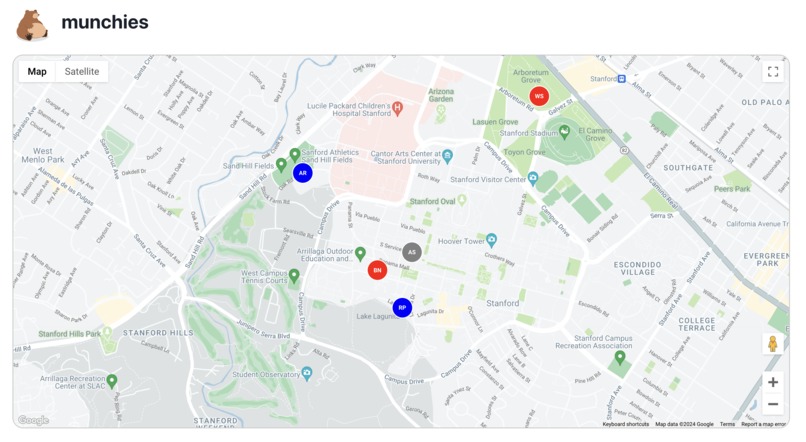
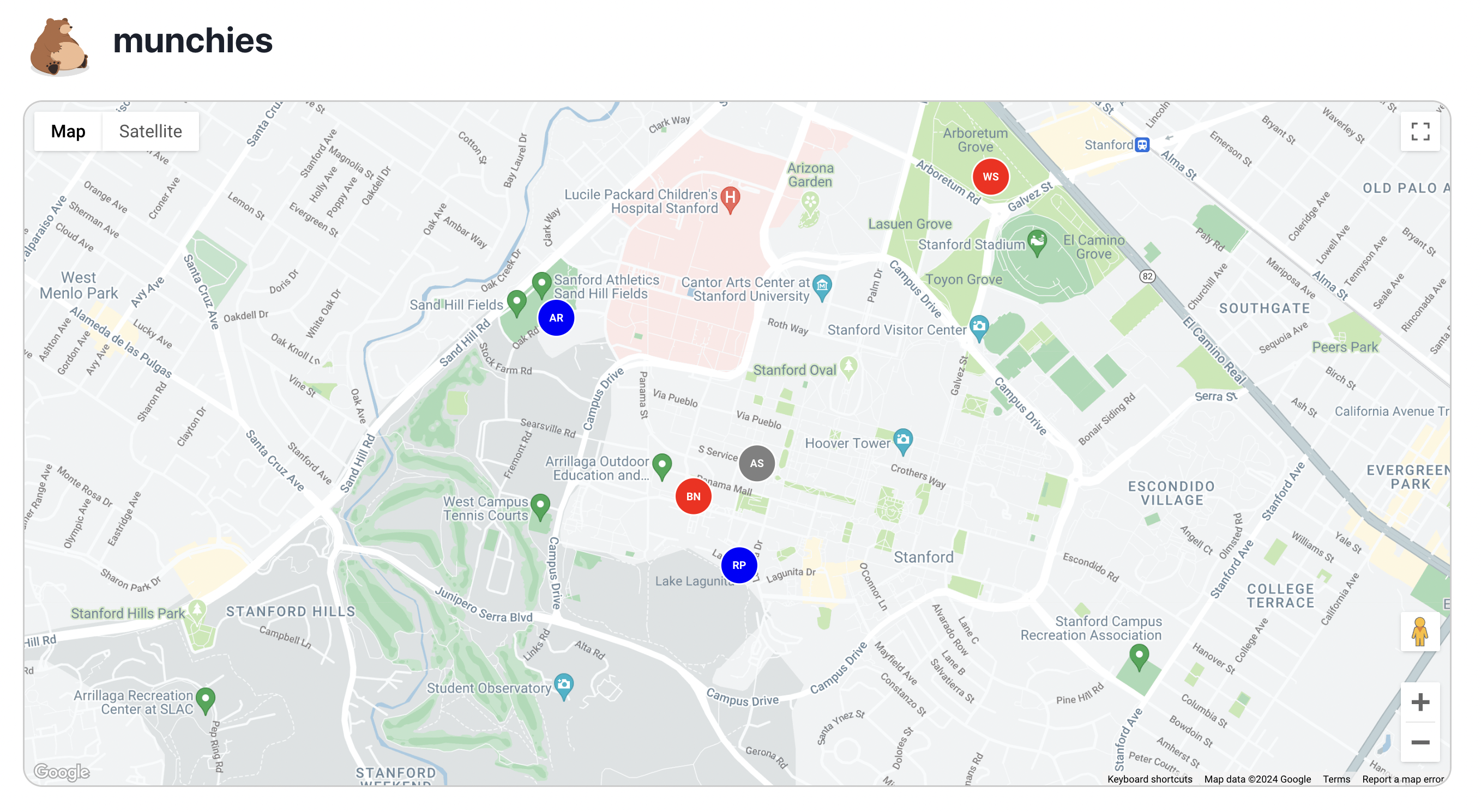
Home Page
-
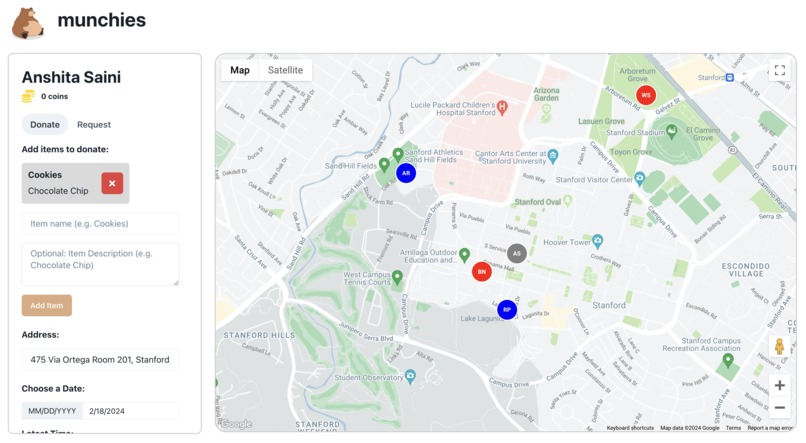
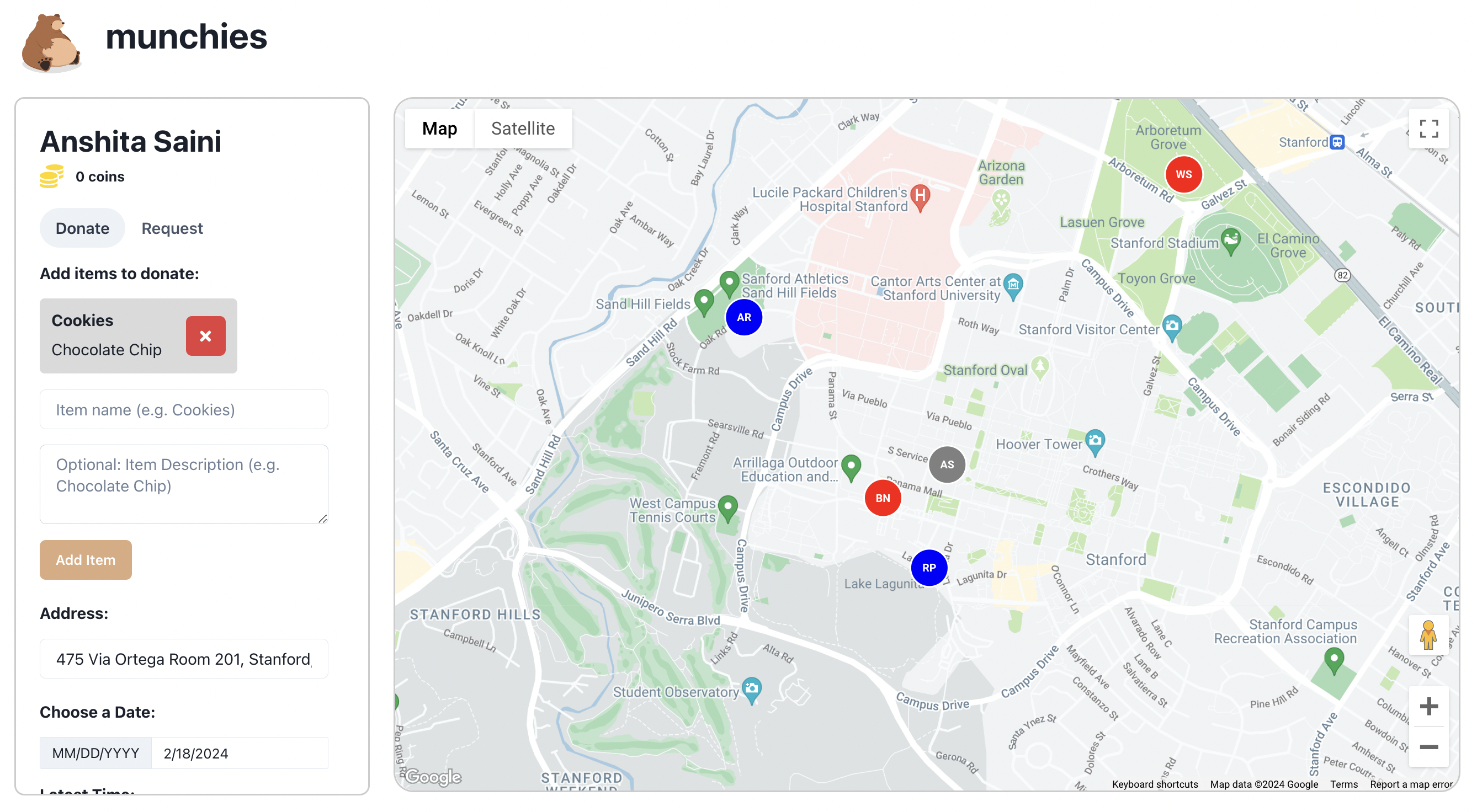
Making a donation - the gray is you
-
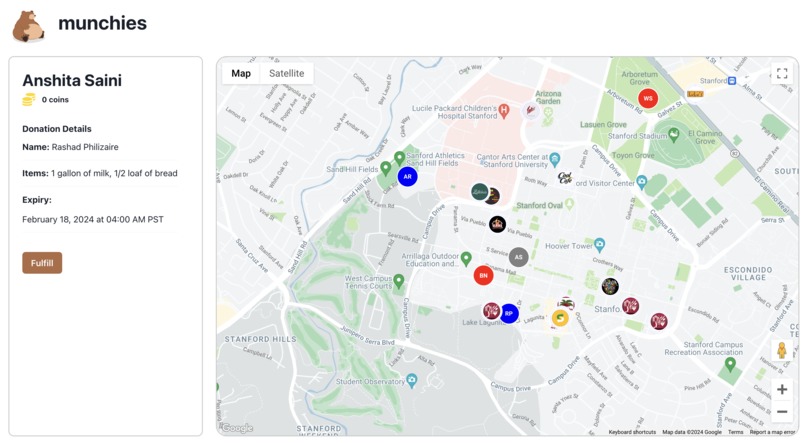
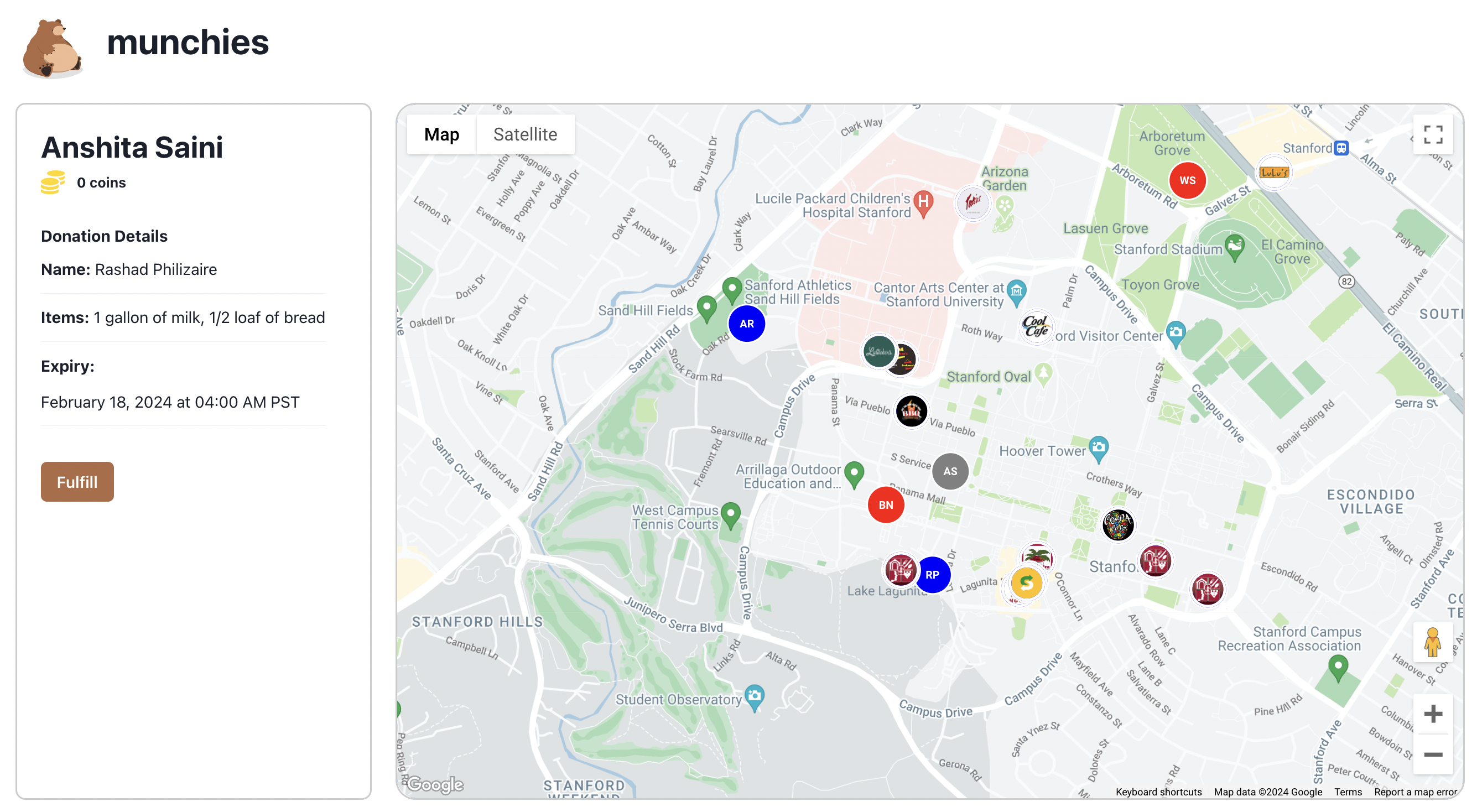
Fulfilling (picking up) a donation - the blue is the donator
-
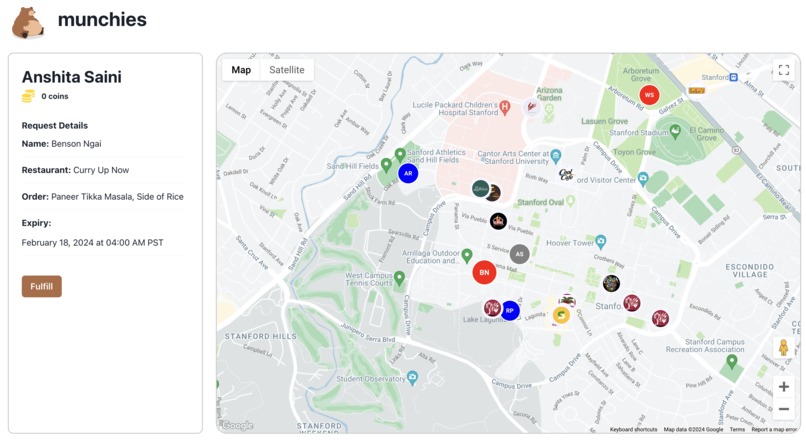
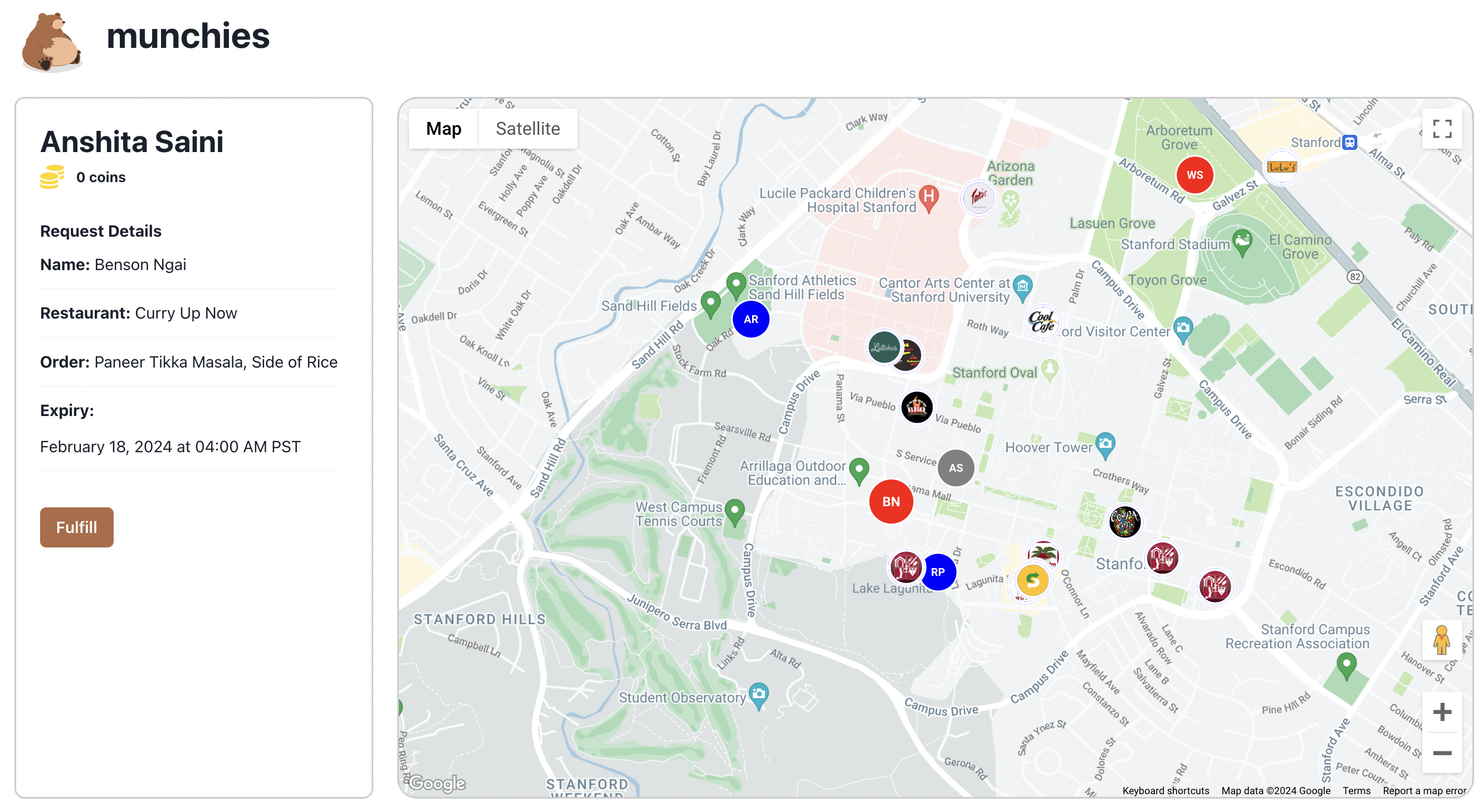
Fulfilling (delivering) a delivery order - the red is the requester
-
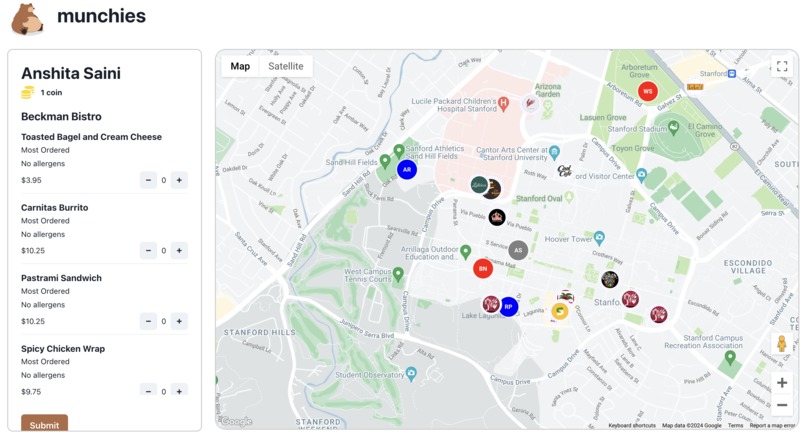
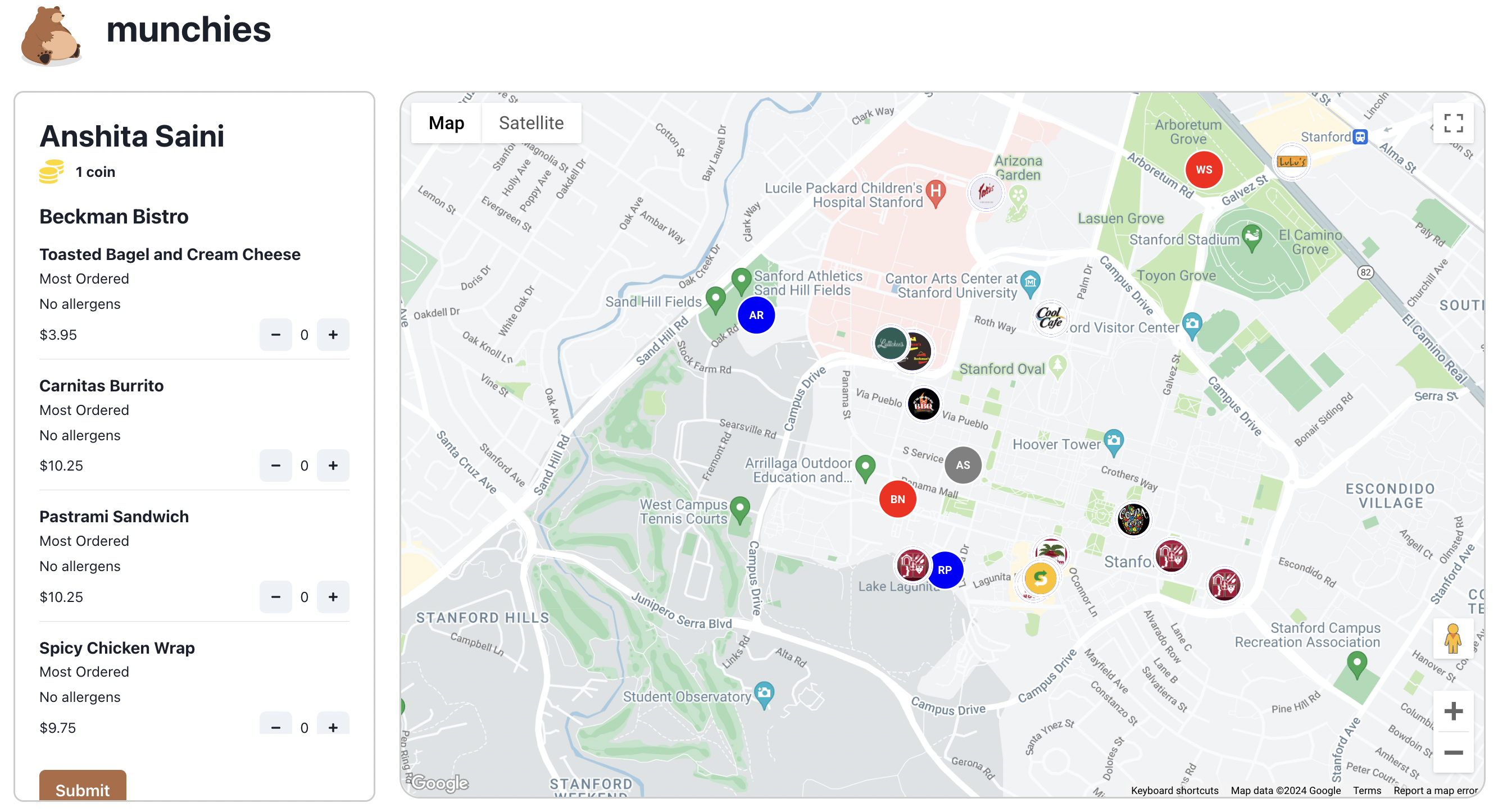
Ordering food delivery from a nearby restaurant
Inspiration
Have you ever wanted food delivered to you, but you don't want to pay those outrageous UberEats/Doordash delivery fees? Or, have you ever had food that you wouldn't use and didn't want to go to waste? Introducing Munchies, the sustainable community-building platform for requesting, delivering, and donating food to others. As college students, we encounter these problems on a daily basis that would be solved with this app.
What it does
Munchies is based on the model of giving and receiving to foster community, specifically in the form of food deliveries or donations. Users can request for food to be delivered by other munchers (such as from a local nearby Chick-fil-a); they simply have to pay the cost for the food, and the request costs some amount of non-monetary points. Therefore, to make requests, users have to help make deliveries to others as well, where each delivery earns them some number of points.
This model is exactly the same with donations; users earn points for posting food donations that are picked up by others for use, and those who pick them up only have to pay in points. Community-building is the main goal and is attained implicitly and explicitly through our app's model. Implicitly, users are encouraged to support one another by making deliveries and donating food, simultaneously benefiting from their actions to have food delivered to them in the future. Explicitly, the app aims to encourage community members to build more sustainable habits, where food wastage is minimized in a world with limited resources.
How we built it
We spent a significant amount of time coming up with our idea and fleshing out our user flow on paper. As we had two submodels (requesting/delivering food, offering/receiving donations) within our app's model, we blueprinted our idea and drew out the full user experience to make sure we were organized with our thoughts. It was imperative that the UI was simple for users to use, and all features (delivering, receiving, making donations) were easily accessible with minimal clicks. As such, we came up with a simple, straightforward Map and order interface to achieve our goal.
Challenges we ran into
- Coming up with a UI that was intuitive and facilitated both of our app's submodels (food deliveries vs donations) was difficult.
- Rendering many things on our map and including interactivity introduced various technical bugs that we spent a lot of time fixing.
- Creating all of our features for donators and food requesters was significantly time consuming. We had many parts and information we could use between different requests/responses, but we had to separately code various parts as data like menus existed on the page for someone wanting to order, but was not necessary for the page for someone donating their food.
- Scraping data for nearby restaurants with menu items was difficult, but we were able to find sufficient information for demonstration purposes.
Accomplishments that we're proud of
With 3 people and in around ~15-20 hours of active work, we were able to put together a reasonably and technically complex hack that we're proud of. Most importantly, this is an app that we built as we would realistically use it, and our vision at the beginning of the hackathon was mostly realized. We completed almost all of the features we intended to build, and our design and interface is reasonably polished. With some refinements, this would be an app we'd be happy to release to communities to test!
What we learned
We all learned to use different frameworks that we were previously not exposed to very well. Specifically, our team used React, Chakra, and Google-Maps-React for our frontend, while our backend was composed of FastAPI and Supabase. We learned to collaborate very well together, maximizing work efficiency to chronologically breaking down and completing tasks one by one to go from an empty project to a fully-working product.
What's next for munchies
Our platform was developed for the computer primary for ease of development and use for a 36 hour hackathon. However, we envision this app to be a mobile app for everyday use, so creating iOS and Android versions of the munchies app is the immediate next step. Further, connecting our app to already-popular food pickup apps like UberEats, Doordash, and Grubhub would be interesting, and we believe would attract many users.
Built With
- fastapi
- google-maps
- javascript
- python
- react
- supabase


Log in or sign up for Devpost to join the conversation.