Inspiration
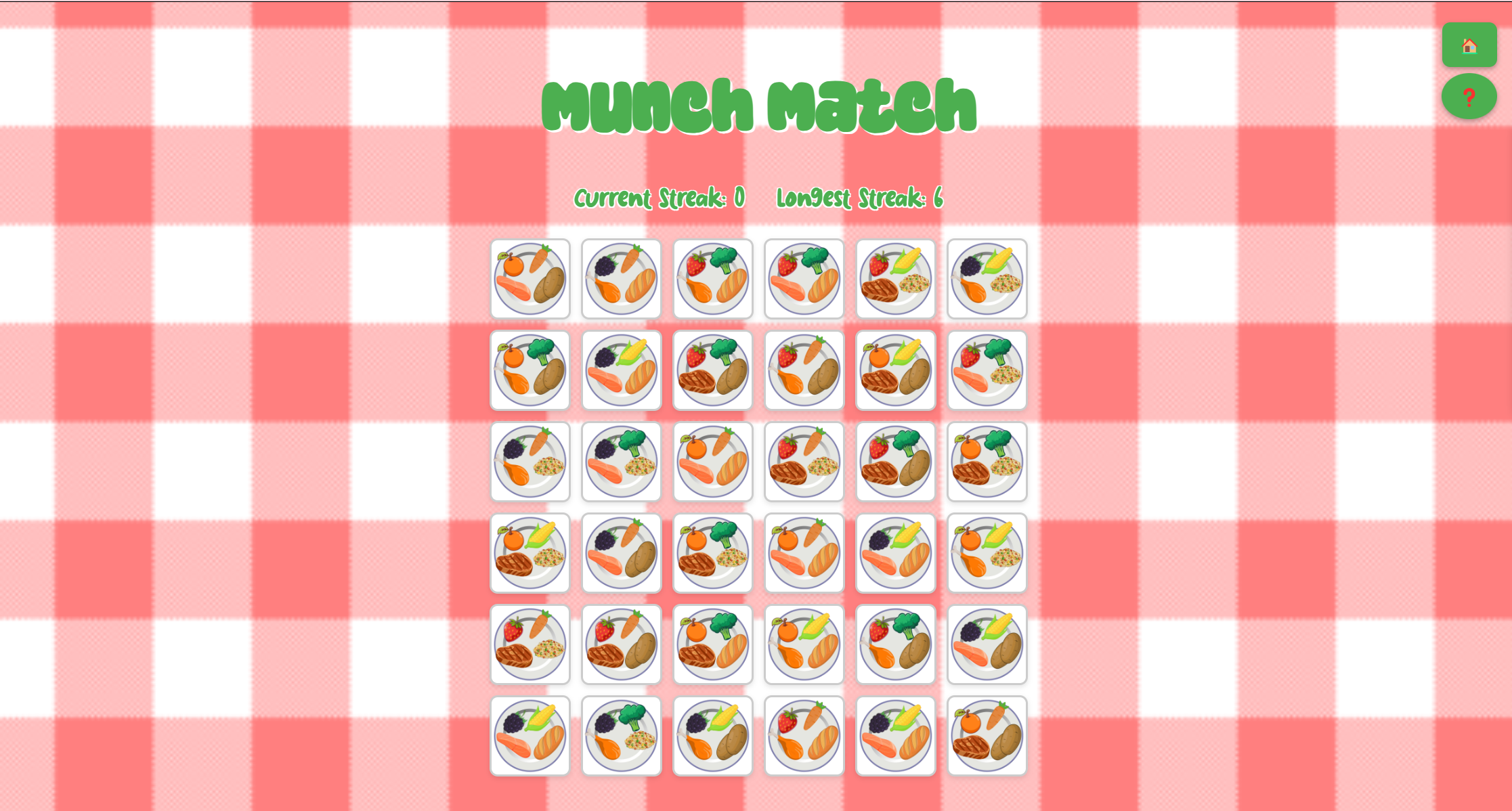
We wanted to create a game that not only entertained but also encouraged players to think about balanced eating in a fun and engaging way. Many food-related games focus on fast food or unrealistic eating habits, so we set out to design Munch Match—a pattern-matching game where players match identical foods, each tile featuring a mix of food groups to reinforce healthy eating habits. Our goal was to make nutrition awareness accessible and fun for all ages while blending education with enjoyable gameplay.
What it does
Munch Match is a tile-matching game where players match identical food items. Each tile features a variety of foods from different food groups, helping players explore balanced nutrition in a fun way. The game combines memory challenges with educational content, encouraging players to think about the foods they eat and how they contribute to a healthy diet. It’s designed to make learning about food diversity and balance both enjoyable and accessible for all ages.
How we built it
We built Munch Match using HTML, CSS, and JavaScript to create an interactive and visually appealing game. HTML provided the structure, while CSS was used to style the frontend, ensuring a clean and responsive layout. JavaScript was used for both the backend game logic and frontend interactivity, connecting the game mechanics with the user interface. Images of various foods were used for the tiles, making the game engaging and colorful. The backend logic was integrated with the frontend to ensure smooth gameplay, allowing players to match food tiles and track their progress effortlessly.
Challenges we ran into
During the development of Munch Match, we encountered several challenges. One of the main hurdles was determining the right number of matches—an odd number of foods led to uneven matching, which disrupted the balance of the game. Another issue was positioning the images correctly on the tiles, ensuring they were centered and displayed clearly for an optimal experience. We also had to ensure the game was responsive across different screen sizes, requiring fine-tuning of the CSS for various devices. Additionally, debugging the game logic took considerable time to make sure tile matching and game flow were error-free. Despite these challenges, we successfully built a fun, educational game that encourages players to learn about balanced eating while enjoying a satisfying gameplay experience.
Accomplishments that we're proud of
We are proud of the way Munch Match turned out, especially considering the challenges we faced during development. One of our major accomplishments was creating a smooth and responsive game that works across multiple devices, ensuring players have an enjoyable experience regardless of screen size. We’re also proud of how we managed to incorporate a wide variety of foods from different food groups, making the game both fun and educational. The ability to match identical foods while subtly teaching about balanced eating is something we’re really excited about. Additionally, the clean, user-friendly design and seamless integration of game logic with the frontend are accomplishments we take pride in. Overall, we’re happy with how we turned our idea into an engaging, interactive game that promotes healthier eating habits in a way that’s both fun and accessible.
What we learned
Throughout the development of Munch Match, we gained valuable insights into both game design and nutrition education. We learned how to create an interactive, user-friendly interface using HTML, CSS, and JavaScript, and how to integrate game mechanics with a responsive frontend. Additionally, we deepened our understanding of balancing game logic to ensure a smooth and engaging player experience. On the educational side, we learned how to present food diversity in a way that promotes healthy eating habits without overwhelming the player. We also gained experience in managing game state and debugging issues related to tile matching and image positioning. Overall, this project taught us not only technical skills but also how to make learning about nutrition both fun and accessible.
What's next for Munch Match
Moving forward, we plan to expand Munch Match by adding new features and improving the overall experience. One of our goals is to introduce more food categories, allowing players to learn about even more aspects of a balanced diet. We also aim to implement a scoring system that rewards players for making healthy food matches, further reinforcing the game's educational aspect. In addition, we plan to refine the user interface to enhance accessibility and make the game even more visually appealing. We’re also exploring the idea of adding a multiplayer option, where players can compete or collaborate to match food tiles. Finally, we hope to gather feedback from users to continuously improve the game and ensure it remains both fun and educational for all players.

Log in or sign up for Devpost to join the conversation.