-
-
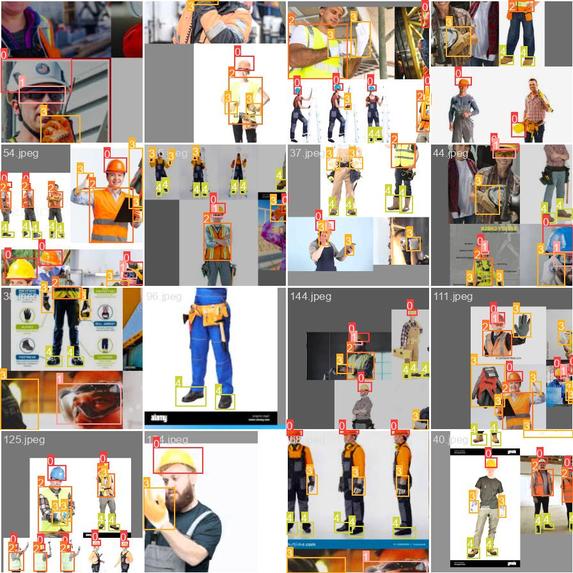
did experiment for detection of ppe kit and other objects
-
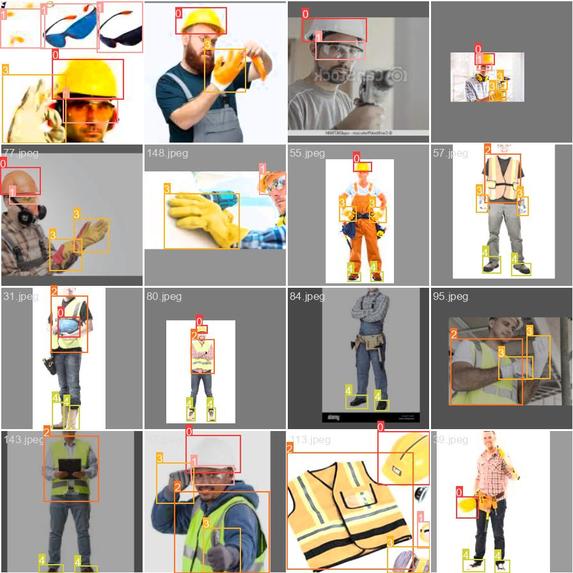
did experiment for detection of ppe kit and other objects
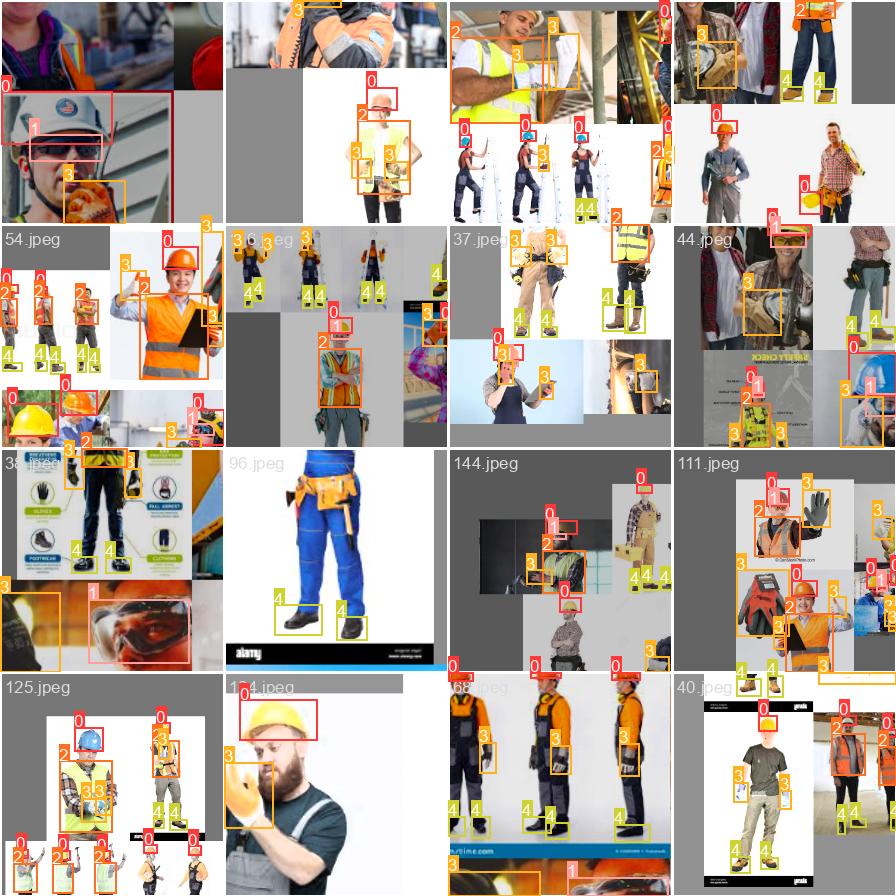
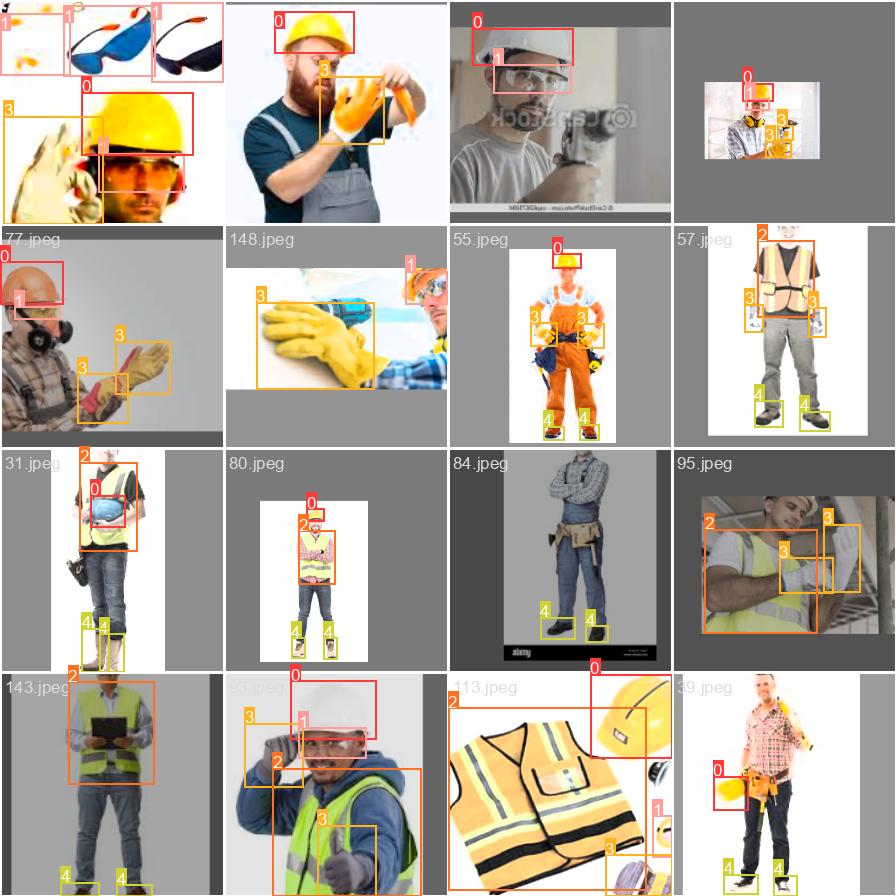
DivyaChakshu – MumbAI Titans
Inspiration
While exploring problems in the construction industry, we realized that most safety solutions focus on monitoring the site from a distance. However, the person who needs the right information the most is the worker on the ground.
Imagine a worker welding on the 12th floor. A supervisor may wonder:
- Is the worker wearing all the required PPE?
- Is the beam being installed correctly?
- Is the latest drawing being followed?
- Has the correct material been delivered?
Answering these questions usually requires someone to walk to the site, make a phone call, or stop the worker to check documents. This slows down work and can also increase safety risks.
This made us think:
What if the worker had an intelligent assistant that could see what they see and answer questions instantly?
That idea became DivyaChakshu—an AI-powered assistant built on smart glasses that aims to improve safety, reduce interruptions, and help workers make better decisions while keeping their hands free.
What it does
DivyaChakshu is a concept for a wearable AI assistant that combines fast on-device processing with more powerful cloud intelligence.
Here's how we envision it working:
Worker wears smart glasses
          ↓
Camera and microphone capture the surroundings
          ↓
Edge AI quickly detects hazards, PPE violations, and reads visible text
          ↓
If a more complex question is asked,
the information is sent to the cloud
          ↓
The AI understands the situation,
retrieves relevant documents,
and generates an answer
          ↓
The response is spoken back to the worker
while important updates are shared with the supervisor
With this workflow, DivyaChakshu could:
- Alert workers if required PPE is missing.
- Detect common workplace hazards.
- Answer questions about manuals or construction drawings.
- Read labels, signs, and documents using OCR.
- Verify whether delivered materials match the purchase order.
- Allow workers to connect with experts without stopping their work.
- Give supervisors a live view of important safety events across the site.
The goal is simple:
Quick responses where speed matters, and deeper AI reasoning when needed.
How we built it
DivyaChakshu is currently at the idea and design stage.
Instead of jumping straight into development, we first focused on understanding the problem, studying existing research, and designing an architecture that could realistically work on construction sites.
Proposed Hardware
- Meta Smart Glasses
- Camera
- Microphone
- Speaker
- Smartphone (to communicate with the cloud)
- Cloud server
Proposed Software
- YOLO for detecting PPE and hazards
- OCR for reading text from the environment
- Speech Recognition
- Vision Language Models (VLMs)
- Retrieval-Augmented Generation (RAG)
- Multi-Agent AI system
- Supervisor Dashboard
How the hardware and software would work together
The smart glasses would continuously capture what the worker is seeing and hearing.
Simple tasks such as detecting helmets, identifying hazards, or reading signs would be handled by lightweight AI models running on the edge. This allows the worker to receive immediate alerts without waiting for cloud processing.
If the worker asks a more complex question—for example, "Am I following the correct installation procedure?"—the relevant image and voice input would be securely sent to the cloud.
There, a Vision Language Model combined with project documents and manuals would understand the situation, generate a response, and send it back as spoken guidance through the glasses.
At the same time, important events like PPE violations, hazard detections, or material verification could be shared with a supervisor dashboard, allowing managers to monitor the site without constantly being physically present.
This hybrid Edge + Cloud approach allows us to balance speed, accuracy, and scalability.
Research
Before designing DivyaChakshu, we explored recent work in AI, computer vision, and construction safety. These papers helped us shape our approach rather than starting from scratch.
Edge–Cloud Vision Language Models for Construction Safety (Adil et al., 2025)
This work highlights that cloud AI offers powerful reasoning but may not always be fast enough for real-time safety applications.
How it influenced us:
It inspired our idea of combining fast edge processing with cloud-based reasoning.
YOLO + Vision Language Model Pipeline (Procedia Computer Science, 2025)
This research combines object detection with vision-language reasoning for construction monitoring.
How it influenced us:
It reinforced our idea of first detecting objects with YOLO and then using a VLM to understand the overall context.
Ontology-aware Vision Language Agent (Chan et al.)
This work focuses on making AI understand construction-site context rather than only recognizing objects.
How it influenced us:
It inspired the idea of building an assistant that understands situations instead of simply identifying items in an image.
Lightweight Vision Language Models for Construction Safety (Sahraoui et al., 2025)
The paper explores lightweight vision-language models that can perform well without requiring massive computational resources.
How it influenced us:
It encouraged us to consider efficient AI models that could eventually work alongside wearable devices.
Visual Question Answering for Safety Compliance (Ding, Liu & Luo)
This paper explores how AI can answer questions based on visual information.
How it influenced us:
It motivated our vision of allowing workers to ask natural questions about their surroundings using voice.
Improvements till now
Although DivyaChakshu is still a concept, we've laid a strong foundation for turning it into reality.
So far, we have:
- Studied research papers on AI for construction safety and wearable intelligence.
- Designed a complete Edge + Cloud architecture for the system.
- Planned four core AI agents:
- Safety Sentinel
- Knowledge Assistant
- Expert Bridge
- Material Verification Agent
- Explored YOLO as a possible solution for PPE and hazard detection.
- Experimented with OCR for reading construction-related text.
- Explored speech recognition to enable hands-free interaction.
- Created a roadmap for integrating all these components into a single wearable assistant.
What's next for MumbAI Titans
Our next step is to turn this idea into a working prototype.
We plan to:
- Build a proof of concept for the complete workflow.
- Integrate YOLO, OCR, and speech recognition into one pipeline.
- Develop the multi-agent backend.
- Connect the software with Meta Smart Glasses.
- Build a supervisor dashboard for real-time monitoring.
- Test the system in simulated construction environments.
- Improve latency and optimize the overall user experience.
We believe DivyaChakshu has the potential to become more than just another safety tool—it can become an AI companion that supports construction workers every day by helping them work safer, smarter, and with greater confidence.
Built With
- docker
- easyocr
- langchain
- langgraph
- opencv
- postgresql
- qwen
- react
- whisper
- yolo
