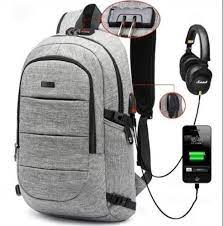
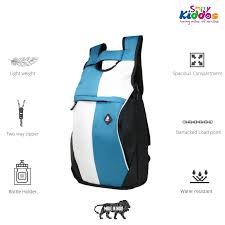
Load carriage is frequently met during the course of normal daily activities among schoolchildren and adolescents. Students use shoulder bags, briefcases or backpacks for carrying what they need (books, stationeries, laptops, and other belongings) to and from schools. Over time most of the students have increasingly been adapted to use backpacks (1, 2). However, there is growing concern among educators, health-care professionals, parents, and legislators that back pain is becoming a serious health issue in school-aged children due to the increased use of heavy backpacks .
Developing a new backpack aiming at reduction of acting force on the torso requires investigation of existing designs, revealing the possibly of relevant pitfalls, and presenting suggestions to resolve the problems. Therefore, ergonomic backpack patents were reviewed as well as patents for extra options, and we followed the criteria of reduction of force on torso and generating safe voltage (less than 50 voltages- AC). The basic considerations were regarded as follows: 1. Making a reduction of acting force on the torso 2. Providing the possibility to inform the wearer about excessive backpack weight 3. Developing a multi-purpose backpack (with especial regard to generating safe voltage) Then, the proposed design was drawn using Solidworks software. 3. Results 1. Reduction of acting force on the torso: The most important innovation of proposed design is using a simple suspending system with four springs (figure 1) which can reduce shearing forces on upper limbs of trunk due to backpack’s weight during walking. Suspending system was embedded in two holding plane frames (A, B) with similar shape, size, and area. These frames jointly act as a scaffold to hold the suspending system, as is described in the following. The holding frame (A) includes ball bearings, and
Built With
- artificialintellengence

Log in or sign up for Devpost to join the conversation.