



Inspiration
I am a university student working on multiple projects and assessments at the same time. Keeping track of deadlines, unfinished tasks, feedback, and where I stopped on each project became overwhelming for one person.
As a student on a tight budget, I wanted a personal secretary for my project folders, not another expensive subscription or complicated team-management tool. Multi-Track was built to help students quickly understand what they have done, what they need to do now, and what comes next.
What it does
Multi-Track is a local-first desktop assistant for project folders.
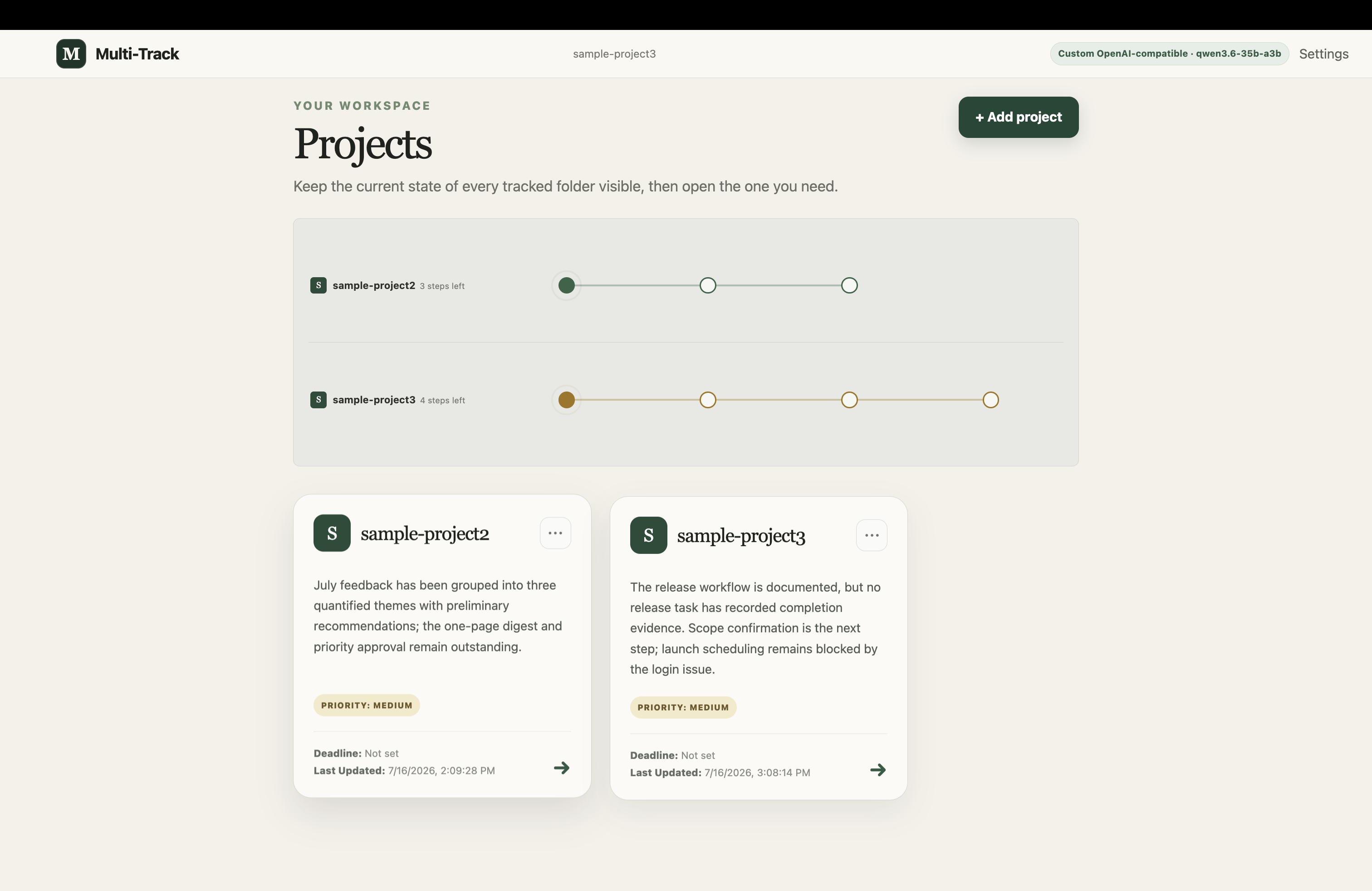
A student selects a folder, reviews which files can be read, and generates a clear project memory. The app creates a project overview, task list, current task, next step, and progress record. Users can also ask grounded questions such as “Where was I up to?” or “What should I do next?”
How we built it
We built Multi-Track as a macOS desktop app using Electron, React, and TypeScript.
The app scans folders locally and lets users approve files before AI analysis. It creates readable Markdown memory inside a .multitrack/ folder, so the project information stays transparent and portable. AI connections support OpenAI, OpenRouter, and compatible APIs.
Challenges we ran into
The biggest challenge was privacy and trust. Student folders may contain private notes, credentials, unfinished work, or files that should not be sent to an AI provider.
To address this, Multi-Track excludes risky files locally, shows users the proposed file boundary before analysis, and only writes inside its own .multitrack/ folder. AI-generated refreshes are shown for review before they are applied.
Another challenge was avoiding complexity. We wanted a tool that helps students between classes and deadlines, not a full business project-management system.
Accomplishments that we're proud of
We are proud that Multi-Track turns an ordinary project folder into a clear, resumable project story.
It helps users see the current task and next step without manually rereading many files. It also keeps project memory as normal Markdown, allowing students to inspect and understand what the app stores.
What we learned
We learned that managing projects is often less about creating a task list and more about recovering context after stepping away.
We also learned that AI is more useful when it supports the user's workflow rather than taking control. Making the process local, transparent, and reviewable was essential to building trust.
What's next for Multi-Track
Next, we want to improve support for student workflows, including clearer deadline tracking, richer task editing, more file formats, and better ways to compare project progress across multiple assessments.
We also want to keep improving the personal-secretary experience: helping students return to work quickly, understand their priorities, and stay focused without adding more stress.

Log in or sign up for Devpost to join the conversation.