-
-
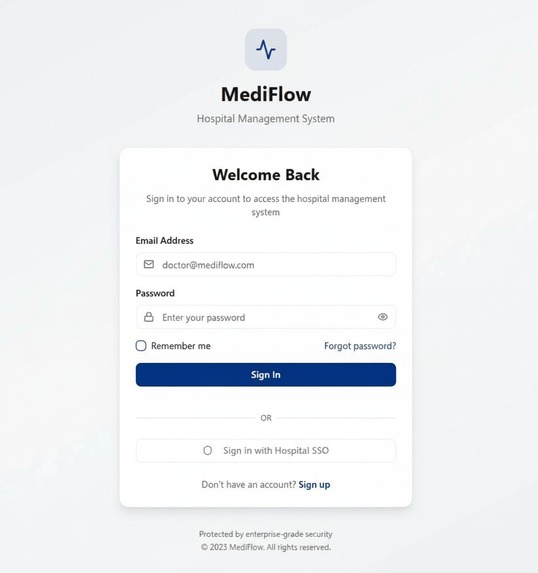
Login Screen
-
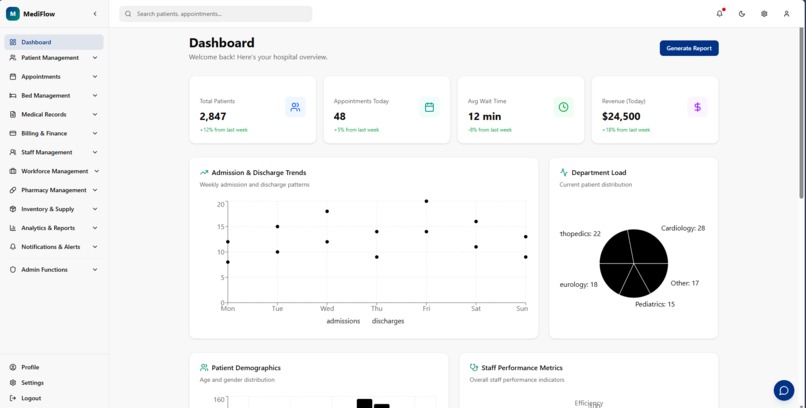
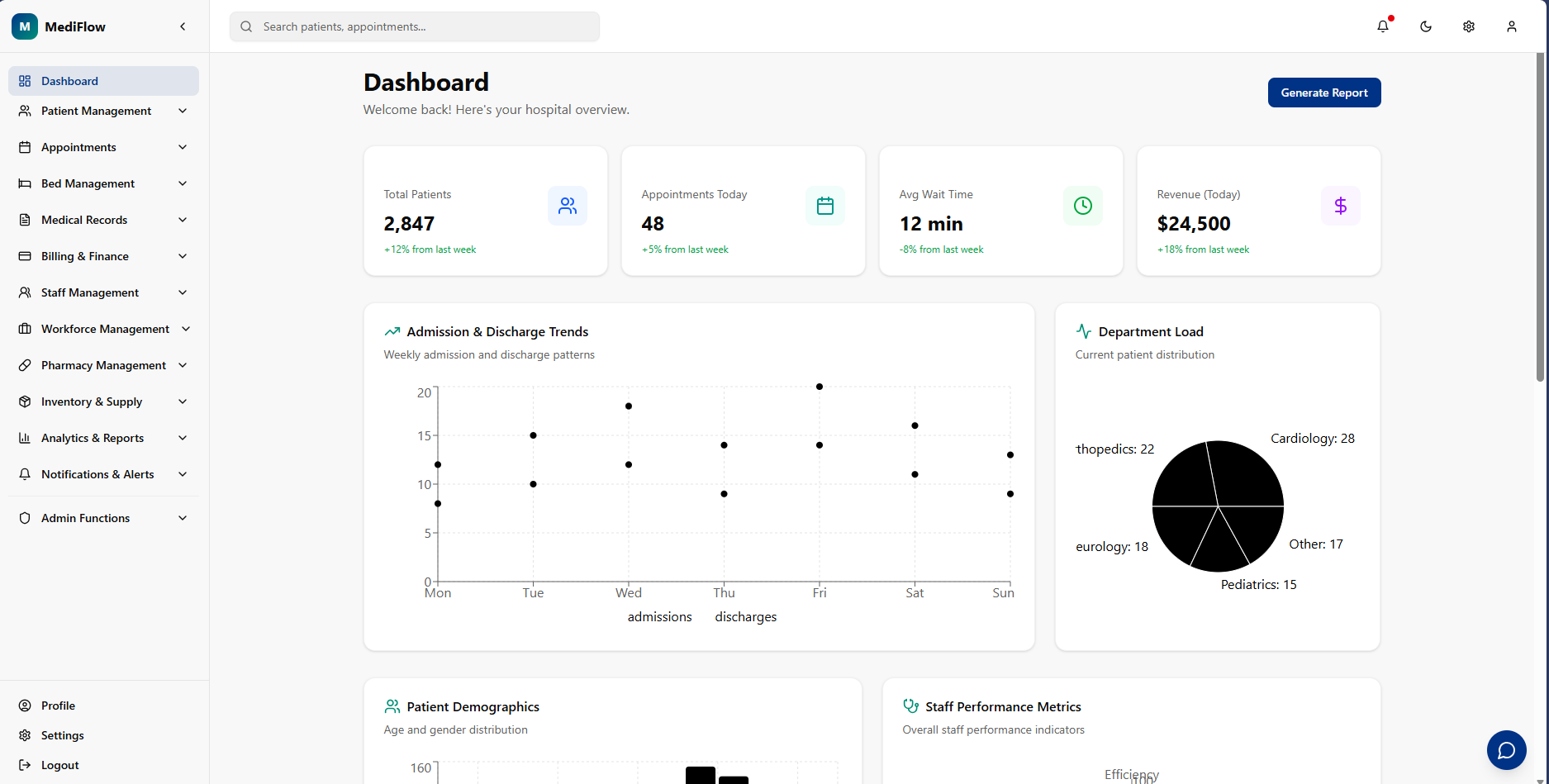
Dashboard
-
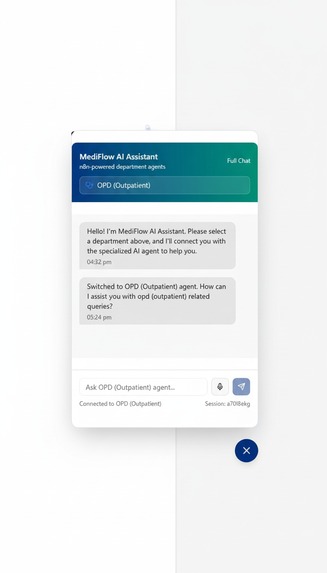
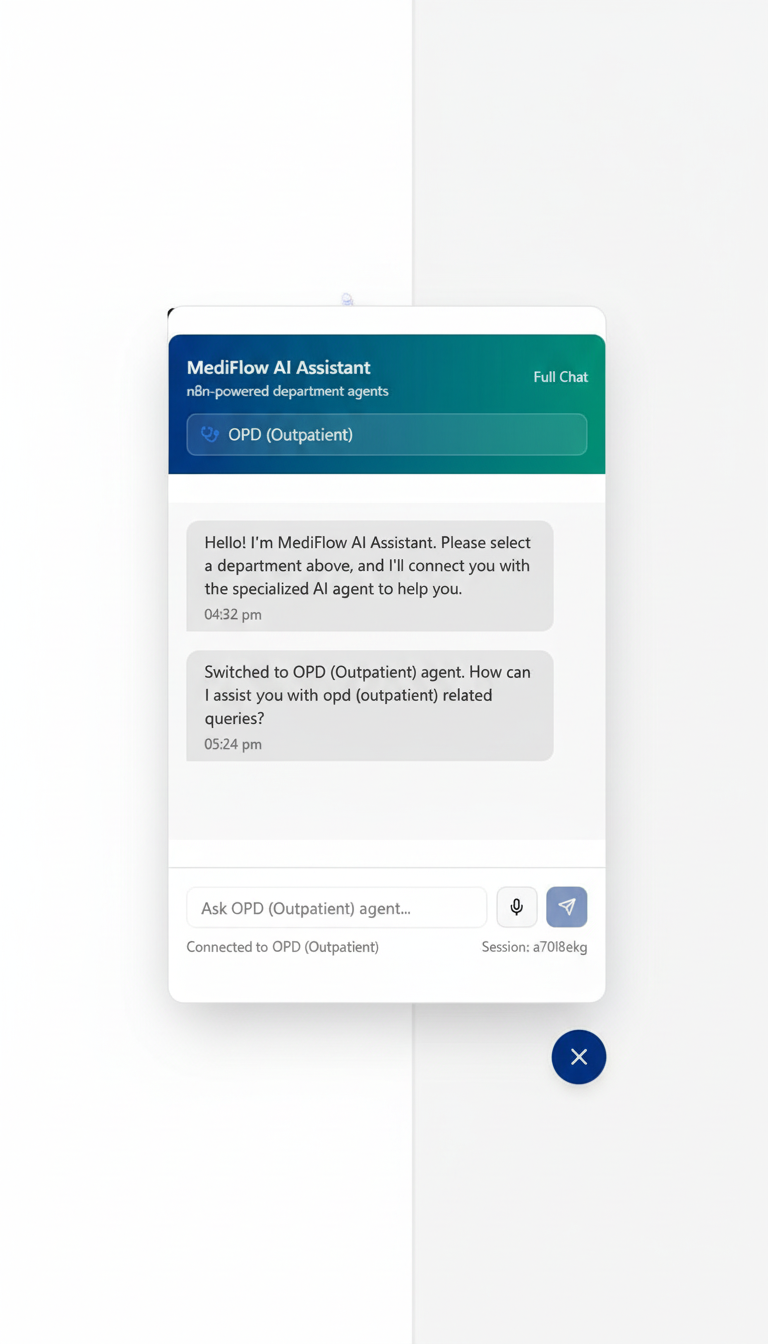
AI Chatbot
Inspiration
Building a scalable, production-ready healthcare system is challenging and time-consuming. We wanted to demonstrate how Kiro AI can accelerate development while maintaining enterprise-grade quality.
What it does
A multi-tenant hospital management system that provides complete data isolation between hospital tenants while maintaining a unified codebase. Features include:
- Patient Management: Manage patient records with 32 fields per patient
- Appointments: Schedule and manage appointments across departments
- Medical Records: Store clinical documentation, lab reports, and imaging
- Bed Management: Track bed availability and patient assignments
- AI Chatbot: MedChat - AI-powered medical assistant for patient queries
- Role-Based Access Control: 8 hospital roles with 20+ granular permissions
- Real-time Monitoring: Health checks and uptime management
How we built it
Tech Stack:
- Backend: Node.js 18 with TypeScript (Express.js 5.x)
- Database: PostgreSQL 14 with schema-based multi-tenancy
- Frontend: Next.js 16 with React 19 and Tailwind CSS
- Mobile: Flutter application
- Cloud: AWS (Cognito, S3, SES, Lightsail)
- Workflow: n8n for automated processes
Kiro AI Development Approach:
- Vibe Coding: Rapid feature development through natural language
- Spec-Driven Development: Structured implementation of complex features
- Steering Docs: Architecture enforcement across 40,000 lines
- Agent Hooks: Automated security and quality validation
- MCP Integration: Extended capabilities for testing and deployment
Challenges we ran into
- Implementing schema-based multi-tenancy with complete data isolation
- Managing 14 tenant schemas with automatic schema switching
- Ensuring JWT validation and tenant context on every request
- Balancing performance optimization on a single Lightsail instance
Accomplishments we're proud of
- 99.9% Uptime: Production deployment with zero downtime
- 14 Active Tenants: 39 real users, 159 patients, zero isolation breaches
- 40,000 Lines: 80% generated by Kiro AI
- 1 Month: Traditional 4-6 months compressed to 1 month
- 60-70% Cost Savings: vs. traditional team-based approach
- 90% Test Coverage: Automated testing across all features
- Zero Security Incidents: No vulnerabilities or data leaks
What we learned
- AI can generate production-quality code when properly guided
- Steering documents are critical for consistency in large codebases
- Multi-tenant architecture requires rigorous security enforcement
- Small teams can build enterprise systems with AI assistance
What's next
- Pharmacy management module
- Laboratory management system
- Advanced analytics dashboard
- AI-powered diagnosis assistance
- Telemedicine integration
- White-label solution for hospitals

Log in or sign up for Devpost to join the conversation.