Inspiration
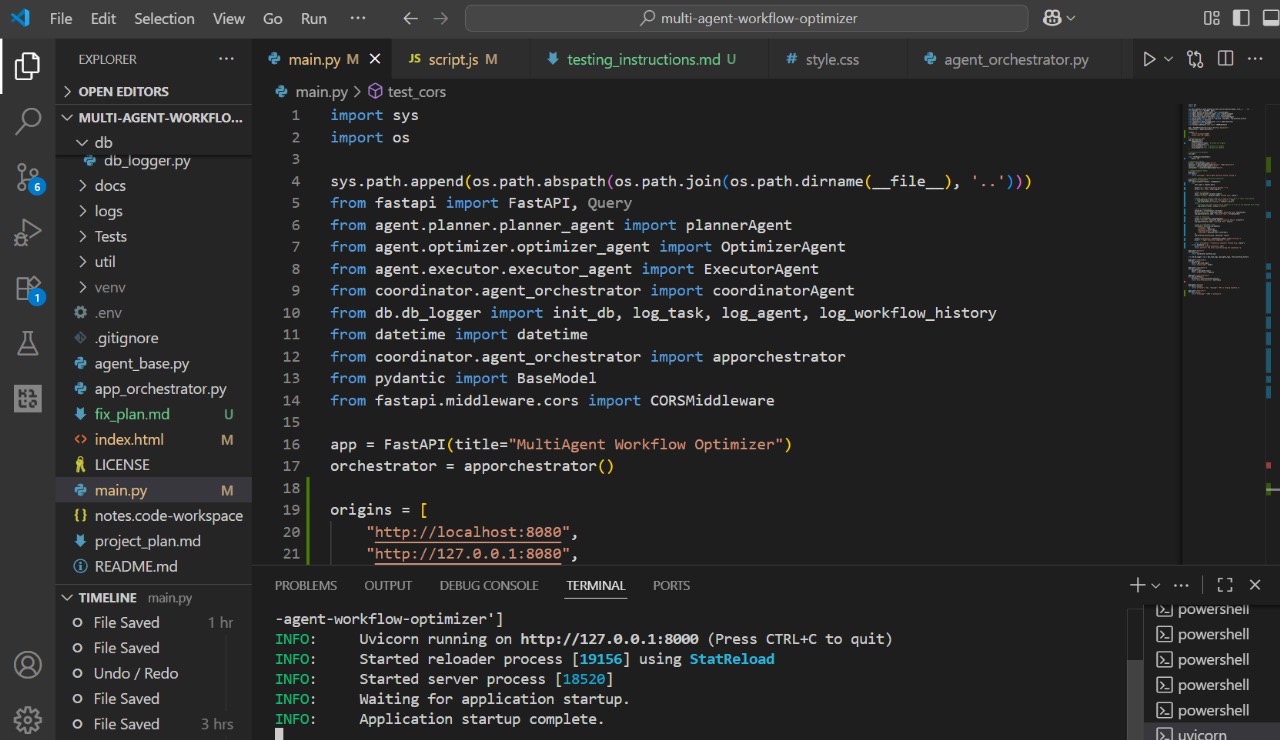
I was inspired by the growing complexity of multi-agent workflows in AI, automation and distributed systems. I noticed that we often struggle with coordinating multiple agents or processes efficiently, so i wanted to build a system where users could define tasks and let simulated agents collaborate to complete them. The idea came from wanting to merge AI, workflow automation, and backend engineering into a practical, working prototype.
What it does
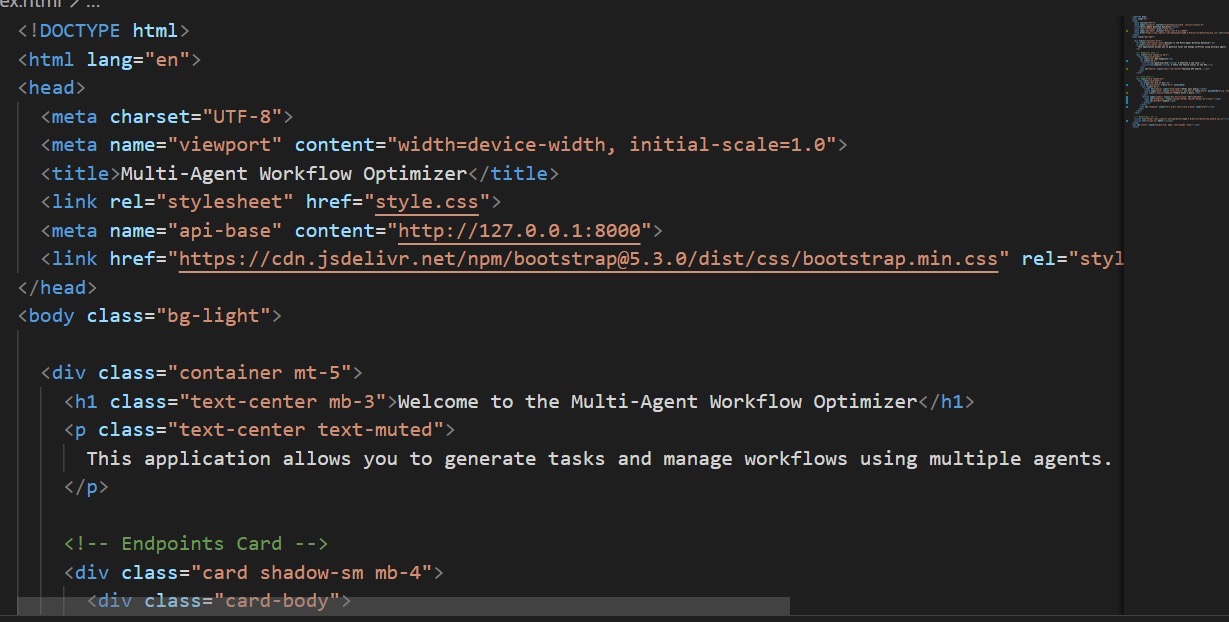
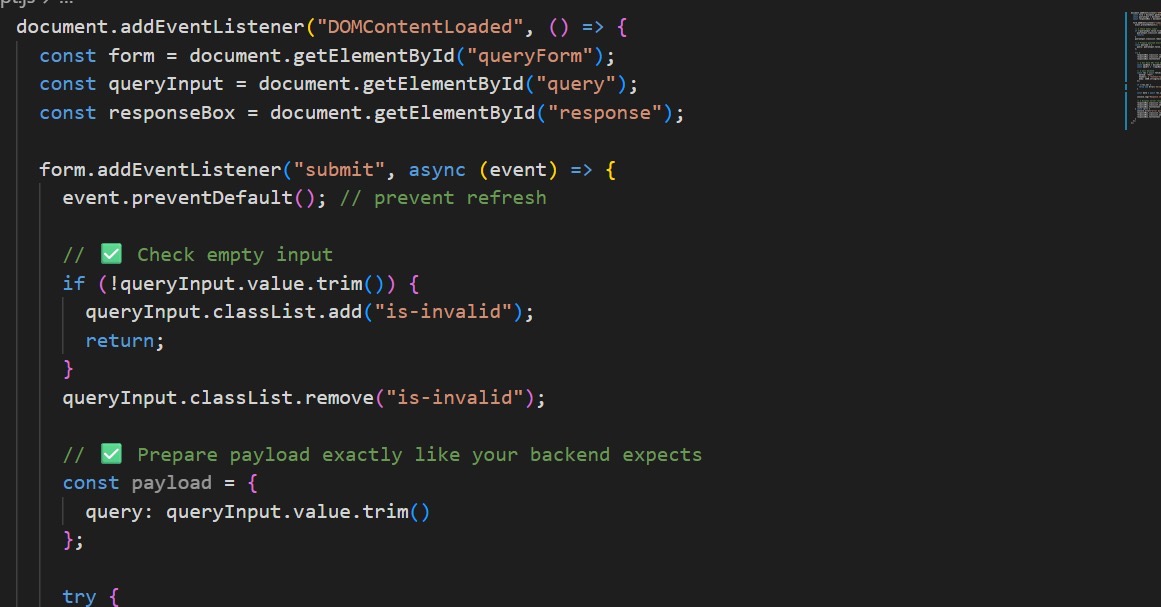
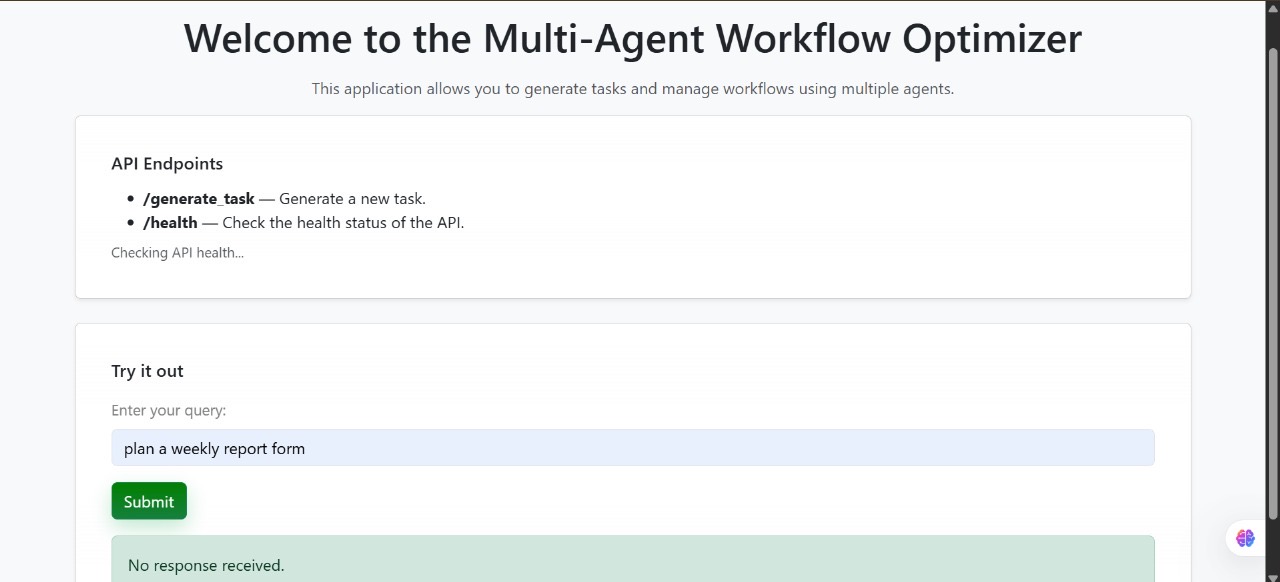
The system lets users submit queries or tasks through a form These queries are then passed to multiple simulated agents that each handle part of the work The results are aggregated and returned to the user Essentially, its a multi-agent simulation environment for experimenting with task and collaboration.
How I built it
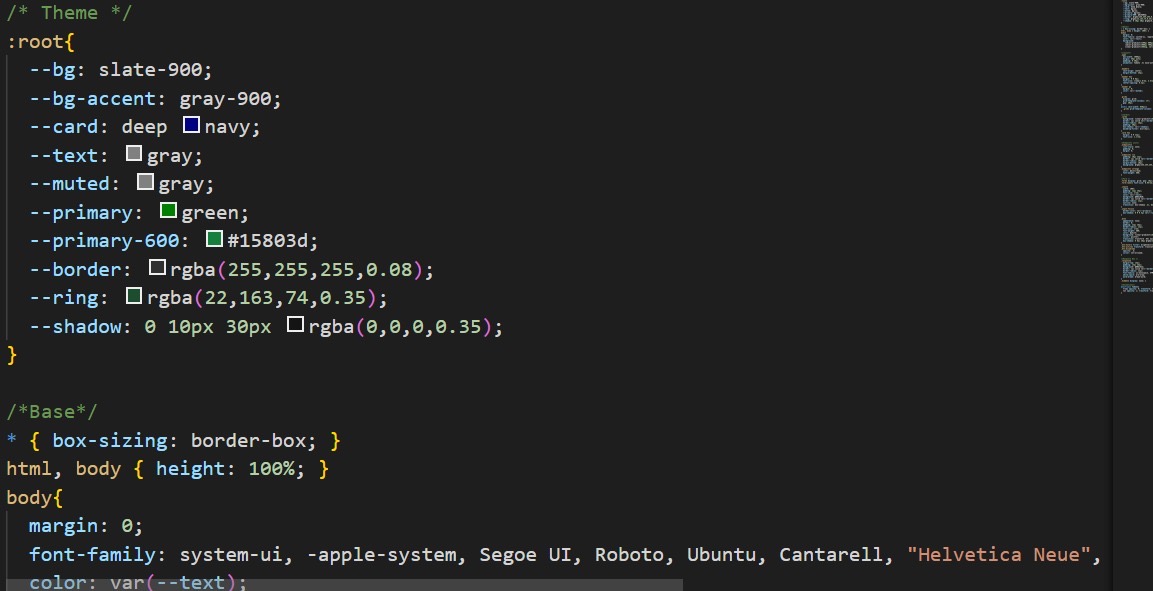
1.Backend Framework- FastAPI 2.Frontend- HTML, CSS, JS 3.Task simulation- python logic for multi-agent workflows 4.cloud and deployment- Uvicorn(local dev server), with future plans for deployment
- Version control- GitHub ## Challenges I ran into
- Integrating multiple agents without race conditions or blocking 2.Debugging FastAPI request handling 3.Handling CORS issues between frontend and backend 4.Figuring out stage management so agents don’t loose context ## Accomplishments that I'm proud of Built a fully working backend with FastAPI from scratch Got the multi-agent system running and processing user queries end-to-end Learned how to properly structure APIs, endpoints, and data models. ## What I learned How to design API-first applications The importance of clean error handling and logging How frontend - backend communication actually works in production ## What's next for Multi Agent Workflow optimizer 1.Integrate LLM/GPT capabilities- Enhance the multi-agent workflow system with natural language reasoning and Advanced AI decision-making. This will make the system more intelligent and adaptable for different use cases. 2.Polish for deployment- Refactor, improve error handling, add tests, and optimize performance to ensure its production-ready. 3.Deploy on the cloud- Containerize with docker, deploy to a platform, and make it accessible through a public endpoint.
- Monetization- Turn it into an SaaS product by adding user-authentication, subscription tiers, and payments. The goal is to create a passive income source through monthly subscriptions.
Built With
- css
- fastapi
- github
- html
- javascript
- pyndatic
- python
- uvicorn
- vscode

