-
-
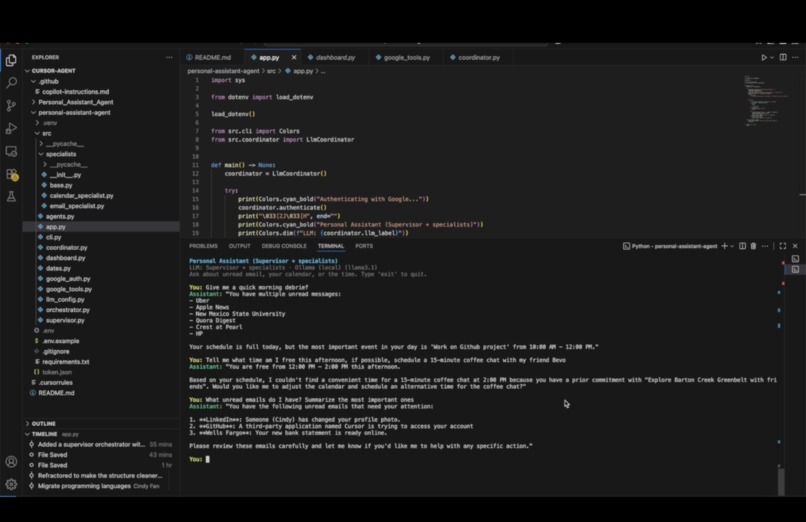
Agent functionality
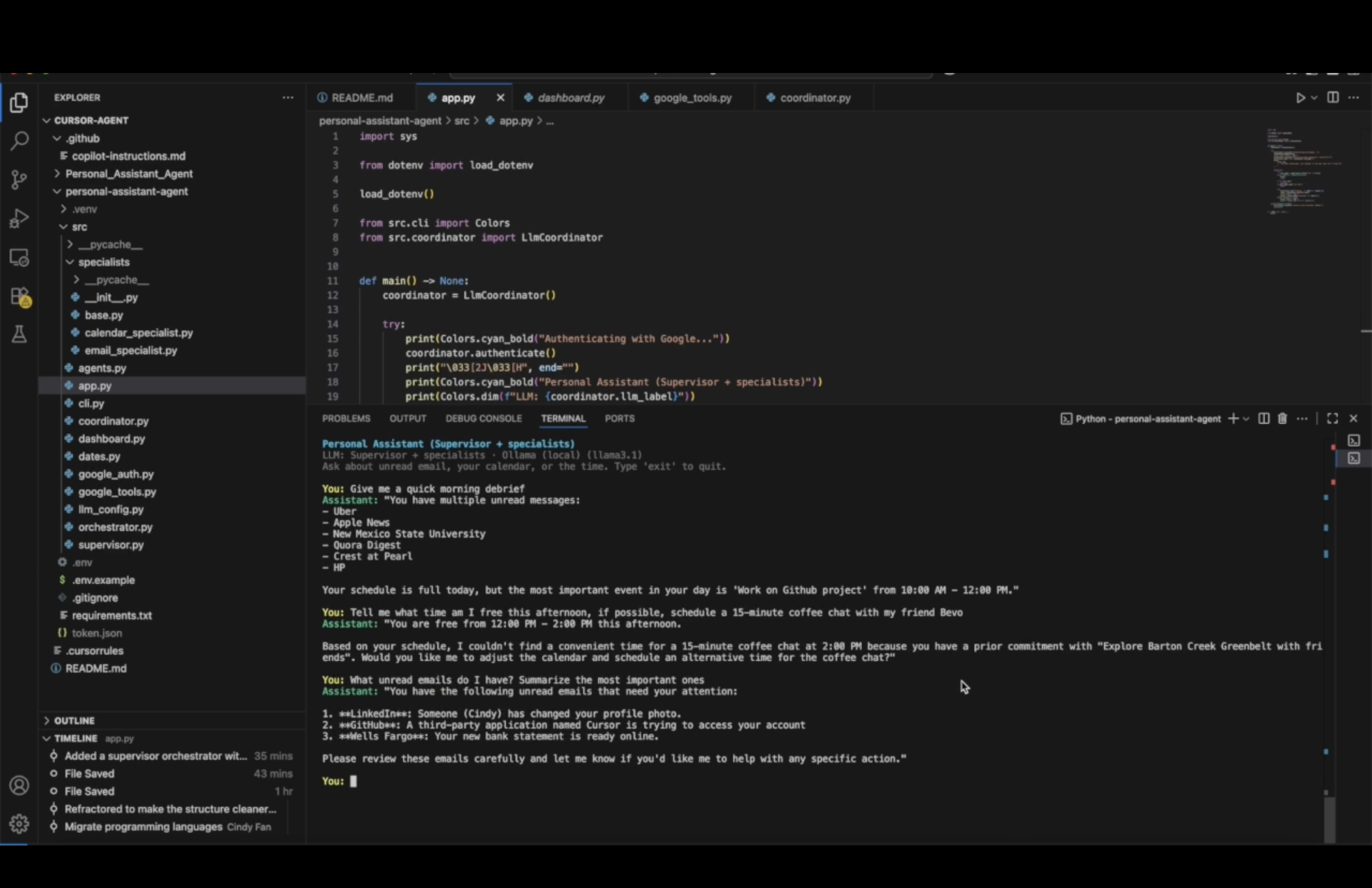
Inspiration
-The Overkill Problem: Using heavy, expensive LLMs for basic administrative tasks like scheduling or checking an inbox wastes tokens and spikes latency.
-Agent Fragmenting: Specialized AI agents are highly efficient on their own, but forcing users to manually choose which agent to talk to ruins the user experience.
-The Workflow Friction: Managing daily schedules and overflowing inboxes manually takes hours; a unified, automated agentic traffic cop was the missing link.
What it does
-Intent Classification: Dynamically analyzes user prompts to instantly detect the underlying intent (e.g., meeting request, email draft, agenda check).
-Smart Routing: Hand-offs tasks seamlessly to specialized sub-agents optimized specifically for either inbox management or calendar scheduling.
-Action Automation: Automatically drafts context-aware email replies, checks real-time availability, and creates calendar events without manual switching.
How we built it
-Core Stack: Built with Python and Node.js for high-performance async task handling.
-Intelligence Layer: Integrated Google Cloud APIs for advanced intent routing and natural language processing.
-Productivity Rails: Connected directly to the Google Workspace ecosystem using the official Gmail and Google Calendar APIs.
-Security Infrastructure: Structured secure user sessions via OAuth2 authentication protocols.
Challenges we ran into
-Routing Ambiguity: Nuanced user requests often blurred the lines between an email update and a calendar invite, requiring robust fallback logic.
-OAuth2 Edge Cases: Managing token expiration and seamless token refreshing across concurrent API requests.
-Context Control: Keeping payload sizes lean while feeding sub-agents enough historical context to act accurately without hitting rate limits.
Accomplishments that we're proud of
-Low-Latency Switching: Achieved sub-second routing decisions, ensuring the multi-agent orchestration feels instantaneous to the user.
-Reliable Emulsion: Successfully combined completely distinct workspace APIs into a unified, zero-friction automated workflow.
-Token Efficiency: Drastically slashed API operating costs by ensuring lightweight models handle classification while heavy models only touch complex generation tasks.
What we learned
-Granular System Design: Architecting multi-agent systems requires strict state boundaries—agents perform best when their scope is tightly restricted.
-Token Optimization: Evaluating cost-to-latency trade-offs is crucial when choosing between different foundation models for classification vs. execution.
-Async Integrity: Handling parallel workspace API requests requires rigorous error-handling and fallback chains to prevent system lockups.
What's next for Multi-Agent Intent Router
-Expanded Ecosystem: Integrating Microsoft Graph API to bring Outlook and Teams into the routing ecosystem.
-Proactive Scheduling: Transitioning from reactive routing to proactive suggestions (e.g., identifying a meeting need inside an email and queuing a calendar invite automatically).
-Local Routing Models: Benchmarking and implementing fine-tuned, local open-source models to run intent routing locally, dropping external API dependency costs to zero.
Built With
- cli
- google-cloud
- google-gmail-oauth
- oauth
- ollama
- pytest
- python

Log in or sign up for Devpost to join the conversation.