-
-
AI_agents
-
AI_agents
🧩 Project Story — Multi‑Agent‑DevOps‑Gemini
🌟 Inspiration
Modern DevOps teams are overwhelmed by routine operational work: planning, tracking progress, analyzing risks, reviewing architectures, debugging pipelines, and generating reports.
Most existing “AI DevOps tools” are essentially single chatbots with oversized prompts — fragile, opaque, and hard to trust in production.
This project was inspired by a simple question:
What if DevOps automation followed the same principles as real engineering teams — clear roles, accountability, observability, and long‑running ownership of tasks?
Multi‑Agent‑DevOps‑Gemini was built to demonstrate a gold‑standard multi‑agent architecture where each agent has a well‑defined responsibility, transparent reasoning, and production‑ready behavior — not prompt chaos.
🤖 What it does
Multi‑Agent‑DevOps‑Gemini is an intelligent multi‑agent system that automates core DevOps workflows using Google Gemini 3.
It provides:
- Strategic planning and task decomposition
- Architecture diagram analysis (vision + reasoning)
- Risk and compliance assessment
- Progress and velocity tracking
- Autonomous code generation, testing, and debugging
- Long‑running tasks with persistent state
- Human‑readable technical digests
- Observability via metrics and health monitoring
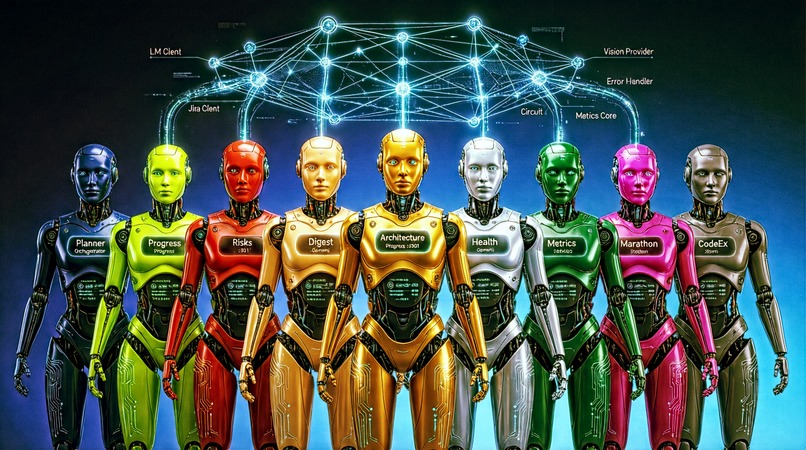
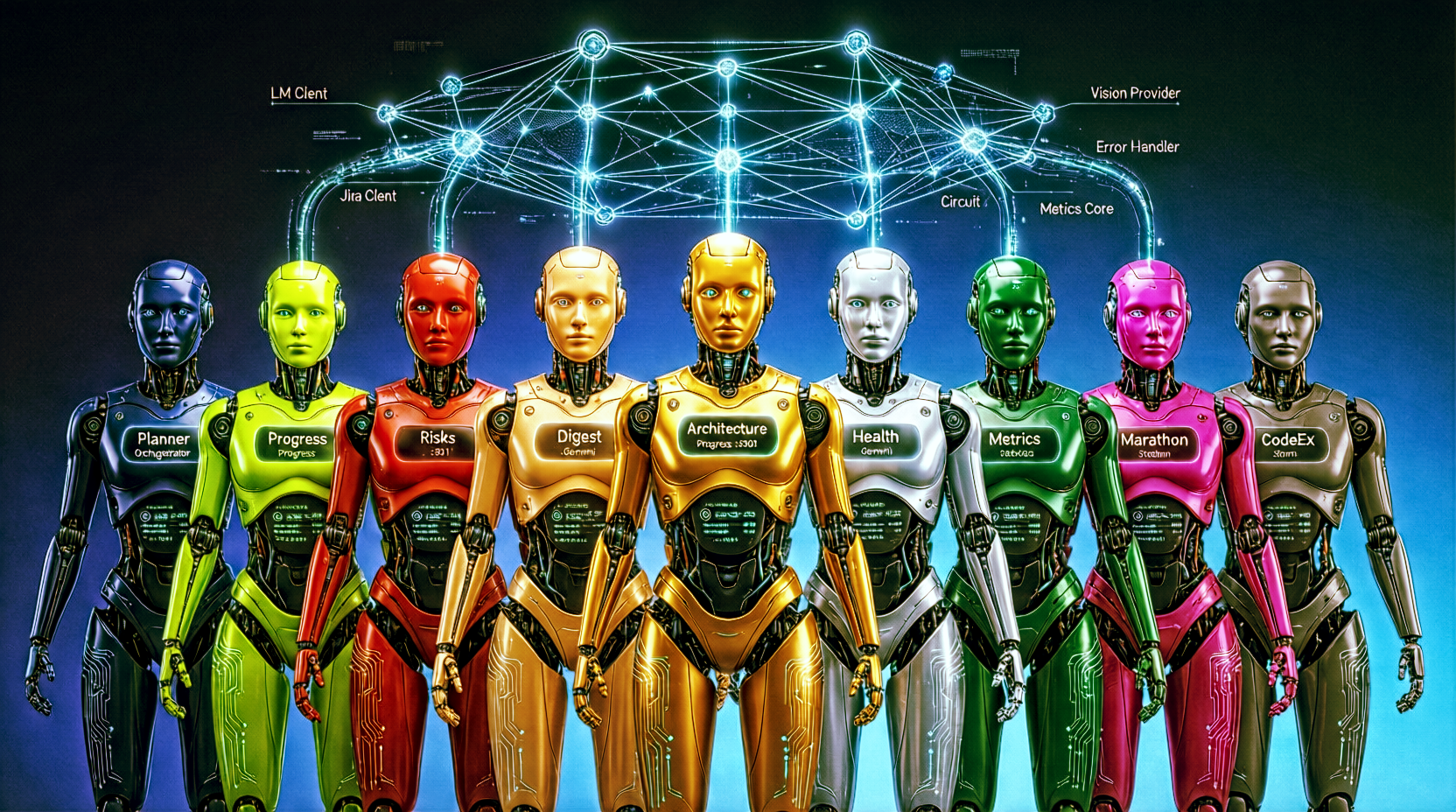
All of this is handled by 9 specialized agents, orchestrated via n8n, communicating through a unified MCP protocol.
The result is not a chatbot — but an AI DevOps assistant team.
🏗️ How we built it
The system is built as a distributed microservice architecture:
- 9 independent agents, each running as a FastAPI service in its own Docker container
- n8n acts as the workflow orchestrator, enabling parallel execution, branching logic, and retries
- Google Gemini 3 is used for:
- Text reasoning
- Long‑context planning
- Vision‑based architecture analysis
- Text reasoning
- MCP (Model Context Protocol) ensures structured, auditable communication between agents
Each agent exposes:
/healthendpoint/mcptool interface- Structured reasoning steps
- Unified logging
Special focus was placed on:
- Observability (metrics, health checks)
- Failure isolation
- Deterministic outputs
- Reproducibility
This aligns with both Marathon Agent (long‑running tasks with state) and Vibe Engineering (autonomous iteration and self‑correction) tracks.
⚠️ Challenges we ran into
- Multimodal input handling: reliably resolving image paths across containers, UI inputs, and agent services
- Agent coordination: ensuring agents collaborate instead of duplicating work
- Long‑running reasoning: maintaining state across extended tasks
- Avoiding prompt spaghetti: designing agents as systems, not prompt blobs
- Production realism: treating agents like real services with health, metrics, and failure modes
Each challenge pushed the architecture closer to real‑world DevOps standards.
🏆 Accomplishments that we're proud of
- A true 9‑agent architecture, not a single LLM wrapper
- Gemini Vision used for real architectural diagram analysis
- Long‑running tasks with persistent reasoning state
- Autonomous code generation with testing and self‑correction
- Observability‑first design (metrics, health, resilience)
- Clean separation of responsibilities — gold‑standard multi‑agent design
- Fully containerized and reproducible system
📚 What we learned
- Multi‑agent systems work best when designed like engineering teams, not prompt experiments
- Observability is just as important for AI agents as for microservices
- Vision + reasoning unlocks powerful architectural insights
- Long‑context models enable real “ownership” of tasks over time
- Structured protocols (like MCP) are essential for scalable agent systems
🚀 What’s next for Multi‑Agent‑DevOps‑Gemini
- CI/CD pipeline integration (GitHub Actions, GitLab CI)
- Incident response automation
- Cloud cost optimization agents
- Jira / GitHub bidirectional sync
- Role‑based agent access
- Production hardening for enterprise DevOps teams
The goal is clear:
Automate routine DevOps work using agents built like real systems — not chatbots.

Log in or sign up for Devpost to join the conversation.