-
-
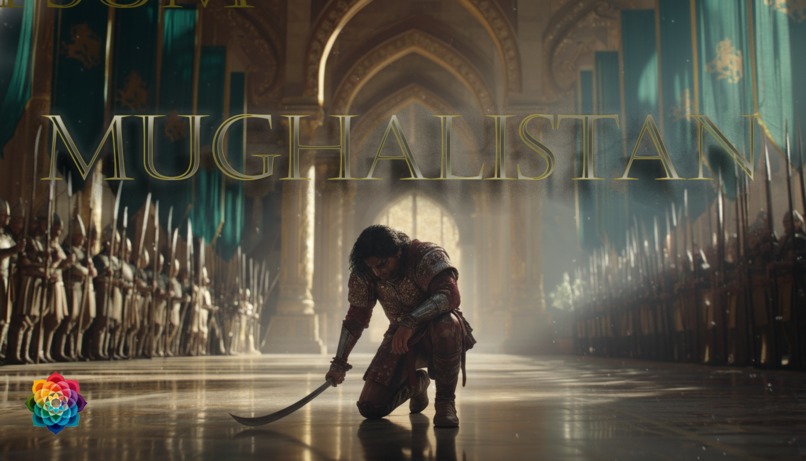
Mughalistan - Teaser Trailer
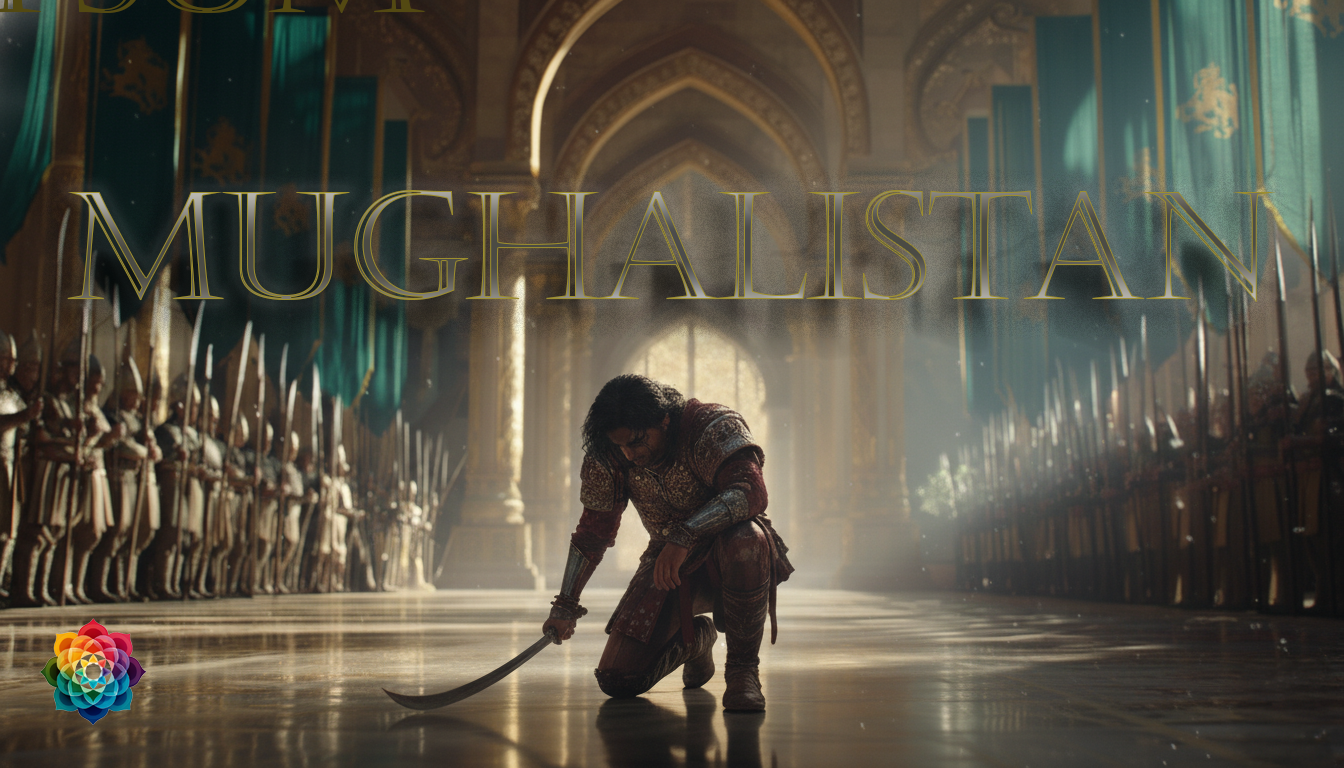
Mughalistan reimagines world history through a single divergence point: the Mughal Empire never collapsed.
Set in the year 2045, this cinematic universe explores a planet ruled by five mega-empires, each shaped by centuries of alternate geopolitics. The teaser trailer introduces the audience to a prophetic crisis inside Mughalistan, told through the visions of a young crown prince who foresees the empire’s fall.
This project blends world-building, AI cinematics, alt-history, and narrative design into a unified cinematic presentation.
Inspiration
I’ve always been fascinated by Islamic history, the Mughal golden age, and the question: “What if the empire never fell—and reached the future?”
Shows like The Man in the High Castle, Dune, and Foundation inspired me to explore political themes, prophetic storytelling, and grand visual worlds.
What it does
Mughalistan — The Empire That Never Fell is a fully AI-driven cinematic world-building project that reimagines global history and projects it into a futuristic 2045. The project uses AI to create:
- A complete alternate geopolitical world with five superpowers (Al-Khams al-Aʿẓam)
- Cinematic teaser trailers blending AI video, soundtrack generation, and narrative design
- Deep lore, characters, and prophecy-driven storytelling
- High-fidelity visuals that mix Mughal aesthetics with futuristic sci-fi elements
The teaser serves as the opening chapter of a much larger vision. The full project will expand into a 10-episode series, exploring:
- The rise and evolution of each empire
- Political conspiracies, rebellions, and global tensions
- The prophecy surrounding the Mughal crown prince
- The betrayal that sparks a worldwide conflict
This universe is designed for longevity, allowing future spinoffs, character arcs, prequels, and explorations of other empires (Britannic Alliance, Sino-Pacific Dominion, Russo-Eurasian Covenant, and Ottoman Confederacy).
In essence, Mughalistan demonstrates how AI can build an entire cinematic universe—from map to mythology, from soundtrack to screen—opening the door for scalable storytelling across formats.
How we built it
I used a multi-AI pipeline:
Midjourney → concept art, characters, world visuals
Veo 3.1 → cinematic sequences with motion, dynamic camera, and atmosphere
Suno → soundtrack creation blending Sufi tones, orchestral motifs, and futuristic textures
MagnificAI → for upscaling the images.
ChatGPT → lore, narration, dialogue, geopolitics, timeline design
Adobe Premiere → Video editing for assembling sequences, color grading, pacing, and transitions
I structured the world as five superpowers (Al-Khams al-Aʿẓam), crafted a 500-year alternate timeline, and designed a narrative centered on prophecy and betrayal.
Challenges we ran into
Balancing historical authenticity with futuristic design
Creating consistent characters across multiple AI tools
Coordinating dozens of shots with coherent lighting, culture, and costume design
Maintaining narrative clarity in a fast-paced teaser format
Rendering large AI sequences under time constraints
Despite these, the project became a fully realized cinematic concept—laying the foundation for a full series.
Accomplishments that we're proud of
Built a complete alternate-history universe using AI tools—maps, politics, empires, religions, culture, economics, and future tech.
Produced a fully AI-generated cinematic teaser trailer, combining Veo video generation, Midjourney world design, and Suno orchestral-Sufi music.
60k+ views, Shared 400+ times and 800+ likes on instagram.
Created consistent character identity and visual language across dozens of shots, outfits, environments, and timelines.
Developed a robust 500-year alternate timeline, bridging Mughal history with future sci-fi aesthetics.
Achieved a cohesive blend of historical narrative + futuristic world-building, something rarely accomplished through AI alone.
Designed a scalable, lore-rich franchise structure with potential for series, films, games, and spinoffs.
Learned how to coordinate multiple AI tools into a single pipeline, creating something truly cinematic within a short timeframe.
What we learned
How to use multiple AI tools (Midjourney, Veo, Suno, and ChatGPT) in harmony to create a unified cinematic experience.
The importance of lore consistency—matching outfits, lighting, culture, geography, and character arcs across different AI outputs.
How to write political, cultural, and historical narratives that build emotional investment even in short-form content.
Techniques for improving AI video coherence—camera prompts, environmental continuity, and motion planning.
How modern AI can dramatically speed up pre-production pipelines for world-building, concept art, storyboards, and mood films.
The value of thinking like a showrunner—structuring a universe that can expand across multiple media formats.
Balancing creative mythology with realistic geopolitics to make an imaginary world feel grounded and believable.
What's next for Mughalistan - Teaser Trailer
The teaser is just the beginning.
Next, we will release a series of 6–7 world-building shorts that gradually expand the Mughalistan universe. These shorts will explore:
The rise of each of the five super-empires
The Great War of the 1950s and how the world was reshaped
Mughalistan's economy, politics, religion, and culture
The rivalries and alliances between the superpowers
The prophecy tied to the throne and the coming betrayal
Key characters such as the Shehenshah, Crown Prince Jalal-ud-Din Khurram, and the philosopher Zakria
The tense social landscape within Mughalistan—rebellions, separatists, and geopolitical manipulation
These shorts act as the foundation for the main 10-episode series, giving viewers the historical and political context they need to fully understand the world before Episode 1 begins.
The long-term plan includes:
Expanding into multiple seasons
Creating spin-offs for each empire
Building a rich transmedia universe with books, lore guides, cinematic trailers, and interactive maps
Leveraging improved AI tools to enhance cinematics and storytelling
Built With
- above
- already
- mentioned

Log in or sign up for Devpost to join the conversation.