-
-
Mugen
-
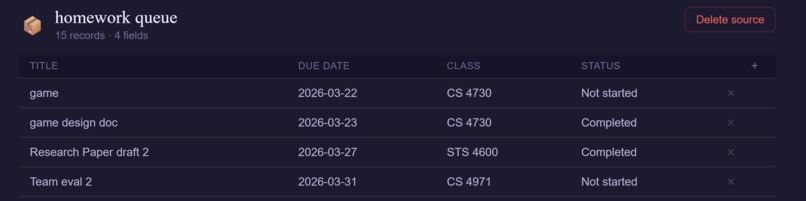
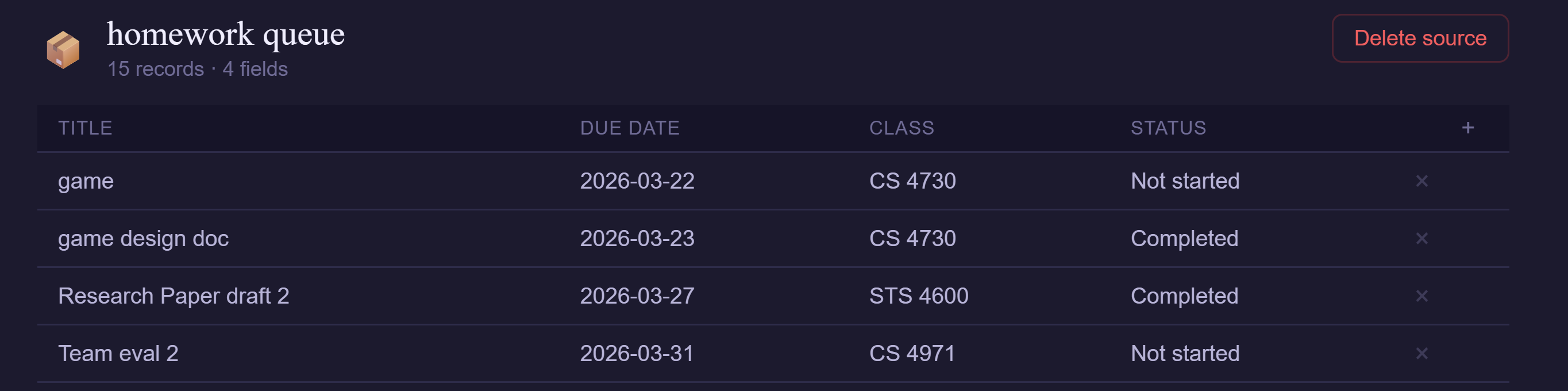
Data source
-
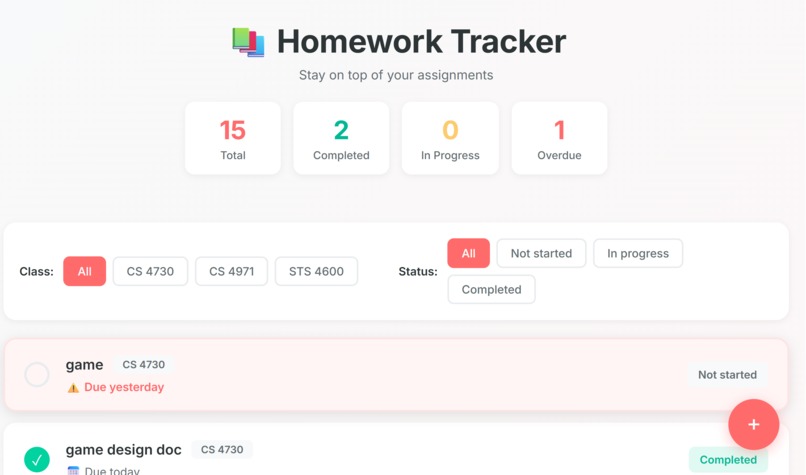
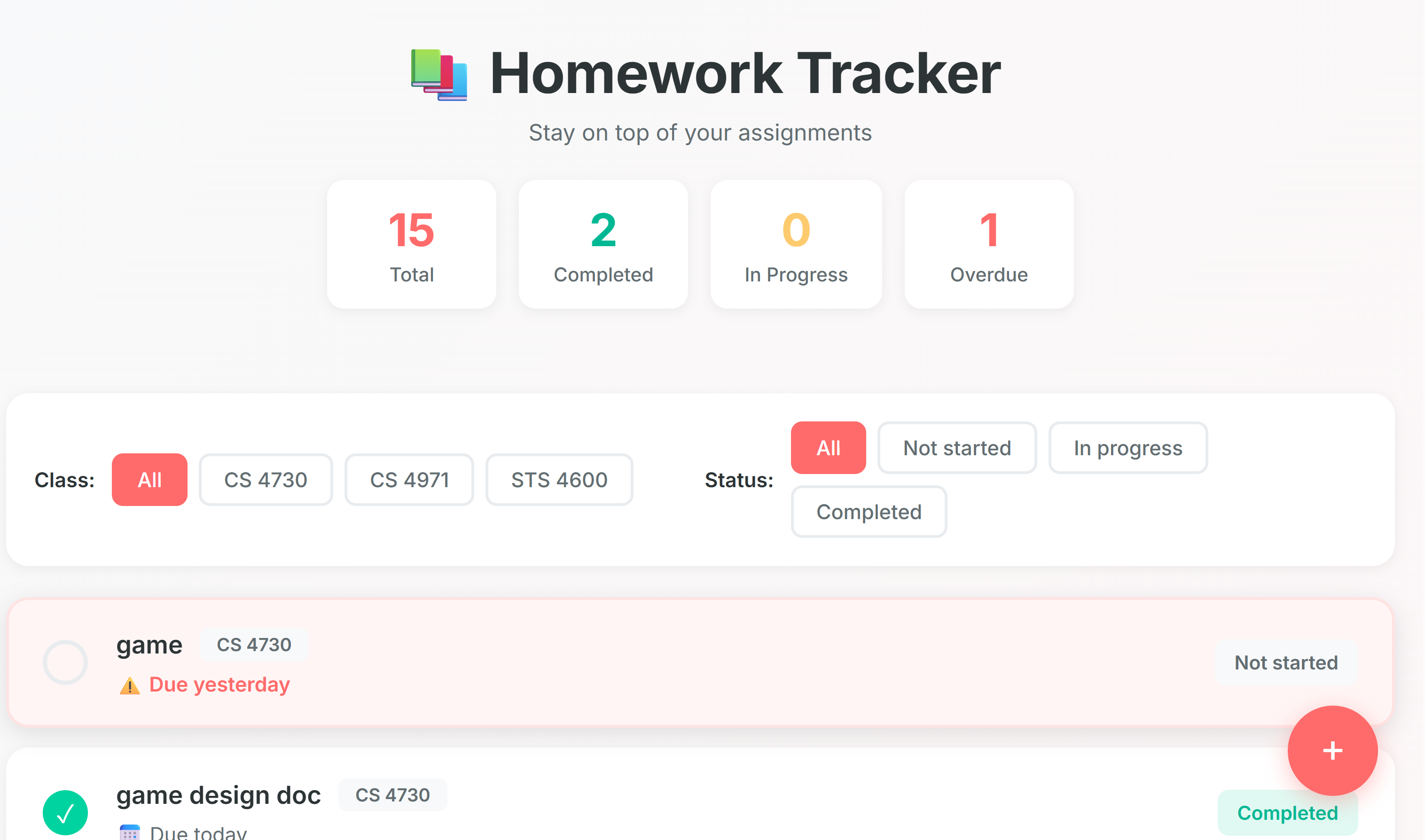
Homework tracker app that integrates with existing data source (uploaded from Notion)
-
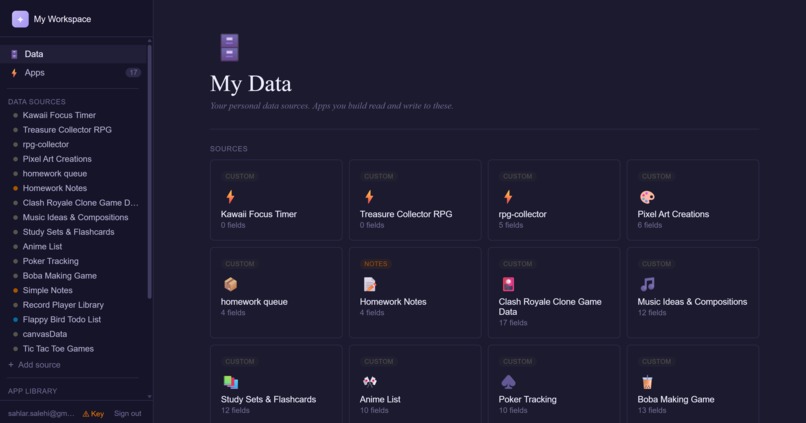
Data home page
-
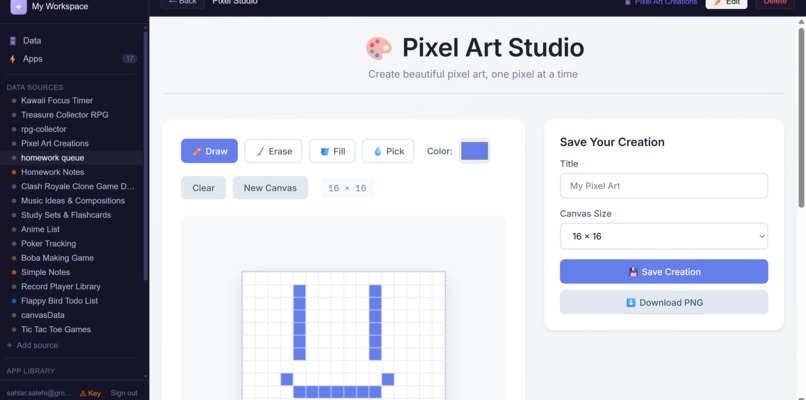
Pixel art editor app made by Mugen
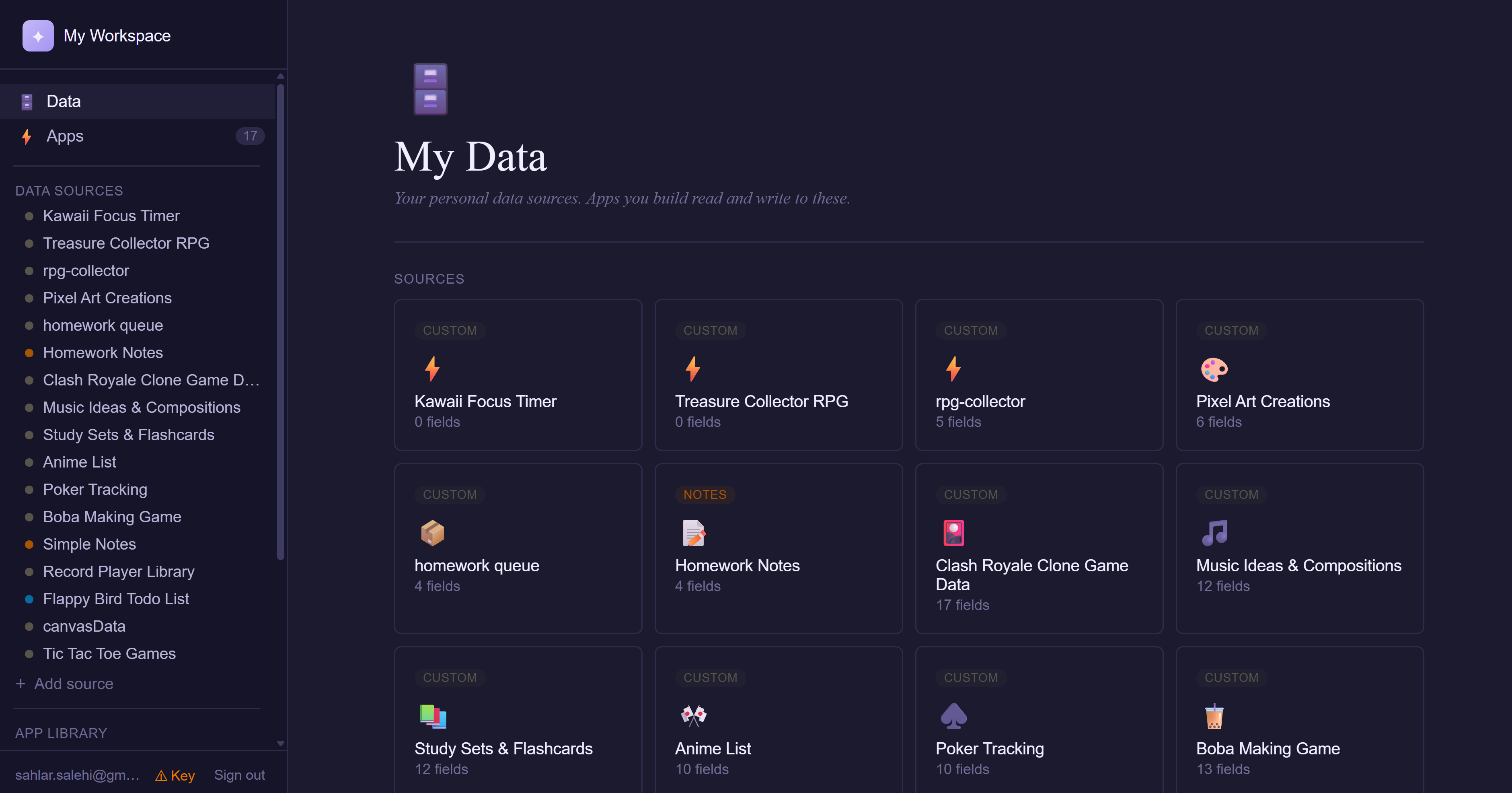
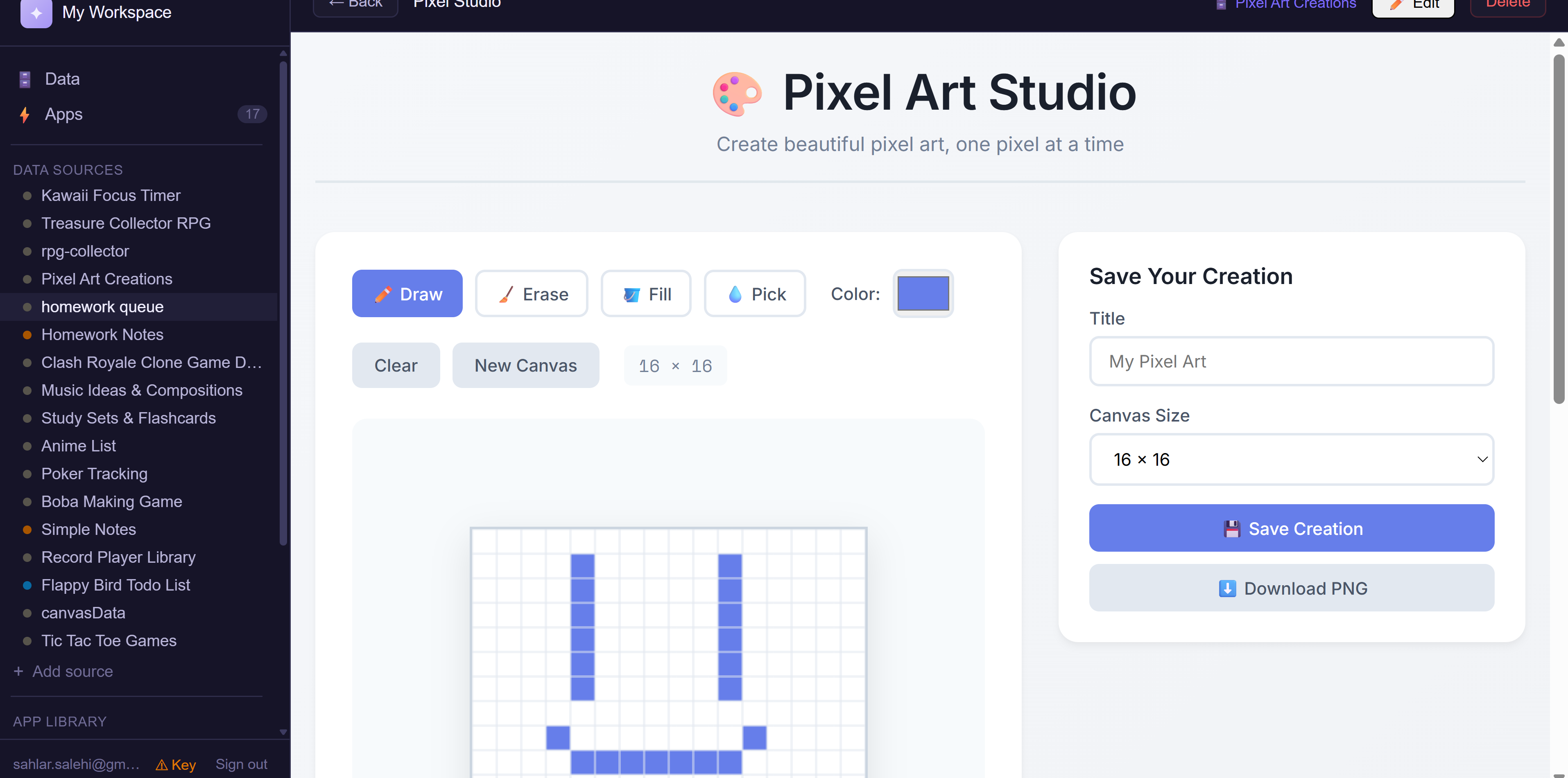
(*Note: if you're trying to use our project, go to mugenai.vercel.app. You will need your own anthropic api key for it to work)
Inspiration
With the extensive coding abilities of LLMs like Claude, it is possible for anyone to create any kind of tool or application they can imagine. However, there is currently a gap for making these tools persistent, collected in one place, and tailored to the user's personal data. We looked at Notion and took the flexibility of user defined databases, and combined it with a fully AI powered vibe-application layer to create Mugen.
What it does
Mugen can be thought of as Notion but with AI powered apps that utilize and modify the data stored in the user's databases. User's can create data sources either manually, with AI, or by uploading data files, and then use those sources to power full AI frontends. Conversely, users can prompt AI to make brand new applications which automatically create and populate new data sources. Then whichever data sources are made can be used to create all new applications that provide a custom user experience. For example, say someone using our platform has a todo list table that they want to have a new user interface for with additional features. Using Mugen, they can generate a frontend interface that can fully interact with their existing data, and add to it. The possibilities go way beyond that too- you can make games, tracker apps, organizational and thought tools, cozy designs, art and music tools, and more! Anything you can thing of and Claude can code, you can make and integrate it with your own personal information so that its relevant to you. We envision this being like an alternative to Notion, where instead of just having all of your data organized, you can use it to make an arsenal of apps to increase your productivity, or just for fun.
We also added integration with Notion's API, so if you already have databases you want to make apps with, you can just connect to your Notion account and pull them into Mugen.
There is also one other crucial feature to our app. We noticed that while apps were being generated by the AI, there was a lot of empty down time for the user. Sure, we had a little loading animation, and we could probably have just put some text out, but that wouldn't have been any fun. So, we decided to take it on ourselves to use ElevenLabs API with a text-to-speech model to actively talk to the user about what its making. But it doesn't stop there- instead of having a regular (and probably more valuable) technical description, we made a lightweight Claude model generate text like the narrator in hit anime Jujutsu Kaisen, and also played one of the tracks from the show (https://www.youtube.com/watch?v=8s-NKe-2ZAk). This has been a joke going around online where people use a TTS model to make Jujutsu Kaisen styled narrations over random concepts, so we thought it would be a fun touch that also plays into the name for our app, Mugen.
How we built it
Our tech stack is React (vite) over a FastAPI + Supabase backend that we used to handle authentication, data layer, and our AI api calls. Our database design was particularly interesting because it is actually fairly simple: we store custom apps by keeping track of the html code that the AI generates for it, and use a CDN to load React into the apps, giving them dynamic rendering. The data sources also have json based fields so that the data schemas can be in whatever format necessary. As mentioned above, we worked with ElevenLabs API for the JJK real-time text to speech. By applying some slight modifications to the voice settings, we were able to make the voice model fit our wants a little better too. As for our development process, we worked heavily with Claude and Claude Code to help ship features fast. In a hackathon where the scope is MVP, we wanted to be able to trial and error a bunch of ideas fast while we designed our system, so this was the best way to do that. Claude models are also great at frontend ui design, so using Claude helped us focus more on the features than on styling.
Finally, Mugen is hosted on Vercel/Railway at mugenai.vercel.app. Vercel was the simplest choice for hosting the frontend, and Railway was an affordable and comprehensive option for hosting our api that one of us already had paid for.
What we learned
Claude is quite powerful. Between the use of Claude Code in making the project, and the actual apps it makes within Mugen, this is the ultimate vibe coding application. But with that in mind, it is important to put in the extra overhead work at the start of any project to establish good coding practices and repository structure that AI models can then build off of in small features at a time. How much code we churn out is never what makes a software engineer- its our ability to plan good and maintainable systems. As powerful as LLMs are, writing an application from scratch using AI can often be hard to maintain, and it is still on us to make sure that what we are writing isn't, for the lack of a better term, AI slop.
What's next for Mugen AI
We believe Mugen is a sign for what is to come with AI. Currently, development and apps as we know it work by a developer making some frontend and some API hosted elsewhere to manage some kind of business logic and present it in a way end-users want. But realistically, that's all an app needs to be- the way it happens doesn't matter as long as its secure. So, with this in mind, why can't our APIs just be a single end point where an AI agent has access to CRUD operations against a database and can perform business logic? Why can't our frontends also just be purely AI generated too and not even stored in a code base but as static files, or even AI dynamic, files delivered with a CDN? With Mugen, we want people to drop what they know about how software works, and start thinking about why we have it in the first place.
For the app itself, we want to integrate Mugen with other applications like Google Calendar, so users can make apps based on other data sources they're already familiar with. We also want to expand the data source system to make something like a full user manageable database for each app generated, and keep these database components as connected and reusable pieces for an arsenal of personal applications. We also want to make an app marketplace, where users can post the things they've generated with Mugen for others to use, similar to Notion templates.
Built With
- claude
- elevenlabs
- fastapi
- python
- railway
- react
- supabase
- typescript
- vercel


Log in or sign up for Devpost to join the conversation.