-
-
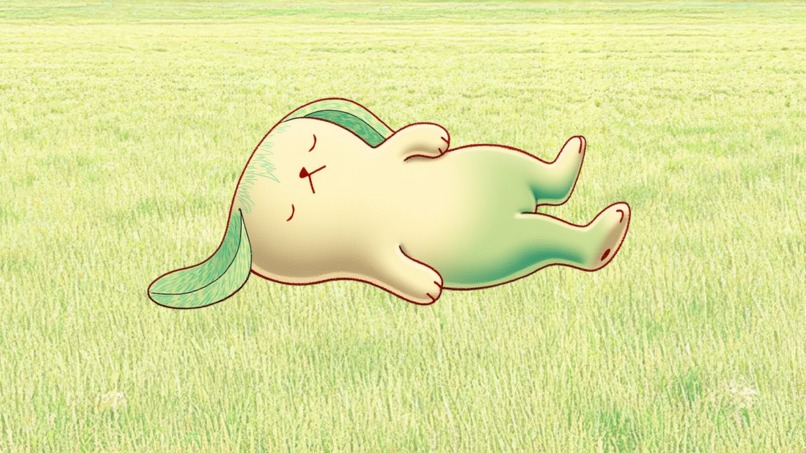
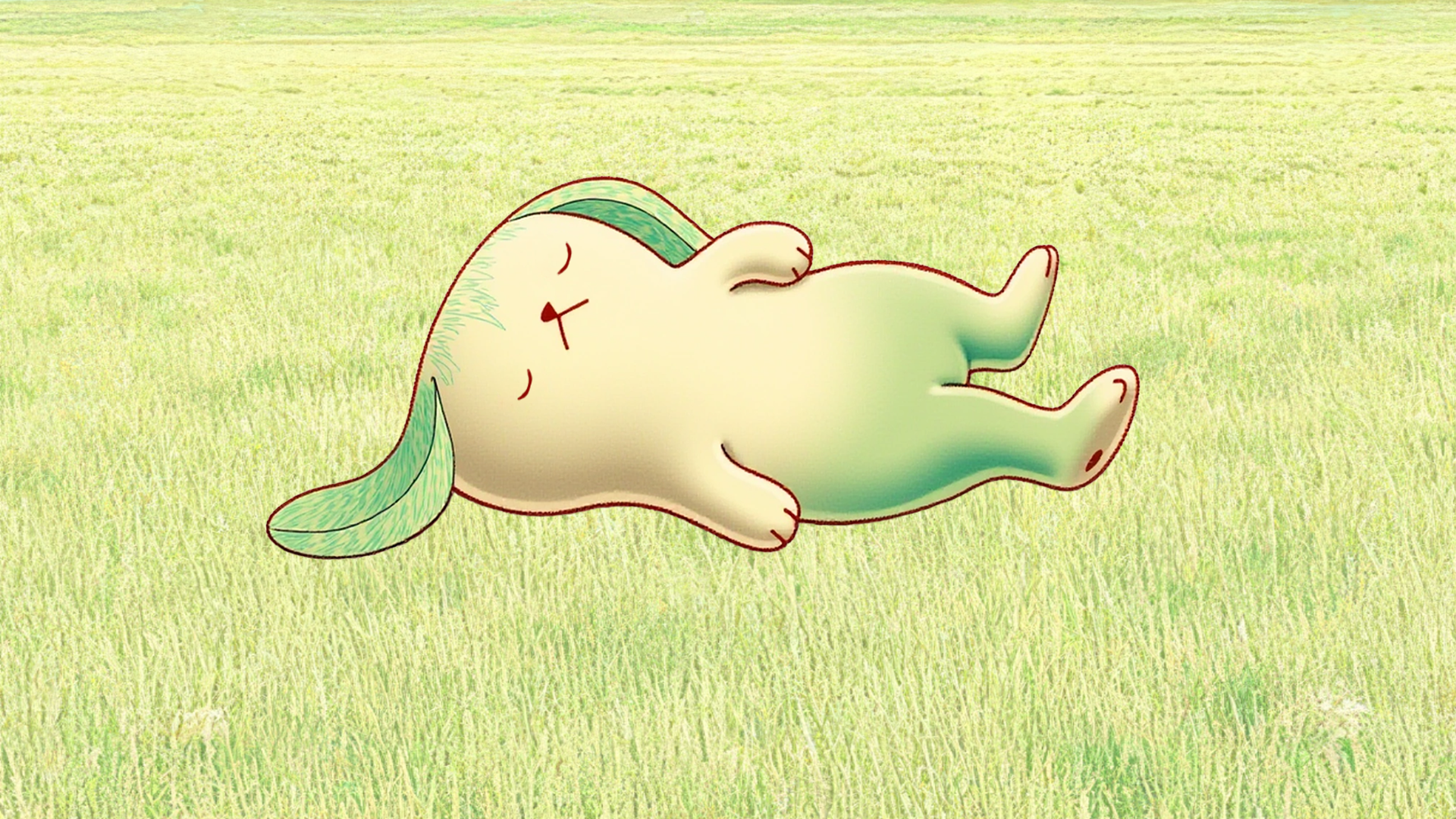
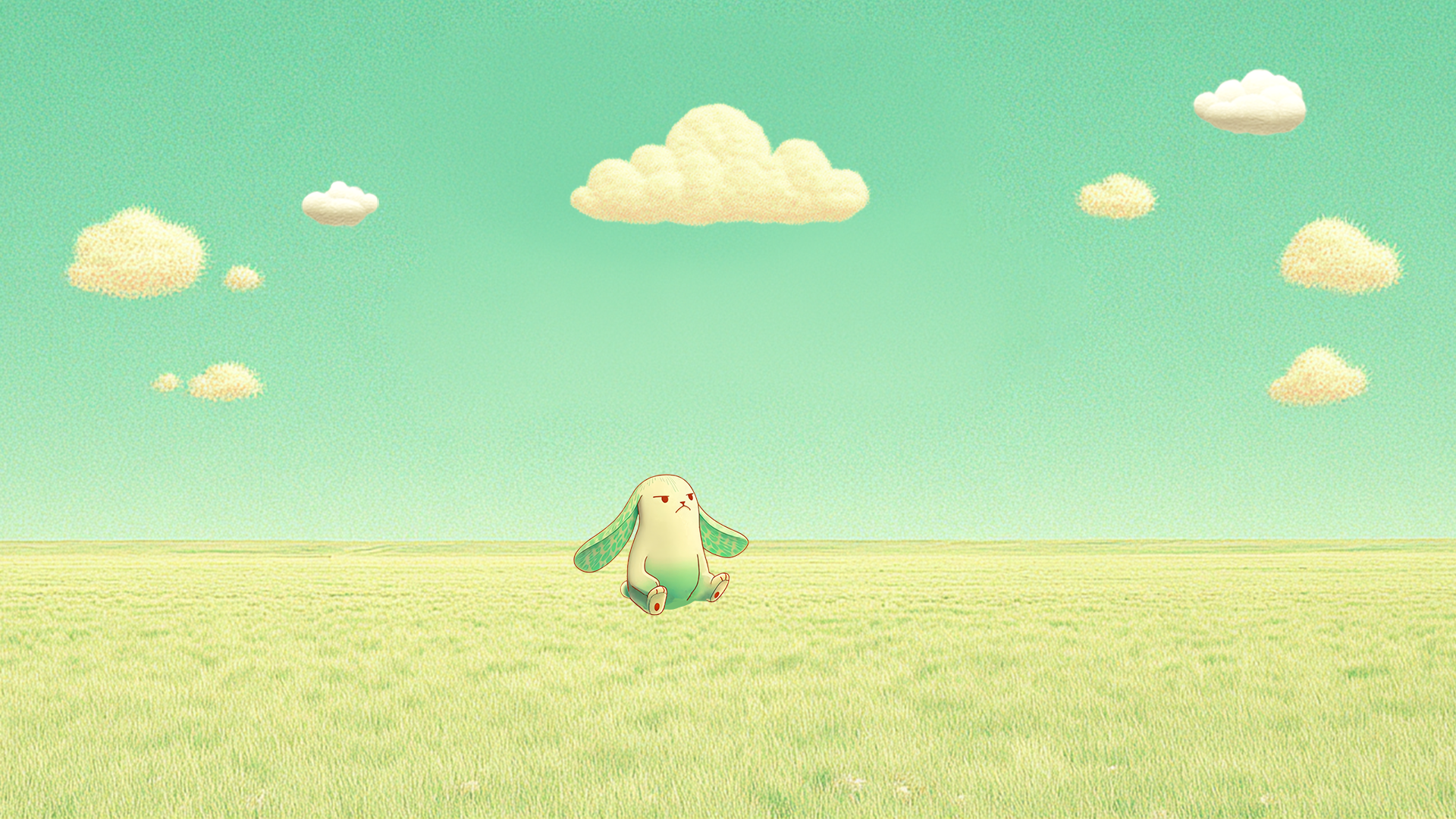
Muainn asleep on the grass before the cloud journey begins.
-
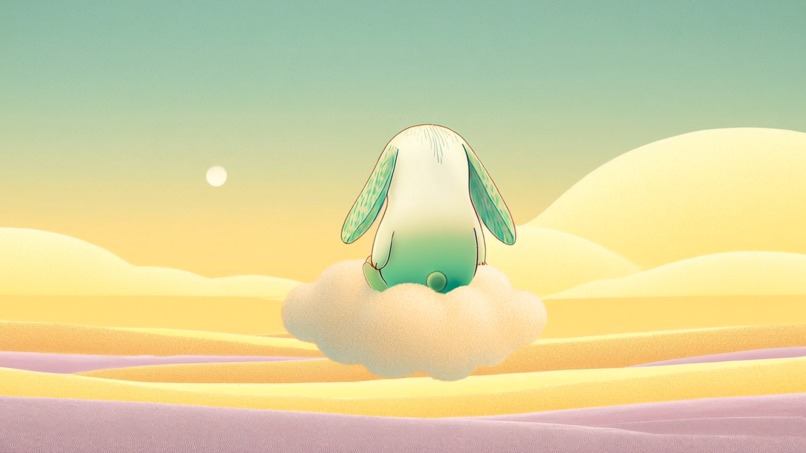
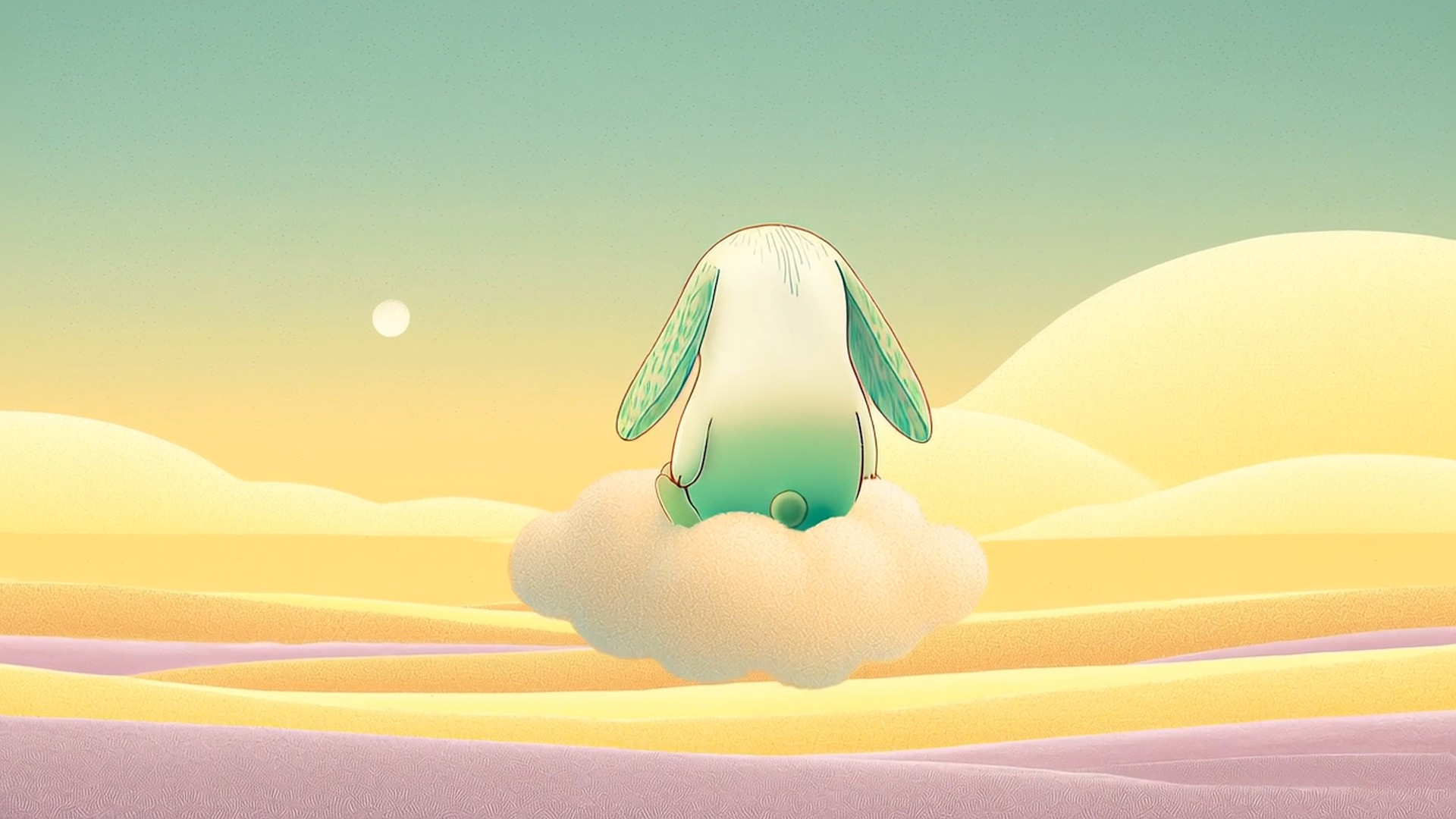
Drifting over a golden and purple desert on a small cloud.
-
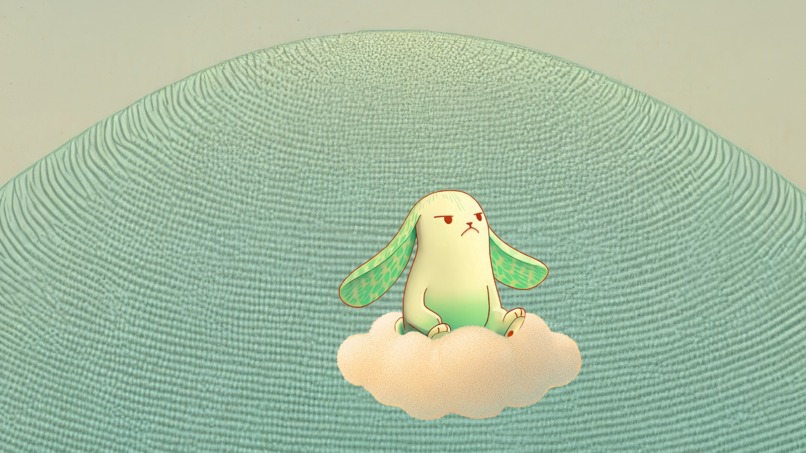
Flying past the tallest mountain peaks, carried higher and higher by the cloud.
-
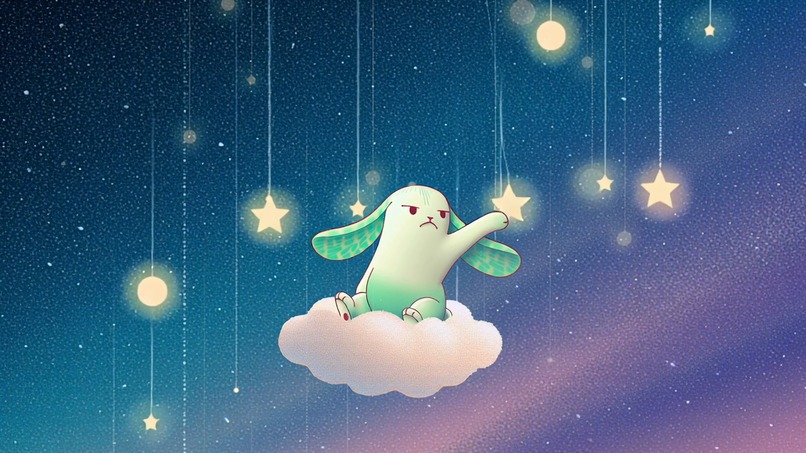
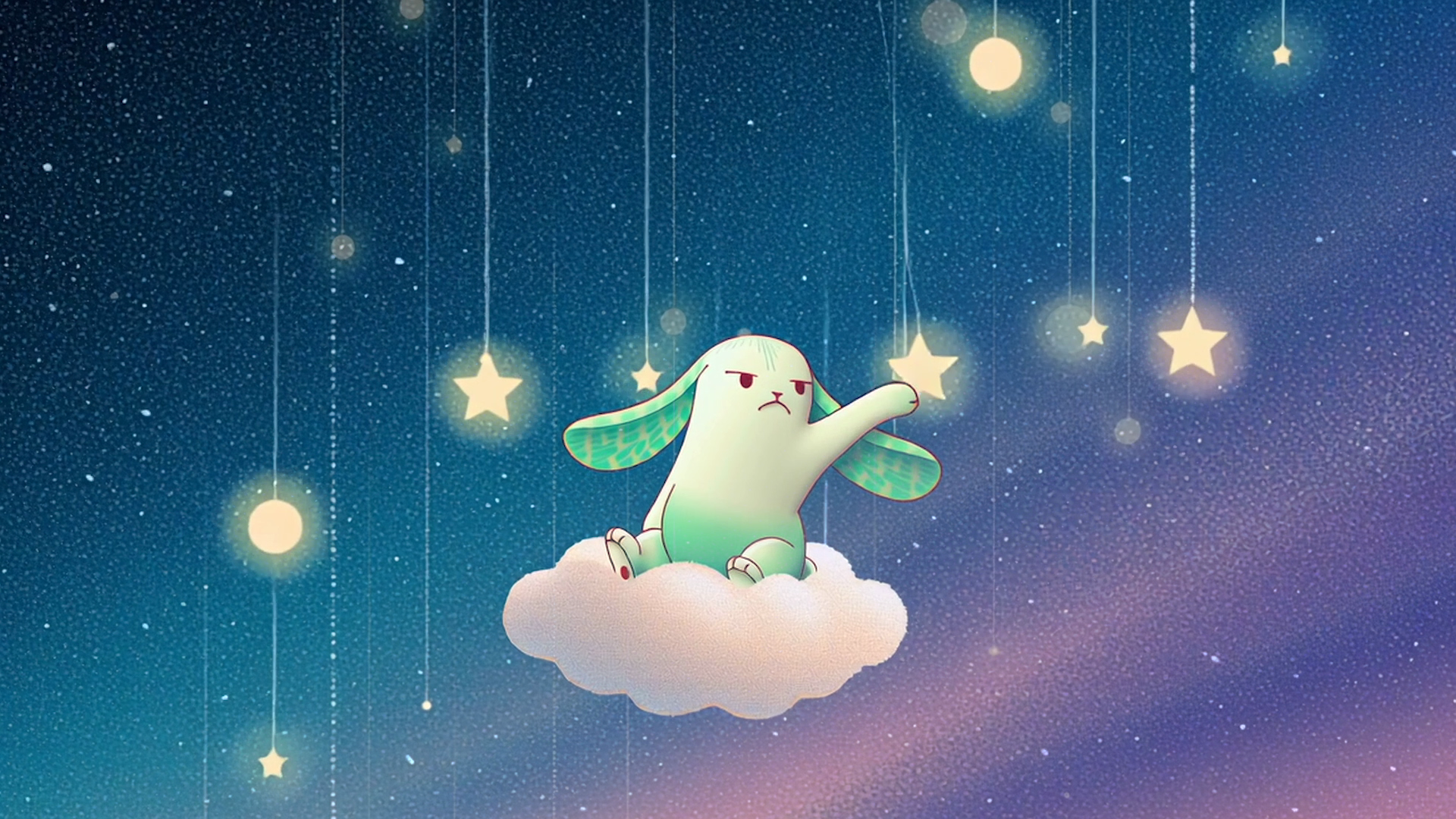
Reaching for the hanging stars in a quiet night sky.
-
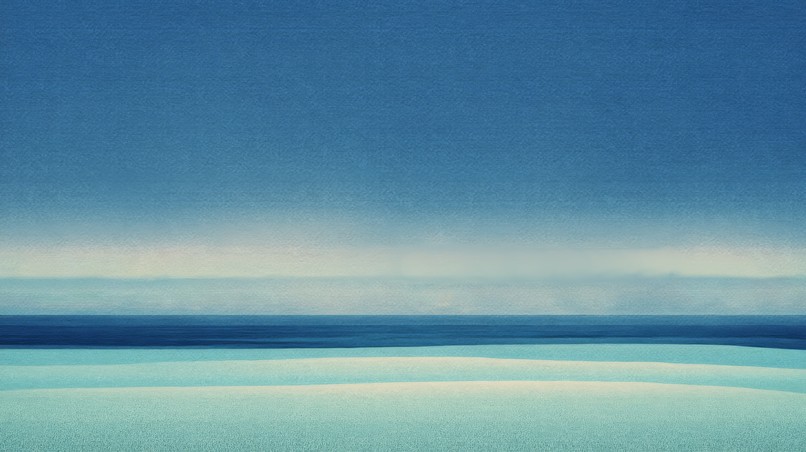
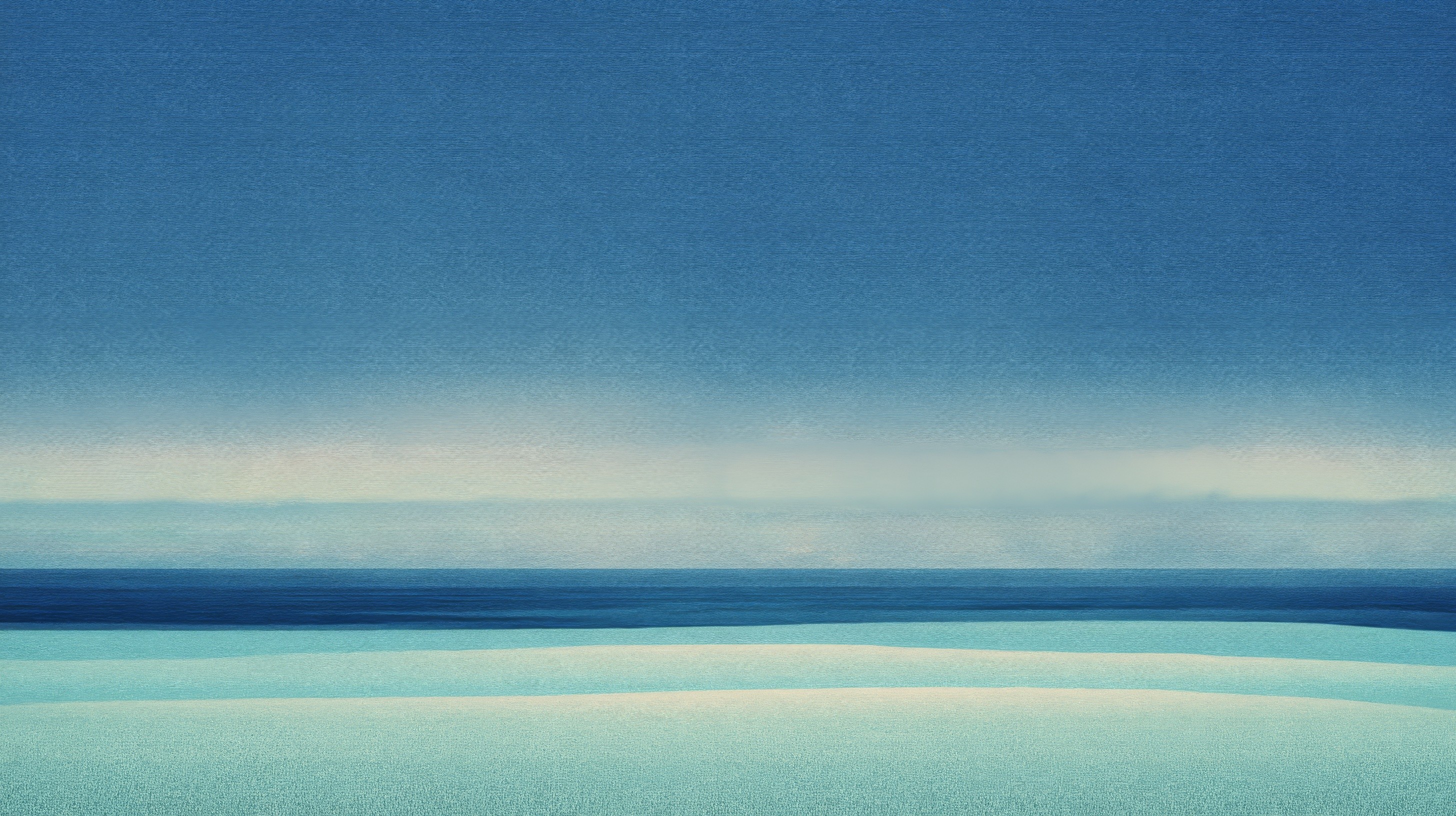
A vast sea in soft blue gradients from Muainn's dream world.
-
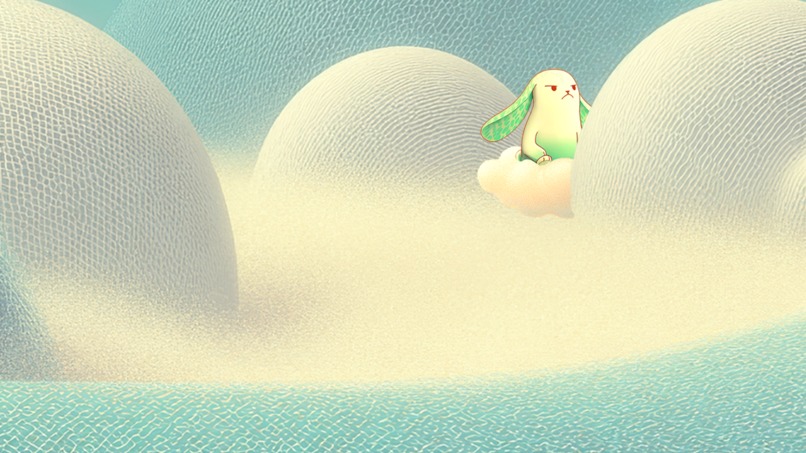
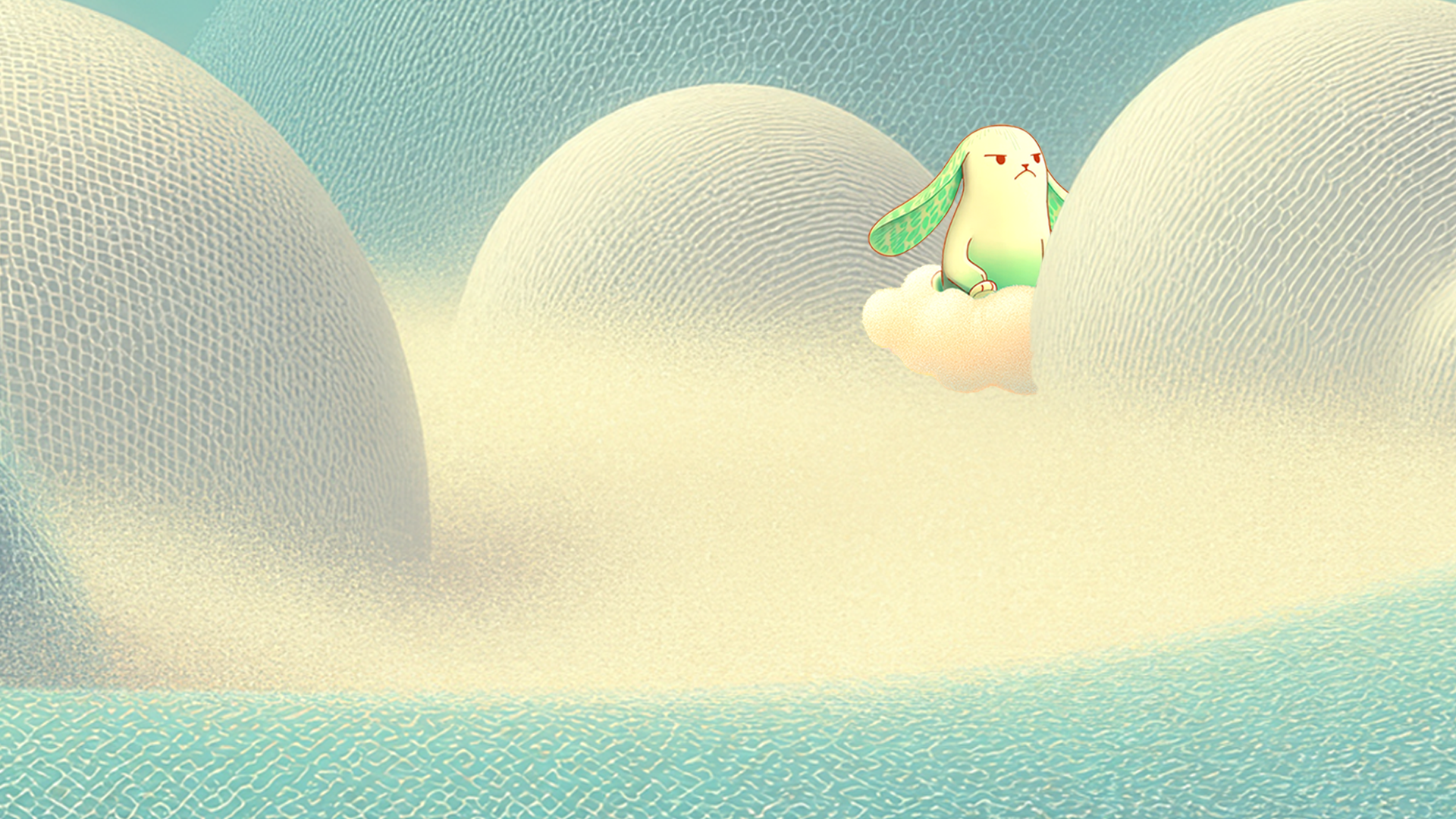
A soft snowy hill, one of the final stops in the cloud journey.
-
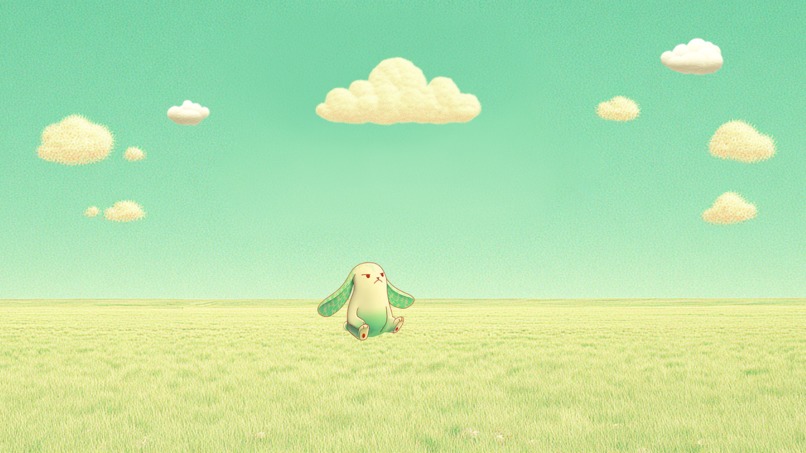
Back on the grass with the same cloud slowly drifting across the sky.
Inspiration
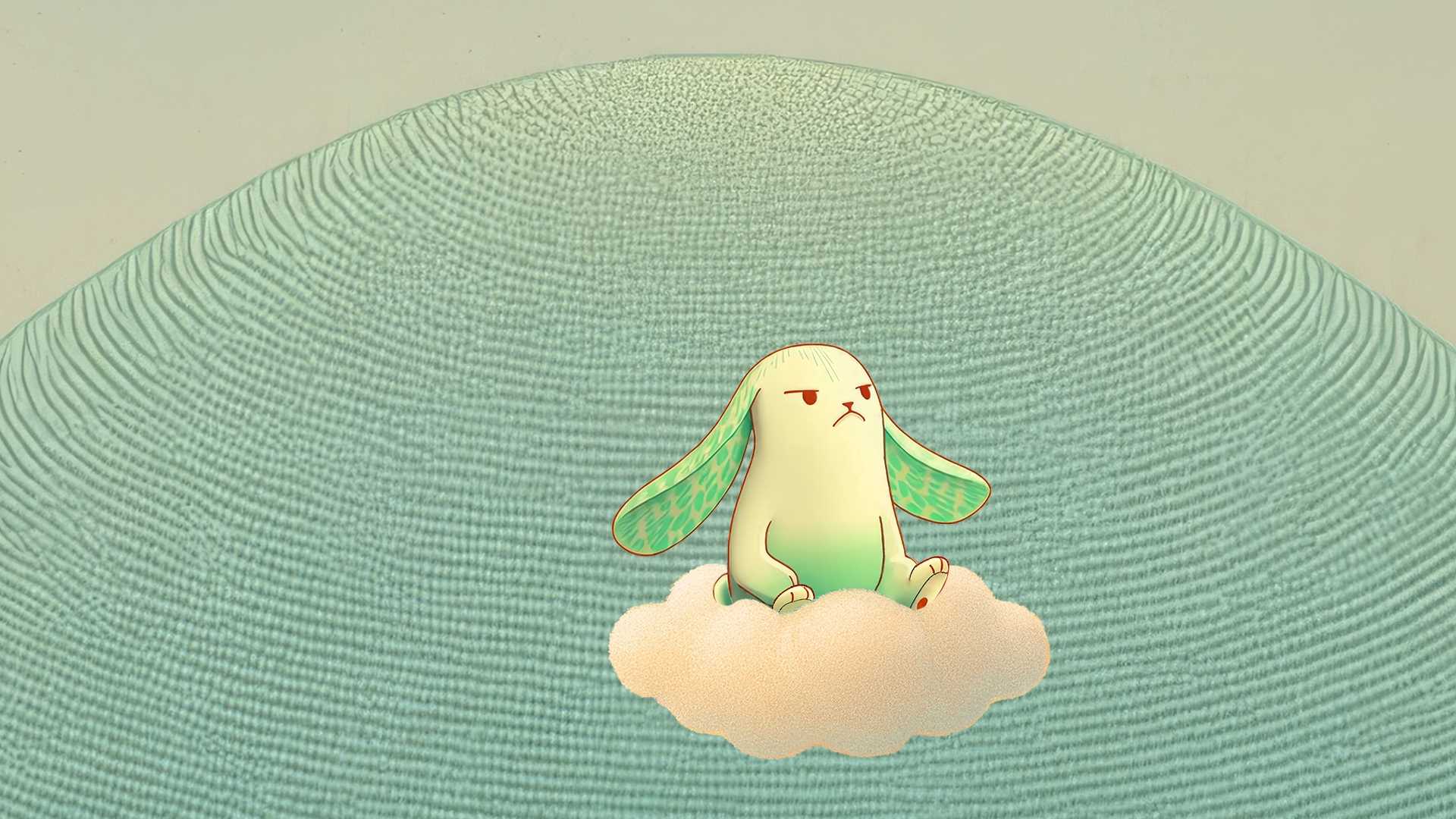
Muainn and the Flying Dream is a three-minute, dialogue-free animated short. The protagonist, Muainn, is a slightly grumpy yet stubborn little creature living in a wild, fantastical world.
One day on the grass, Muainn encounters a cloud. The cloud invites Muainn to play and carries them across the sky: soaring over the highest mountains, touching the stars hanging in the night, drifting above a sea made of countless shades of blue, and finally entering a hill covered in falling snow.
When Muainn wakes up, they are still lying on the grass. The same cloud is slowly moving across the sky, and the entire journey feels like a dream that was a little too vivid. Muainn starts to wonder: is today just a repeat of yesterday? Am I still dreaming, or have I already woken up?
The film draws inspiration from a familiar feeling in everyday life: the body keeps moving and days keep passing, yet something inside still feels not fully “awake.” I wanted to use picture-book-style storytelling, philosophical questions, and poetic scenery to create a film that looks like a storybook for children, but is quietly made for adults.
What it does
This short film offers a silent visual journey. The audience follows Muainn’s point of view, being carried by the cloud from the grass into the sky, across mountains, through starry night, above the sea, and into snowy hills—before finally returning to where it all began.
There are no explanations and no answers. Instead, the film uses very slow movement, soft colors, and gentle music to evoke the feeling of floating between waking and not-yet-awake. Rather than relying on plot twists, it gives viewers a small pocket of time away from information overload: watching a little creature hesitate and then set off again, so they can reflect on their own fatigue and curiosity.
Functionally, it is both a self-contained animated short and the starting point of a growing “healing” character IP. It tests whether AI tools can help build a stable, extensible animated universe that carries a quiet existential question at its core.
How we built it
This project did not begin with a full script, but with a series of 5–10 second emotional clips: Muainn waiting for the rain to stop, lying by the sea, spacing out on a cloud, crying inside a cave, and so on. Each tiny video focused on a single action and emotion—like pausing on one moment and inviting the viewer to return to their own “now.” From these fragments, we later developed a unified story arc and a three-minute short.
Based on the story outline and the original character design, we first used AI image tools to generate empty backgrounds for each environment (grassland, sky, starry night, sea, snowy hill). Sometimes we then composited Muainn into these scenes; other times we directly generated keyframes that already contained both character and background. Using different AI video tools and manual compositing, we created in-and-out keyframes and then generated animated segments between them—for example, the drifting of the cloud, the small movements of ears and feet, and slow camera motion.
Once the base shots were in place, we used AI upscaling and enhancement to improve resolution and details. Then we moved back into a traditional editing workflow: reordering shots, cutting and retiming, adding subtle zooms and pans, until everything formed one gentle, continuous journey of about three minutes. Finally, guided by the emotional beats of the film, we generated and adjusted AI-composed music, added a small amount of sound effects, and kept the overall soundscape close to the feeling of quietly dreaming.
Challenges we ran into
The first major challenge was maintaining character consistency and emotional continuity across a large number of AI-generated shots. Muainn’s body proportions, ear length, facial outline, and even the exact position of the eyes could easily drift. Once they shifted too far, Muainn stopped looking like themself. This forced us to create strict character design sheets for each angle and expression, refine prompts repeatedly, and discard a large amount of footage, keeping only the shots that truly preserved Muainn’s silhouette and personality.
The second challenge was conveying emotion and rhythm without any dialogue or subtitles. How long should the cloud stay still? How slowly should it move forward? Should the camera follow or remain fixed? Should Muainn look at the distance for one extra second? These tiny decisions change whether the audience feels anxiety, numbness, or a softer kind of hesitation.
On top of that, the limitations of current AI video tools—characters suddenly deforming, flickering frames, disappearing details—created extra work. Many problems had to be solved by regenerating images, manually retouching frames, masking, or re-editing, rather than simply accepting whatever the AI produced.
Accomplishments that we're proud of
There are three aspects we are especially proud of:
Building a stable, recognizable character in an AI-heavy pipeline.
Muainn is not just a single nice image, but a character who remains consistent across multiple scenes and emotions.Transforming scattered micro-clips into one emotional journey.
What began as many disconnected 5–10 second fragments was ultimately woven into a continuous path with a clear sense of departure, drifting, doubt, and return.Finding a balance between AI automation and human direction.
This film is not a showcase of flashy effects, but of picture-book softness, slow pacing, and gentle mood. Within a sea of automatically generated material, we relied on human choices—selecting, cutting, and refining—to make it feel truly “directed,” not just like an AI demo.
What we learned
The biggest lesson was rethinking the role of “director” inside an AI-driven workflow. AI tools do not magically produce finished films. They behave more like a group of extremely efficient but temperamental collaborators who require clear direction and strict curation.
We learned that character design, emotional arcs, and rhythm logic must be decided first, before we bring in tools—rather than hoping the algorithms will figure it out for us. In a film without spoken language, color, sound, motion, and the length of each pause become more “linguistic” than ever, carrying meaning in place of words.
For future projects, this experience also gave us a repeatable pipeline: start from emotional micro-moments → define character and scene specs → alternate between AI generation and human selection → integrate everything in traditional editing → then use AI again for upscaling and music.
What's next for Muainn and the Flying Dream
We don’t see this film as a one-off piece, but as the starting point of a larger “Muainn universe.” Concretely, we hope to:
Continue developing more “Muainn everyday micro-shorts.”
Extend scenes like grassland, seaside, snowy hills, and other environments, letting Muainn return again and again to the present moment and the feeling of simply existing in different situations.Turn the project into a series of thematic shorts and picture-book texts.
Use this three-minute film as a core, then build several thematically distinct but visually consistent healing shorts in parallel with a poetic picture-book version, so the character can travel between screen and page.Refine our AI workflow and tool stack.
In future episodes, we plan to keep testing combinations of AI image and video tools to improve character stability and motion subtlety, while reducing time spent fixing technical bugs.
Our hope is that Muainn and the Flying Dream will not only be a competition entry, but the opening chapter of a series that can quietly accompany people through small, healing moments in their everyday lives.
Built With
- adobephotoshop
- adobepremiere
- elevenlabs
- freepik
- kling
- midjourney
- seedance
- topazlabs

Log in or sign up for Devpost to join the conversation.