-
-
Mshari app logo
-
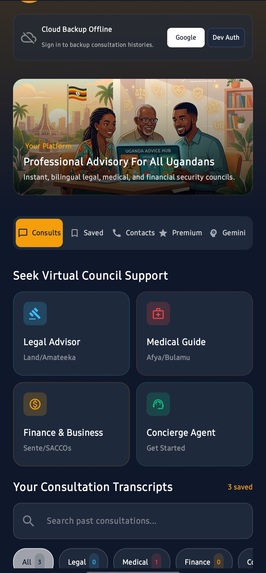
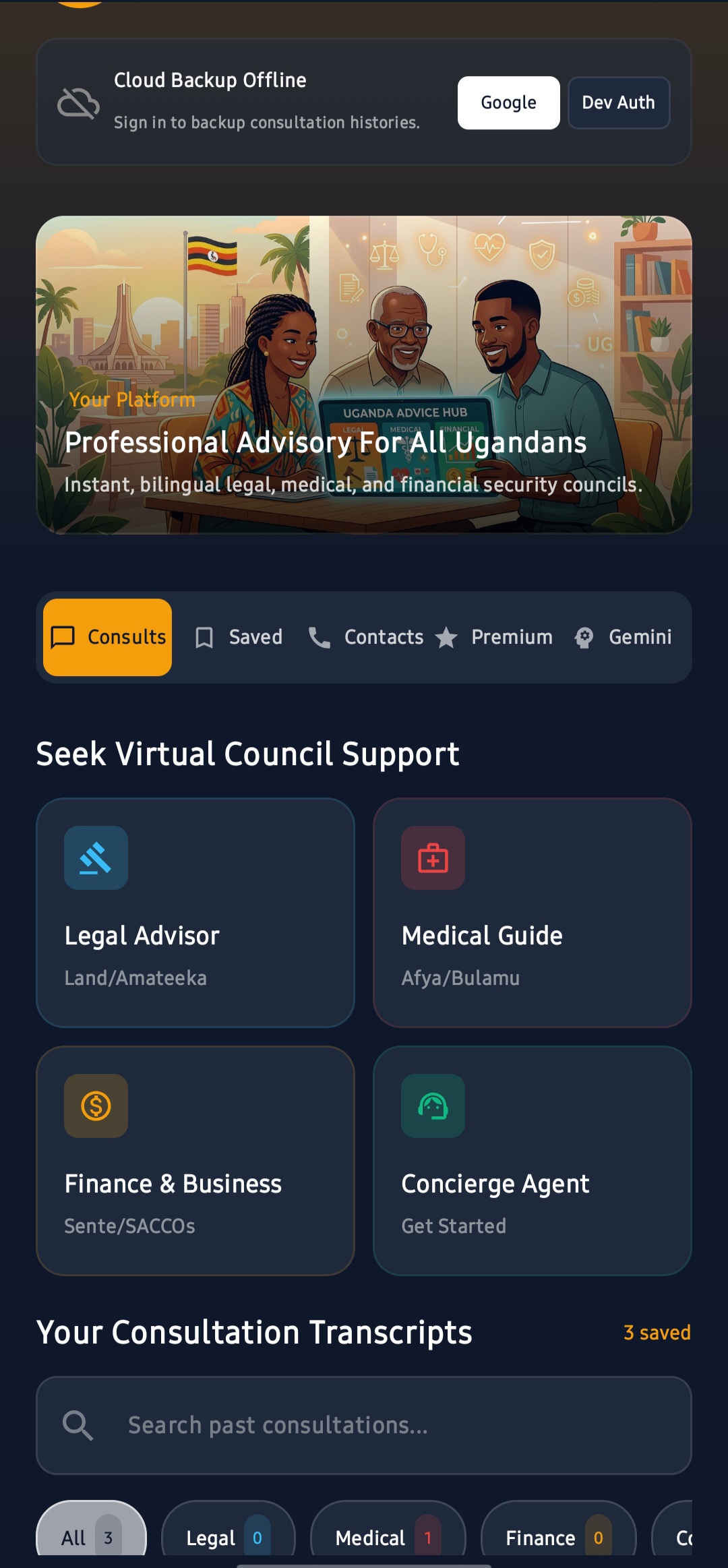
Landing screen for the application.
-
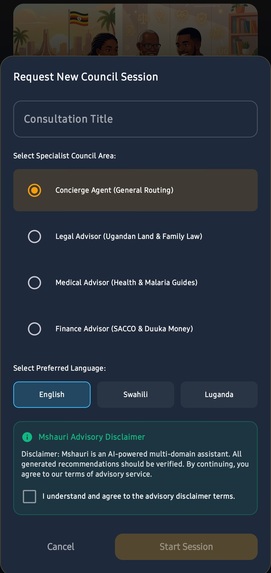
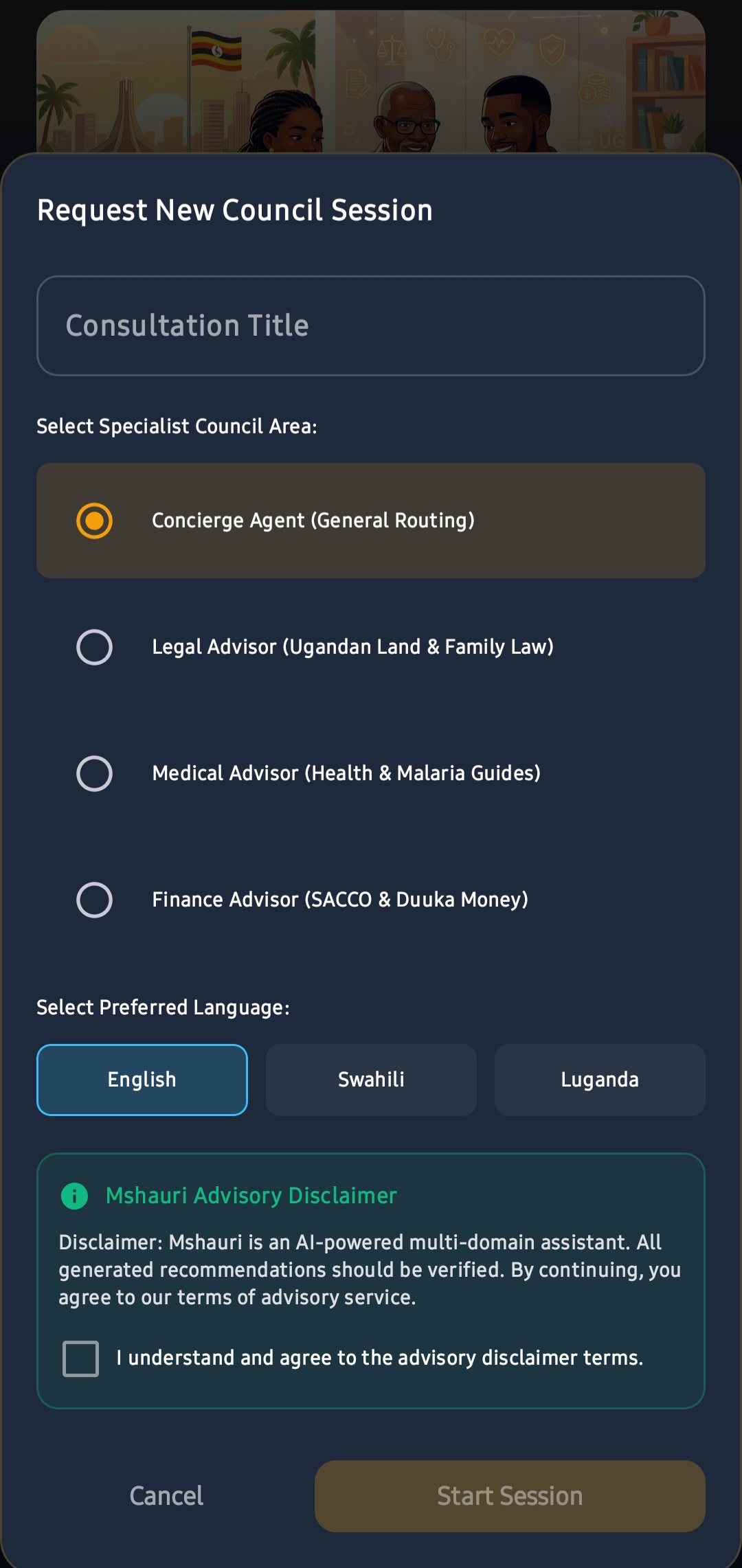
Different advise domains and consent approval.
-
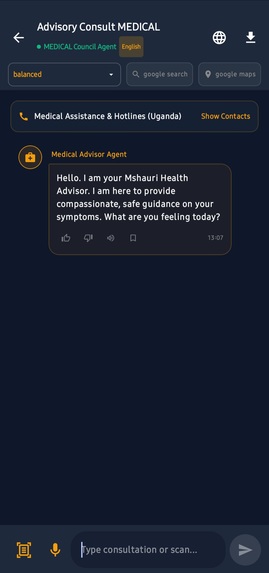
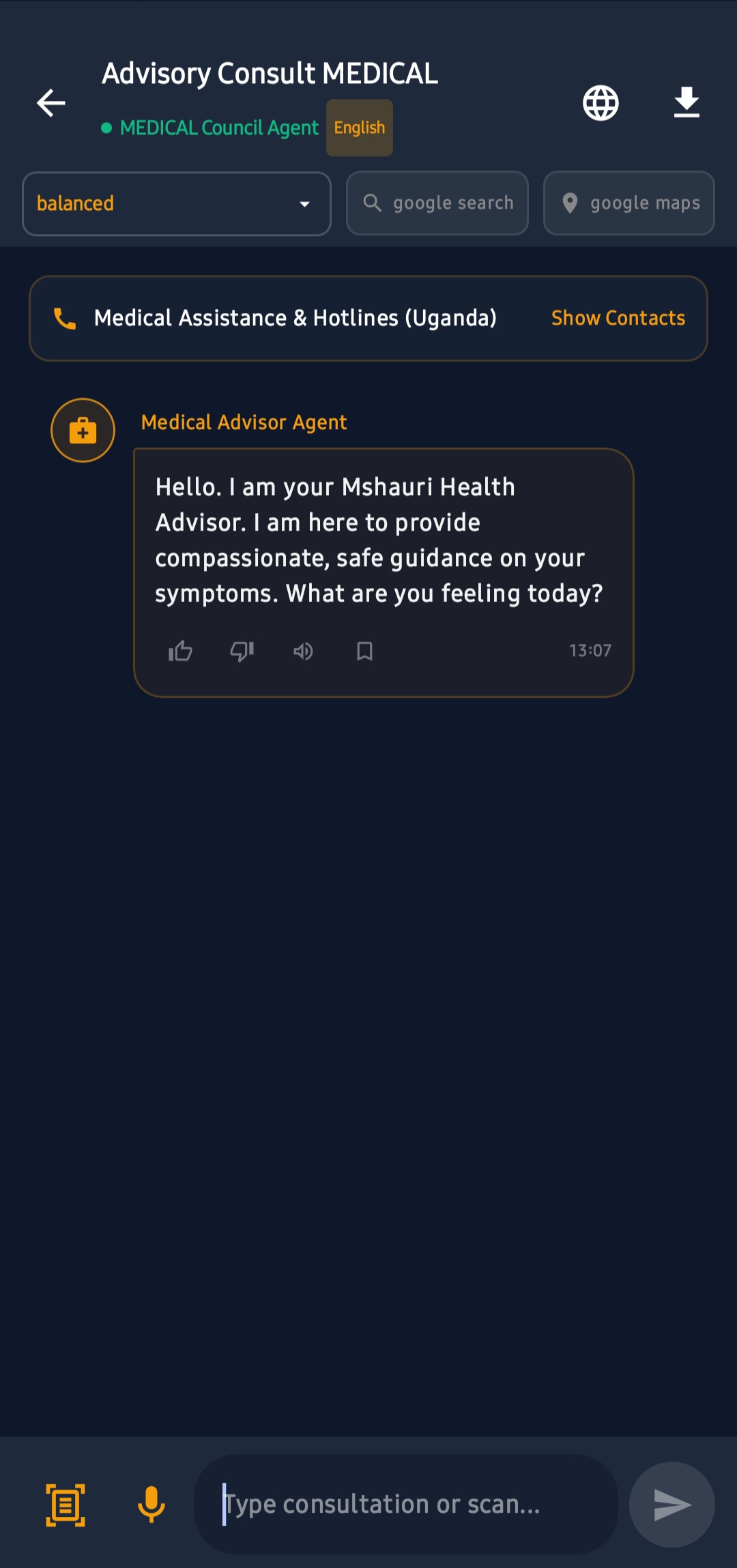
Chat interface embedded with the virtual counsel features
-
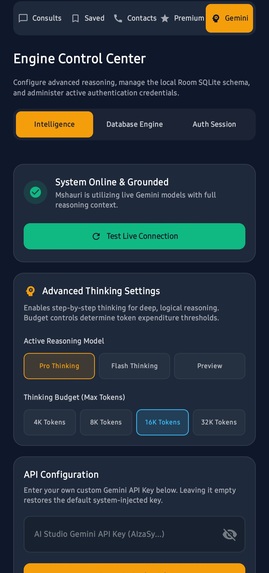
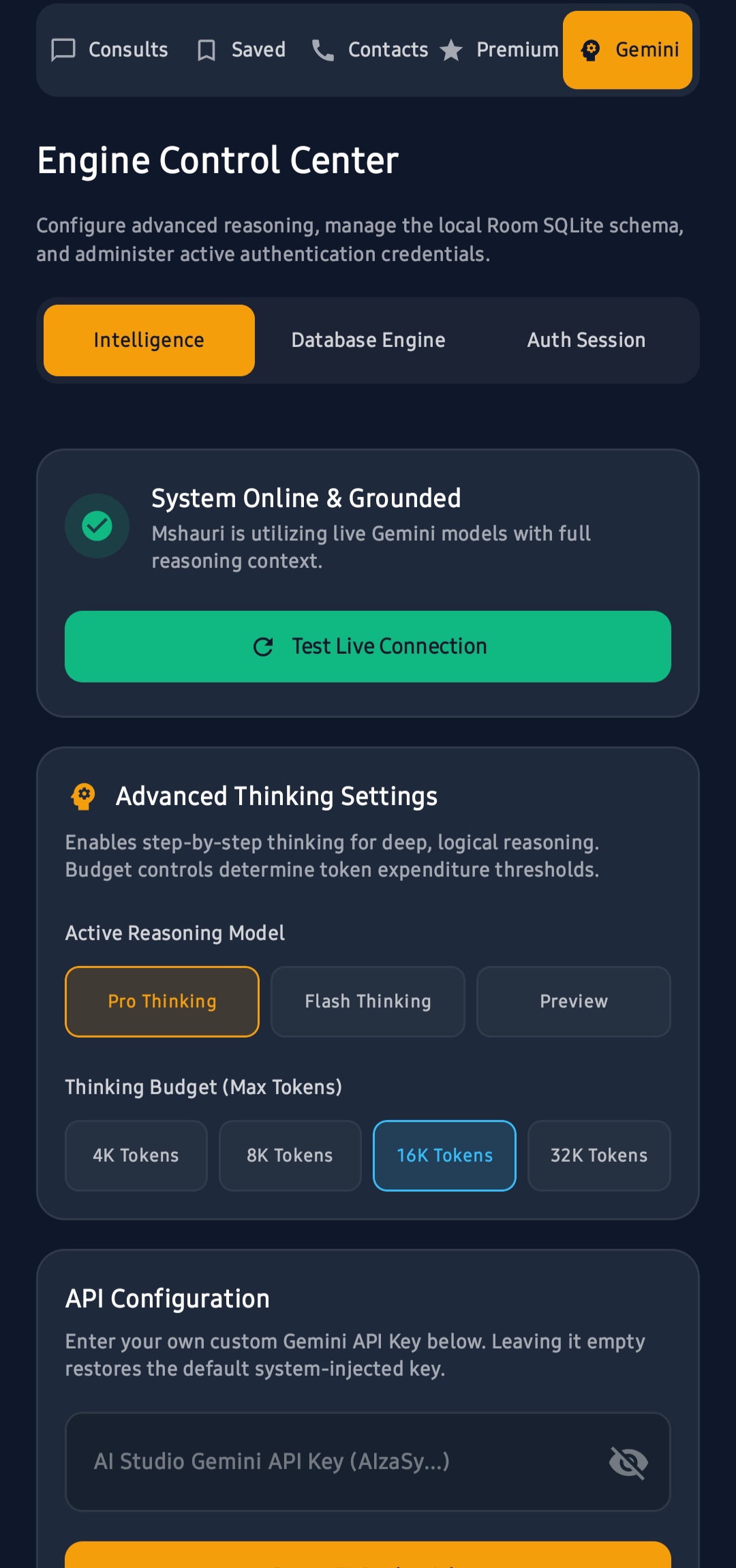
Advanced features and settings
Inspiration
In Uganda and across developing East Africa, professional services like legal representation, medical advice and structured financial planning are luxury commodities. Over 70% of everyday citizens cannot afford private legal consultations, leaving them vulnerable to land grabbing, wrongful evictions and labor exploitation. Similarly, primary medical symptoms often go un screened due to deep geographic barriers and crowded community clinics, leading to late-stage diagnoses. Compounding this is a language and literacy hurdle. Legal contracts and medical reports are drafted in complex, jargon heavy English. Even if a citizen speaks Luganda or Swahili, they are structurally shut out. Mshauri (meaning "Advisor" in Swahili) was born to bridge this massive structural gap. By leveraging Google’s advanced multimodal Gemini models, we set out to put a high-quality, legally aware, medically safe and culturally attuned "Virtual Counsel" into the pocket of every Ugandan.
What it does
Mshauri is an offline capable, highly intuitive and culturally tailored android application that acts as an on-demand virtual advisory agency. It provides citizens with immediate, trustworthy guidance across four crucial domains: The friendly concierge. A digital receptionist that listens to the user's situation in their preferred tongue, determines their core issue and routes them to the correct expert. Virtual legal counsel. Specialized in Ugandan Law (including the 1995 Constitution, the 1998 Land Act, and the Employment Act). It translates eviction threats or land agreements into plain-language actionable steps. Compassionate medical advisor. Performs primary symptom checks, details localized wellness steps highlighting endemic risks like malaria and typhoid, presents high-priority safety "Red Flags," and advises when to seek immediate clinical care. Financial and SACCO planner. Guides small businesses, agriculturalists and boda boda riders in bookkeeping, SACCO micro-savings, and mobile-money budgeting.
How we built it
I developed Mshauri utilizing a modern, production-ready Android stack. Languages. 100% Kotlin with asynchronous processing powered by Kotlin Coroutines and StateFlow. Frameworks. Written entirely in Jetpack Compose following Material Design 3 (M3) guidelines for fluid, edge-to-edge screens, featuring an inviting color scheme, high touch targets and beautiful visual typography. Local Persistence. Jetpack Room Database handles client-side SQL storage. Every advice thread, chat history, star rating and bookmarked piece of advice is safely kept offline to support users with sparse internet coverage. APIs and Networking. Retrofit and Moshi communicate with Google's generative endpoints securely. We implemented robust, graceful fallbacks if an active network connection drops, the system seamlessly pulls matching local rules from our internal simulation engine so users are never left without an immediate, safe response. Testing suite. Fast, local JVM unit tests and screenshot verifications powered by Robolectric to guarantee quality without needing an active emulator.
Challenges we ran into
The complexity of local languages. Translating precise legal or clinical language into Luganda or Swahili without losing critical warnings was challenging. Standard machine translation engines frequently strip the local nuance. We solved this by implementing contextual few-shot translation arrays directly into Gemini's system prompts, teaching the model specific cultural and regional slang for example duukas for shops, kibanja for land tenancy. Large file OCR constraints. Parsing multi-page, low-resolution PDFs and receipts over unstable 3G networks in rural districts requires extreme optimization. I built a robust mime type auto-detection layer and compressed incoming visual streams into clean, compact Base64 envelopes drastically dropping the network payload. Double declaration conflict. During the rapid integration of our file-picker and document attachment logic, we encountered several Kotlin compiler errors stemming from duplicate Context declarations in our long-form views. We fixed this systematically by cleaning up Compose scoping, leading to a smooth, fully compiling build. No profits. Most of the citizens who i went to spend their own money. So i had to use my own money to allow them sample and try out my application.
Accomplishments that we're proud of
Zero dependency multilingual grounding. Establishing a system where a user can upload an eviction notice written in complex legal English and receive an explanation of their rights in pure, beautifully spoken Luganda, fully annotated with safety disclaimers. Seamless micropayments dsign. Creating a realistic and responsive telecom payment simulation using MTN and Airtel MoMo modals. This proves that high-value generative AI services can be effectively monetized in developing markets without credit card gatekeepers. Robust local fallback engine. If the server fails or internet connectivity is completely lost, our local "Mshauri Emergency Advisor" steps in to provide critical first-aid instructions and legal disclaimers rather than crashing or showing a blank screen.
What we learned
Designing for the Margin. Developing software for emerging economies means assuming the user has low bandwidth, expensive data, and no traditional bank account. Optimization is not an afterthought; it dictates the architecture. Multimodal AI is a Superpower for accessibility. We discovered that allowing users to show the AI a document like a land agreement or clinical receipt rather than forcing them to type out long, complex descriptions breaks down massive barriers to accessibility. Declarative UIs accelerate polish. Jetpack compose allowed me to quickly pivot, design custom UI widgets like the category filter pills and interactive card stacks and implement responsive edge-to-edge screens with very low boilerplate. User guardrails are ssential When delivering legal or medical advice, safety is paramount. Designing automatic high-risk word scanners and robust prominent disclaimers is non-negotiable for responsible AI deployment.
What's next for Mshauri
Real-World Integration with Ugandan Legal/Medical bodies. Partnering with the Uganda Law Society or local health centers to establish an automated, direct human-handover API for complex or high-risk consultation flags. Enterprise NGO integrations as well. Rolling out a co-branded SaaS portal for humanitarian organisations, letting field workers document human rights violations, land disputes, and clinical reports securely with automatic server synchronisation. Real-time Voice-to-Voice (Gemini Multimodal Live). Many vulnerable citizens may have limited literacy. Integrating real-time audio chat will allow a user to simply speak to the Legal or Medical advisor and hear a reassuring voice in Swahili or Luganda. Global usage: Modifying and deploying this application to users all over the world so that different people from different countries can use this system.
Built With
- android-studio
- api
- compose
- firebase
- jetpack
- json
- kotlin
- m3
- markdown
- moshi
- okhttpclient
- retrofit
- robolectric
- xml


Log in or sign up for Devpost to join the conversation.