-
-
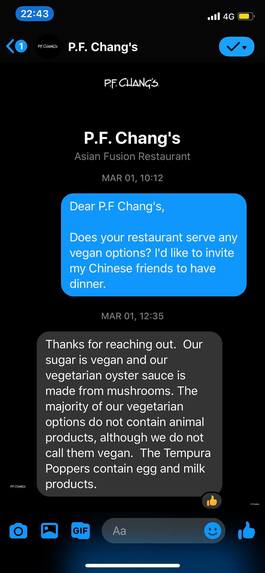
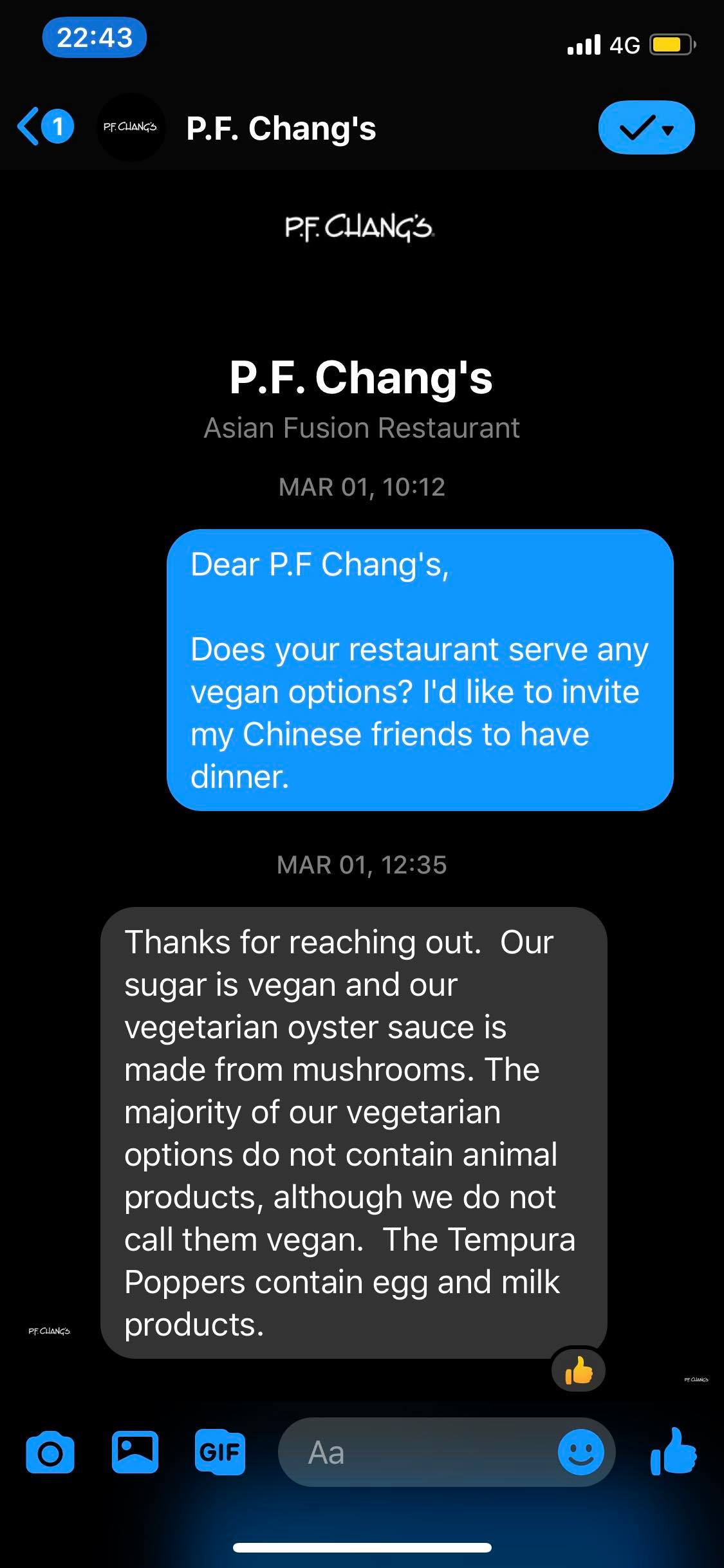
Page Admin response message to our bot agent
-
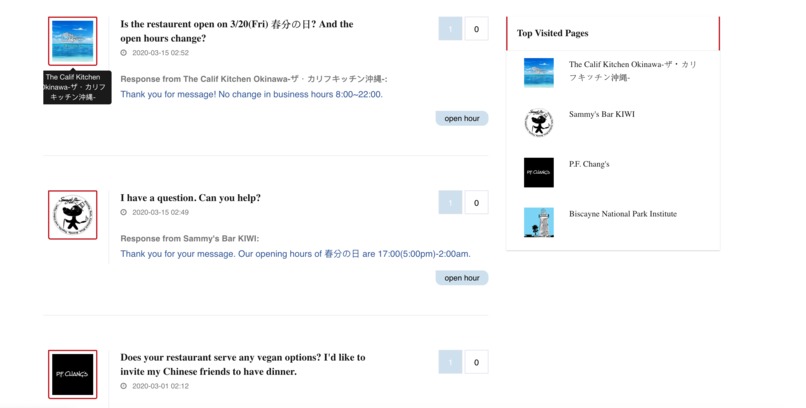
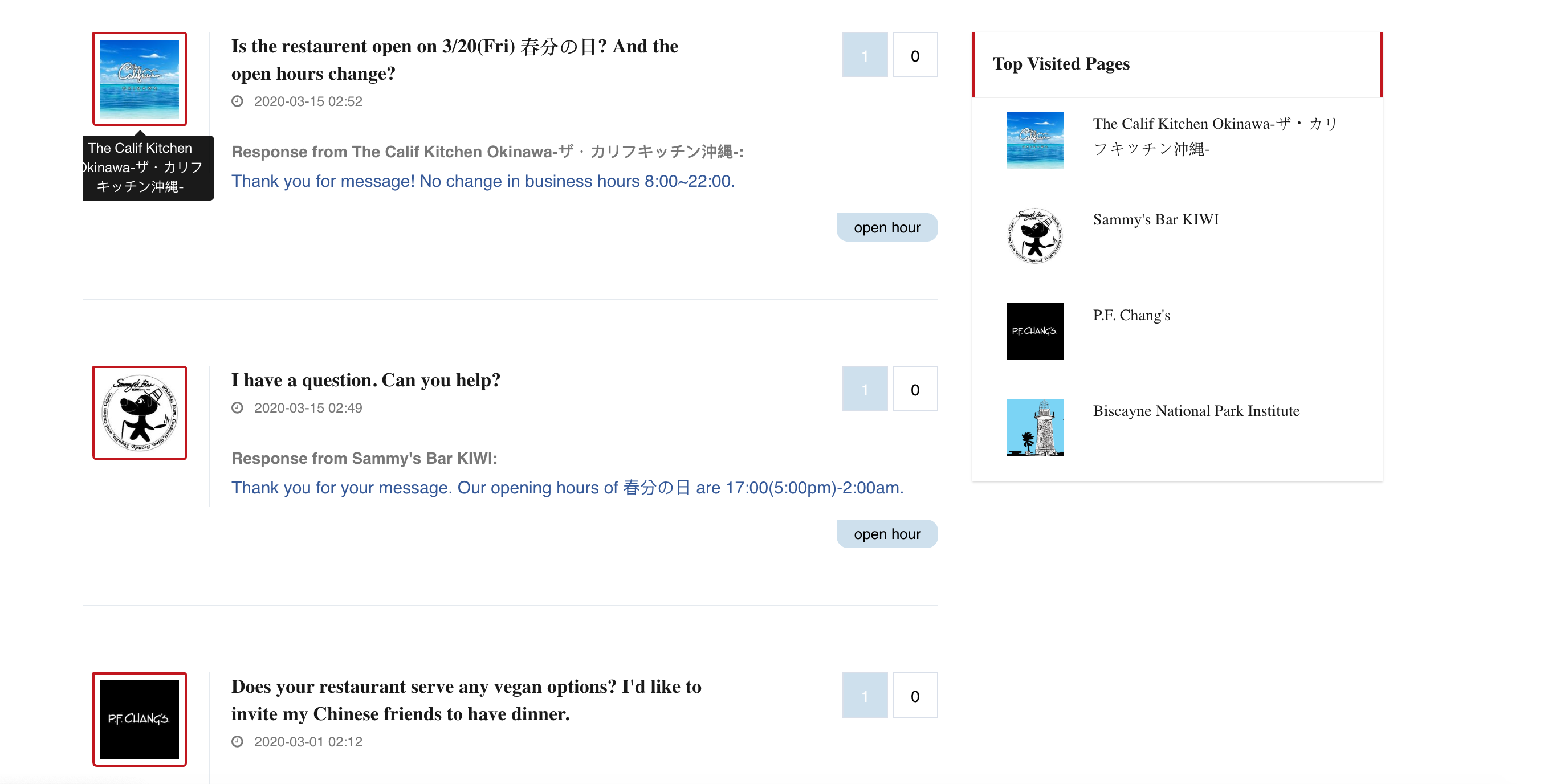
The responses collected from page admin.
Inspiration
- In addition to the technical development of NLU or FAQ-Based, the "demand statistics database" in the dialogue service is a great starting point when improving business operating related APPs. When comparing the information shown on web information/searching results against Messenger's ecosystem, it is clear that when the users' using the latter application, their needs are far from satisfied with respect to the the volume and speed/frequencies of updates. For restaurant or catering information, there is a plenty of rooms for further development regarding the details of service, and the demand for such advanced service is wide and universal.
- The services provided via Messenger should be able to analysis and extract the common needs/requests of its users by employing various data sciences applications, and hence consolidating into a database of “frequently asked information” to further establish a practical dialogue process.
- In addition, the completeness of each dialogue service provided by every Facebook Page should be rated, and its results should be available for the Page's users for their reference. Such ratings are to assess the dialogue services provided against the “frequently asked information."
What it does
Based on the database of the common questions/requests raised by the users, the Agent who serves the suppliers’ side is designed to match both of the supplies and demands in the dialogue information service as much as possible, and also, disclose the response quality of the dialogue service of each Page to the public users at the same time.
How I built it
Backend: Build Messenger Portol lookup service which focus on Facebook Page discovery Store Facebook Pages list into databases Build a holiday or a regular scheduler that automatically triggers our messenger agent to send questions to those page admins.
Front End: We built a Q&A UI to display the messaging dialog flow.
Challenges I ran into
Not all of Pages admins will respond to our designed Agent. However, we think this is also a common problem happened in the Messenger Platform, which needs to be addressed.
We start from several human-designed questions. However, we are also plan to create AI-generated questions in the coming future.
By integrating more data, we can analysis and build up a lighter-weight demand structure that solves the same level of pain points, so that the dialogue service can keep up with user needs more quickly.
Accomplishments that I'm proud of
We are gradually combining mature technologies (previously developed by other developers) on the internet, and the response answered by mannual customer services (i.e. the industry practitioners), trying to integrate all kinds of data to create the most suitable and tailor-made lightweight structure of dialogue service application agents for each industries, to achieve an upgraded service quality to a certain level, and to improve the efficiency of dialogue service between the supply and demand sides.
Furthermore, we'd also like to combine the latest development of AI technology, so that the overall design structure will be based on the need for dialogue. As a result of that, the data generated by the machine and customer service staff are retained in a simple way, while keeping the maximum flexibility for the machine learning samples.
During the initial implementation of our Prototype, we had some interaction with many real-person business operators. We found that everyone was working hard to provide their services. They also showed a positive attitude towards the initial design of our concept.
What I learned
- Data Science: Through the concept of "demand statistics", we try our best to integrate different data structures and explore the applicable machine learning samples, to find more space for implementing data in a mature information society. Great data science should do more than just discovering demand accurately, but also needs to allow users to see the demand profile, so that machines can progress with its users, and pursue the highest service quality.
- FanPage Side: The manual customer service providers reply various messages everyday, and need to analysis and integrate the statistics of various but fragmented client requirements. If fully integrated information can be accessed by those customer service providers, people are willing to improve their service details.
- Business Side: > a. Optimizing supply and demand in higher-frequency conversation services can maximize efficiency. > b. The service providers are able to get more new leads with good word-of-mouth. > c. The service providers might evaluate their consumers ’ value by considering conversational records.
What's next for Scoop up-to-date biz info out of messenger conversations
To graft more information APIs in different industries, as well as a structured web database, to strengthen the AI's capabilities to response (e.g. more dynamically respond to current events), we can smoothly match the supply and demand and, thus, create higher incentives for customer to use the advanced dialogue services. To design a more tailored applications for different industries through multiple iterations, so that the most appropriate demand statistics could be constructed and to create the most suitable service Agent for dialogue services. To reveal more ratings of dialogue service quality of more Pages, so as to improve the comprehensive quality of customer service and machine service. In addition, the demand statistics will also be made public for the dialogue service providers, so that each industry will have a clearer idea and objectives to improve their services. It will also allow more technology developers to have a better-defined and common goal when helping to solve the pain points of the industry, and systematically improve the quality of the Messenger Platform.
Built With
- google-app-engine
- grapi-api
- python
- selenium
- webapp2

Log in or sign up for Devpost to join the conversation.