-
-
AI Course Generation
-
Dashboard
-
Landing Page
-
Landing Page
-
Dashboard
-
About Section
-
About Section
-
Landing Page
-
Dashboard
-
Dashboard
-
Dashboard
Inspiration
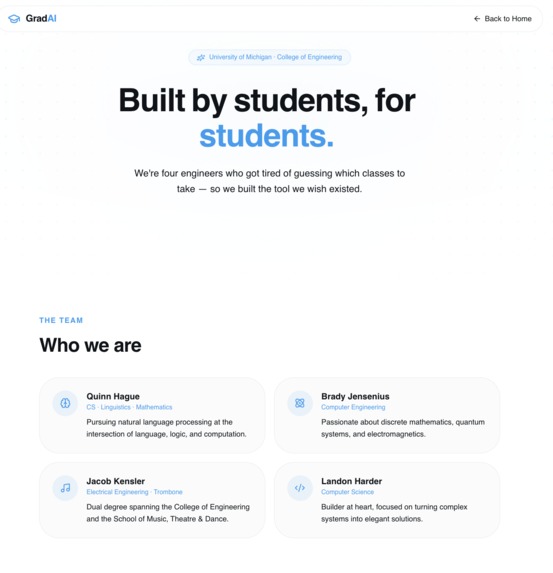
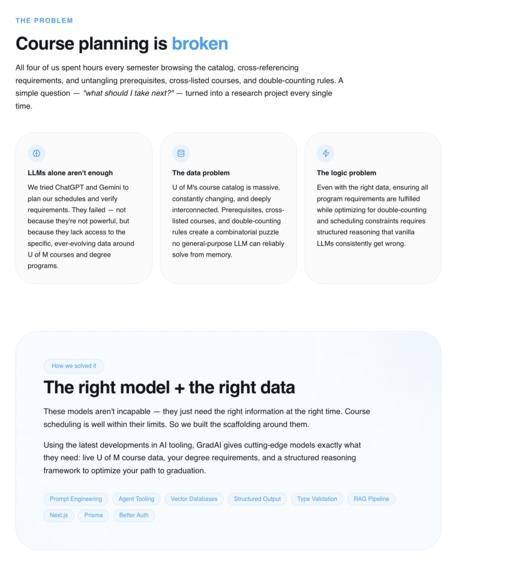
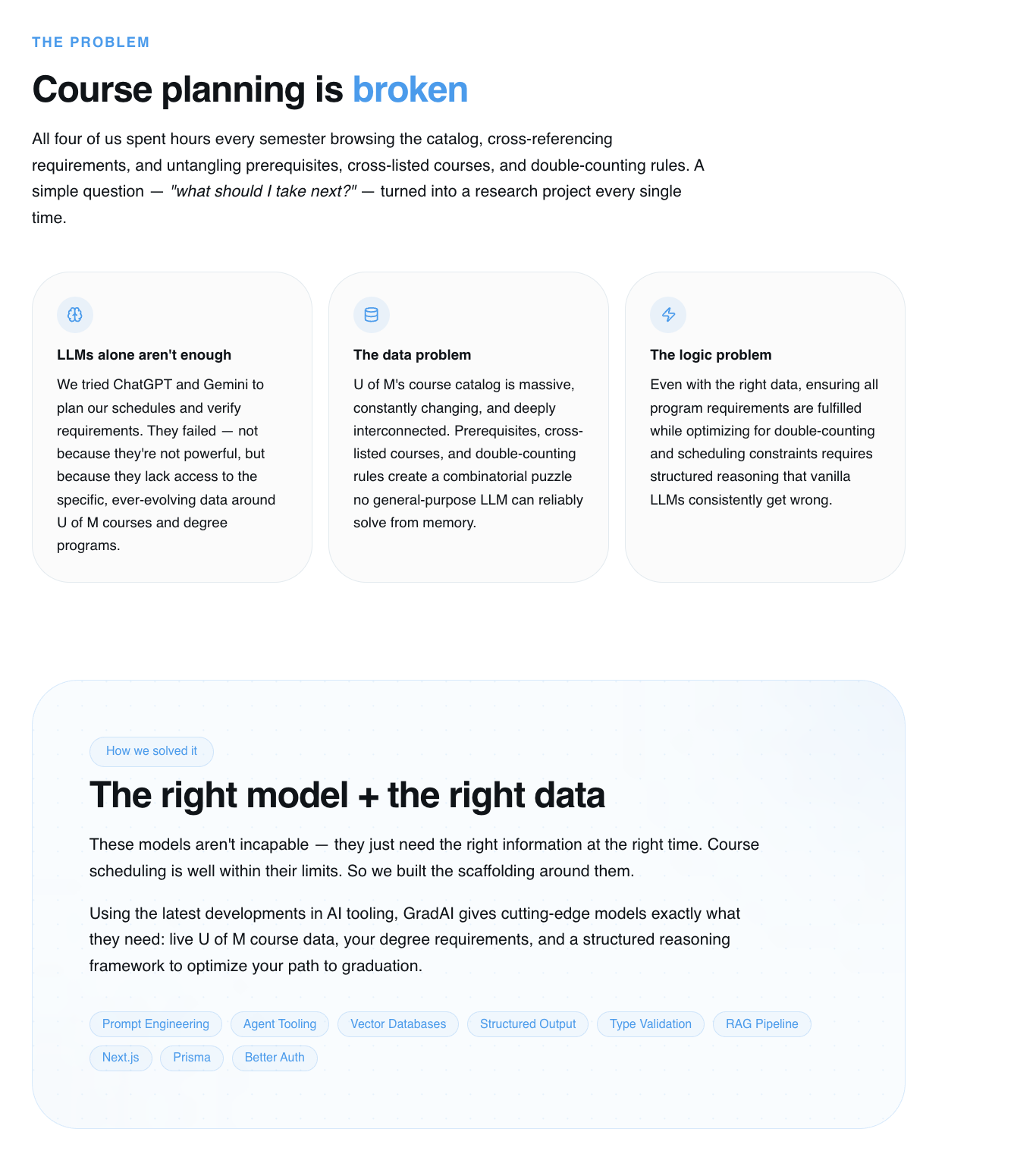
The University of Michigan has an incredible scheduling tool called Atlas. In Atlas you can build schedules from the course catalog, see various different useful statistics, and send the courses directly to pre-registration. As amazing as Atlas is, it cannot help you much in terms of figuring out which classes to take and when. We tried generative AI, but there were many times where the models were often just as—if not more clueless than us.
What it does
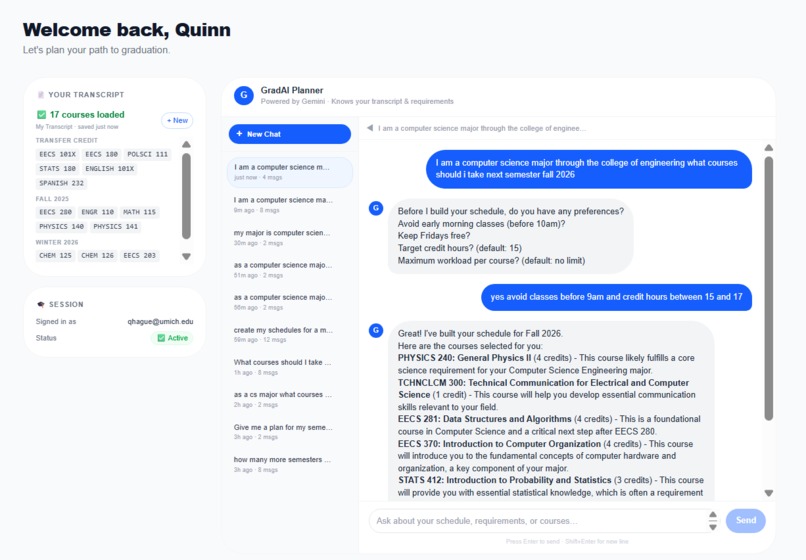
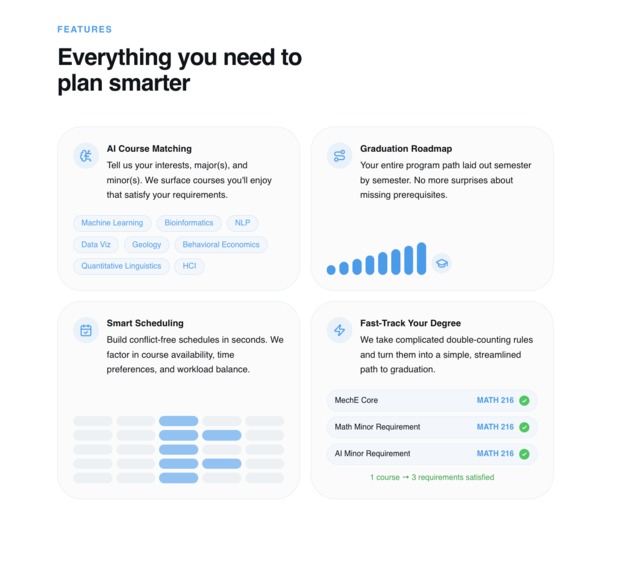
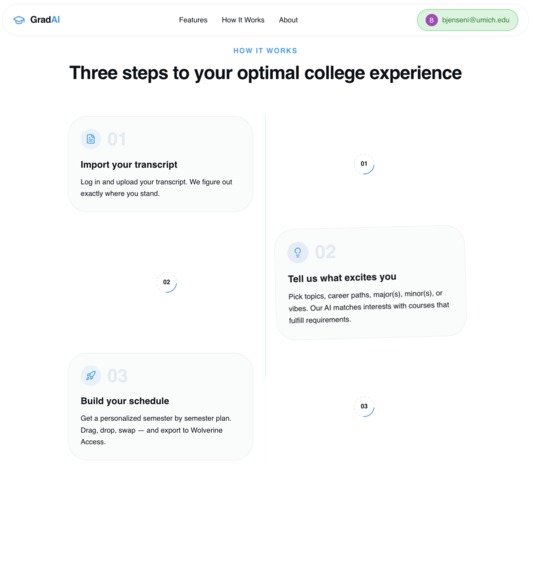
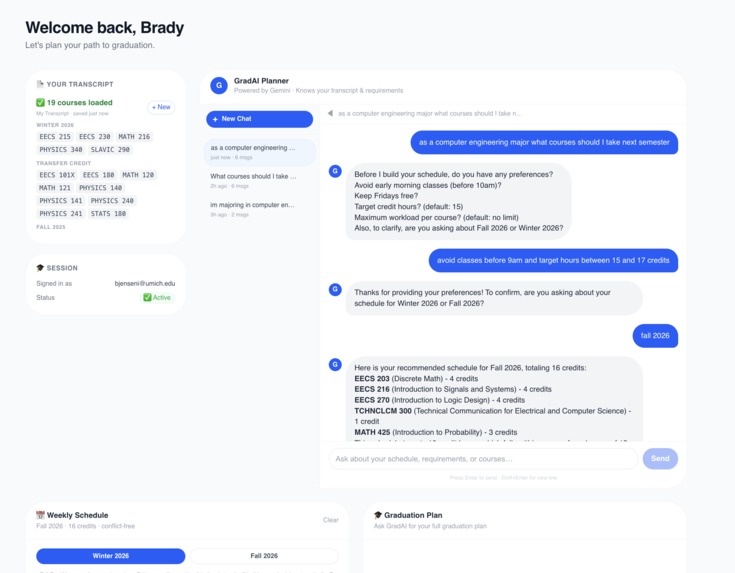
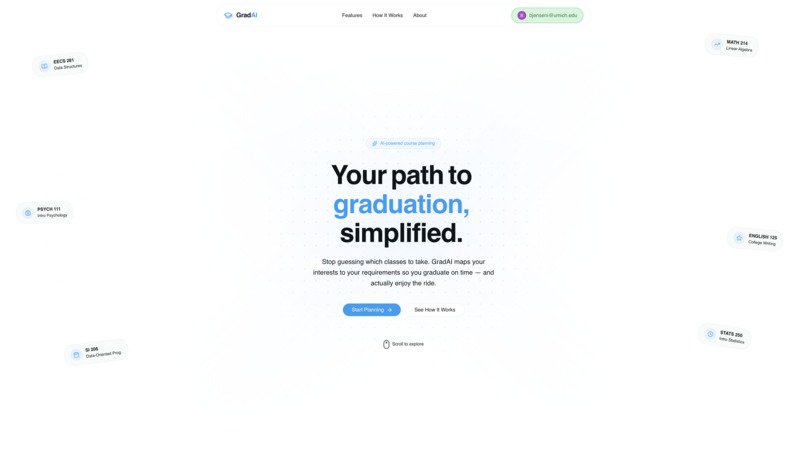
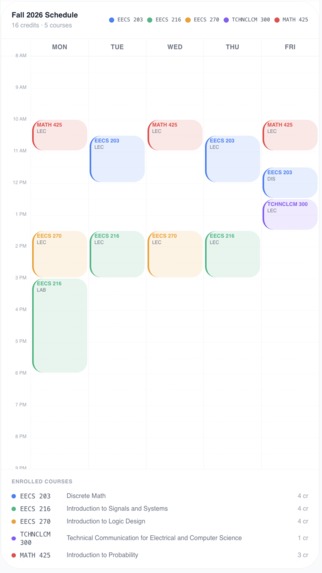
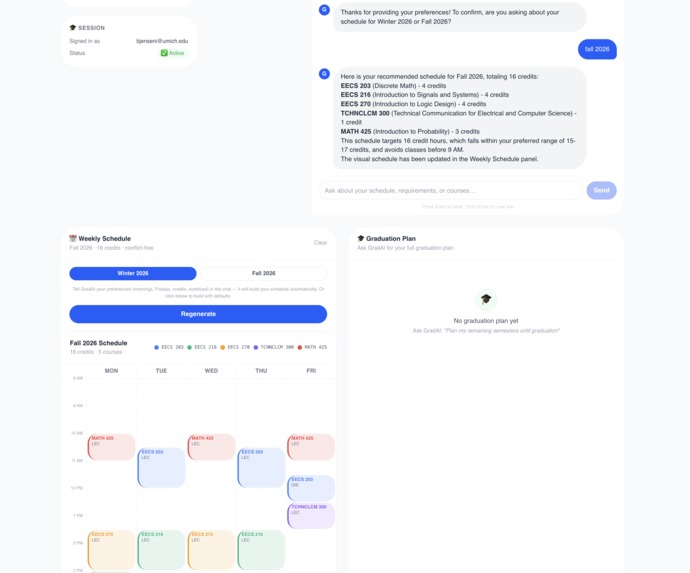
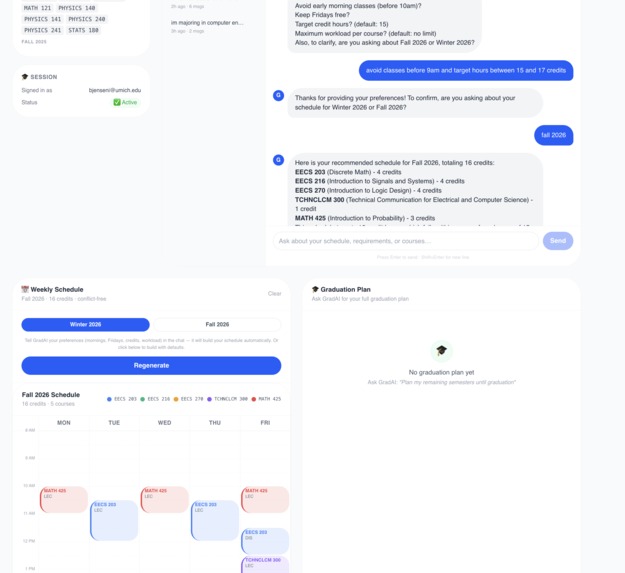
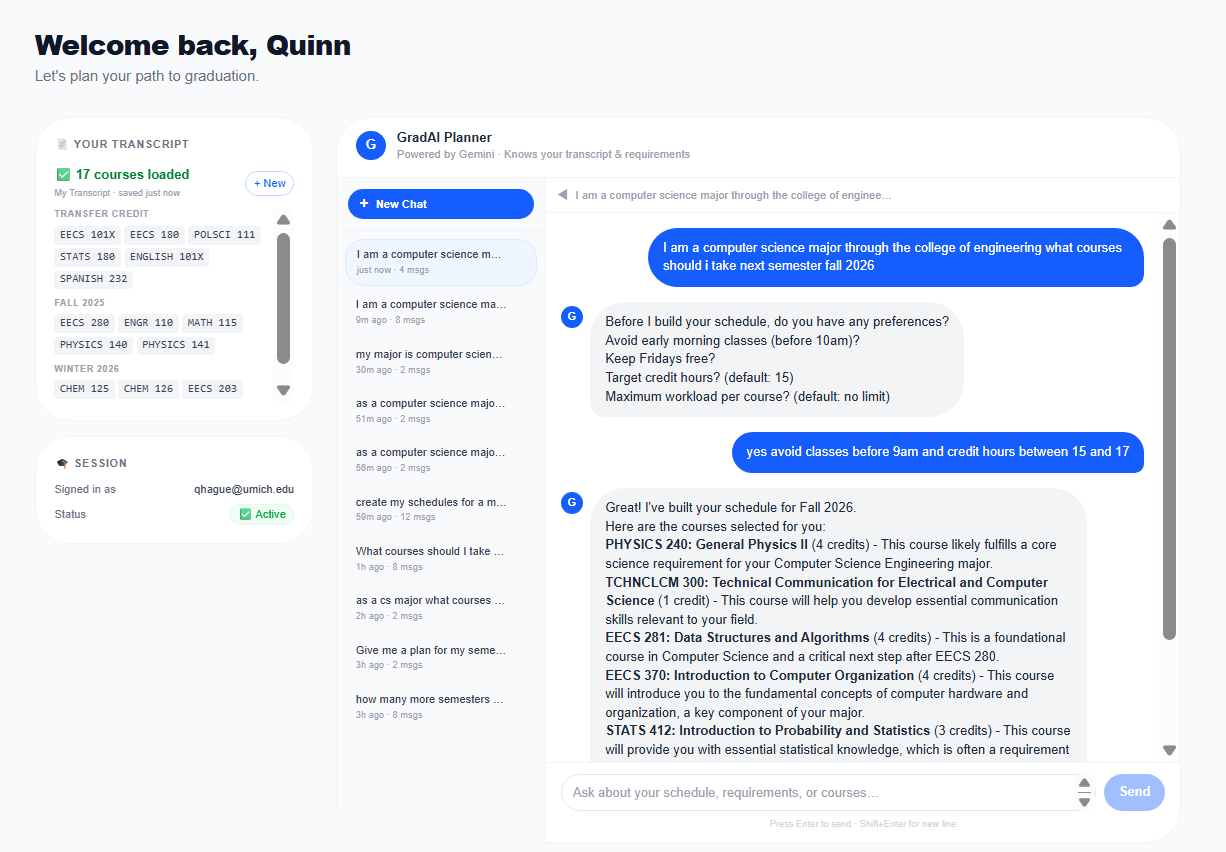
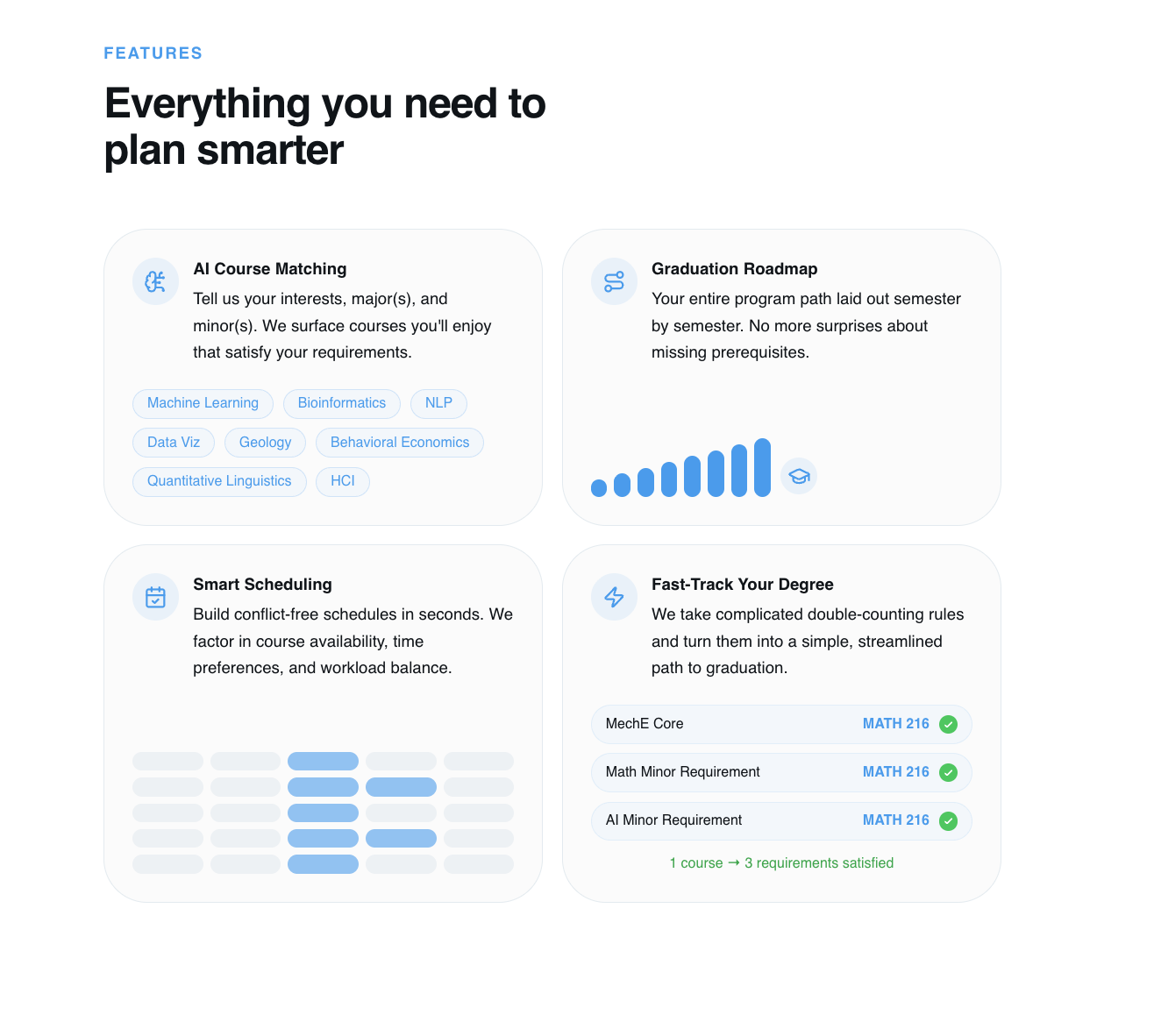
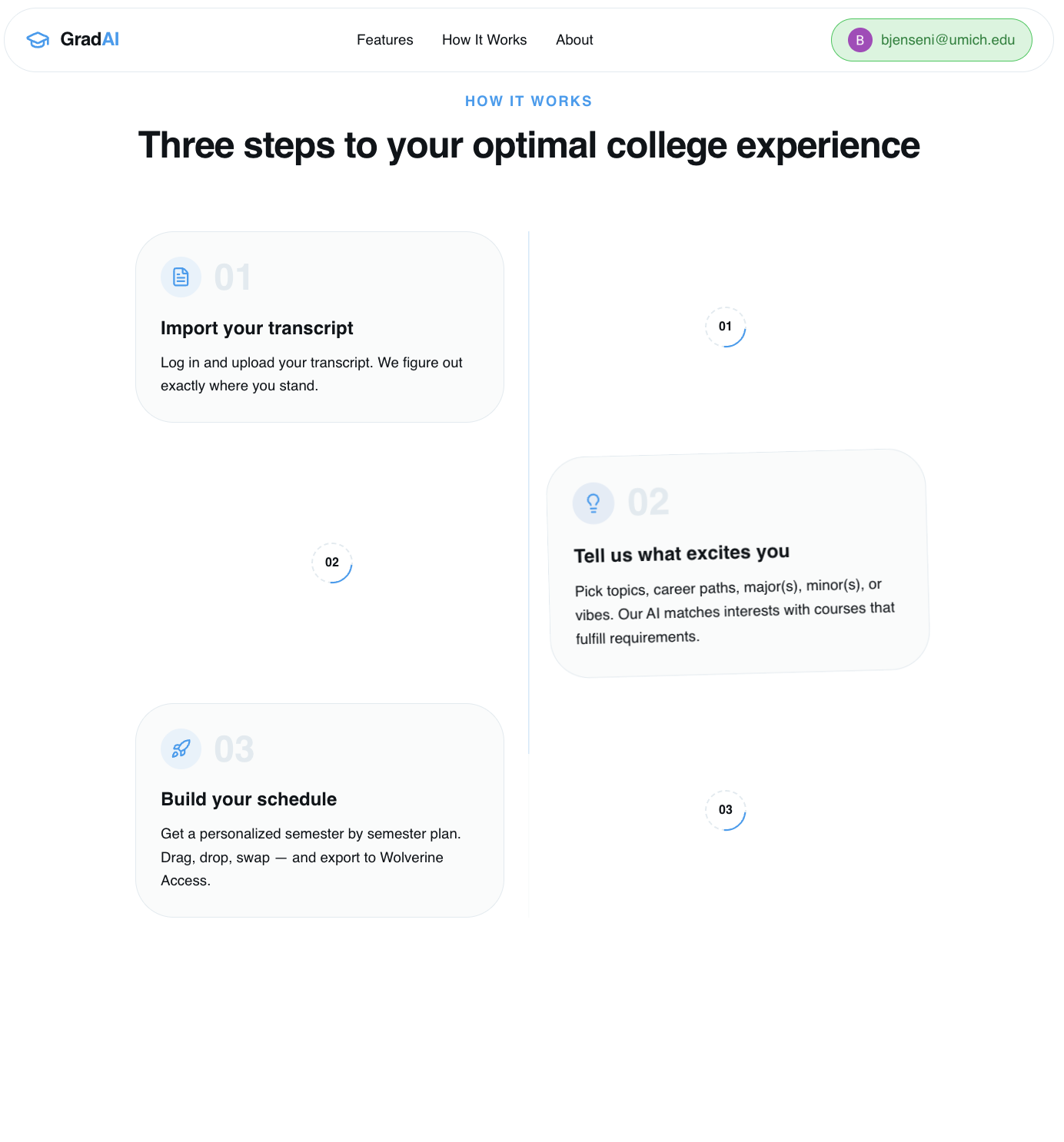
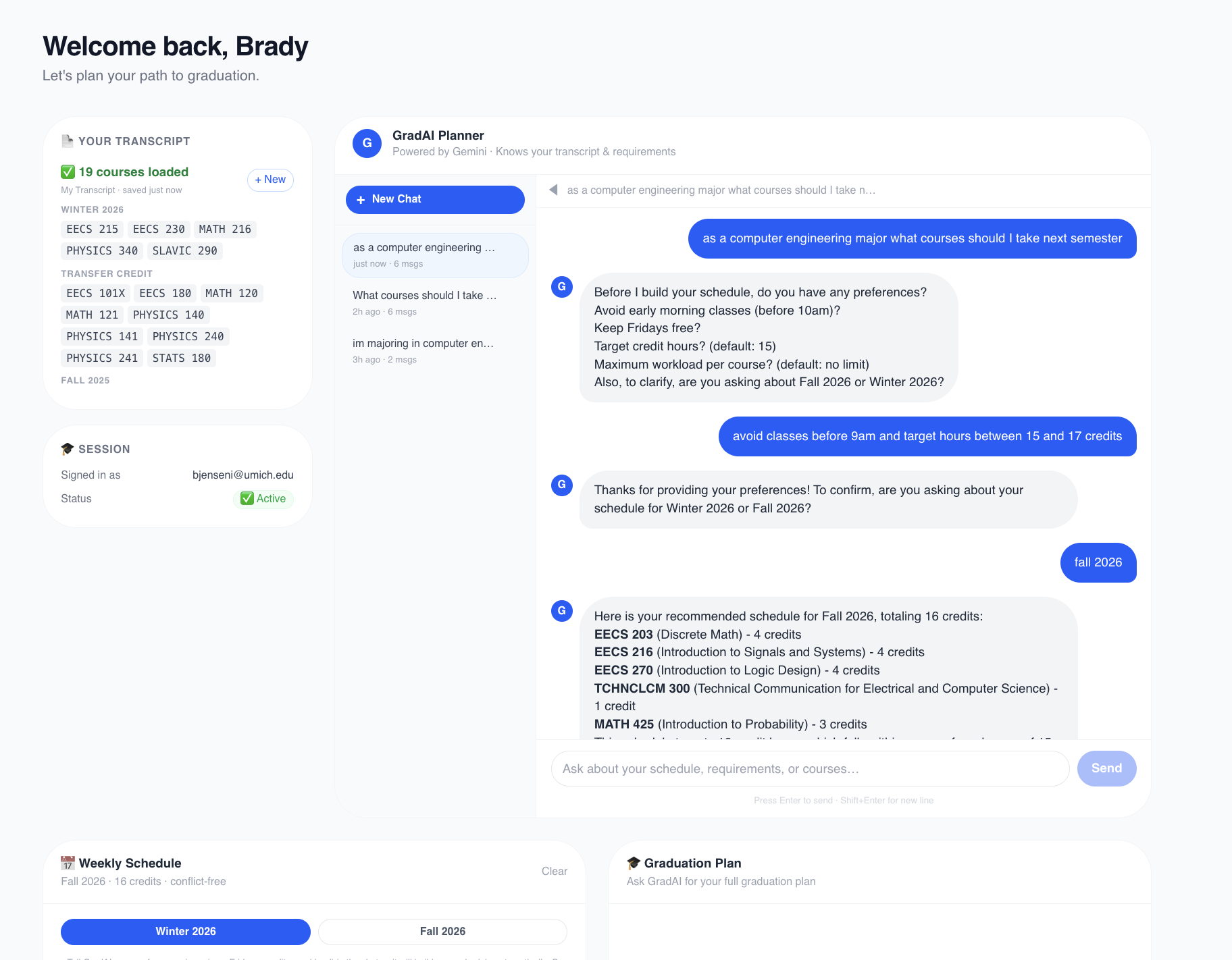
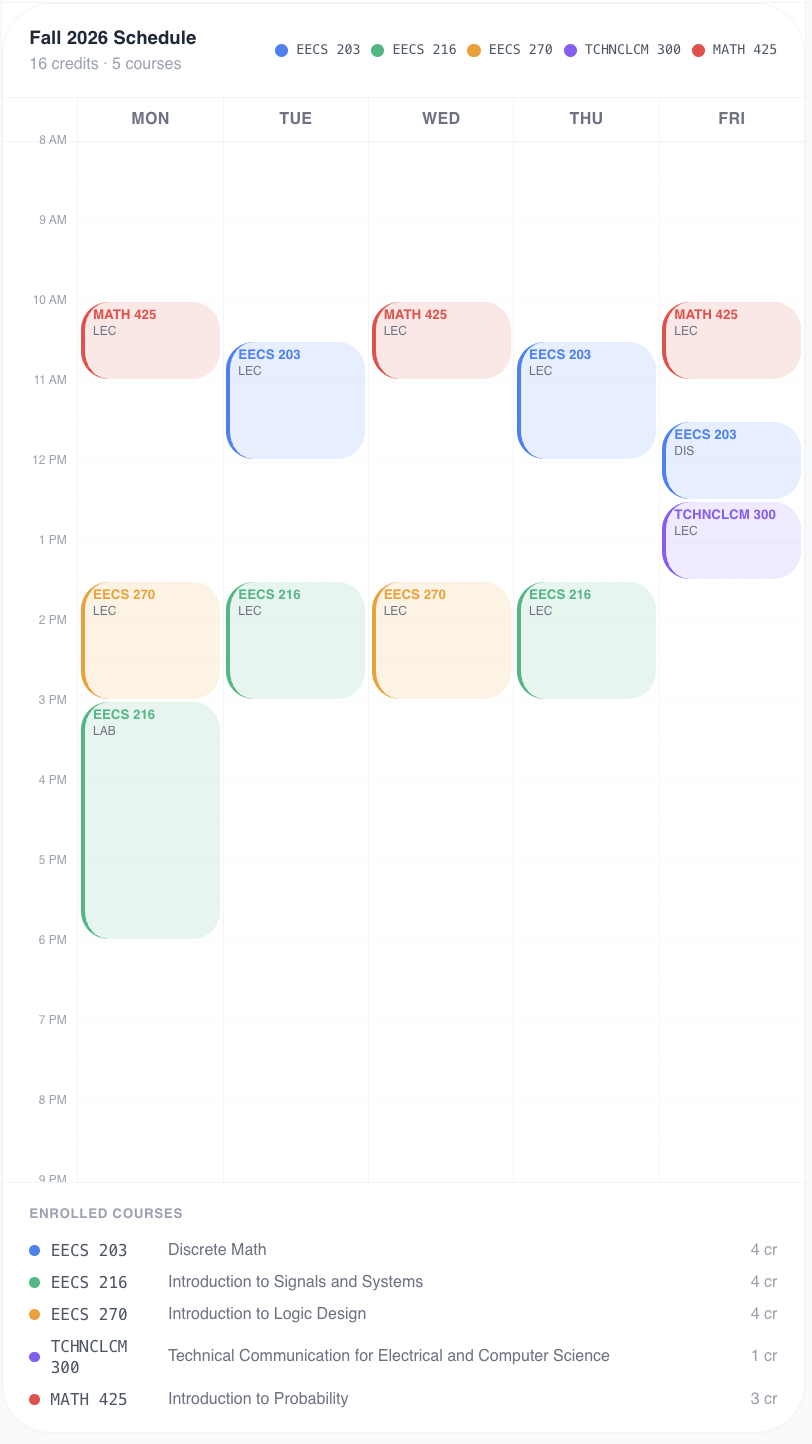
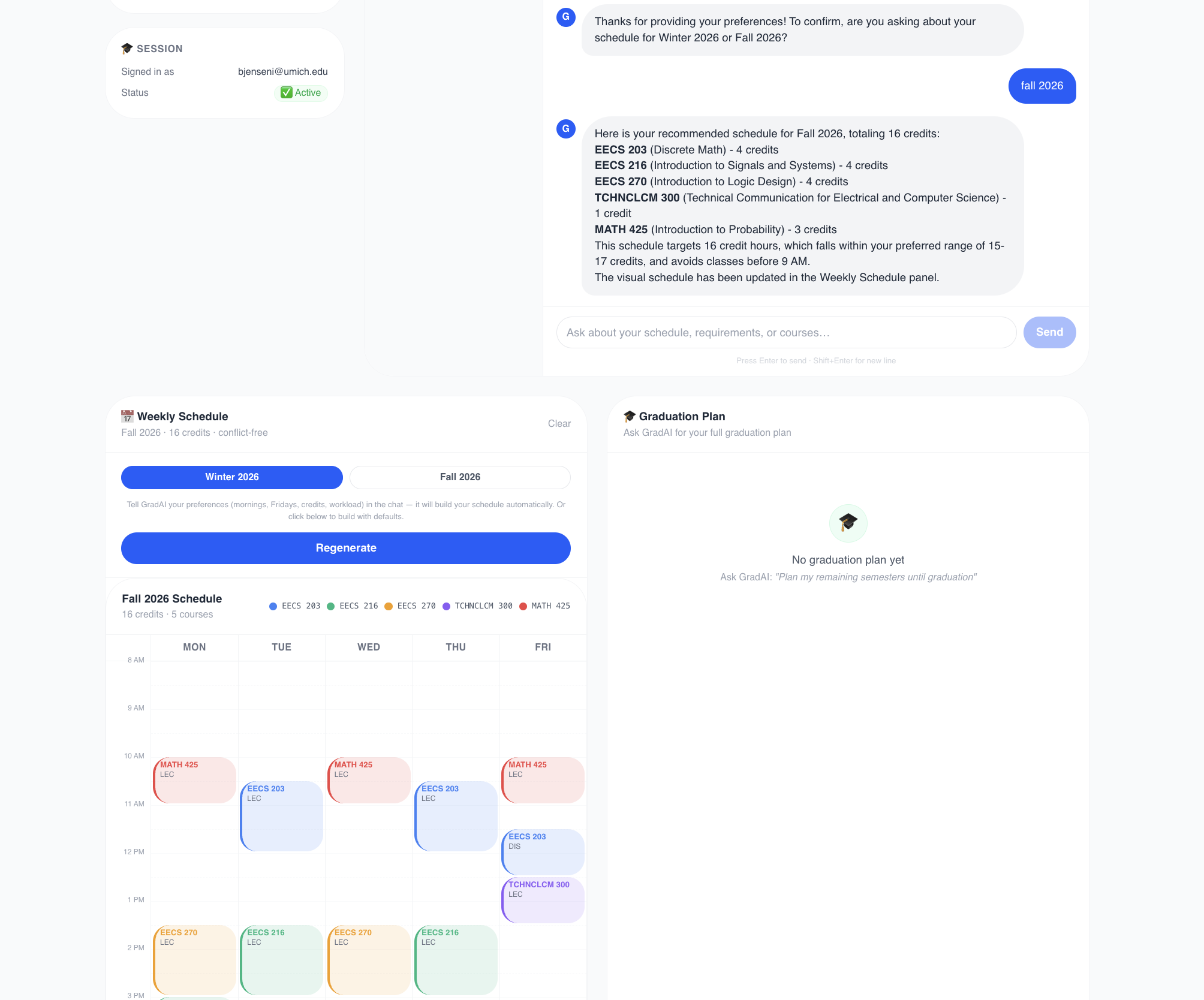
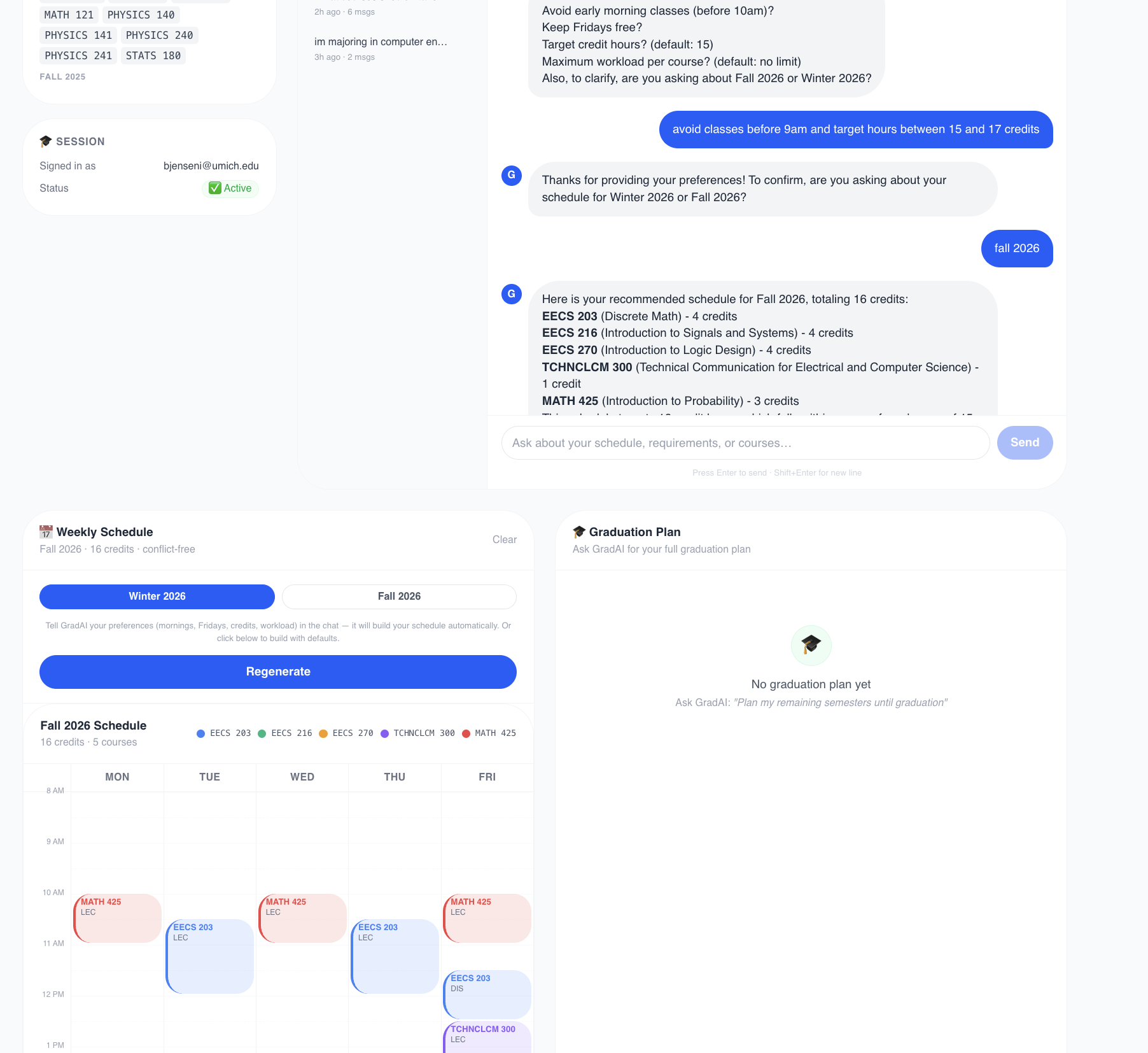
GradAI reads your transcript and checks it against degree requirements and recommends which classes you should take next, and also makes a sample schedule. Additionally, you can tell GradAI what you are interested in and it can recommend enjoyable electives to fill your schedule. GradAI works to make sure that you can finish your degree as fast as possible, consequentially reducing debt, by attempting to maximize double-counting between different major and minor programs. GradAI is not supposed to be an alternative to atlas—rather it is a supplement designed to help you use Atlas more efficiently.
How we built it
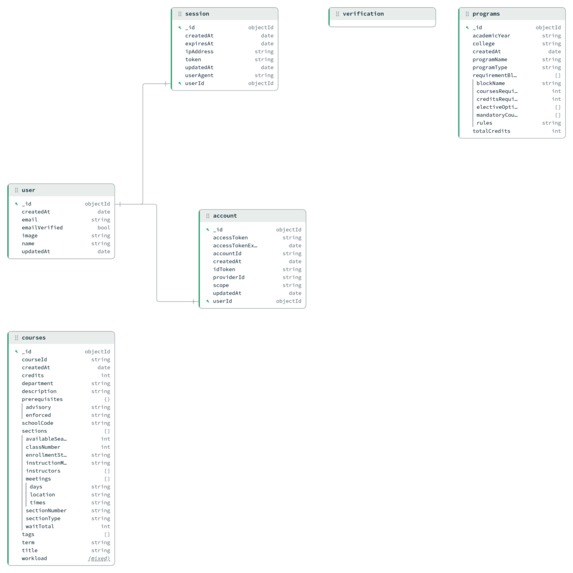
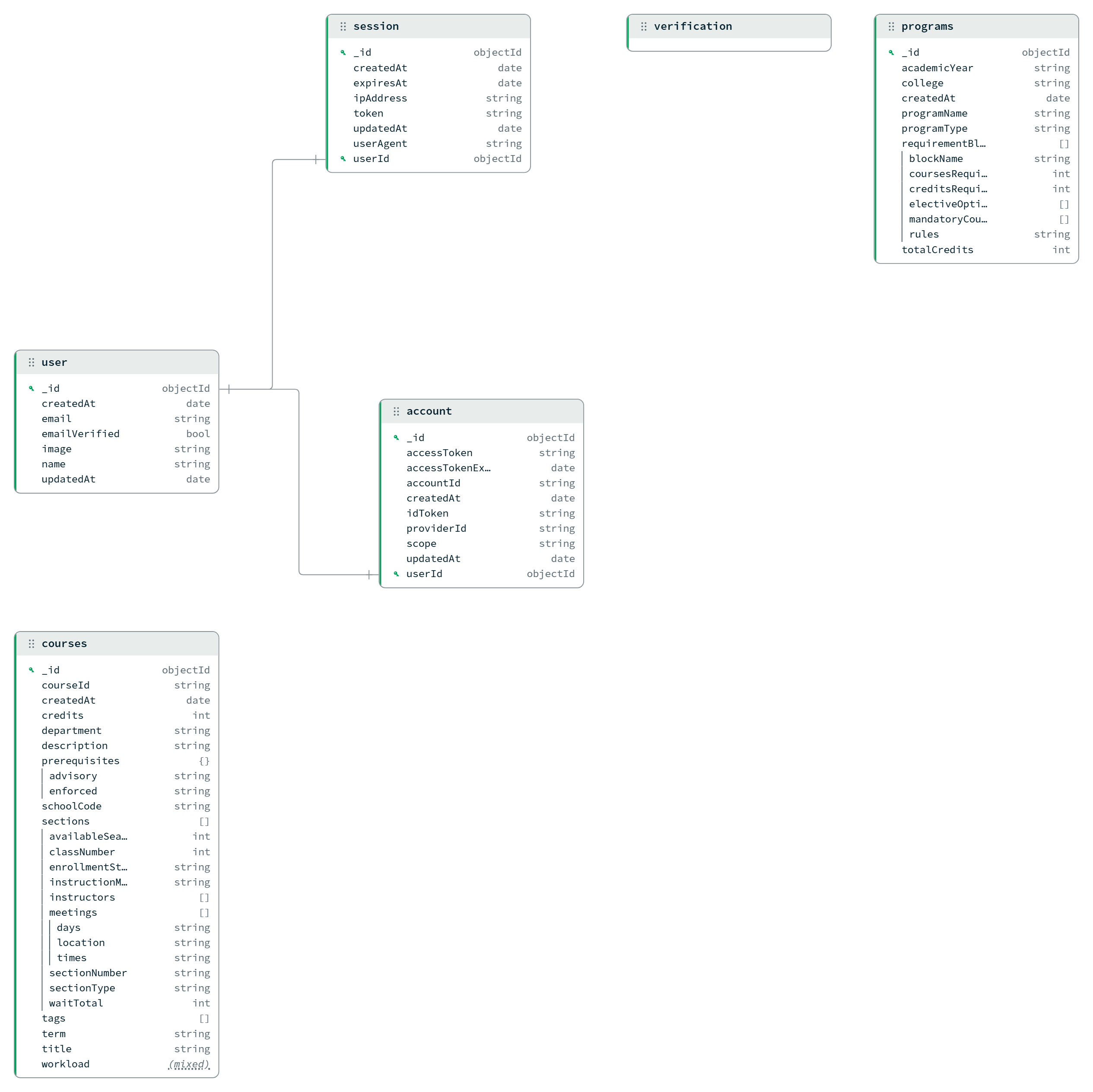
We used the UMScheduleOfClasses API in conjunction with the Gemini API to gather information on all 14,000+ classes at the University of Michigan. We used a mixture of Claude and Gemini code to help do this project. When the user uploads their transcript the Gemini API parses the transcript into a json file, which is then used to help the Gemini API decide which classes you should take in the future.
Challenges we ran into
One of our biggest issues was using Google Authentication to sign into GradAI. Another significant challenge we faced was getting the Gemini API keys as we were able to sign up for Google Cloud and get the free tokens, but we were unable to get an API key through Google Cloud, so we resorted to Google AI Studio and the API keys from there.
Accomplishments that we're proud of
We are very proud of our perseverance and our Gemini-based model that provides accurate class data while also balancing workload. We're also proud of our use of agentic tool calling and our use of MongoDB Atlas to manage the LLMs context.
What we learned
We learned how to implement APIs in our programs, how to more effectively use AI as a tool, and also a lot more about the many different courses offered at the University of Michigan.
What's next for GradAI
We hope to optimize the scheduling further and fix some errors that arise with specific program guides (such as many of the music programs) that are more ambiguous so that GradAI can provide more accurate information. Additionally, we wish to add more obscure programs such as SUGS or research opportunities. We would also like to potentially work with the University of Michigan to have some of our concepts added to Atlas in the future.
Built With
- claude
- css
- gemini
- javascript
- mongodb
- python
- tweakcn
- typescript
- umscheduleofclasses
- vercel

Log in or sign up for Devpost to join the conversation.