-
-
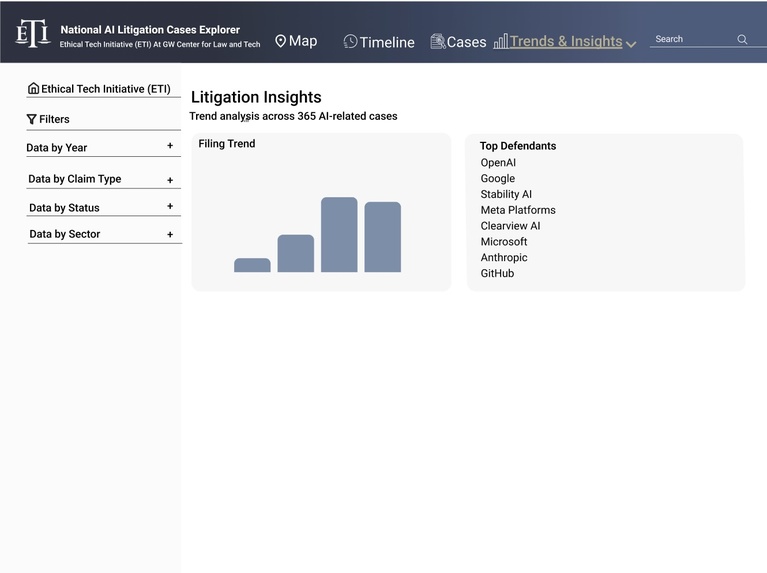
UI 2
-
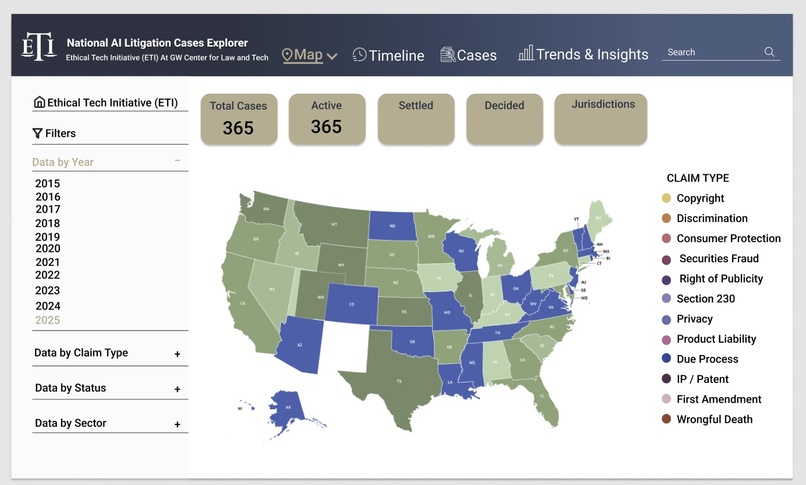
UI figma main page
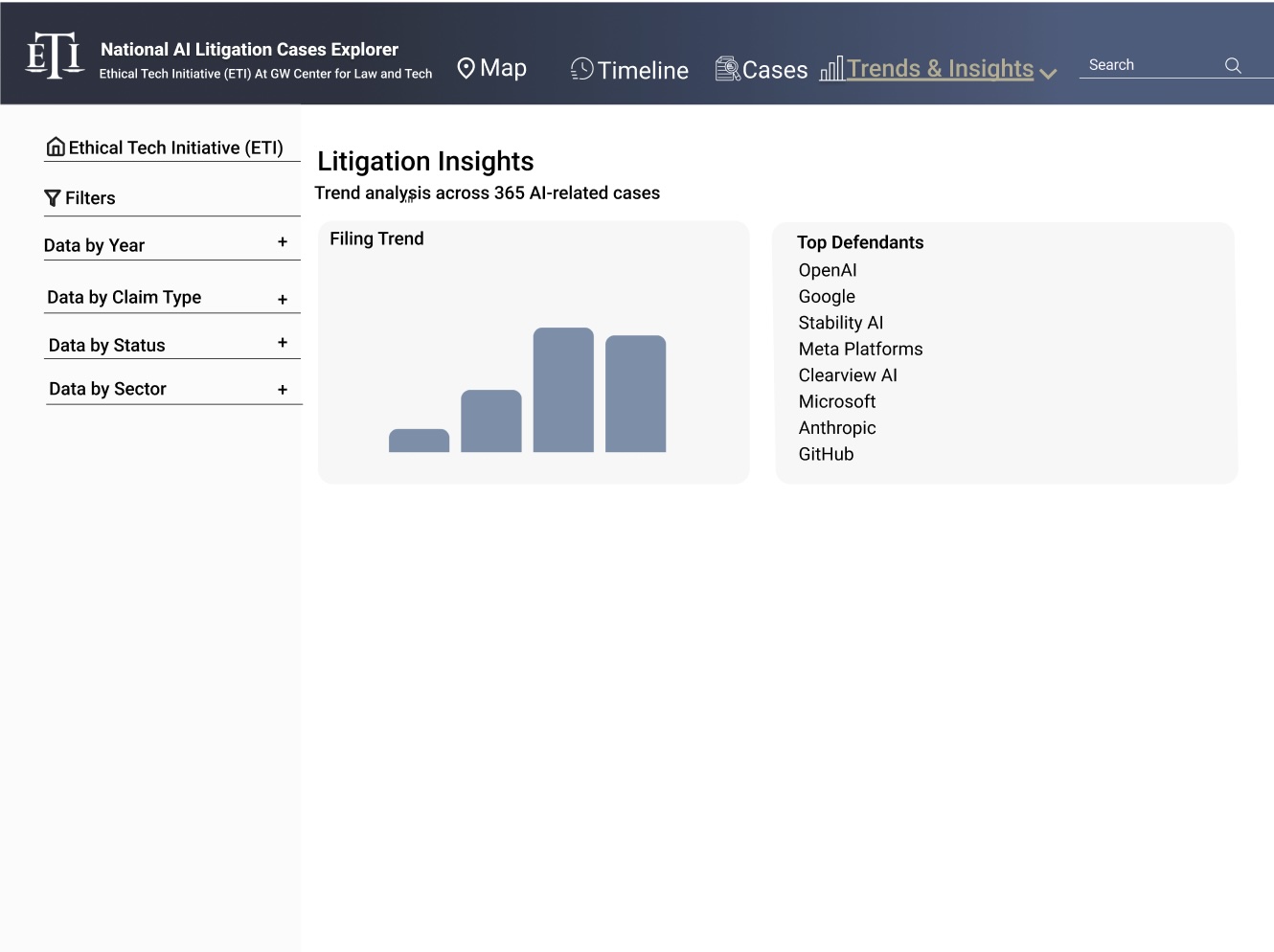
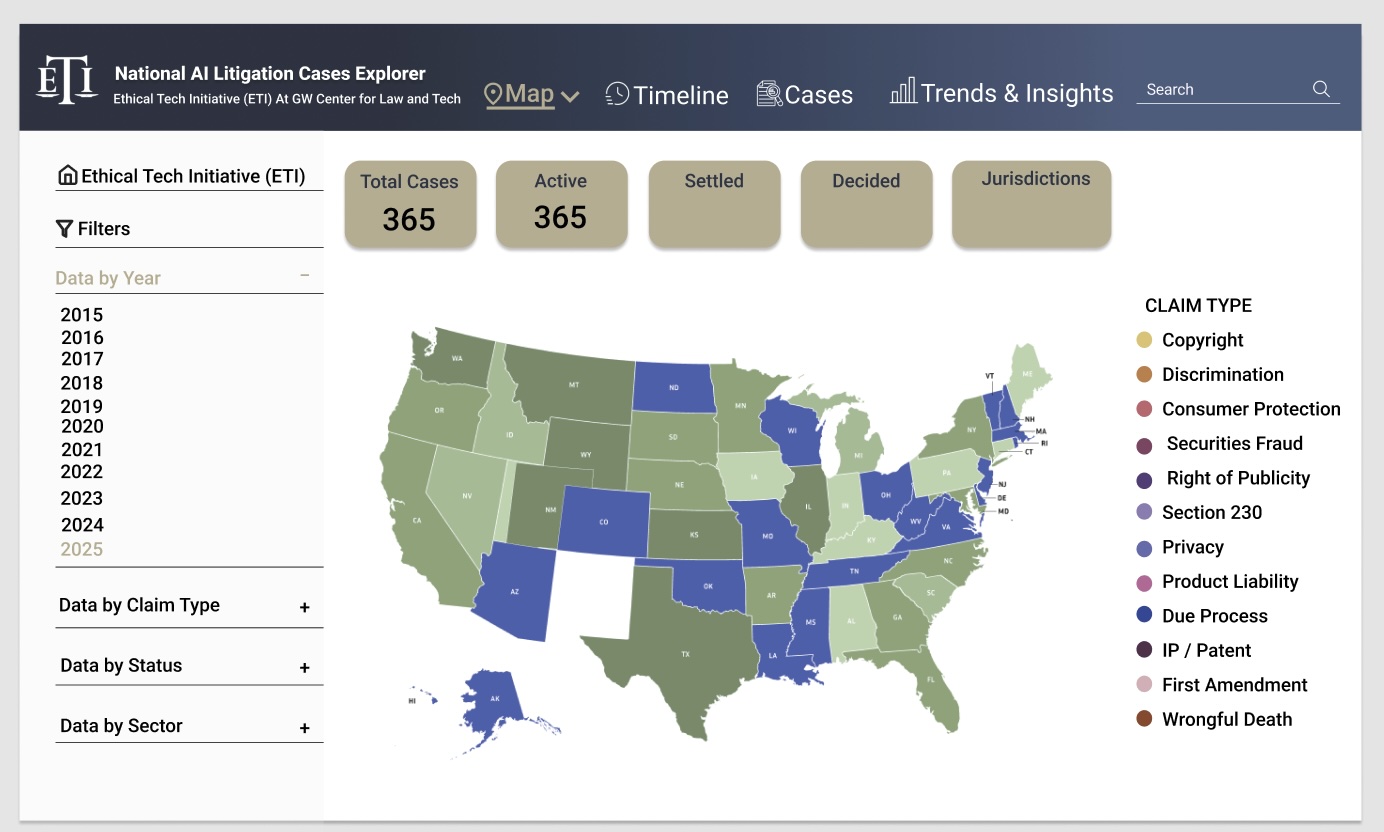
Inspiration
We began by exploring the GW Trustworthy AI Initiative and the Ethical Tech Initiative at the GW Center for Law and Tech to align our visual identity with their institutional, academic aesthetic. During the prototype phase, we referenced the Centers for Disease Control and Prevention COVID-19 spread map for inspiration — particularly its use of choropleth visualization to communicate complex, evolving data in a clear and trustworthy way. We chose to build a web application because it is the most accessible platform for researchers, scholars, policymakers, and lawyers who need fast, interactive access to structured legal data without specialized technical skills.
What It Does
MAS AI Litigation Mappers is an interactive web application that visualizes AI-related litigation across the United States. It allows users to: Explore a choropleth U.S. map showing cases by jurisdiction Filter cases by year, claim type, status, and industry sector View filing trends through a timeline interface Browse detailed case listings Analyze high-level trends and statistical insights Ask natural language questions through an AI-powered chatbot The platform transforms static legal records into a dynamic, searchable, and visual research tool.
How We Built It
We built the frontend using React.js with Vite for fast development and optimized builds. Geographic data is fetched dynamically from the U.S. Census TopoJSON dataset and rendered as SVG paths with a custom projection — allowing us to color states in real time without heavy mapping libraries. Our structured JSON dataset (50 landmark AI litigation cases from 2015–2024) feeds directly into the application. Using React’s useMemo hooks, filters recompute instantly across the map, timeline, table, and statistics views. The AI chatbot uses a local search algorithm that parses natural language queries and matches them against structured case fields — enabling instant responses with zero external API calls. The application is deployed on Vercel and connected to GitHub for continuous deployment.
Challenges We Ran Into
Cleaning and standardizing legal case data from multiple sources Categorizing cases consistently across 12 claim types and multiple sectors Designing a map visualization without relying on heavy third-party libraries Building a chatbot that felt intelligent while operating fully client-side Balancing visual sophistication with institutional credibility Ensuring accuracy and clarity while maintaining performance was one of our biggest technical challenges.
Accomplishments We're Proud Of
Building a fully functional full-stack visualization tool within a hackathon timeframe Designing a professional, institution-ready interface in Figma before development Structuring a clean, extensible litigation dataset Creating a responsive choropleth map without external mapping frameworks Implementing a zero-API AI chatbot that works instantly Deploying a live production-ready application Most importantly, we created a tool that fills a real research gap in AI governance.
What We Learned
The importance of structured data modeling before visualization How design-first prototyping dramatically speeds up development The technical tradeoffs between performance, usability, and visual detail How interdisciplinary collaboration — data, design, and development — leads to stronger outcomes That AI governance tools must prioritize clarity and transparency over novelty We also gained hands-on experience building trustworthy AI tools rather than just talking about them.
What’s Next for MAS AI Litigation Mappers
Expanding the dataset beyond 50 cases and automating updates Adding federal vs. state court filters, filter cases by state and city Integrating external legal databases through APIs Adding downloadable research reports and citation tools Implementing advanced analytics such as claim-type forecasting Partnering with academic institutions and policy organizations Our long-term vision is to make MAS AI Litigation Mappers a national research infrastructure tool for AI governance and legal transparency.


Log in or sign up for Devpost to join the conversation.