-
-
-
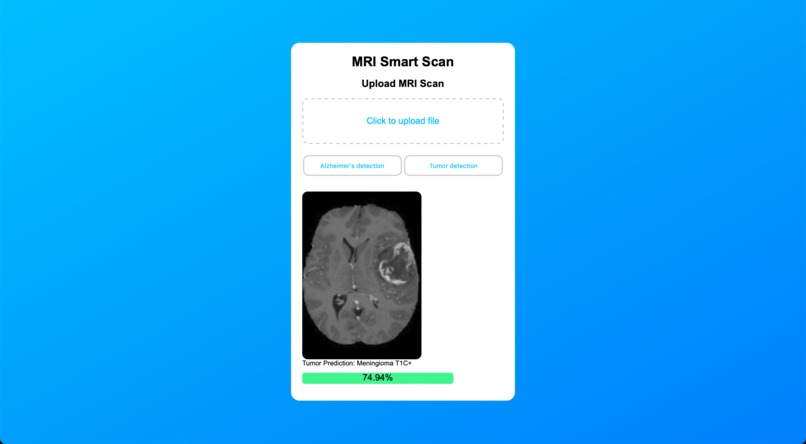
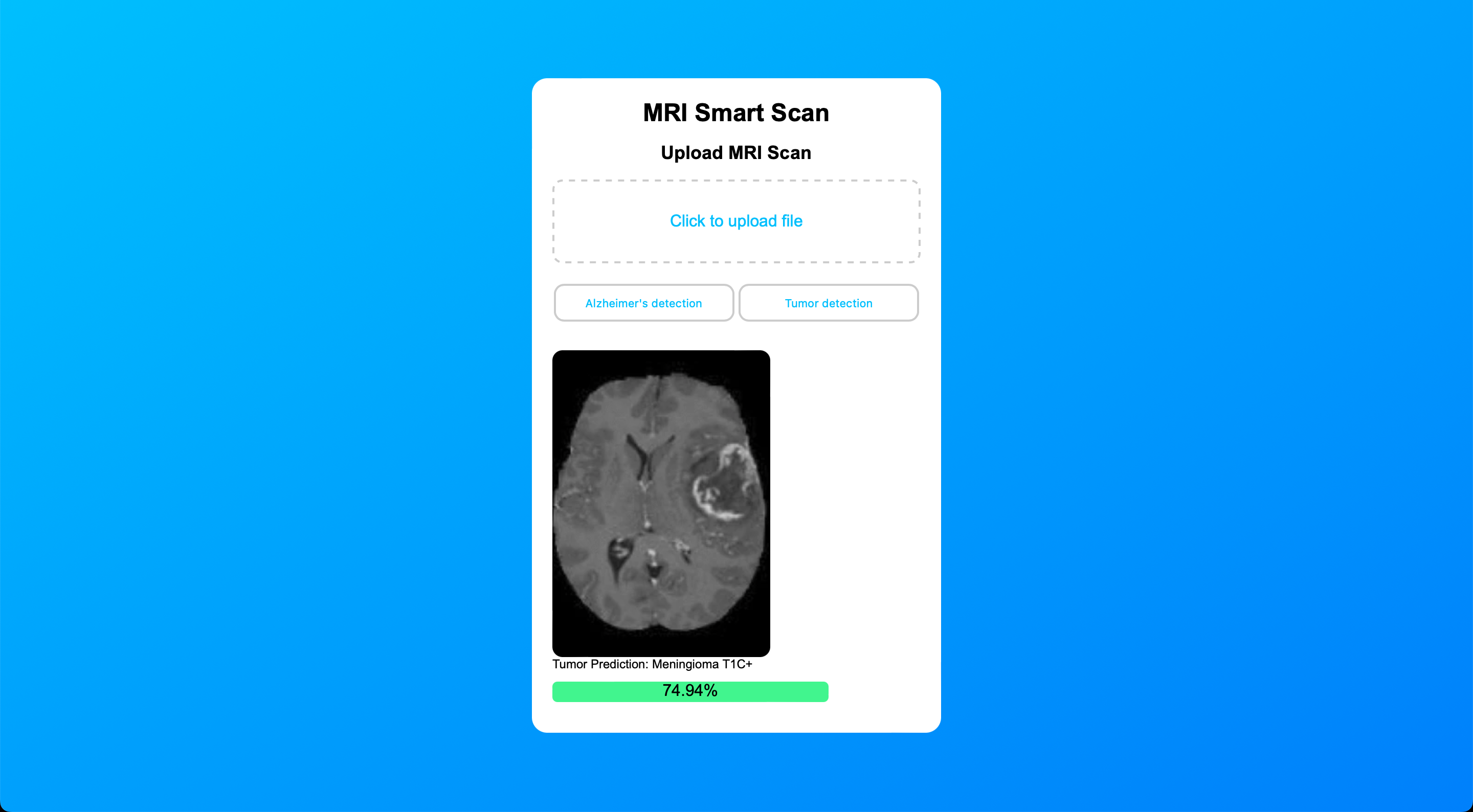
Tumor detection
-
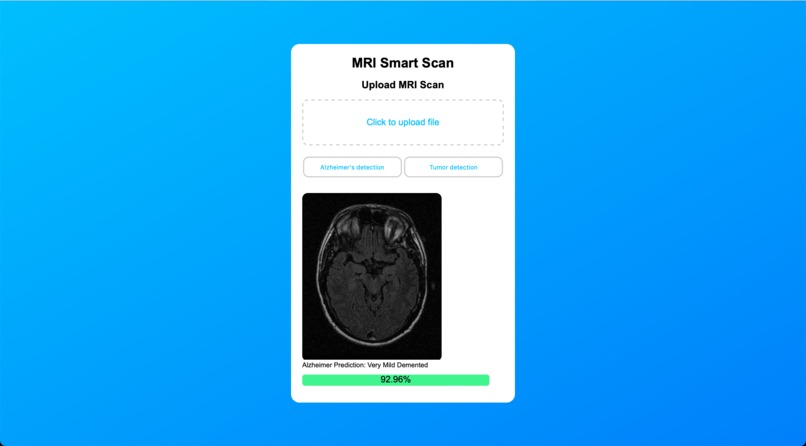
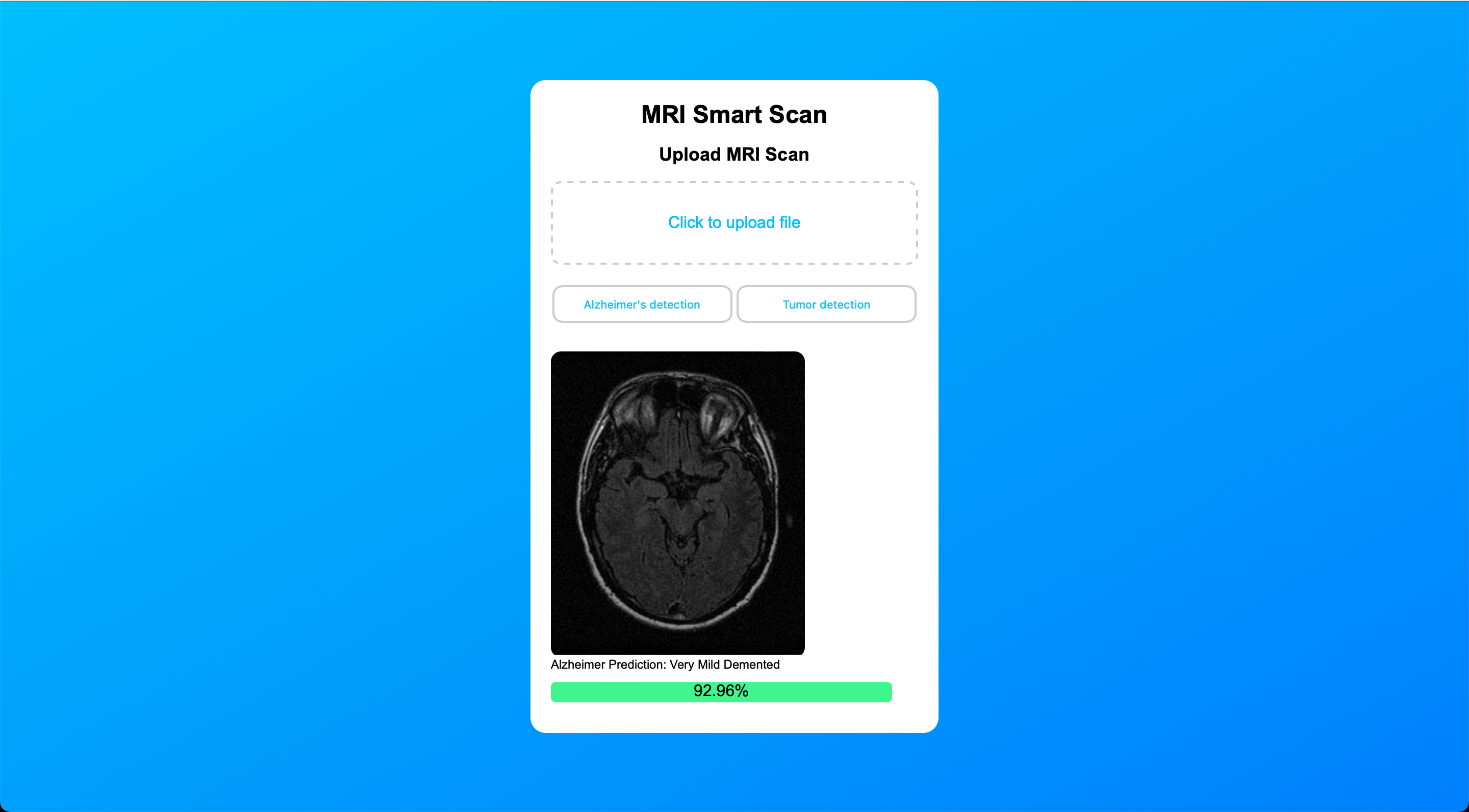
Alzheimer detection
MRI Smart Scan for Brain Defects and Diseases Detection
Inspiration
While modern medicine has made great strides, diagnosing neurological disorders like Alzheimer's and detecting brain injuries or abnormalities still presents major challenges. Manual diagnoses can be time-consuming, and human error or missed details in early-stage diseases can result in delayed intervention. This project was built off the need for more accurate, faster, and scalable diagnostic tools. With AI-driven technology, we aim to improve the precision of brain scans, ensuring that more patients receive timely and reliable diagnoses for complex neurological conditions and disorders.
What it does
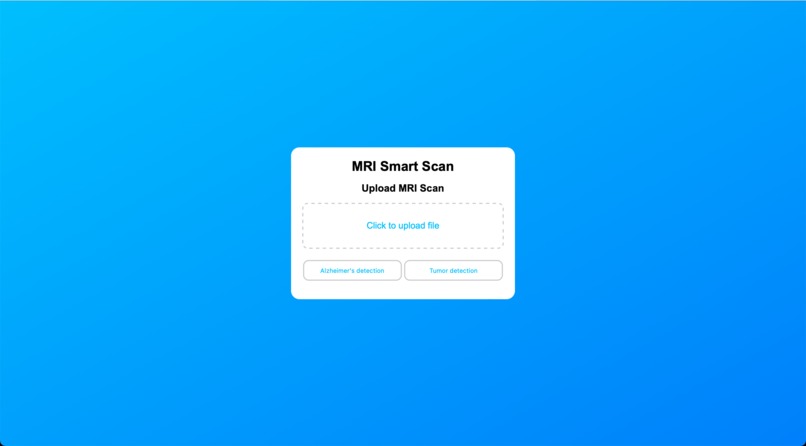
Our MRI Smart Scan software uses AI to detect and diagnose brain defects, abnormalities, injuries, and diseases like Alzheimer's. By automating the interpretation of MRI data, it reduces human error and significantly increases the speed of analysis. The software is powered by advanced machine learning algorithms that can identify patterns often missed by traditional diagnostic methods. These insights help doctors detect conditions such as Alzheimer's, traumatic brain injuries, and tumors earlier and with greater efficiency. With each diagnosis, the software also provides the probability of accuracy, giving medical professionals an additional layer of confidence in the results.
How we built it
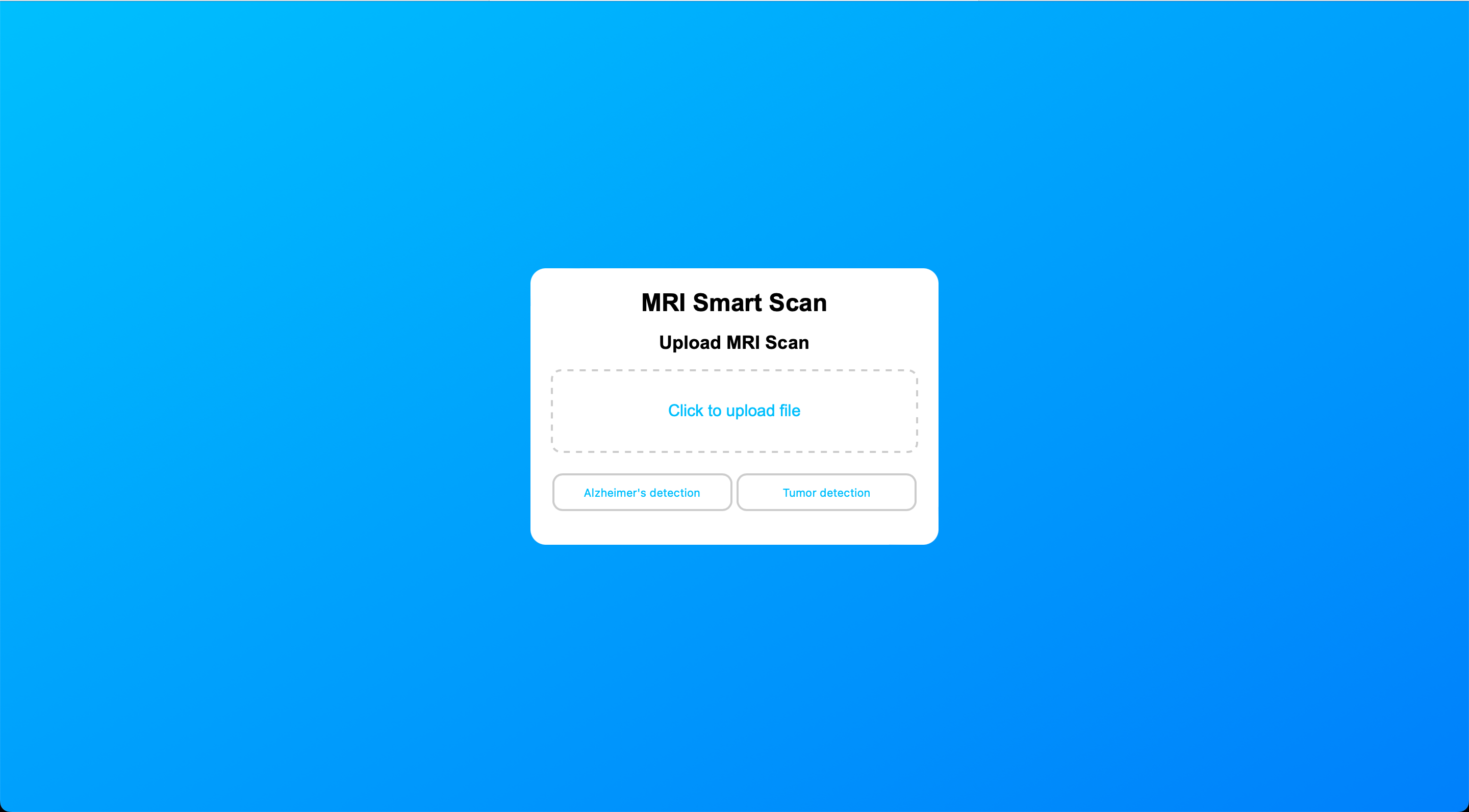
We built the MRI Smart Scan using Python, TensorFlow, and JavaScript. The journey started with sourcing a comprehensive MRI dataset, which was then cleaned and pre-processed to irrelevant data. Python served as the primary language for data processing, while TensorFlow powered the design and training of our networks. The software's front-end was developed in JavaScript, offering an intuitive interface for medical professionals to upload MRI scans, view diagnostic reports, and receive percentage-based confidence scores for each diagnosis.
Challenges
Finding an Appropriate Dataset
Sourcing a balanced and diverse dataset of MRI scans was one of the toughest challenges. Public datasets often lacked sufficient examples of specific brain defects or didn't provide enough labeled data for effective model training. We had to merge and curate datasets from various sources to ensure the data was both comprehensive and reliable.
Parsing the Dataset
Once the right data was secured, parsing MRI scans into a usable format presented another challenge. MRI images are complex and high-dimensional, and transforming these images into data suitable for machine learning required extensive pre-processing. We tackled issues related to resolution, noise, and converting image data into numerical formats for training.
Python and TensorFlow Integration
Integrating Python for data science and TensorFlow for machine learning wasn't always smooth. We encountered version incompatibilities and performance optimization challenges. Understanding the intricacies of both platforms was necessary to ensure smooth model training and deployment.
Data Cleaning
MRI data often contains noise, artifacts, and irrelevant sections that can confuse the AI model during training. Cleaning this data to retain only essential features was crucial but time-consuming. We employed several techniques to remove outliers and ensure data uniformity without losing vital diagnostic information.
Finding the Right Algorithm
Choosing the right neural network for our model was tricky. We experimented with different architectures, including convolutional neural networks (CNNs) and fine-tuned parameters like learning rates and batch sizes to optimize the model for our specific use case.
JavaScript Issues
The JavaScript-based front-end posed additional challenges, particularly in handling asynchronous tasks such as communicating with the back-end AI model and processing large MRI files. Issues like slow response times and data transmission errors required a combination of optimized code and rigorous testing to resolve.
Development Process
Model Training
Using TensorFlow, we trained separate machine learning models for Alzheimer's and tumor detection. The models were trained on pre-processed, cleaned datasets, with layers and parameters optimized for accuracy. These models were then saved as JSON files for easy integration into the web-based interface.
Front-end Setup
HTML5 and CSS3 were used to design the front-end interface, focusing on an intuitive and user-friendly experience. Key features include an image upload area, result display section, and a clean, modern layout that adapts across devices.
JavaScript Integration
JavaScript powered the core user interactions, such as:
- Loading the machine learning models asynchronously with TensorFlow.js.
- Handling image uploads and resizing them to 128x128 pixels for consistent input.
- Preprocessing images and running the models for predictions.
- Displaying diagnostic results and confidence scores in real time.
Firebase Integration
Firebase was used to host the entire application, ensuring fast and scalable deployment. Firebase analytics allowed us to track user interactions and app performance, while Firebase Hosting ensured the platform's availability across the globe.
Testing and Deployment
The system underwent extensive testing across multiple devices and browsers to ensure smooth functionality and compatibility. After testing, the app was deployed using Firebase Hosting, enabling users to access it from any location.
Accomplishments
- Successfully trained a model with high accuracy in detecting brain abnormalities.
- Developed an intuitive interface that bridges the gap between front-end and back-end systems.
- Created a reliable pre-processing pipeline that ensures consistency and cleanliness in the input data.
- Solved key technicalities related to Python-TensorFlow integration and JavaScript implementation.
- Built a diagnostic tool capable of early detection of conditions like Alzheimer's, providing confidence scores for more precise assessments.
What we learned
- The critical role of high-quality data: Clean, well-structured datasets are vital for machine learning success.
- Iterative refinement is key: Machine learning models often require several rounds of experimentation with algorithms, architectures, and parameters to achieve the desired performance.
- Integrative collaboration is essential: Integrating Python, TensorFlow, and JavaScript for a seamless AI experience taught us the importance of cross-functional collaboration.
- Insights into medical imaging: We gained a deeper understanding of MRI imaging techniques and the role of AI in interpreting these complex scans.
What's next
- Expanding Disease Detection: We plan to extend the model's detection capabilities to include other neurological conditions such as Parkinson's and brain cancer.
- Improving Accuracy: By incorporating more diverse MRI datasets, we aim to enhance the model's performance across a broader range of cases and demographics.
- Real-Time Diagnostics: Our goal is to further reduce processing time, allowing for real-time analysis and diagnosis during MRI scans.
- Clinical Testing: The next step is to partner with healthcare institutions to test the software in clinical settings, ensuring it meets the standards required for medical tools.
@dataset{alzheimer_mri_dataset,
  author = {Falah.G.Salieh},
  title = {Alzheimer MRI Dataset},
  year = {2023},
  publisher = {Hugging Face},
  version = {1.0},
  url = {https://huggingface.co/datasets/Falah/Alzheimer_MRI}
}
Built With
- css3
- firebase
- html5
- javascript
- keras
- python
- tensorflow


Log in or sign up for Devpost to join the conversation.