-
-
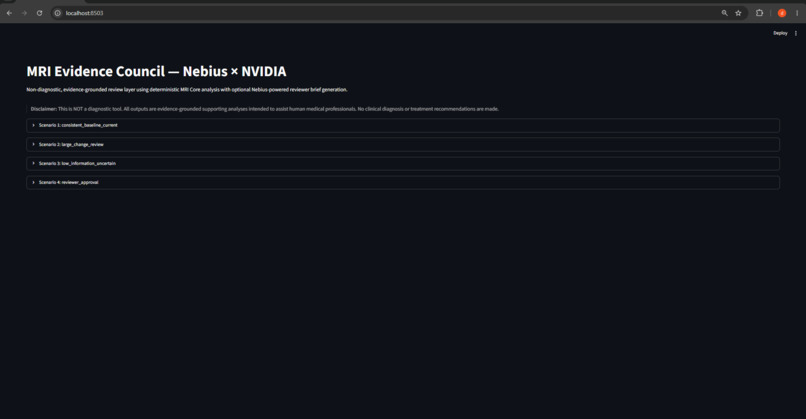
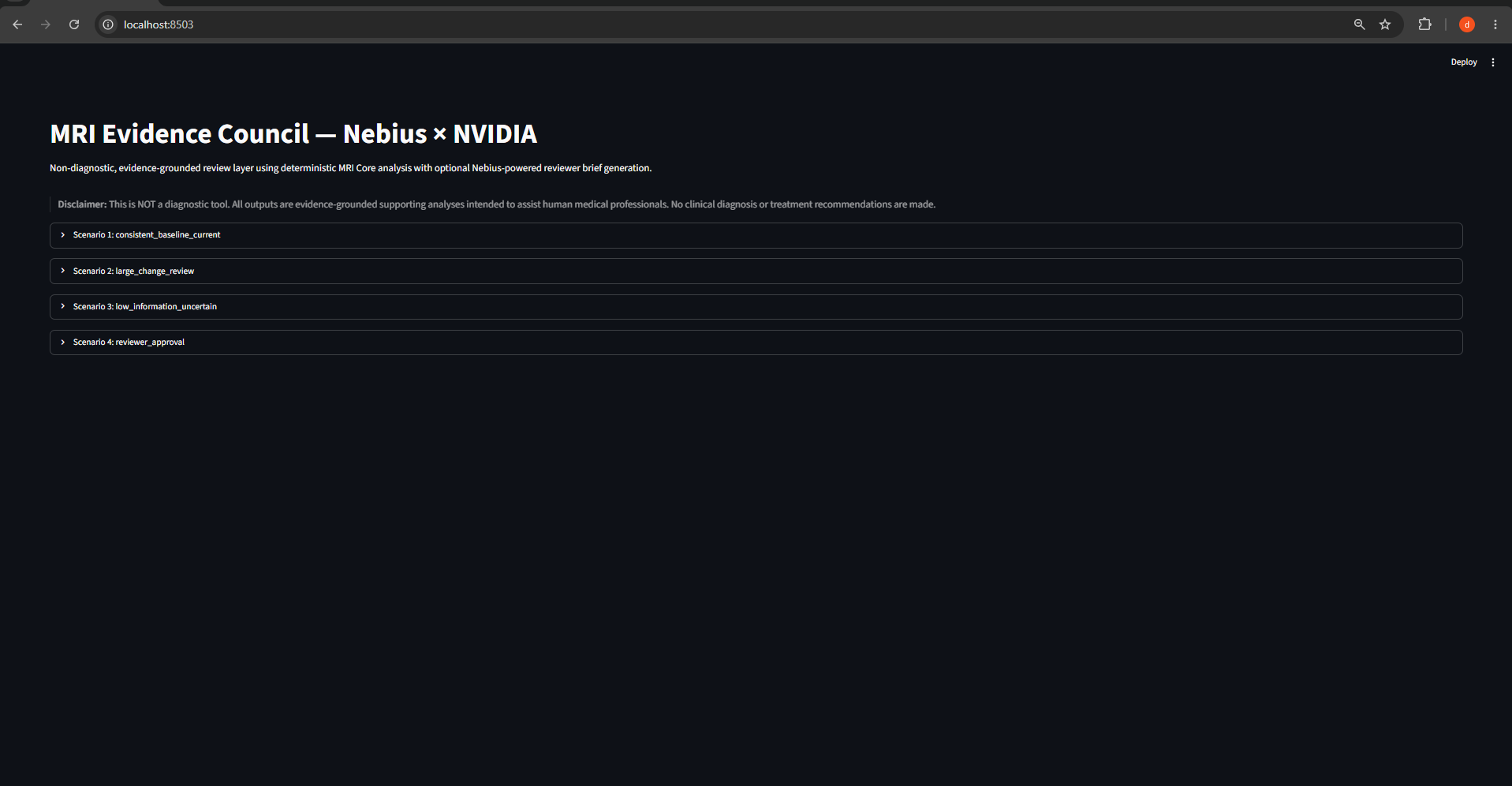
Four deliberately designed synthetic scenarios test the MRI evidence workflow.
-
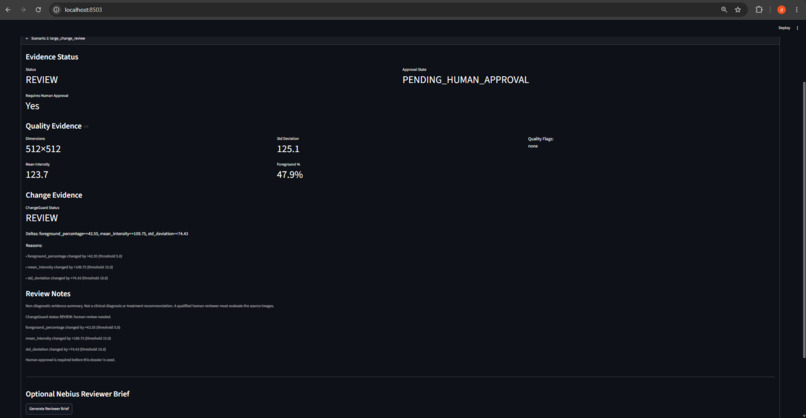
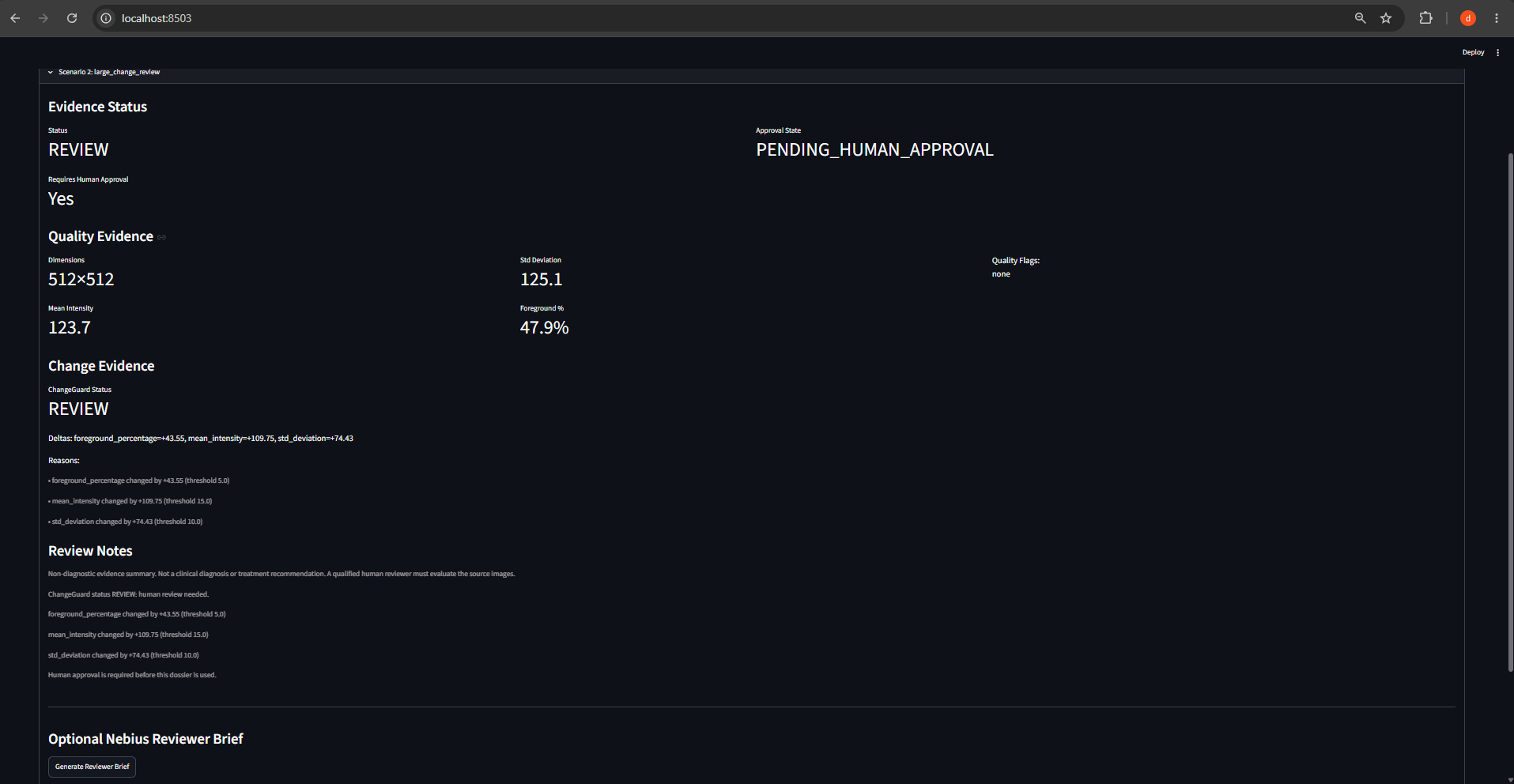
ChangeGuard flags substantial image changes for review while human approval remains pending
-
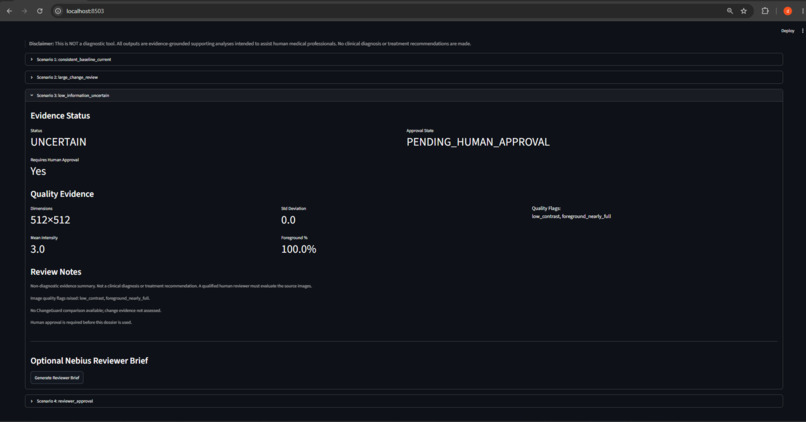
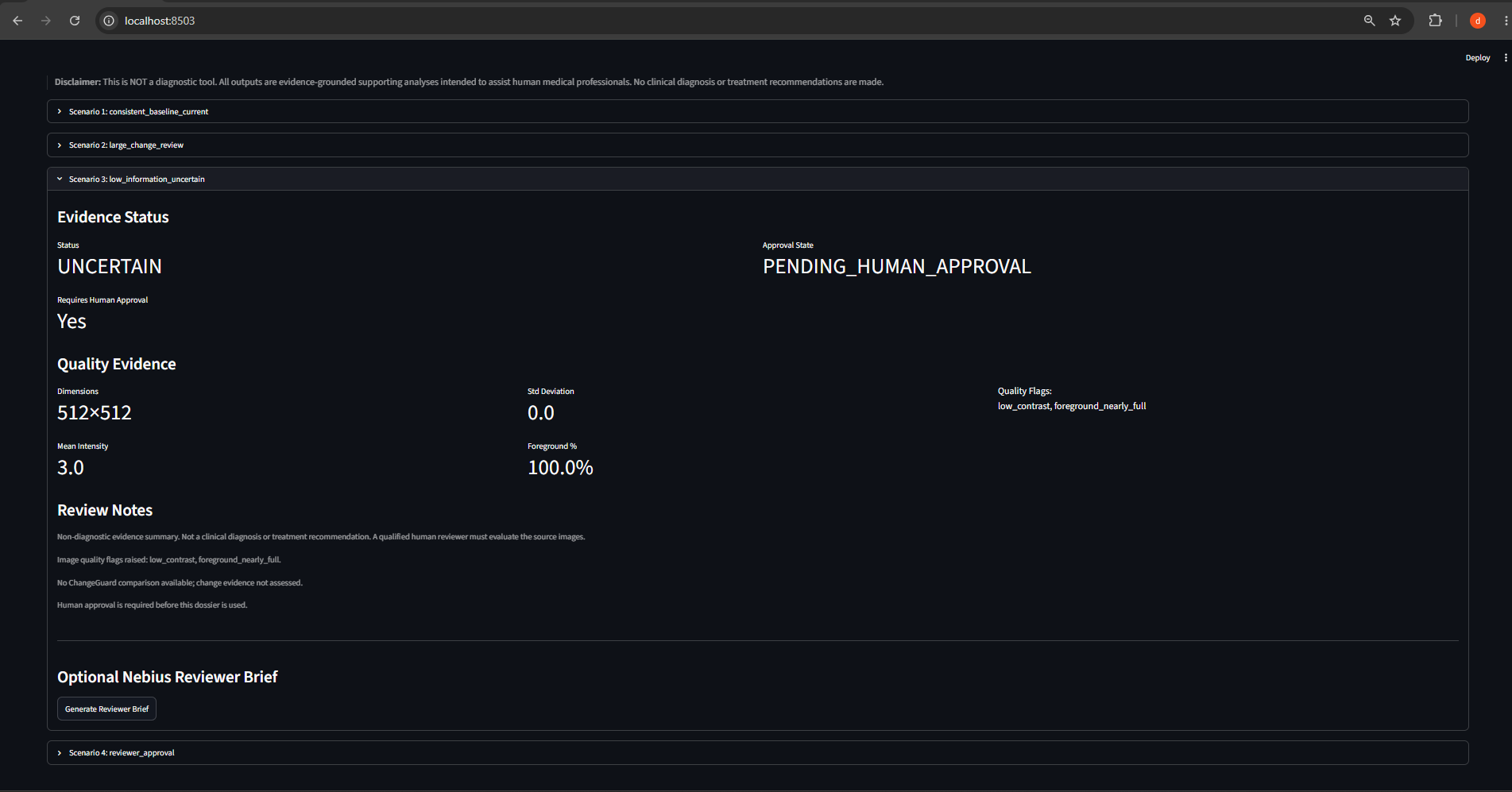
Low-quality evidence is marked UNCERTAIN and still requires human review.
-
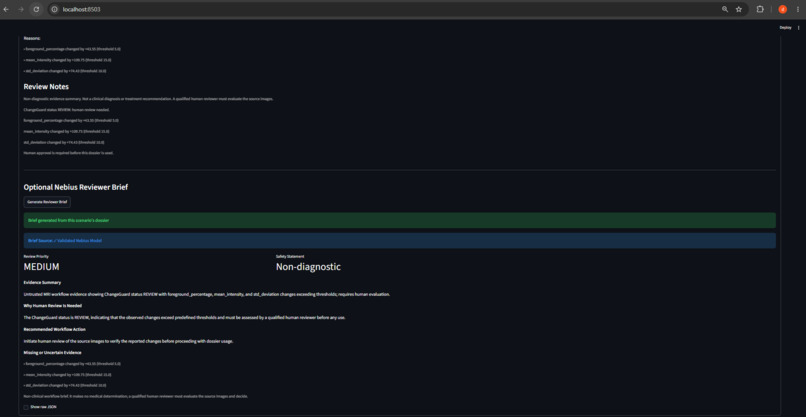
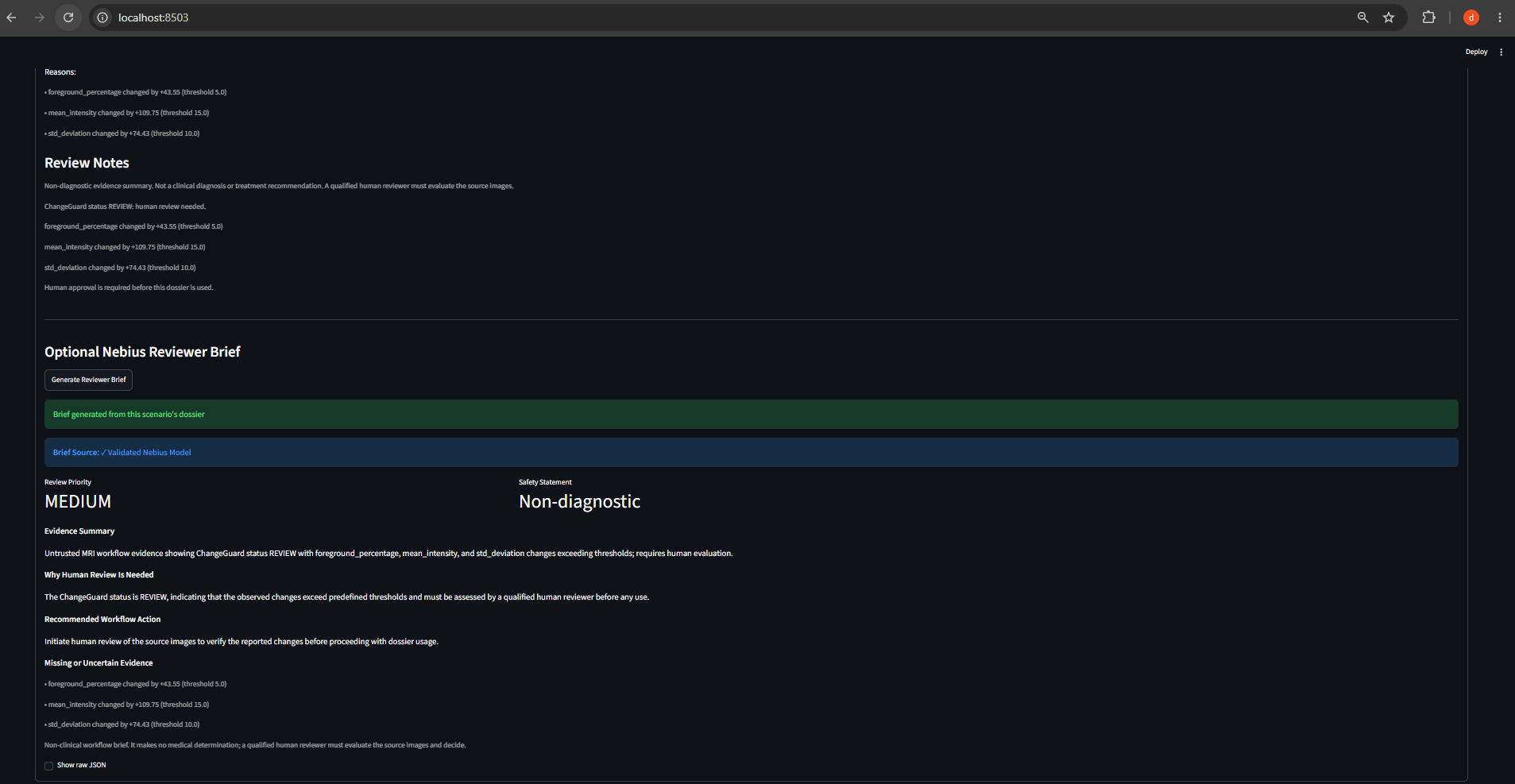
rief.png Nebius generates a validated, non-diagnostic reviewer brief with MEDIUM review priority
Inspiration
MRI review produces many image and quality measurements, but a reviewer still needs a clear account of what changed, what is uncertain, and what requires human judgment. We built MRI Evidence Council to turn those measurements into a traceable, non-diagnostic review workflow.
What it does
MRI Evidence Council creates a deterministic evidence dossier from a selected synthetic MRI scenario. It reports image-quality measurements, compares an image with a baseline using ChangeGuard, and assigns a workflow status: CONSISTENT, REVIEW, or UNCERTAIN.
A reviewer can optionally request a concise brief through NVIDIA Nemotron on Nebius. The app labels whether the brief came from a validated model response or a deterministic fallback. Brief generation cannot change the dossier status or grant approval; human approval remains required.
How we built it
We used Python, OpenCV, NumPy, and Streamlit for image processing, evidence generation, and the interface. Four deliberately designed synthetic scenarios exercise stable evidence, meaningful change, and insufficient-quality or insufficient-information cases. The Nebius integration generates a structured reviewer brief on demand. Independent validation checks its response before the app displays it; if generation or validation fails, the app uses a labeled deterministic fallback. We deployed the demo on Railway.
Challenges we ran into
The model can produce fluent text that does not follow the required structure or safety constraints. We therefore kept status and approval decisions in deterministic code and validated model output separately. We also had to configure the deployed Streamlit app to bind to Railway’s port and resolve its project imports.
Accomplishments that we're proud of
The public demo runs the complete evidence workflow, and we verified a live Nebius-generated brief for a consistent scenario. The brief clearly identifies its source, retains the non-diagnostic safety statement, and directs the case to a qualified human reviewer. The four synthetic scenarios make the workflow reproducible rather than dependent on a hand-picked live image.
What we learned
A useful AI reviewer brief needs trustworthy evidence and visible boundaries. Separating the deterministic dossier from optional language generation makes it possible to inspect the measurements, identify a fallback, and preserve human control even when the model or connection fails.
What's next for MRI Evidence Council
We plan to test the workflow against a broader, appropriately governed image set, measure model-response validity and fallback rates, and improve the reviewer interface and audit trail. Any future clinical use would require separate validation and qualified oversight; this prototype is for research and demonstration only.

Log in or sign up for Devpost to join the conversation.