Inspiration
Neurological diseases like Alzheimer’s and Parkinson’s require early detection for better treatment outcomes, but MRI analysis can often be slow and dependent on specialist availability. We wanted to explore how AI could assist doctors by providing faster screening, structured reporting, and intelligent clinical support through medical imaging.
My goal was not just to build an ML model, but to create a complete healthcare-oriented workflow platform that feels practical and usable in real-world environments.
What it does
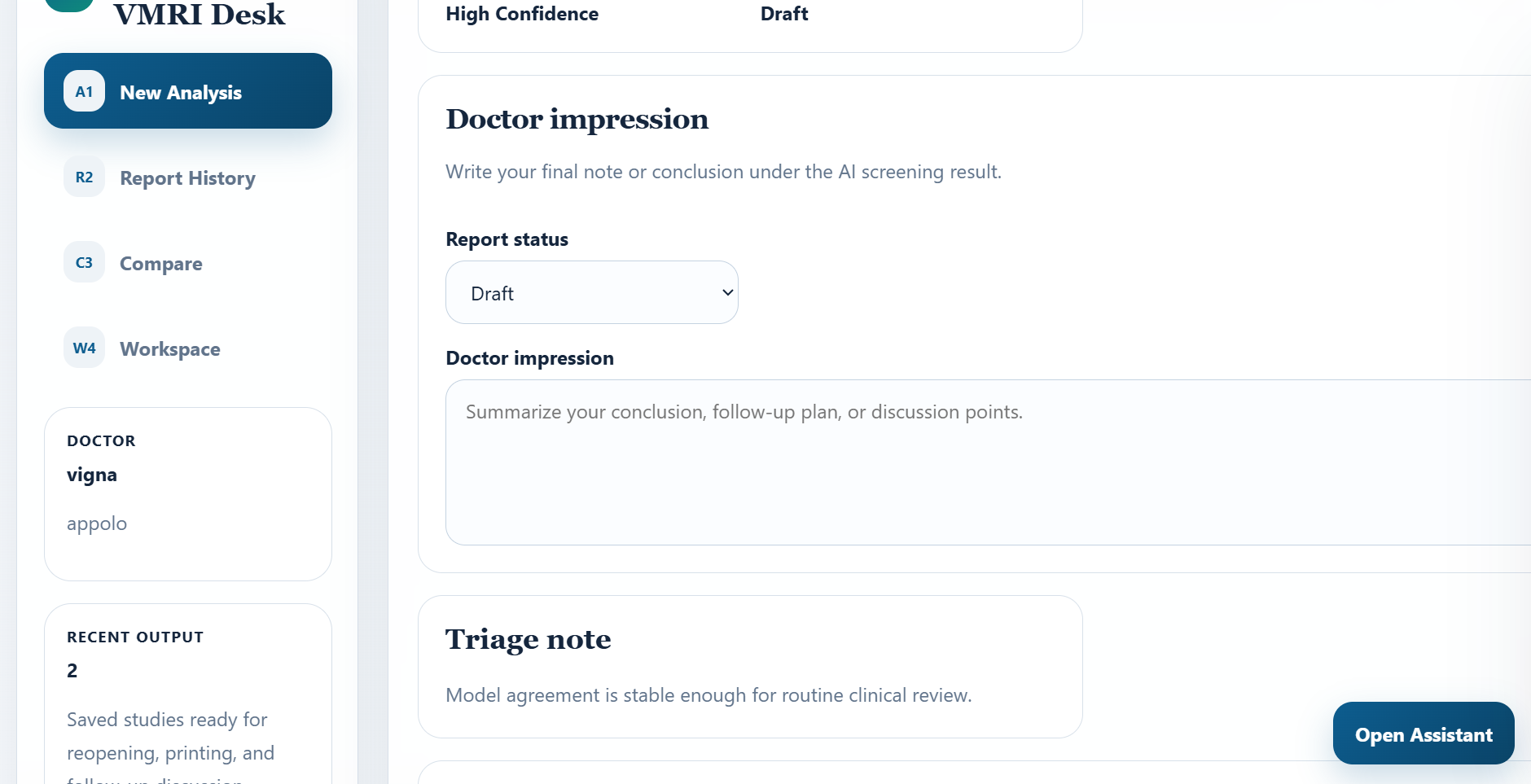
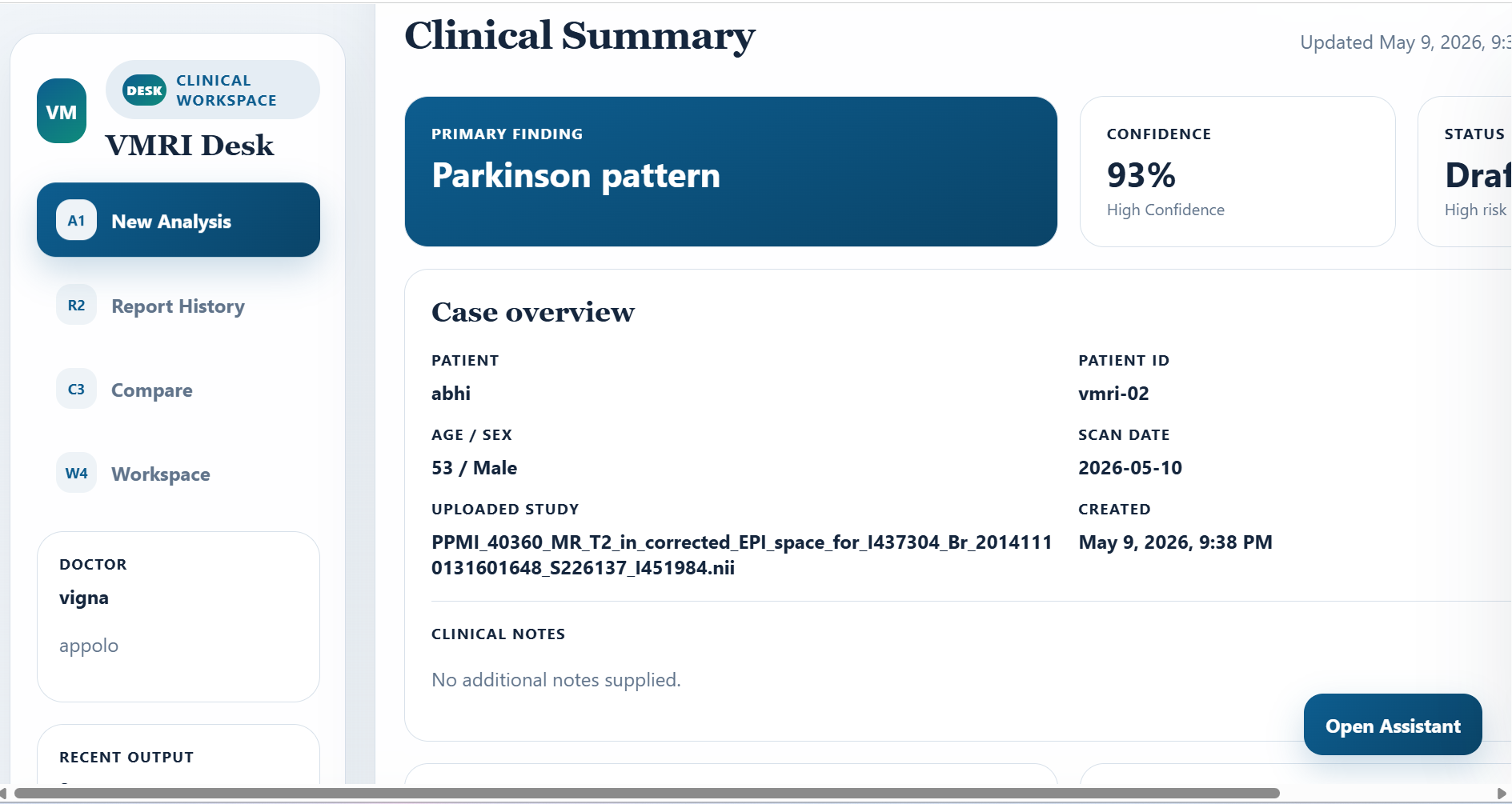
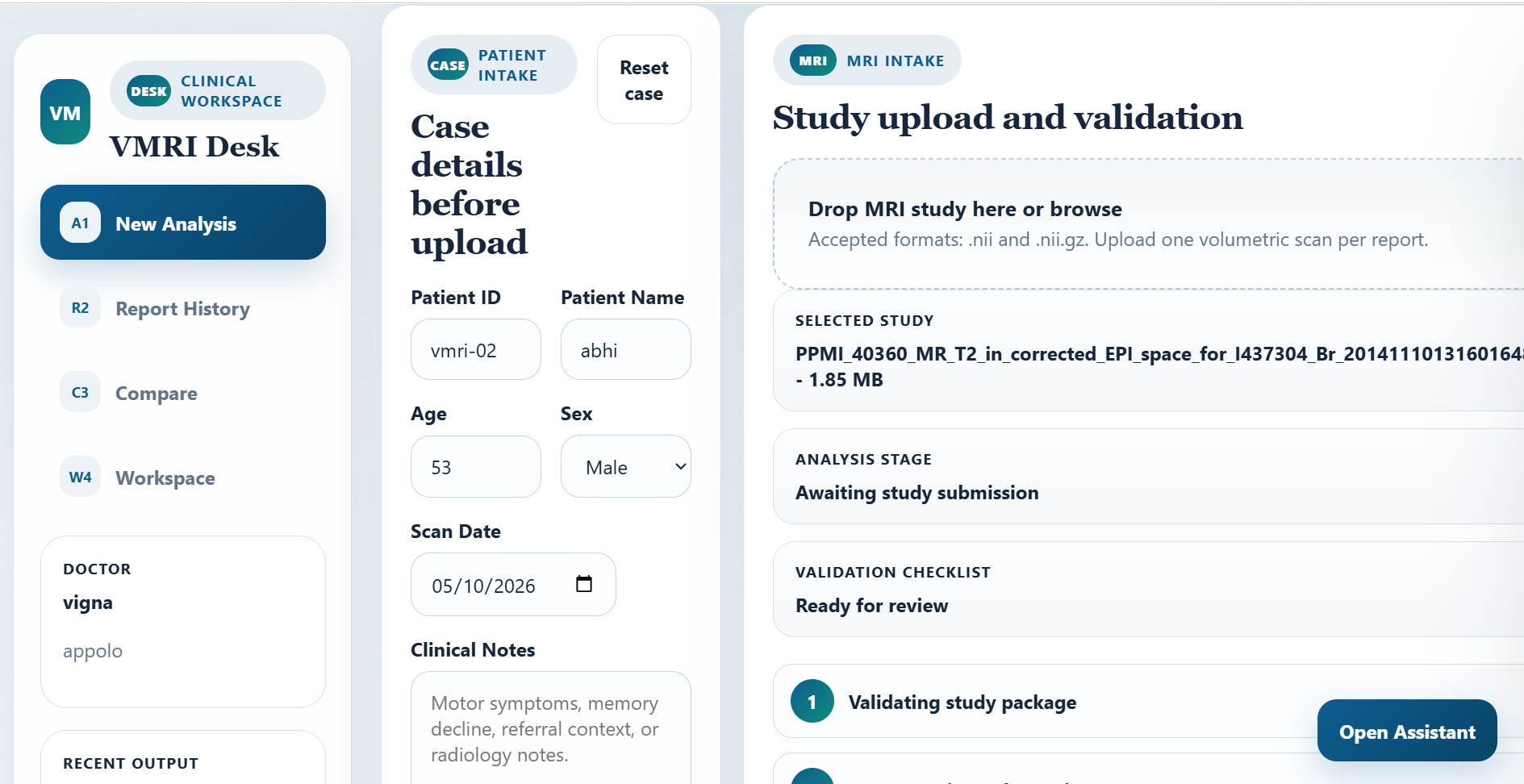
MRI Brain Disease Detection App is an AI-assisted MRI screening platform that allows doctors or hospital users to upload brain MRI scans in .nii or .nii.gz format and receive structured diagnostic-style reports.
The system:
- predicts Healthy, Alzheimer’s, or Parkinson’s patterns
- generates confidence scores and probability analysis
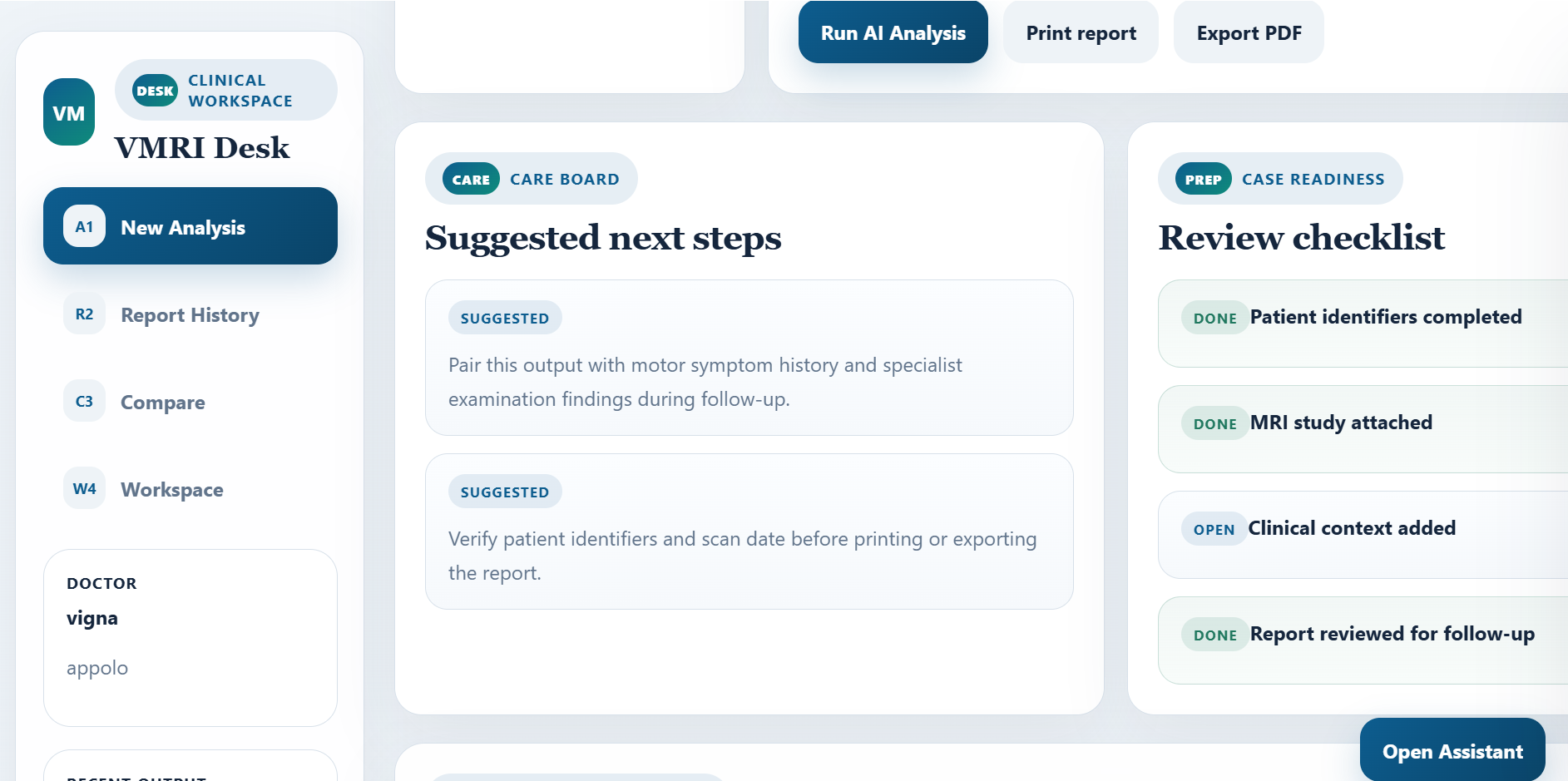
- provides observations and recommendations
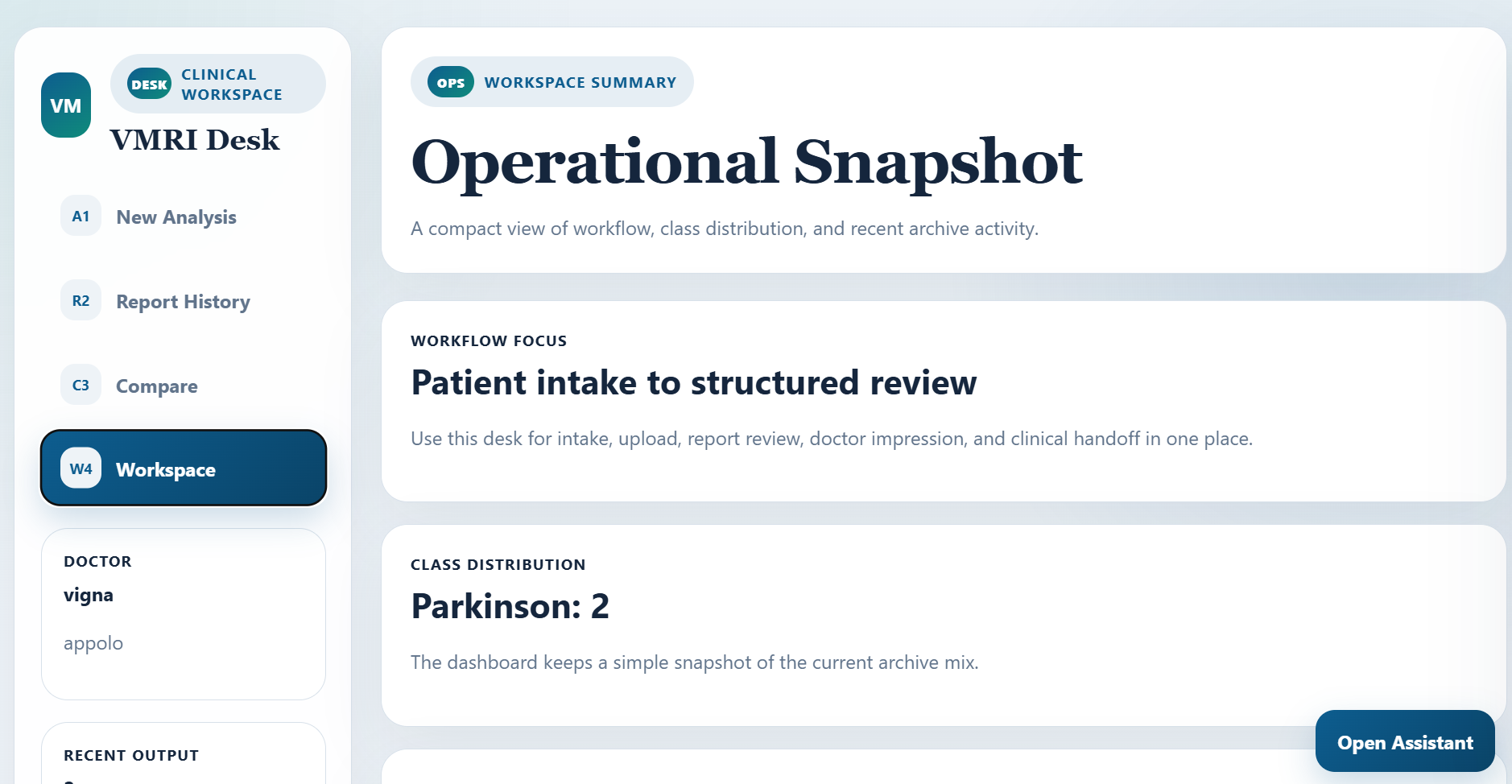
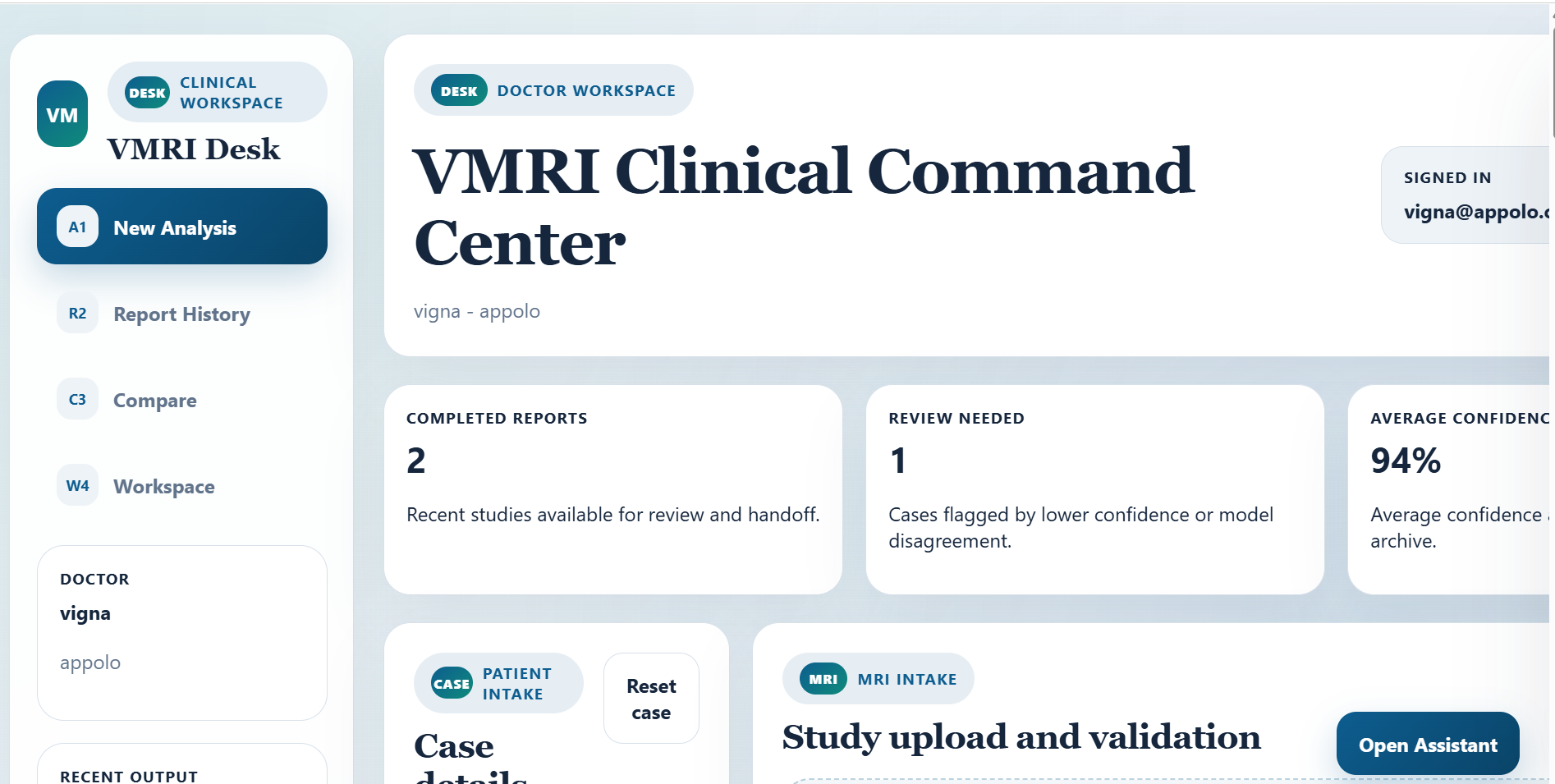
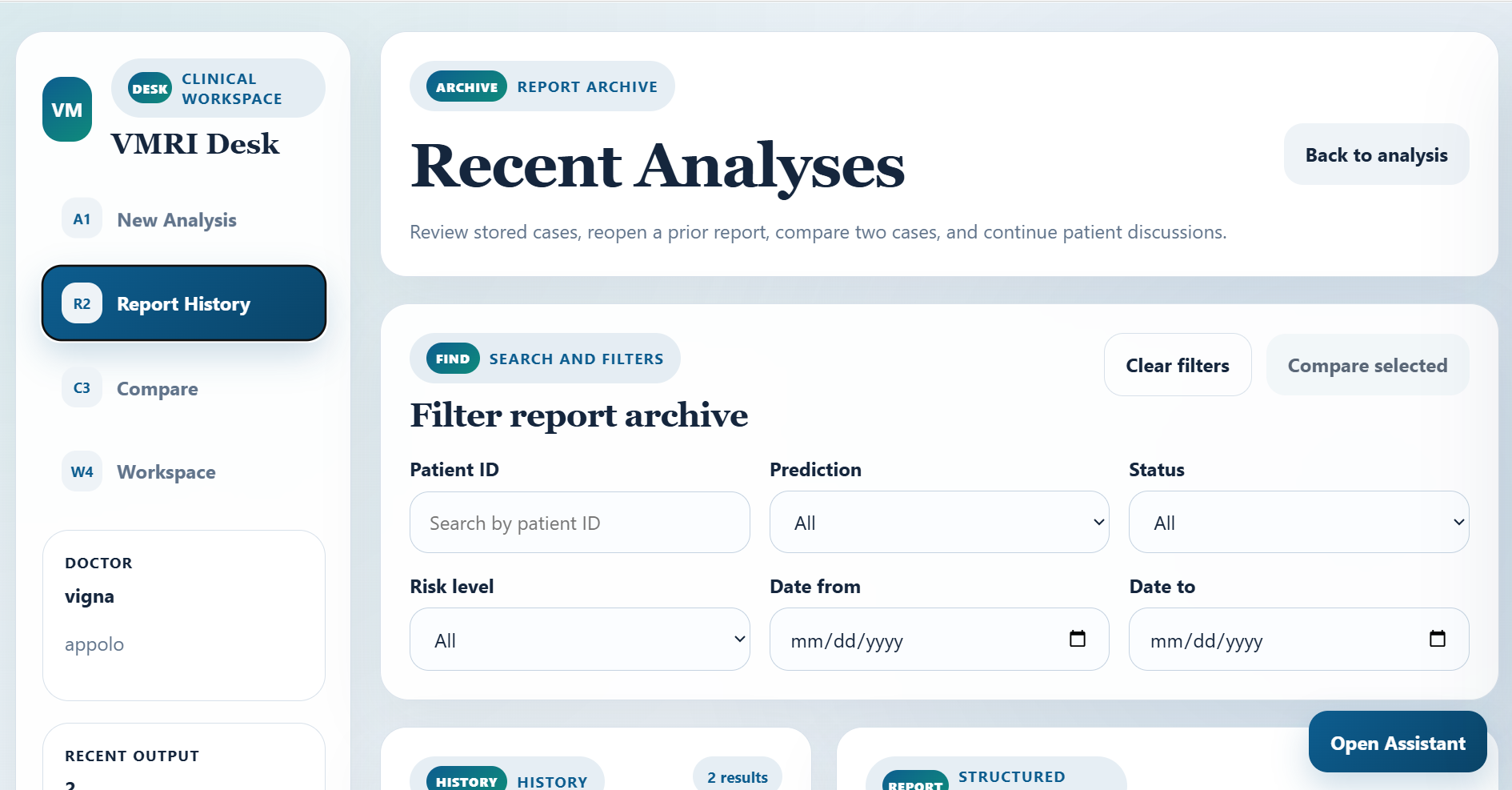
- supports patient report history and workflow tracking
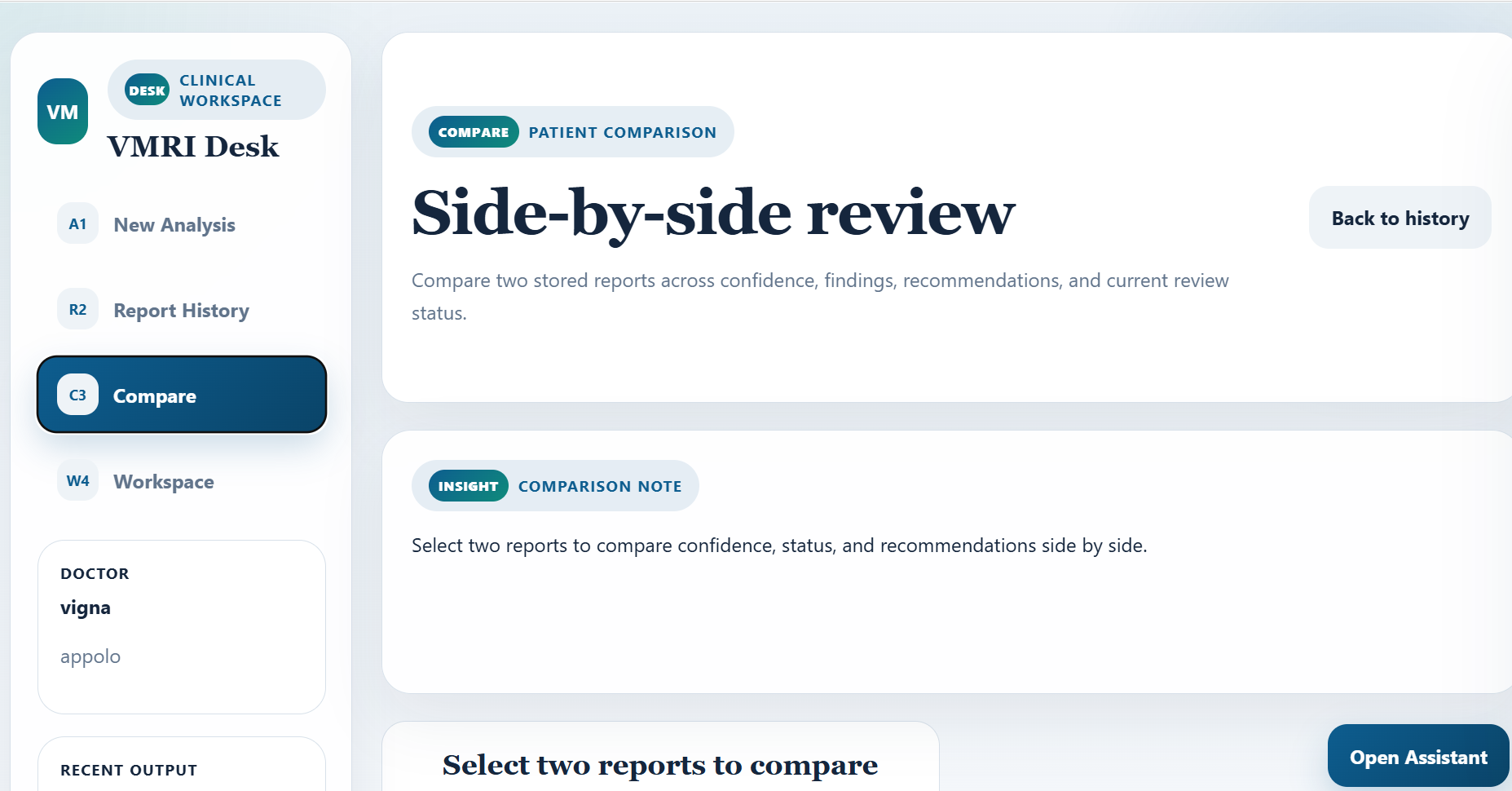
- allows side-by-side comparison of reports
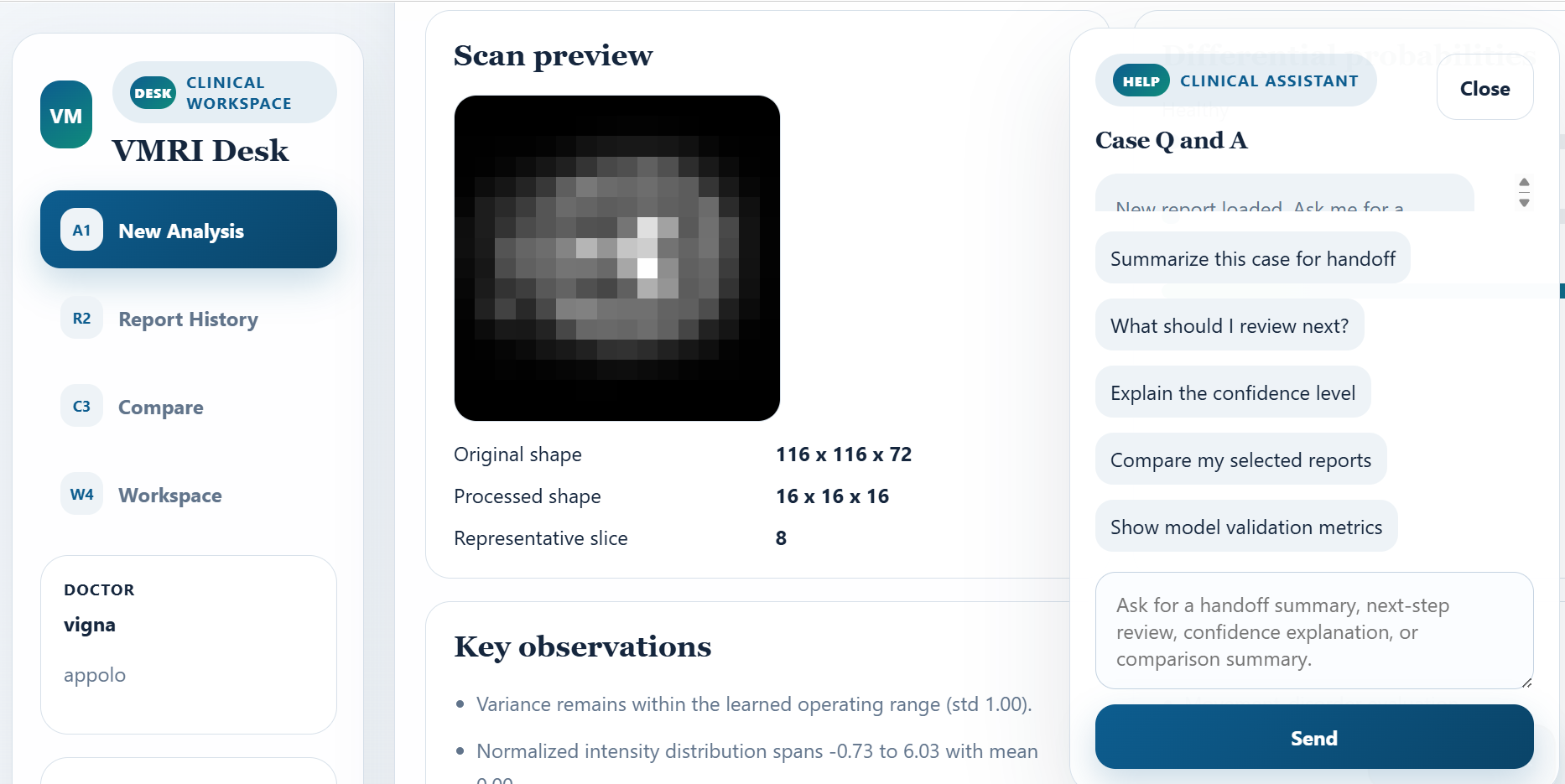
- includes a doctor-focused dashboard and assistant system
How I built it
I built the frontend using:
- React
- JavaScript
- Axios
- CSS
The backend was developed using:
- Python
- Flask
- SQLite
- scikit-learn
- NiBabel
- NumPy
- Joblib
The AI pipeline preprocesses MRI scans, extracts statistical features, and combines reference similarity with an ExtraTrees ensemble classifier for prediction.
I also implemented:
- authentication systems
- report storage and filtering
- printable report workflows
- model validation metrics
- assistant-driven report explanations
Challenges I ran into
One of the biggest challenges was working with medical imaging formats like .nii and .nii.gz, since MRI data is far more complex than standard images.
Other challenges included:
- MRI preprocessing and normalization
- feature extraction from 3D scans
- balancing prediction confidence
- reducing false reassurance in predictions
- deploying lightweight AI systems efficiently
- designing a professional doctor-friendly UI
I also wanted the project to feel like a real healthcare workflow system rather than only an AI demo.
Accomplishments that I am proud of
I am proud that we built:
- a full-stack AI healthcare platform
- an end-to-end MRI screening workflow
- a doctor-oriented reporting dashboard
- report comparison and management features
- a hybrid AI prediction pipeline with validation metrics
I am especially proud that the project combines AI, healthcare, usability, and workflow management into a single integrated platform.
What I learnt
Through this project, I learnt:
- medical imaging preprocessing
- MRI feature engineering
- AI model deployment
- healthcare workflow design
- full-stack application development
- explainable AI concepts
- cloud deployment using Render
Most importantly, I learned how to build AI systems that focus not only on predictions, but also on usability and real-world impact.
What's next for MRI Brain Disease Detection App
In the future, I plan to:
- support additional neurological diseases
- integrate deep learning models for improved accuracy
- add explainable AI visualizations
- enable cloud-based hospital integrations
- expand telemedicine and collaboration features
- develop a mobile-friendly healthcare interface
- enhance the assistant into a smarter clinical support system
Our long-term vision is to make AI-assisted neurological screening faster, more accessible, and more useful for healthcare professionals worldwide.
Built With
- ai/ml
- axios
- css
- extratreesclassifier
- flask
- gunicorn
- javascript
- joblib
- mri
- nibabel
- nifti
- numpy
- python
- react
- render
- scikit-learn
- sqlite


Log in or sign up for Devpost to join the conversation.