
💡 Inspiration
Modern trucking operations still rely heavily on manual processes — spreadsheets, phone calls, and gut instinct. Dispatchers have to constantly balance driver availability, cost efficiency, and route optimization under time pressure.
We wanted to reimagine this experience:
What if dispatching felt like talking to an intelligent assistant instead of managing a dashboard?
Inspired by systems like Jarvis, we built Mr. T, an AI copilot that turns complex logistics decisions into simple conversations.
🚀 What it does
Mr. T is a voice-enabled AI dispatch assistant that allows users to:
- Ask for available drivers in real time
- Assign drivers using natural language
- Compare driver options based on efficiency and cost
- Receive explanations backed by real operational data
Example:
“Assign Maria Jen to Dallas”
“Who is the best driver for Phoenix?”
Mr. T:
- Understands the request
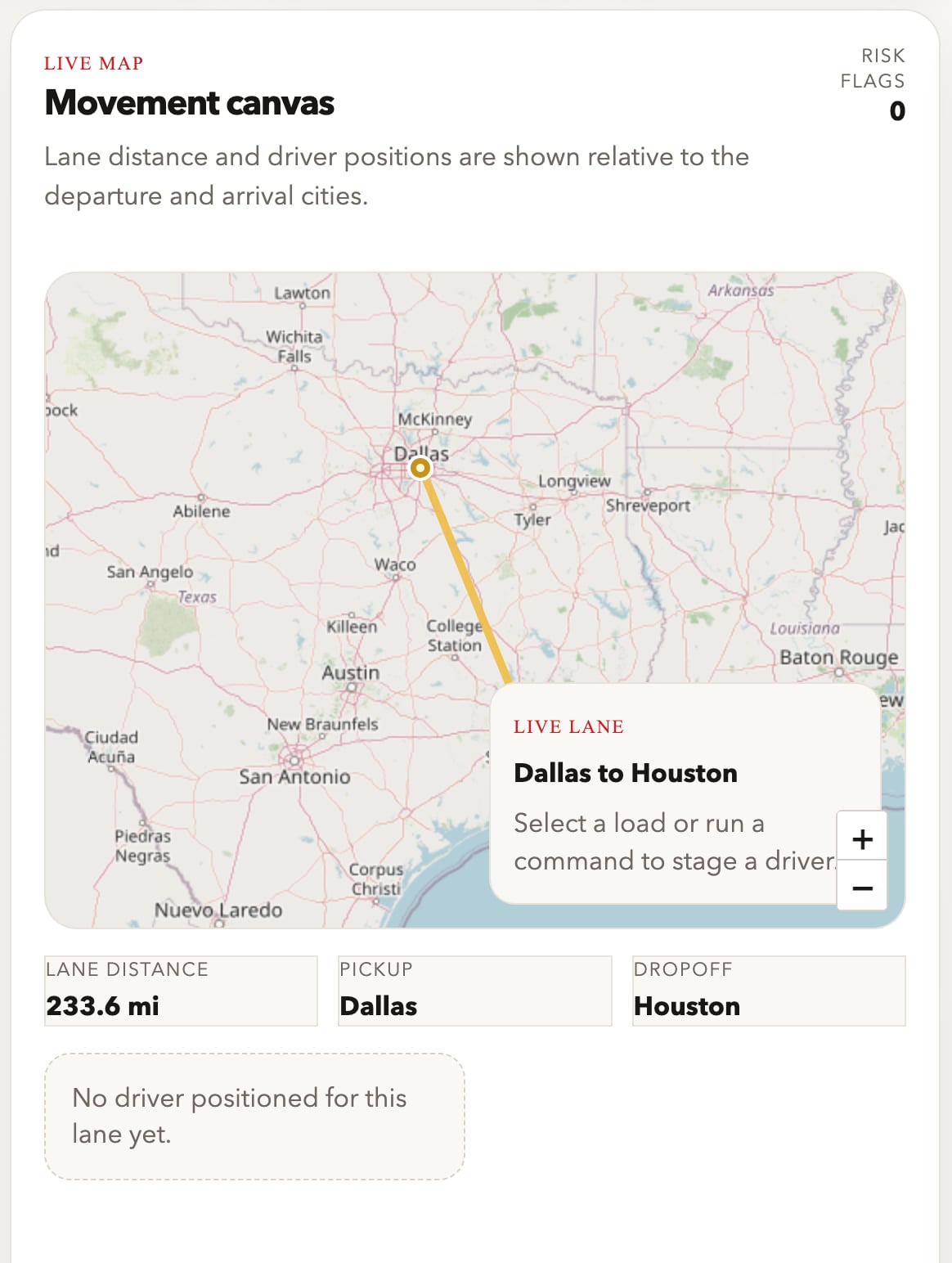
- Queries real data from NavPro
- Makes intelligent decisions
- Explains why using metrics like deadhead miles and cost
All of this happens through a natural voice interface, making logistics feel conversational and intuitive.
🛠️ How I built it
We built Mr. T using a hybrid AI + deterministic architecture:
- Frontend: React (Vite) for real-time interaction and UI
- Backend: FastAPI for orchestrating logic and API calls
- LLM: Google Gemini for intent parsing and response generation
- Voice: ElevenLabs for realistic, Jarvis-style speech
- Data Layer: NavPro API for real driver, trip, and routing data
System flow:
- User speaks or types a command
- Gemini parses the intent into structured data
- Backend applies deterministic logic (driver ranking, cost analysis)
- NavPro API executes actions (trip creation, data retrieval)
- Gemini generates a natural explanation
- ElevenLabs converts it into speech
🚧 Challenges I ran into
LLM reliability: Early models struggled with consistent intent parsing
→ Fixed by switching to Gemini with structured schema outputsMaking AI responses believable:
Generic responses felt fake and unconvincing
→ Solved by grounding responses in real metrics (miles, cost, comparisons)API integration complexity:
NavPro required proper driver setup and understanding of data structure
→ Built a service layer to normalize and handle API responsesVoice experience:
Basic TTS felt robotic
→ Integrated ElevenLabs for natural, conversational voice
🏆 Accomplishments that I'm proud of
- Built a fully working AI agent that interacts with real logistics data
- Successfully integrated multiple complex systems (LLM + API + Voice)
- Created a natural, conversational interface for a traditionally complex workflow
- Delivered data-backed AI decisions, not just generic responses
📚 What I learned
- LLMs work best when combined with deterministic systems
- Structured outputs are critical for reliable AI applications
- User experience matters as much as intelligence — voice made a huge difference
- Real data integration transforms a demo into a product
🔮 What's next for Mr-T-AI
- Real-time alerting for delays, breakdowns, and compliance risks
- Predictive driver assignment using historical data
- Multi-load and fleet-wide optimization
- Fully autonomous dispatch workflows
- Deeper integration with real-time tracking and analytics systems

Log in or sign up for Devpost to join the conversation.