-
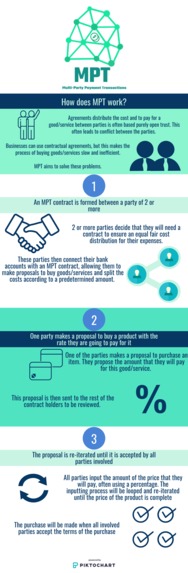
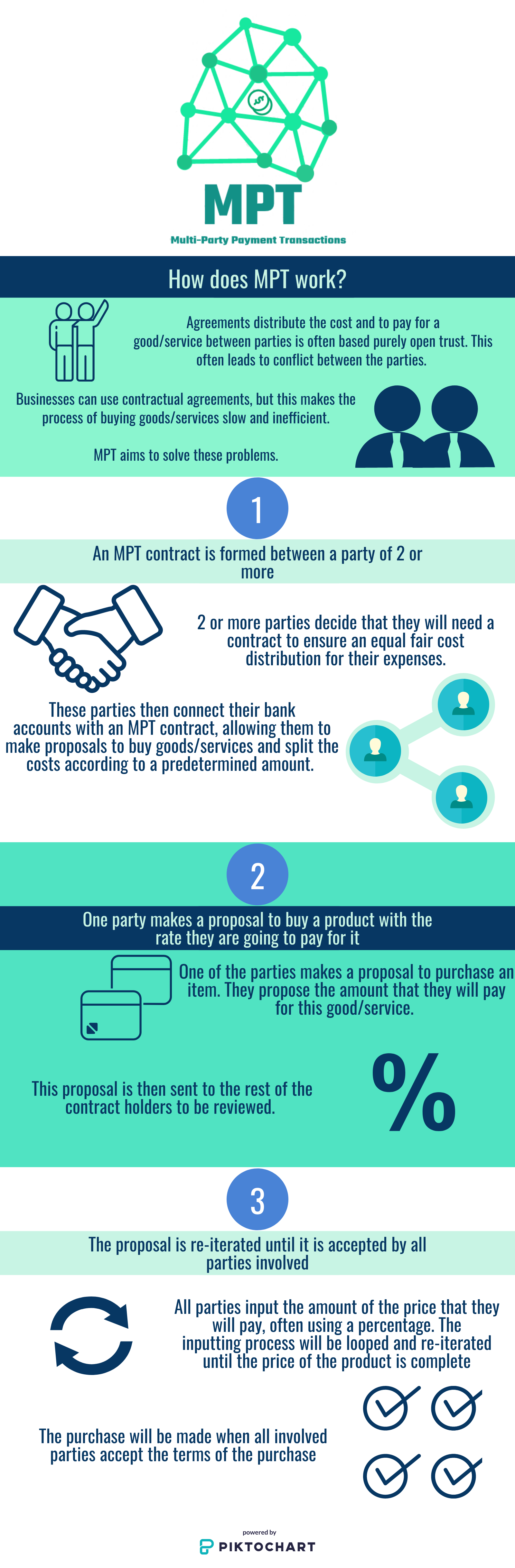
an info-graphic about how our system works
-
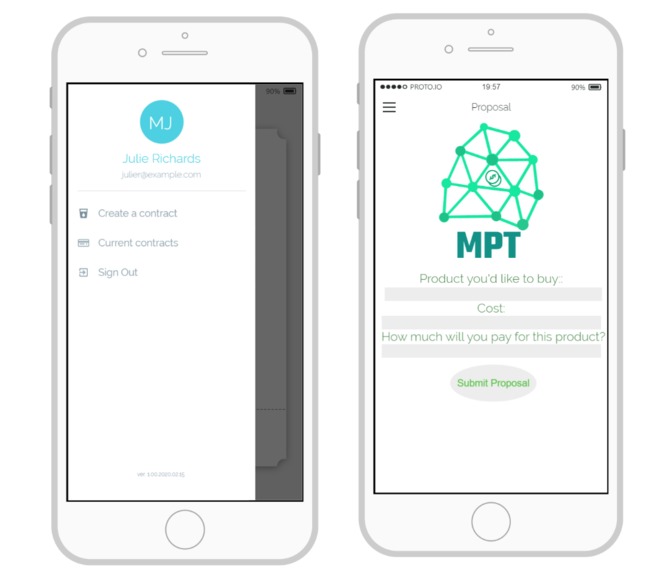
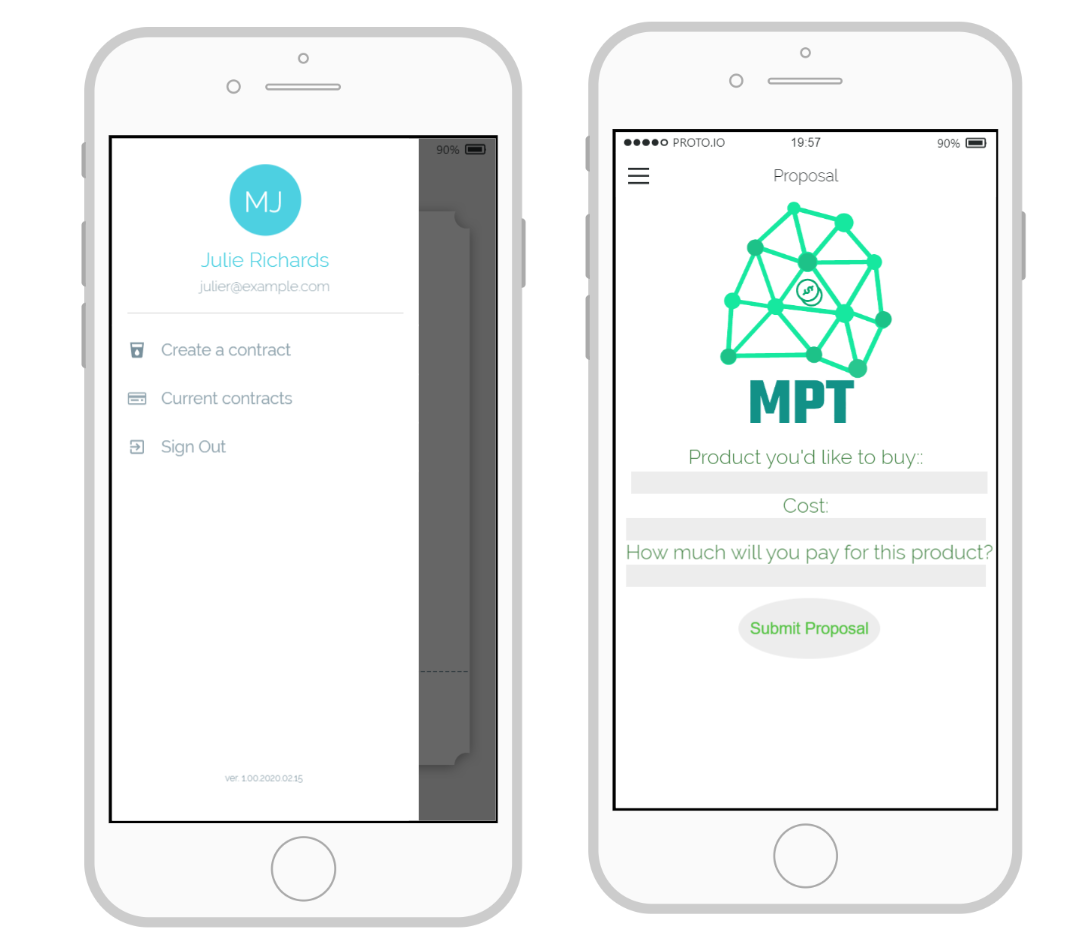
a possible prototype mobile app for our system
-
our logo
Inspiration
Agreements to distribute the cost and to pay for a good/service between parties is often based purely upon trust, and this often leads to conflict. An everyday example of this would be a roommate not paying their fair share of expenses that they previously agreed to pay. This kind of situation also happens with businesses and organizations, and it brings down the efficiency of their operations. Organizations often use reimbursements, and businesses use contractual agreements, but these methods make the process of buying goods/services slow and inefficient. Our inspiration/vision came upon realizing these problems, and we came up with a simple, yet comprehensive, solution.
What it does
MPT acts as a middle-man and ensures that everyone pays the amount of money they initially agreed to pay. As the info-graphic shows, the MPT process starts off by two or more parties creating a digital MPT contract and linking their bank accounts to our system. After the initial contract is made, the parties have the right to propose to buy an item they desire. When they are making this proposal, they have to specify the price of this item and the amount that they are willing to pay. This proposal is then sent to the rest of the clients to be reviewed. The rest of the client's input the price that they will be paying. This process is complete once an agreement is reached and the total proposed money is greater than or equal to the cost of the item. Then, every client pays MPT the money they promised to pay for the product. Lastly, MPT makes the payment on behalf of the client with their money. Given MPT's scalable nature, it could be used by roommates buying toiletries to businesses making multi-million transactions. Like that was not enough, this process takes a matter of seconds after all the clients agree.
How we built it
We have used python to build the backbone of our system. We implemented a blockchain data structure in order to secure our client’s data and transactions. We have also taken advantage of the Nessy API, provided by Capital One.
Challenges we ran into
Coming up with the a system to solve this issue was initially daunting as the it is quite difficult to create a financial system without having to fill a stack of paperwork. However, we were able to neglect this by creating a third-party system. Also, integrating our GUI with our servers and the back end operations was a difficult task as we were not experienced with this type of work in python. However, we were still able to pull through and create our visionary product.
Accomplishments that we're proud of
We are proud of the system that we came up with. MPT is the most efficient way to ensure that financial promises made by multiple parties are fulfilled without an exception. We are also proud of creating a block chain data structure with zero prior experience. We learnt how a block chain structure worked and implemented it in our system in a matter of hours.
What we learned
We learned about branding our image and the design process of a company. Like most things, it is not possible to learn about a design process without actually going through with it. We’ve also learned about the importance of marketing and branding, as well as being able to market our product. Lastly, we learned about how a block chain data structure could be implemented to most projects to secure the integrity of the stored data.
What's next for Multi-Party Transactions
Though we’ve come a long way creating the backbone of our system, MPT is yet to be done. In order for MPT to function the way we want it to, we would have to go through with the legal and financial steps and fill out the necessary paperwork. We also need to expand the current capacity of users and scale our system up. Lastly, we have to fine-tune our GUI and create a mobile app.



Log in or sign up for Devpost to join the conversation.