Inspiration
People with chronic skin conditions are often advised by their doctors to keep a paper diary of their symptoms, treatments and possible triggers. In practice, paper diaries are difficult to maintain, search and compare over time. They also leave patients with the manual task of reviewing months of entries and trying to identify patterns themselves.
Digital tracking tools exist, but many are simply online versions of the same diary. Users still have to record everything manually, interpret the information themselves and decide how to summarise it for an appointment.
For a doctor, analysing months of paper notes is also near impossible in a 10 minute appointment.
I am a medical doctor and I also live with eczema. I built Moya because I understood this problem from both perspectives: as a patient trying to make sense of changing symptoms between appointments, and as a doctor who knows how difficult it can be to assess a long-term condition during a brief consultation.
Moya goes beyond recording symptoms. It structures the information, adds relevant context and helps users review changes and recurring co-occurrences over time.
What it does
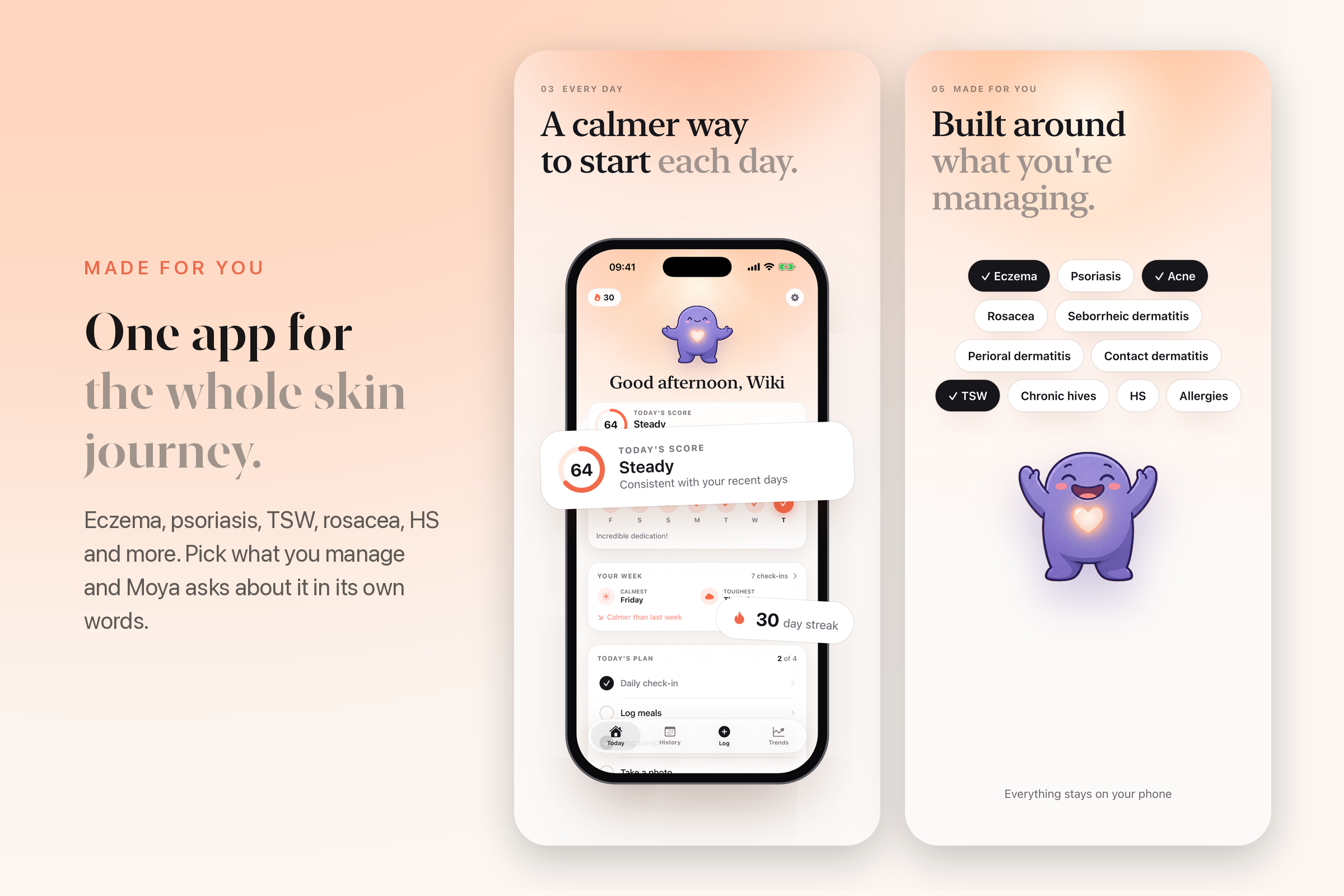
Moya is a private symptom tracker for people living with nine chronic skin conditions:
- Eczema
- Psoriasis
- Rosacea
- Seborrhoeic dermatitis
- Perioral dermatitis
- Contact dermatitis
- Chronic urticaria
- Hidradenitis suppurativa
- Acne
It can also be used without a confirmed diagnosis.
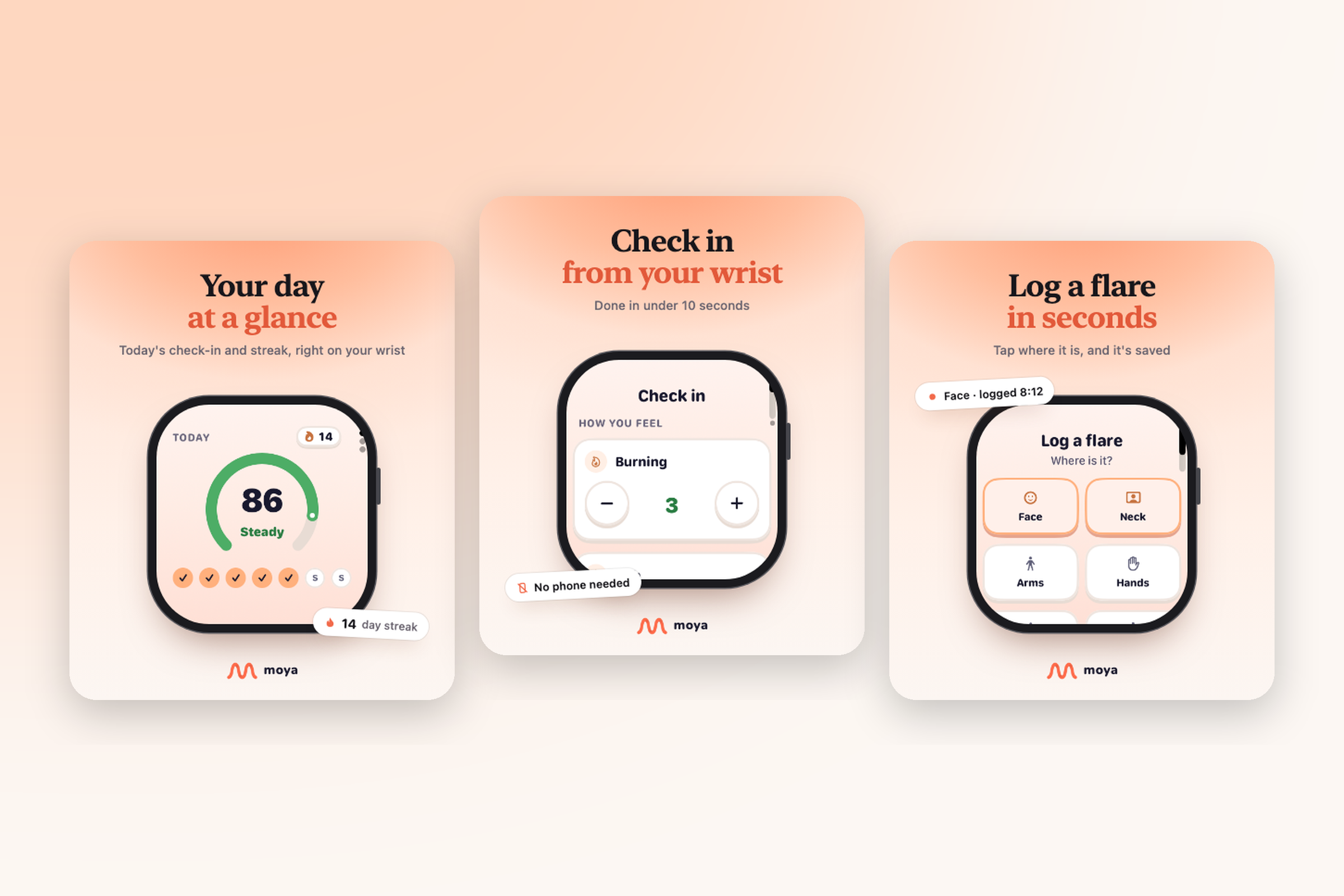
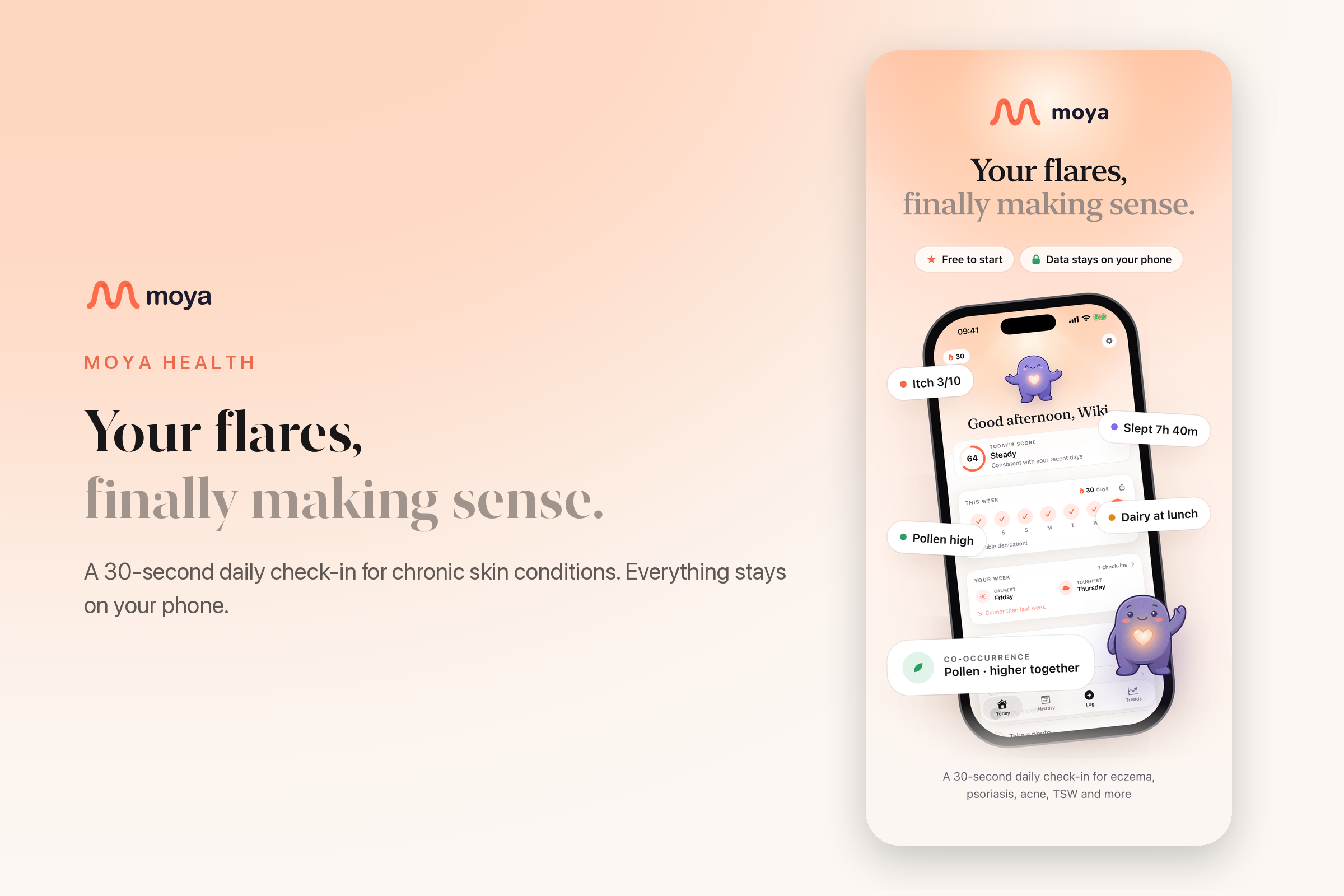
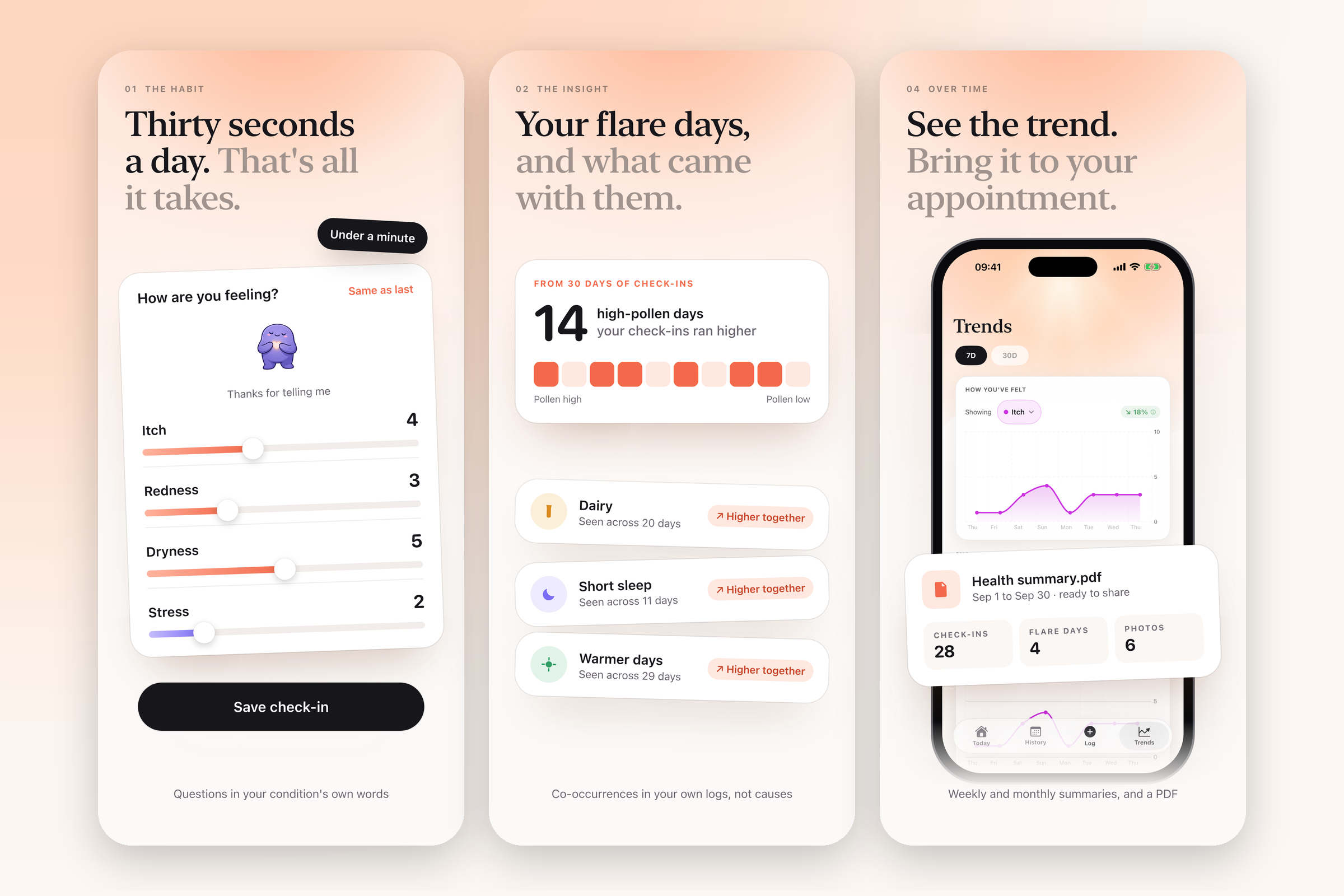
A daily check-in takes about 30 seconds. Users can record:
- Itch, redness, dryness, pain and flare days
- Sleep, stress and mood
- Food and drink
- Skincare products and ingredients
- Medications and treatments
- Physical activity
- Photographs and journal notes
Moya reduces manual work by adding information automatically where possible. It can import sleep and activity data from Apple Health or Health Connect and add local weather, pollen and air quality information.
It then makes the information easier to review through:
- Symptom and lifestyle trends
- Comparisons between different periods
- Recurring co-occurrences around flare days
- Weekly reports and monthly recaps
- Environmental context
- Side-by-side photo comparisons
- Doctor-ready PDF reports
This gives users a structured history to review, rather than requiring them to search through individual diary entries or rely on memory during an appointment.
Moya does not diagnose conditions, identify triggers or recommend treatment. It presents observations from the information recorded by the user so they can decide what may be worth discussing with a healthcare professional.
Privacy by design
Health information is highly personal, so Moya was designed to minimise how much of it leaves the user’s device.
Moya does not require an account or sign-up. Check-ins, photographs, notes and journal entries are stored locally on the device. Users can export or delete their records at any time, and their health information is not sold or used for advertising.
This allows users to maintain a detailed health record without creating a cloud-based profile containing their symptoms and photographs.
How I built it
Moya was developed around four core requirements:
- Reduce manual work: Health and environmental information should be added automatically where possible.
- Fast enough for daily use: A manual check-in should take less than a minute, including on difficult days.
- Clear enough to be useful: Results should be presented in understandable language rather than left as individual entries or complex charts.
- Private by default: Sensitive health records should remain under the user’s control.
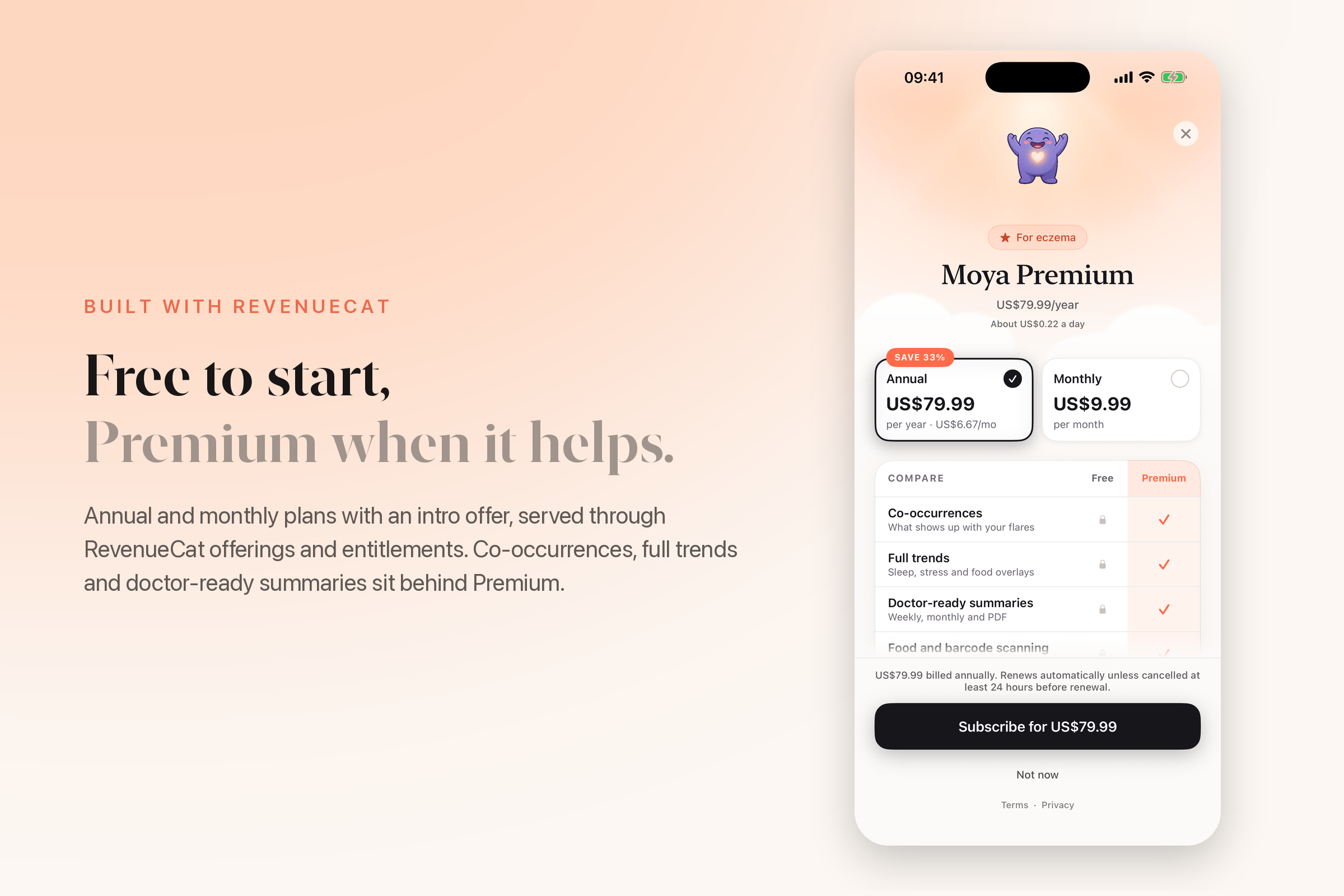
RevenueCat manages Moya’s monthly and annual subscriptions and access to Premium features.
The daily check-in, full history, journal, reminders, streaks, widget and first ten photographs are free, with no time limit.
Moya Premium includes:
- Deeper symptom and lifestyle trends
- Recurring pattern analysis
- Comparisons between different periods
- Weather, pollen and air quality context
- Unlimited photographs
- Side-by-side Photo Compare
- Weekly reports and monthly recaps
- Doctor-ready PDF reports
- Meal and product scanning tools
This model keeps the essential tracking experience accessible while supporting continued development through features that provide additional analysis, context and reporting.
Challenges
One of the most important challenges was presenting potentially useful associations without implying medical causation. Moya can show which entries repeatedly occur together, but it does not label them as triggers or draw medical conclusions.
Another challenge was deciding how much information to present. Chronic condition tracking can generate a large amount of data, but more information is not necessarily more useful. Moya therefore prioritises short check-ins, focused comparisons and concise summaries.
Privacy also influenced the technical design. Moya needed to provide useful analysis, photograph tracking and exportable reports while keeping the underlying health record on the user’s device.
Each skin condition also required its own tracking considerations. Rather than applying the same generic questionnaire to every user, Moya provides condition-specific questions and allows users to choose which symptoms they want to track.
Development during Shipathon
Moya’s first public version was released on 3 August 2026.
Since launch, Moya has expanded to support nine chronic skin conditions. I have also added configurable symptoms, condition-specific questions, improved accessibility and further tools for reviewing changes over time.
Moya is now available on both iPhone and Android, with subscriptions managed through RevenueCat.
Feedback from early users influenced the addition of further conditions and reinforced the importance of short check-ins, reduced manual entry, clear summaries and strong privacy protections.
What I learned
The main lesson was that digitising a paper diary is not enough. For a health record to be useful, it must reduce the burden of recording, organise information consistently and help users compare it over time.
I also learned that chronic condition tracking needs to accommodate inconsistency. Users will miss days, symptoms will change and not every factor can be recorded. The product needs to remain useful without requiring perfect tracking.
Finally, different conditions require different questions. Moya therefore expands condition by condition rather than presenting the same generic form to everyone.
What’s next
The next priorities are to improve the reports users can bring to appointments, make long-term changes easier to interpret and add support for further chronic conditions based on user demand.
The longer-term goal is to expand Moya beyond skin conditions while retaining the principles on which it was built: reduced manual work, quick daily tracking, clear presentation of the user’s own information and privacy by default.


Log in or sign up for Devpost to join the conversation.