-
-
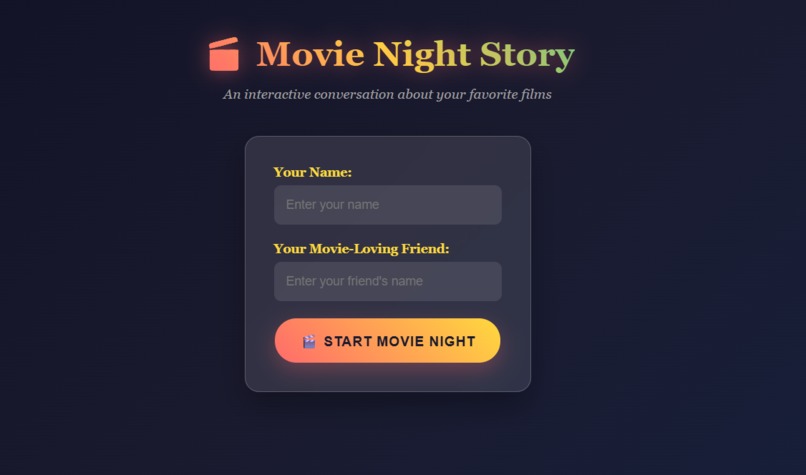
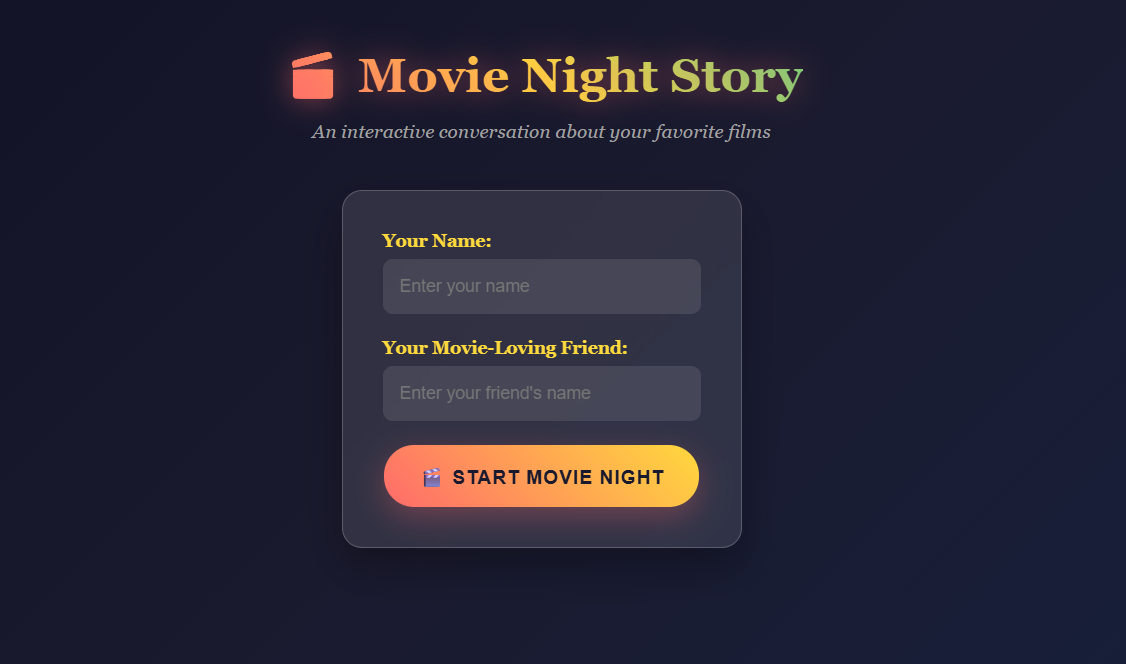
Landing Page
-
Inspiration
We’ve all been in that situation where someone expects us to know way more about a topic than we actually do. For us, it was movies. The idea sparked from a funny conversation: "What if an AI could cover for you when you're bluffing about movies you’ve never seen?" That led us to build an app that doesn’t just summarize real movies, but generates entirely fake, believable ones on the spot — helping you maintain your movie buff persona without ever hitting play.
What it does
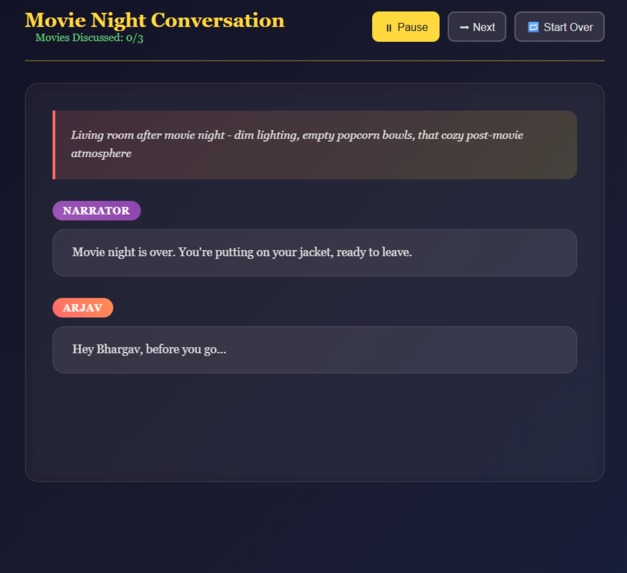
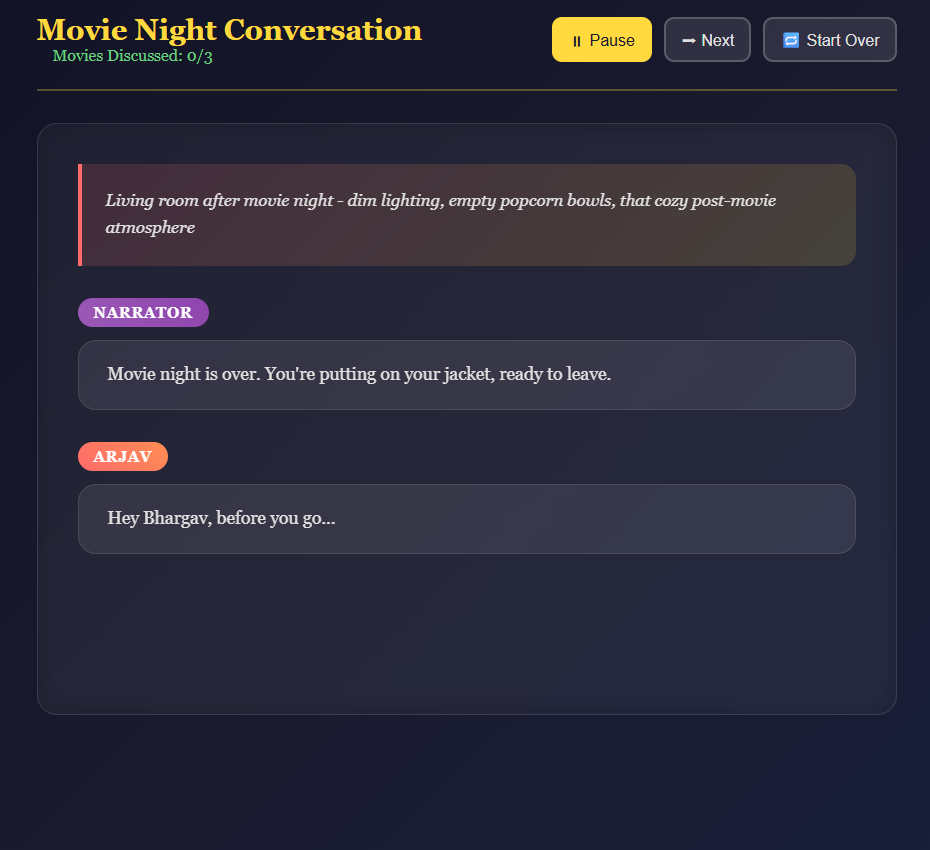
Movie_Summary_AI is an interactive storytelling web app where you're put in a social crisis: someone thinks you're a movie expert, and now you're stuck making up movies on the spot. The app uses a custom-trained GPT model to:
Take any made-up movie title you give it
Generate a convincing plot summary in real time
Simulate a conversation with your “movie-obsessed friend”
Help you survive the interaction without being exposed
How we built it
We split the project into frontend and backend:
🔮 AI Backend: Built using PyTorch and a custom GPT transformer trained on 360MB+ of movie and TV show plot data. We used nanoGPT as the base framework and customized the model architecture (12 layers, 19.17M parameters).
🌐 API: A Flask server handles user requests and model inference, returning AI-generated summaries through a REST API.
🎨 Frontend: A responsive web app using HTML, CSS, and JavaScript (no frameworks). It simulates a branching dialogue experience, complete with typewriter effects and loading indicators.
⚙️ Deployment-Ready: Designed to be hosted on platforms like Vercel (frontend) and Render (backend), or combined into a single-stack deployment.
Challenges we ran into
Model hallucination: Getting the AI to generate believable movie plots without going too off the rails was a constant balancing act between temperature, top-k sampling, and training quality.
Data preparation: Cleaning and formatting 360MB of movie plots for training took time and multiple iterations.
Frontend & Backend sync: Managing async behavior between the story logic and real-time API calls required thoughtful error handling and fallback strategies.
Inference speed: Ensuring the model responds quickly on CPU/GPU without overloading memory.
Accomplishments that we're proud of
✅ Built a fully working GPT-powered app that generates fake movie summaries on the fly
✅ Designed a slick, responsive frontend with immersive storytelling
✅ Trained a custom AI model from scratch — no OpenAI APIs involved
✅ Seamlessly integrated backend AI inference with frontend dialogue flow
✅ Delivered a project that's fun, unique, and demonstrates real technical depth
What we learned
How to fine-tune GPT models for creative use cases, not just factual generation
How much user experience design matters even for AI apps — typewriter effects and small details make a huge difference
Managing real-world issues like CORS, error handling, and async API logic
How to break down a complex ML app into clean frontend/backend components for easier deployment and collaboration
What's next for Movie_Summary_AI
📱 Mobile App: A React Native version for awkward conversations on the go
🧠 Smarter Conversations: Let the AI ask follow-up questions and challenge your answers
🎭 Genre Modes: Generate horror-only plots, sci-fi only, or 80s rom-coms
🎤 Voice Input: Let users speak their movie titles instead of typing
👥 Multiplayer Mode: More than one friend questioning you
📡 Real Movie Blending: Mix real movie facts from TMDB with fake plots to create even more confusion

Log in or sign up for Devpost to join the conversation.