-
-
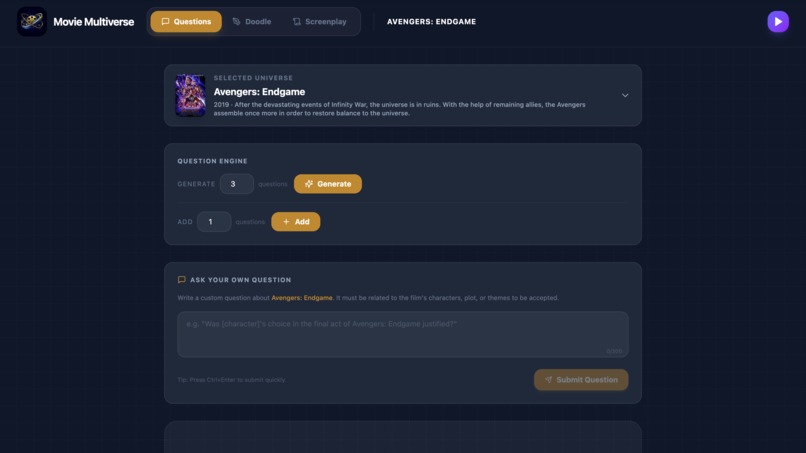
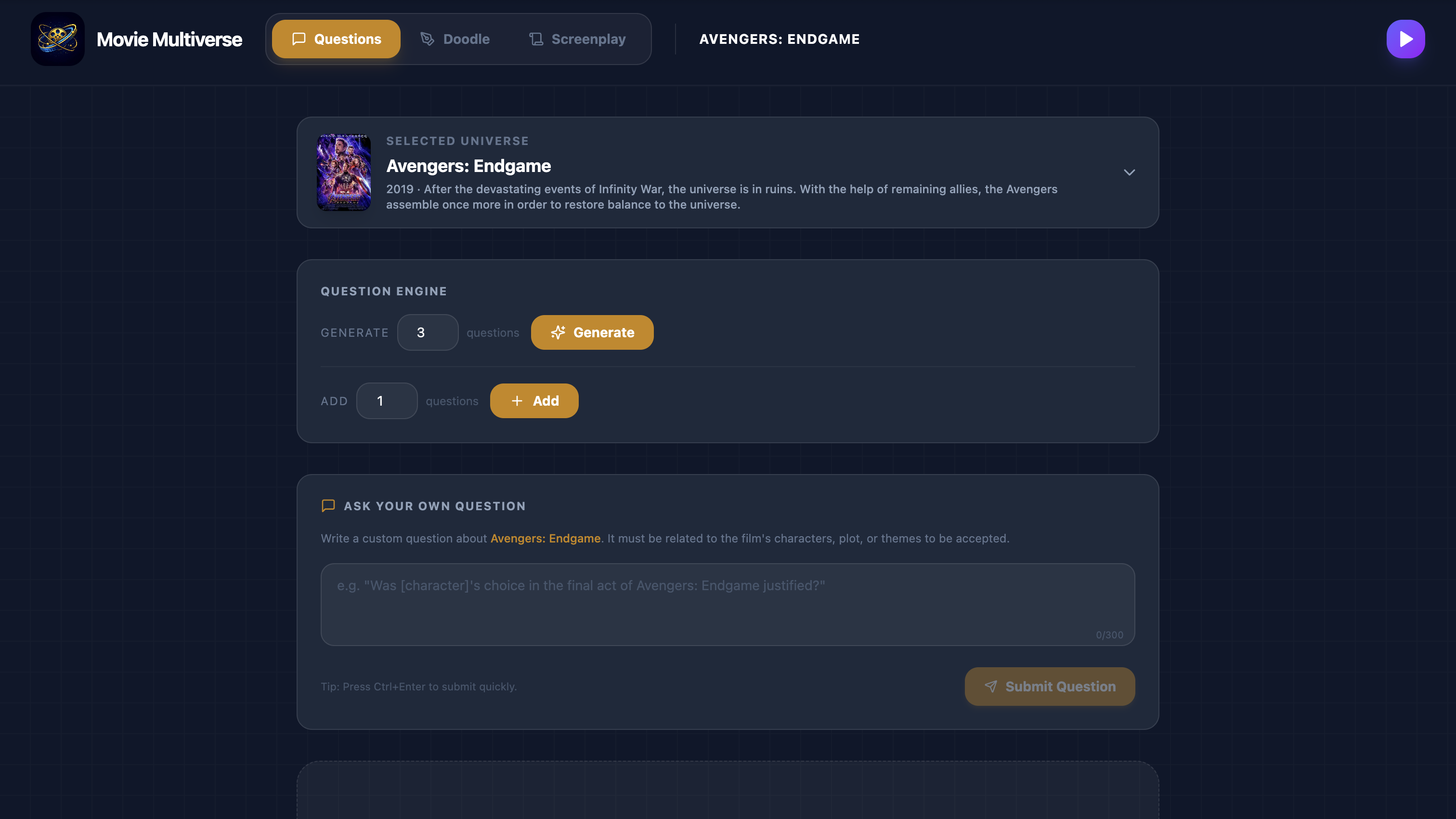
Initial Screen presented to User.
-
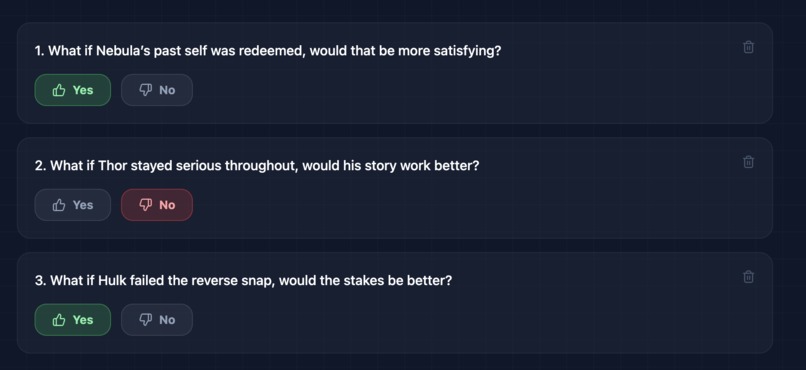
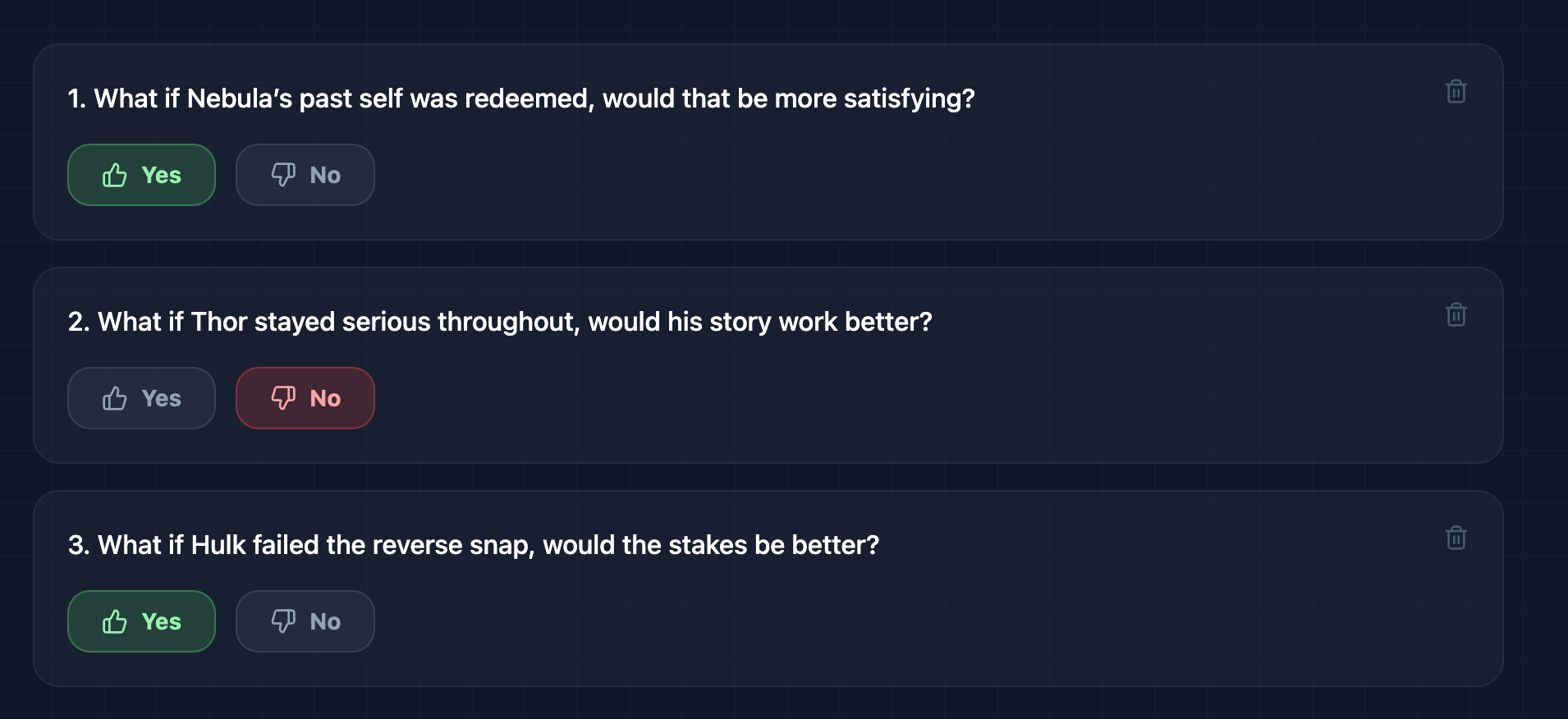
Question Generation and Answer UI.
-
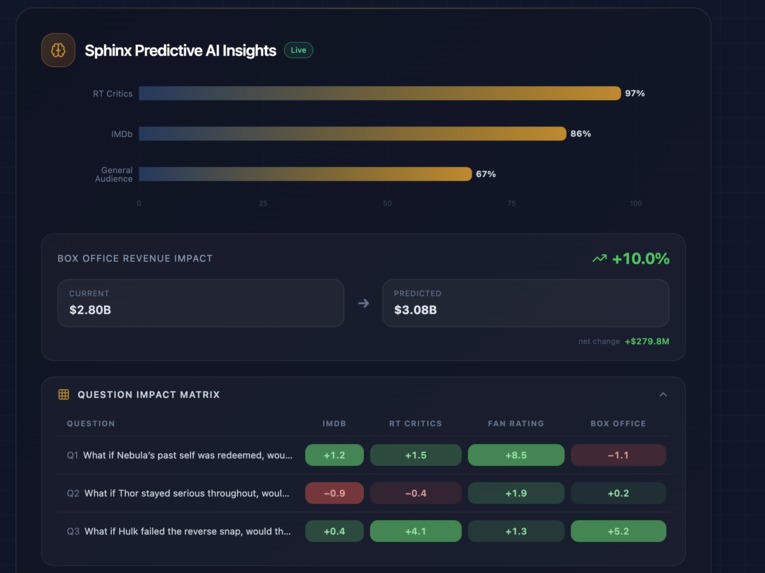
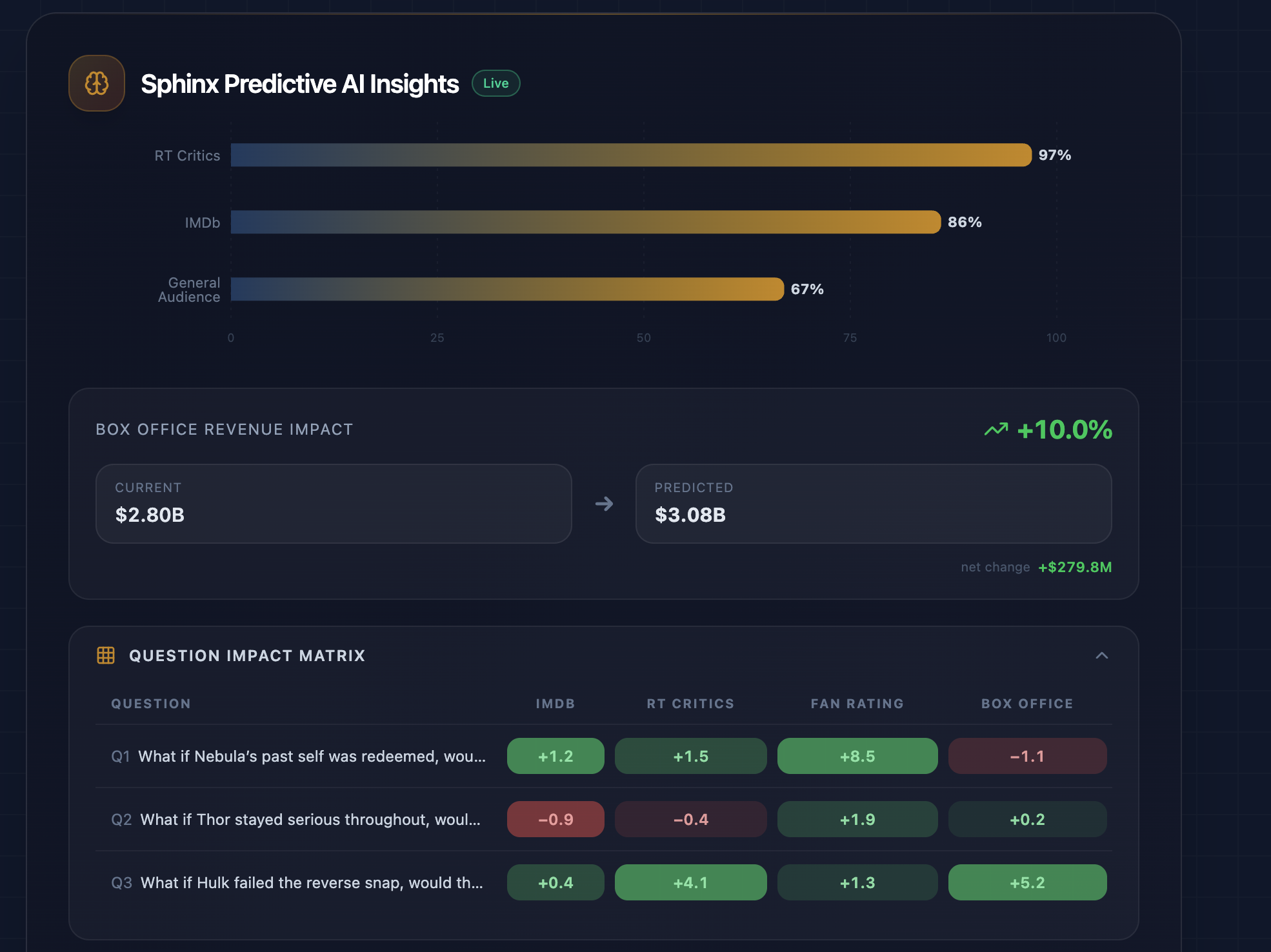
Data Visuals related to critical acclaims from Youtube and Reddit.
-
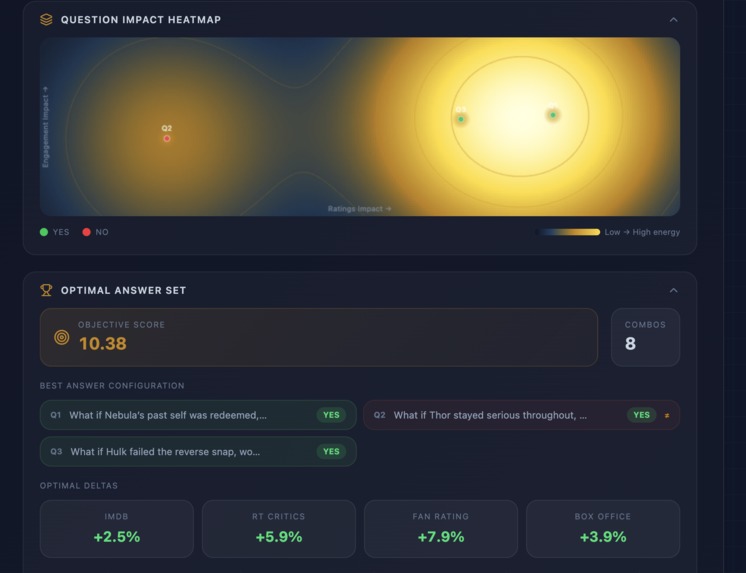
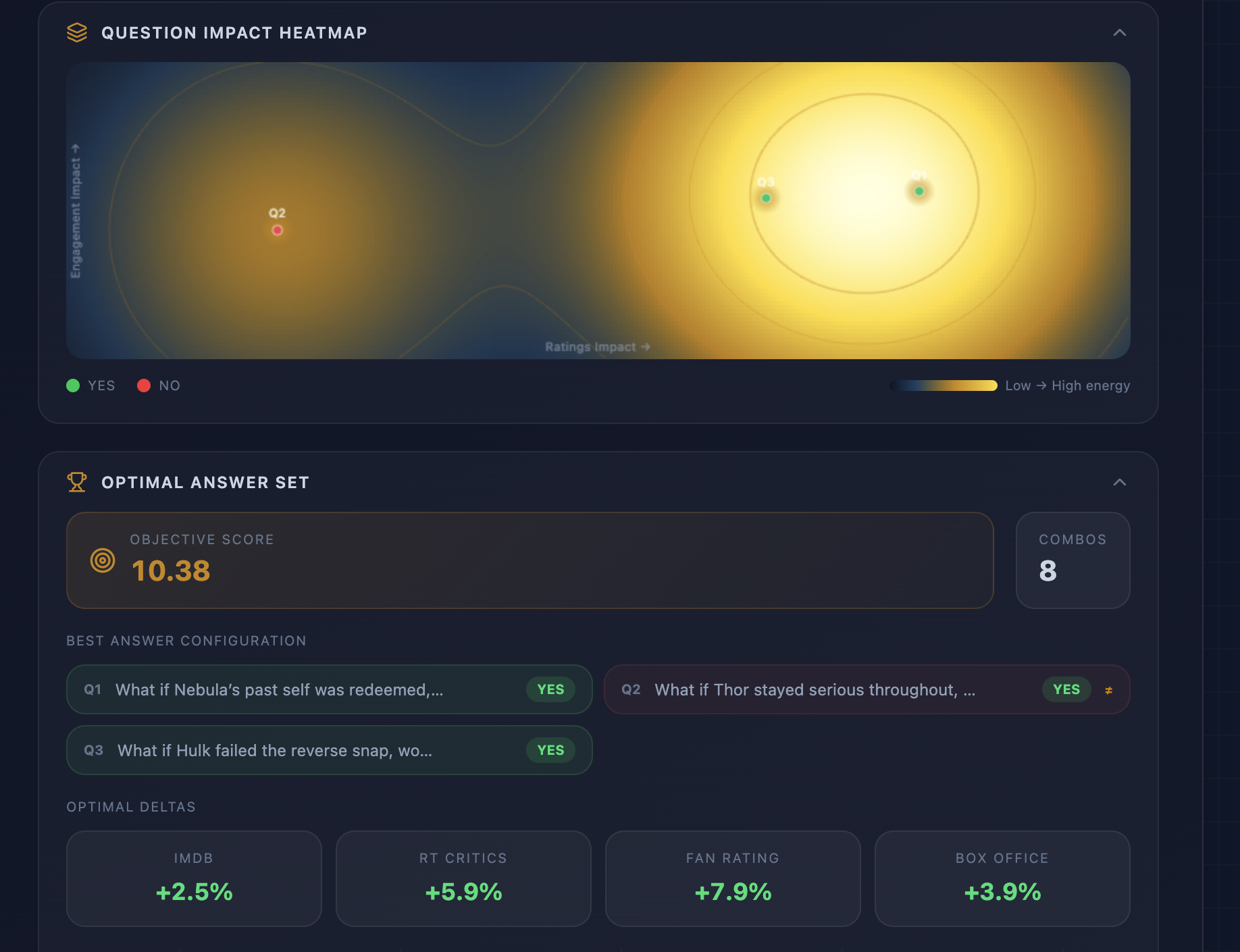
Optimal Answer Set that provides the best viewed, in the eyes of critics, storyline.
-
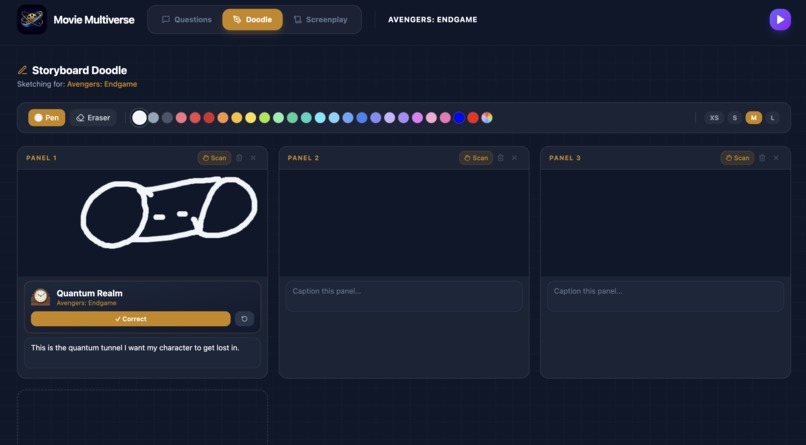
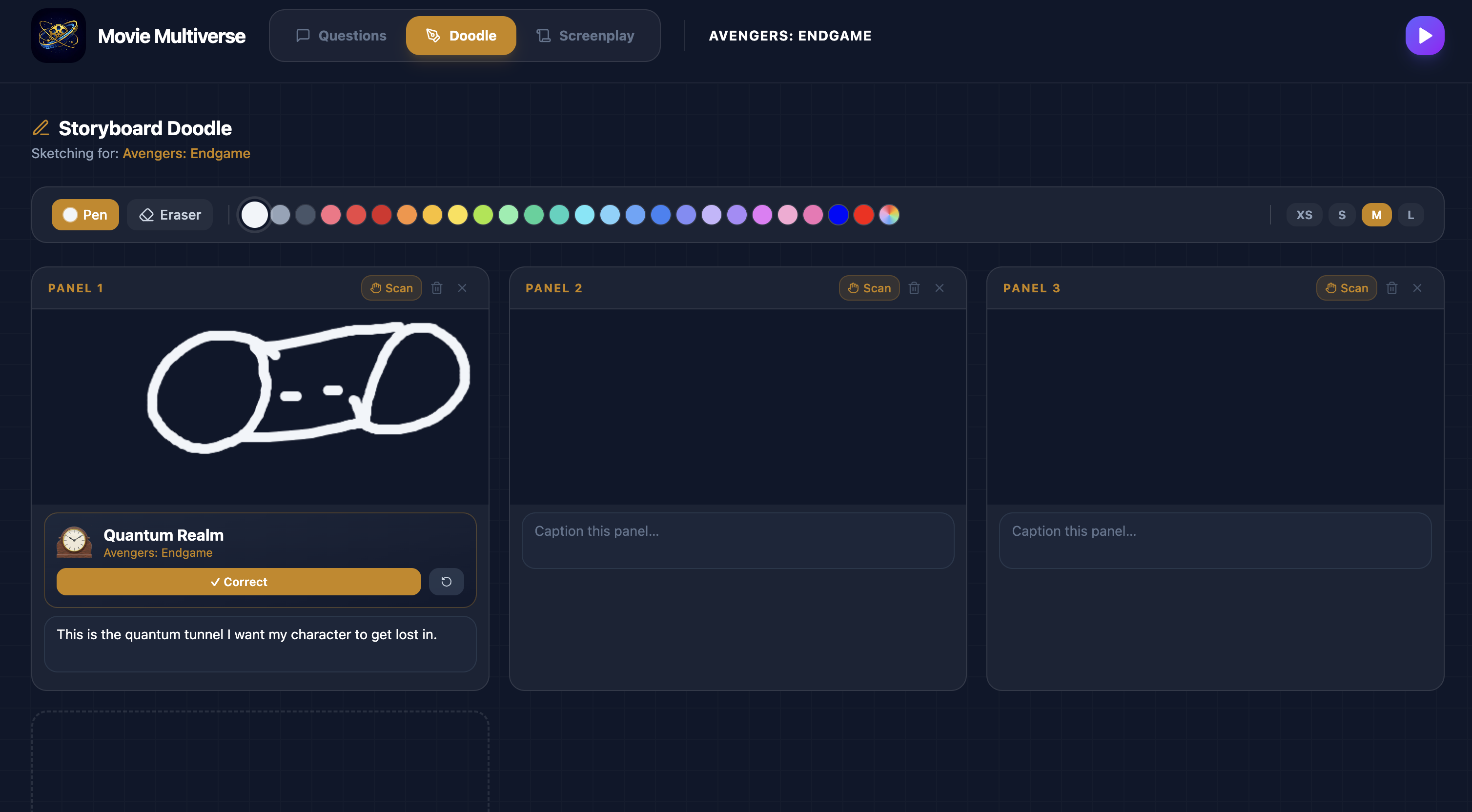
Storyboard Creation allows users to channel artistic imagination into creating a storyboard which can later be used for script generation.
-
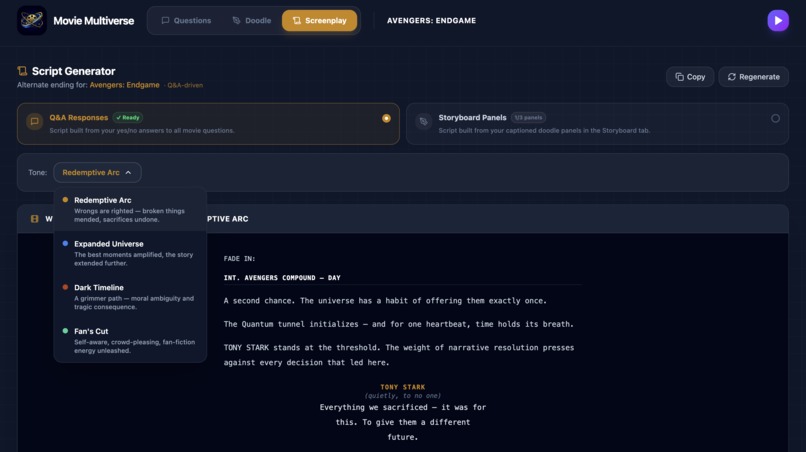
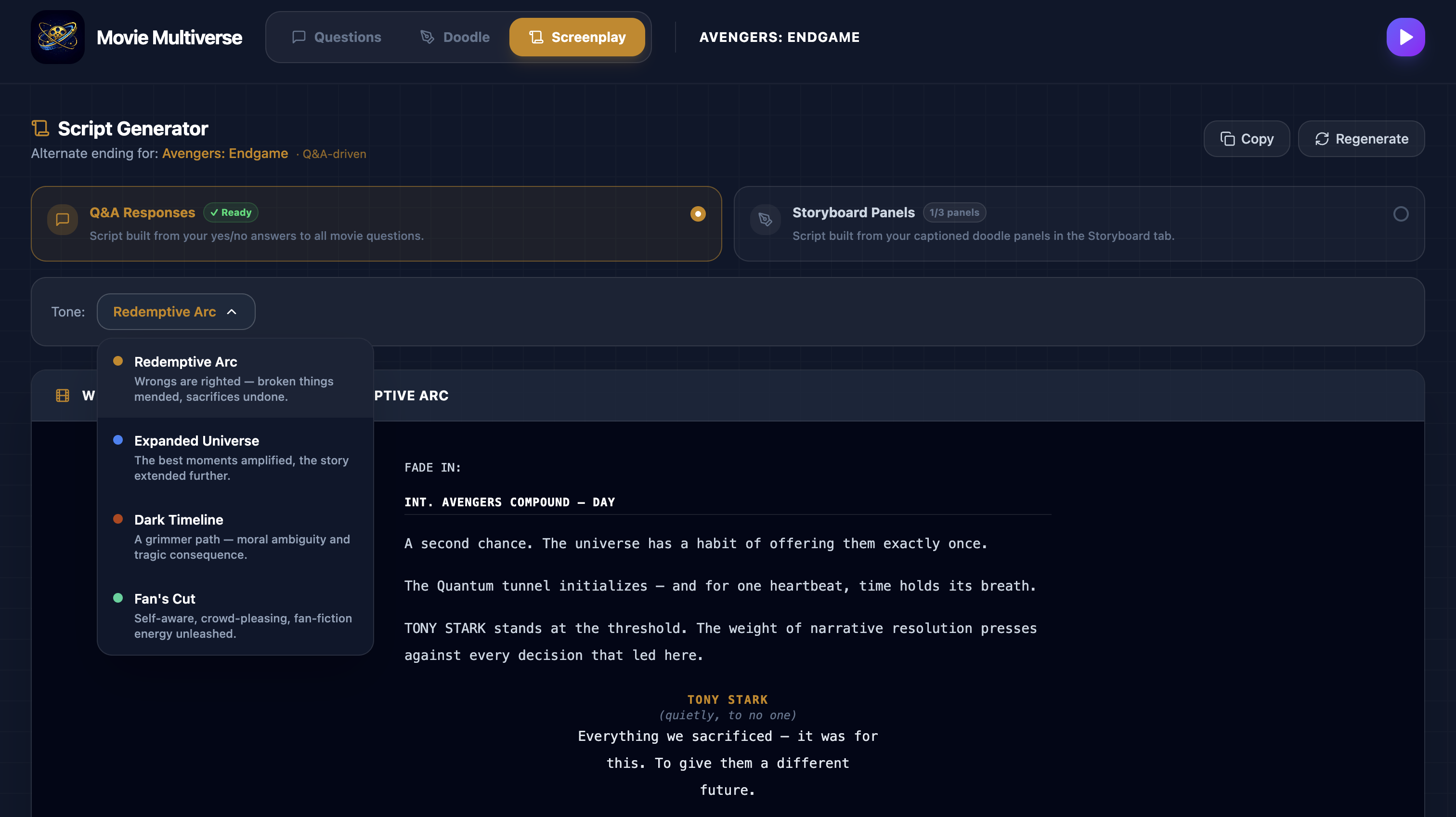
Script Creation can be done in two ways: Q&A Responses & Storyboard Generation. There are four possible script generation templates.
-
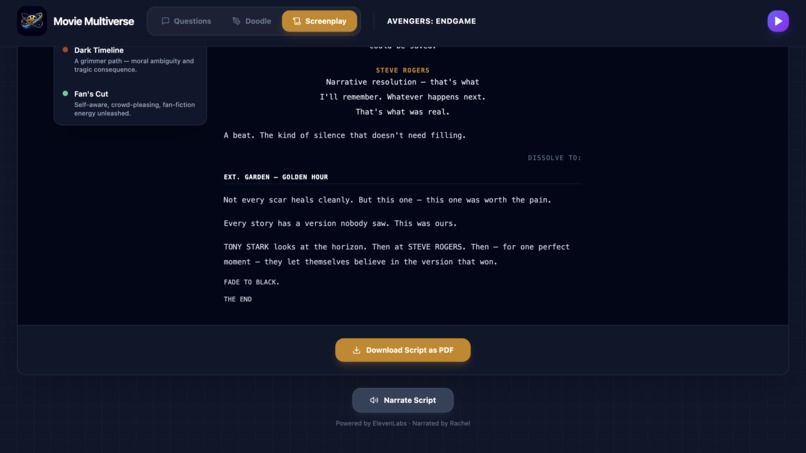
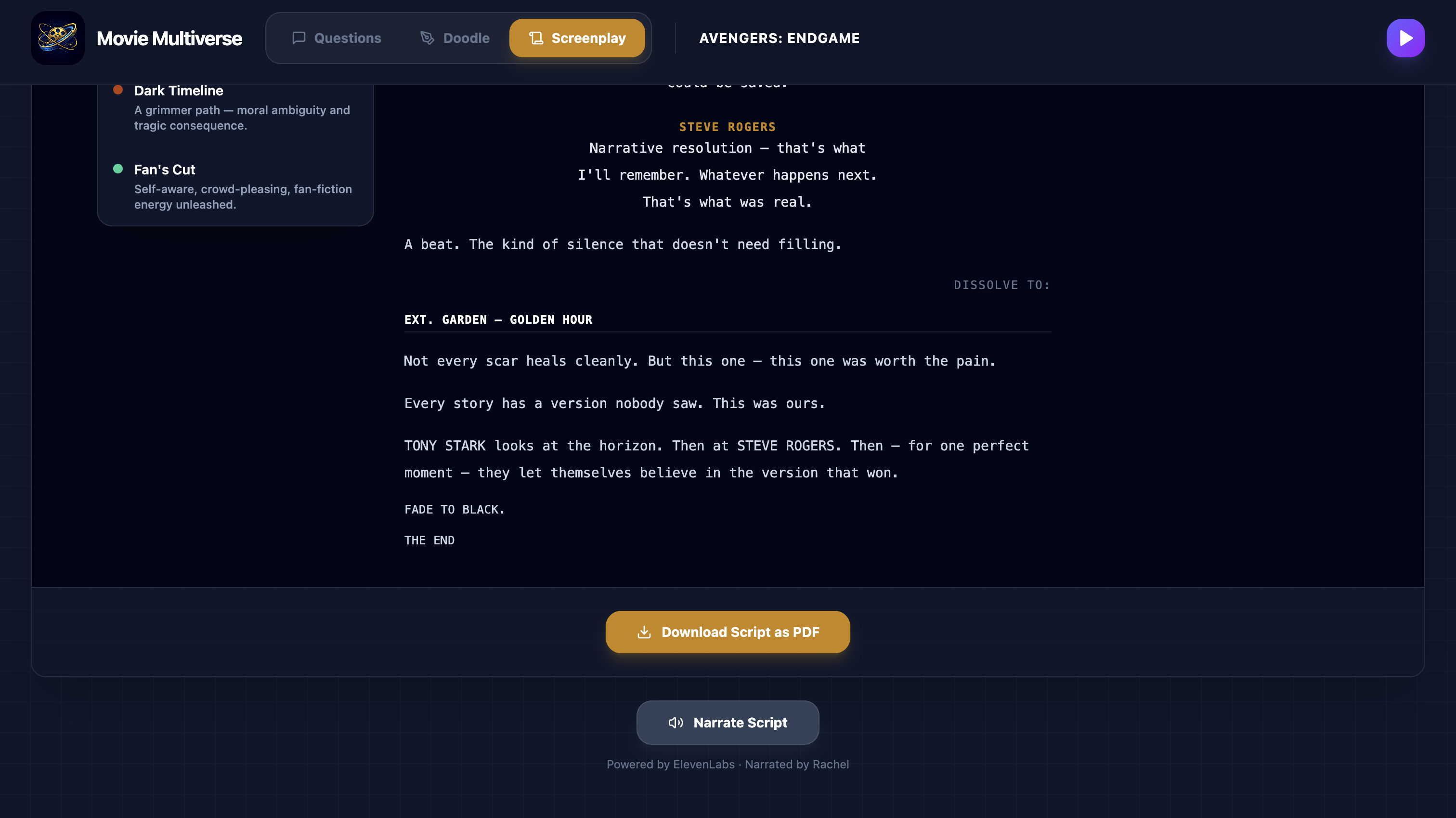
Script Narration by Eleven Labs' Audio Generator with ability to pause and stop.
-
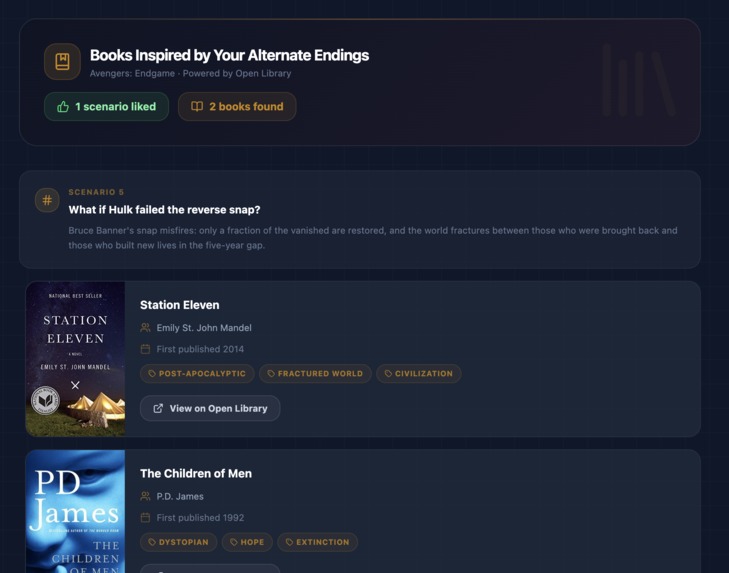
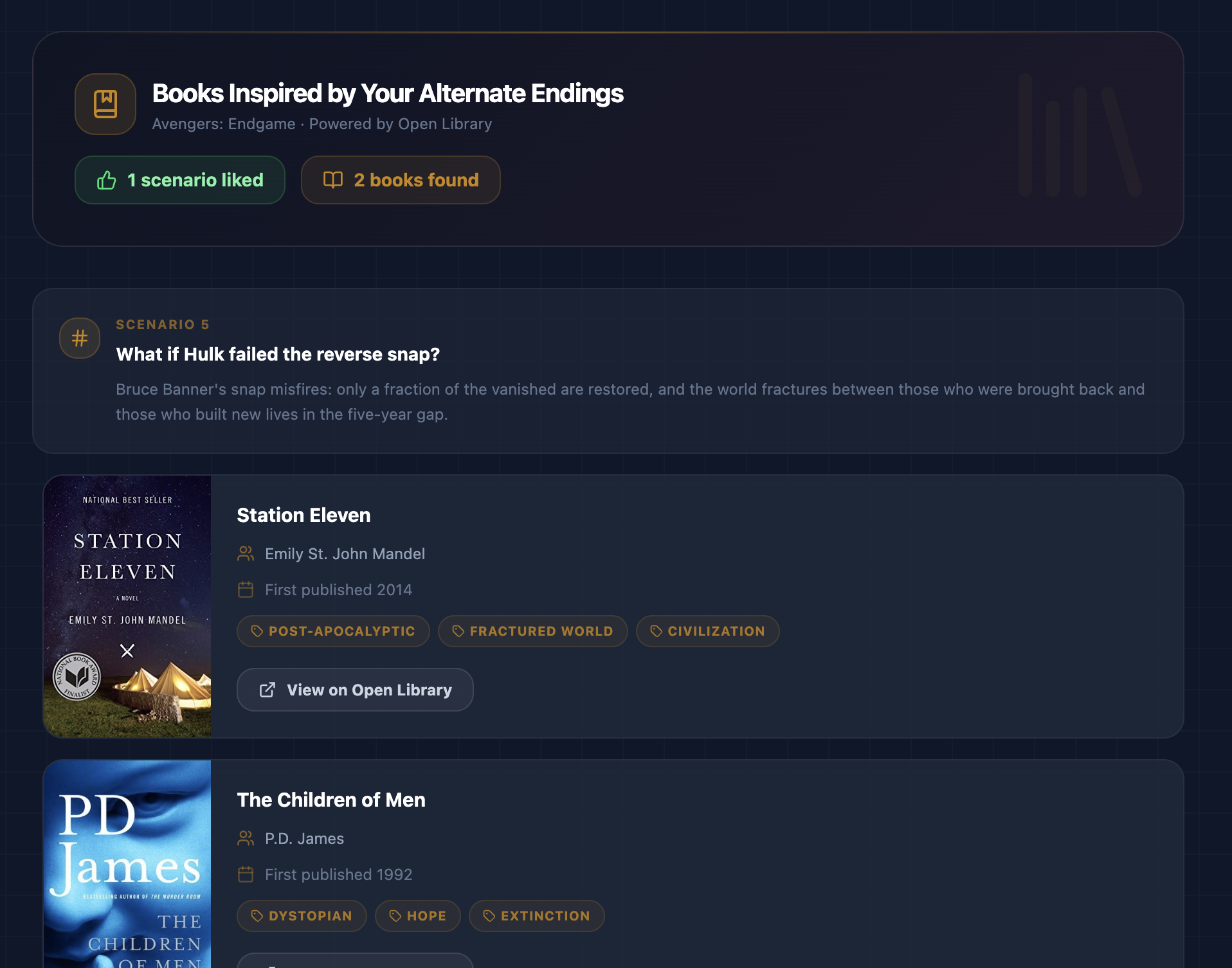
Book Recommendations based on common themes and topics selected by user.
Inspiration
Recently in the entertainment industry there has been a rise in unsatisfactory endings by producers who are attempting to create pleasing character arcs regardless of how they may be perceived by audiences. For example, the upheaval created at the ending of Stranger Things or the ongoing conflict of Ross ending up with Rachel.
We dug deeper based on these initial observations and were interested in exploring how critical and commercial performance were affected by these plot choices. This is how Movie Multiverse spawned.
What it does
Movie Multiverse allows users to explore the bounds of their imagination by playing with the script of an existing movie and changing it to observe and analyze the possible merits and drawbacks of that version, taking into consideration customer reception and economic impact.
There is a multiverse of versions that can be created and altered, and each is compared to the “optimal” version that peaks in terms of critic and audience satisfaction, as well as blowing up the box office.
Based on the user’s interpretation:
• It matches their version with similar texts and books by authors they may enjoy.
• Users can explore writing their own scripts using our script-writing tool.
• Our storyboarding feature identifies characters and converts drawings into a first-draft script.
• Users can listen to how dialogue would be delivered in the actual movie using our integrated audio feature.
How we built it
FIGMA UI
• Used Figma to create graphs displaying reviews across audiences and critics.
• Designed the entire navy blue and gold color scheme through prompting with Figma and CSS files.
• Integrated Sphinx, Eleven Labs Audio Creator, and the Gemini API into a seamless interactive interface.
RAG + Gemini API using Actian Vector DB
• Used Beautiful Soup and APIs (Reddit, YouTube Data, IMDb) to scrape controversial and popular opinions.
• Stored all data in the Actian Vector Database.
• Implemented Retrieval-Augmented Generation (RAG) to ground LLM outputs in real evidence.
• Generated scenario-based questions using Gemini.
• After user responses, Gemini predicted how critics and customer reviews would change.
• Gemini returned predictions and per-question impact deltas (IMDb / RT / Fan / BoxOffice%) in structured JSON format.
• Computed an optimal answer set via brute force over all yes/no combinations using weighted scoring.
Sphinx AI
Using the JSON predictions returned by Gemini, we visualized outputs in a clean format:
• Bar Plot: tracked changes in ratings dynamically.
• Box Plot: visualized revenue impact under different scenarios.
• Matrix Plot: showed the importance of each question on dependent variables.
• Heatmap: provided an energy-based visual interpretation of impact concentration.
• A separate section displays the results of the optimal version and the scenarios that produced it.
ElevenLabs
• Fed generated scripts into the ElevenLabs API.
• Generated audio versions of dialogue.
• Integrated playback directly into the UI for seamless interaction.
Challenges we ran into
We encountered a major issue where Figma began crashing and rendering a blank screen, causing us to lose our fully integrated UI and backend build during development. Fortunately, because we maintained strong local Git version control, we restored from a stable checkpoint and rebuilt quickly without significant delays.
Accomplishments that we're proud of
• Built and shipped a fully interactive, AI-powered movie multiverse simulation integrating user decisions, evidence retrieval, and predictive modeling.
• Designed backend logic for sentiment analysis, impact modeling, and optimal outcome computation.
What we learned
• Learned Figma from scratch to design and prototype a complete interactive interface.
• Implemented Retrieval-Augmented Generation (RAG) with vector search and embedding pipelines.
• Developed prompt engineering strategies for structured JSON outputs.
• Integrated frontend, vector databases, LLMs, and optimization logic into one cohesive system.
What's next for Movie Multiverse
• Create a complete video or visual sequence that fully plays out alternate scripts.
• Expand the dataset to include more movies and potentially TV shows.
• Scrape broader data sources to improve accuracy and reduce bias.
• Develop more historically grounded and statistically realistic “what if” scenarios.
Built With
- actian
- beautiful-soup
- elevenlabs
- figma
- gemini
- huggingface
- json
- openai
- openlibraryapi
- python
- redditapi
- sphinxai
- youtubeapi


Log in or sign up for Devpost to join the conversation.