-
-
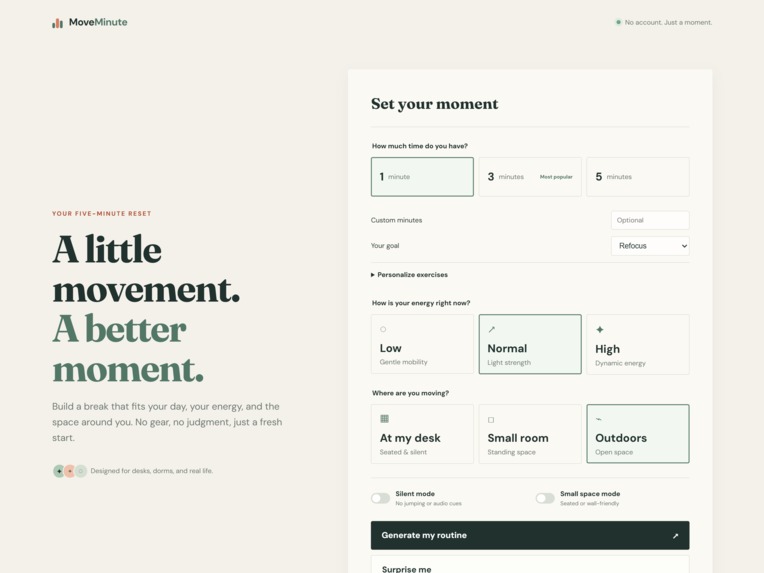
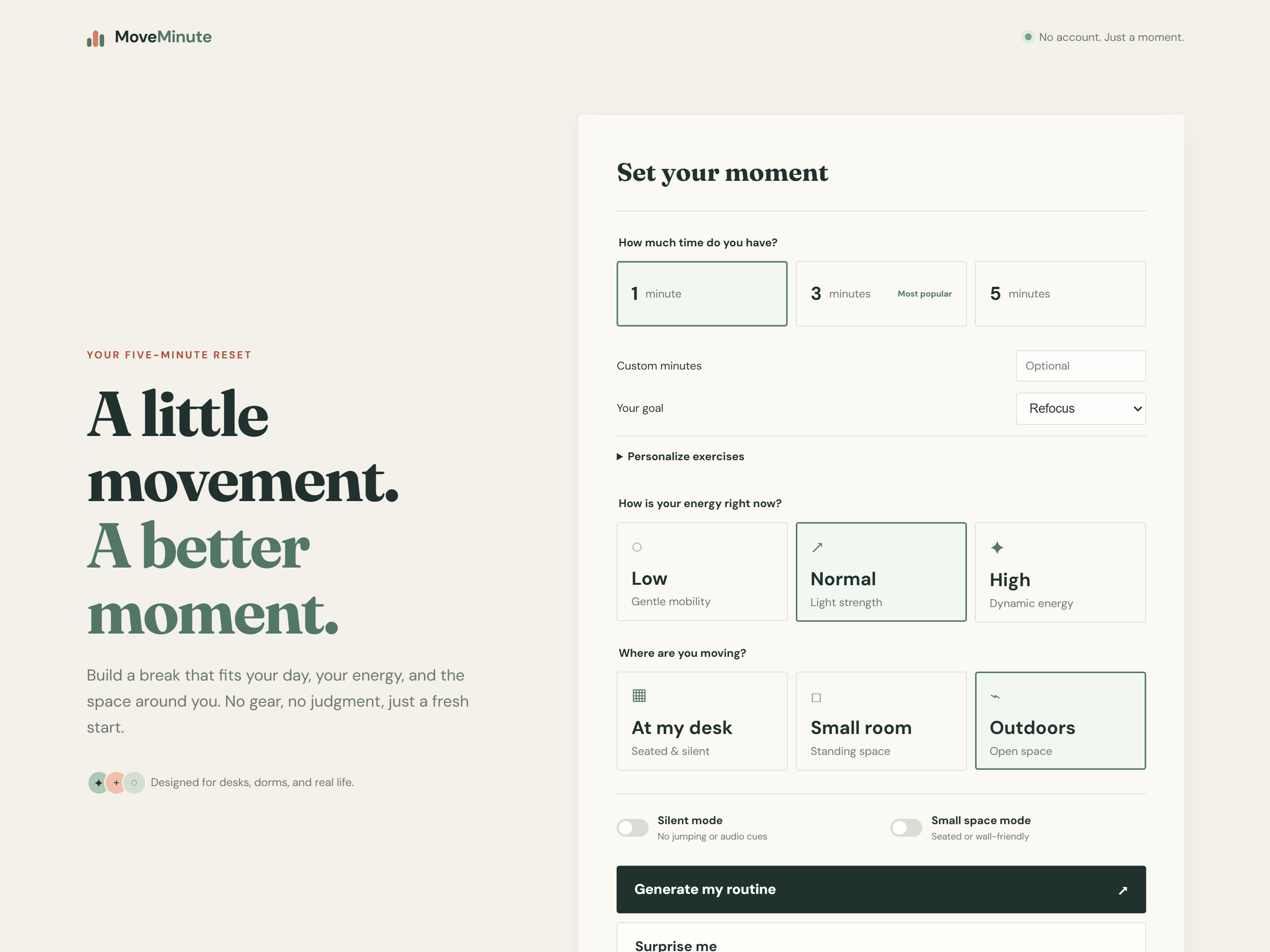
home page
-
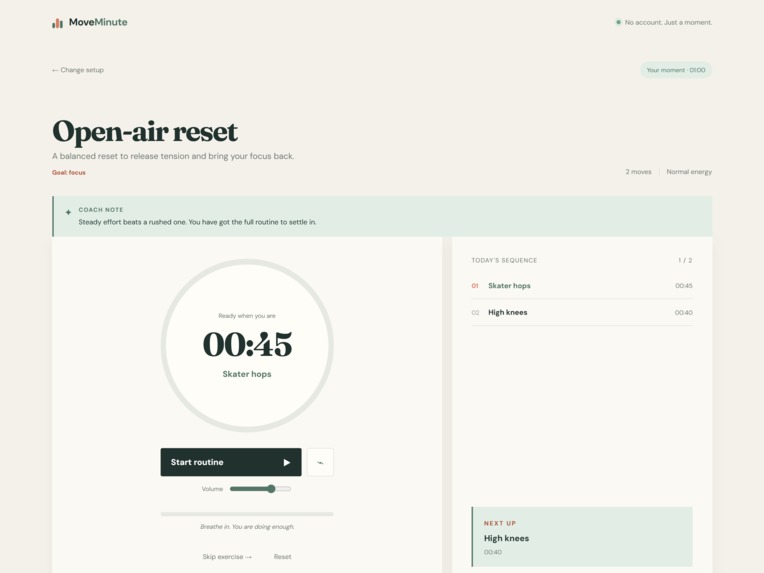
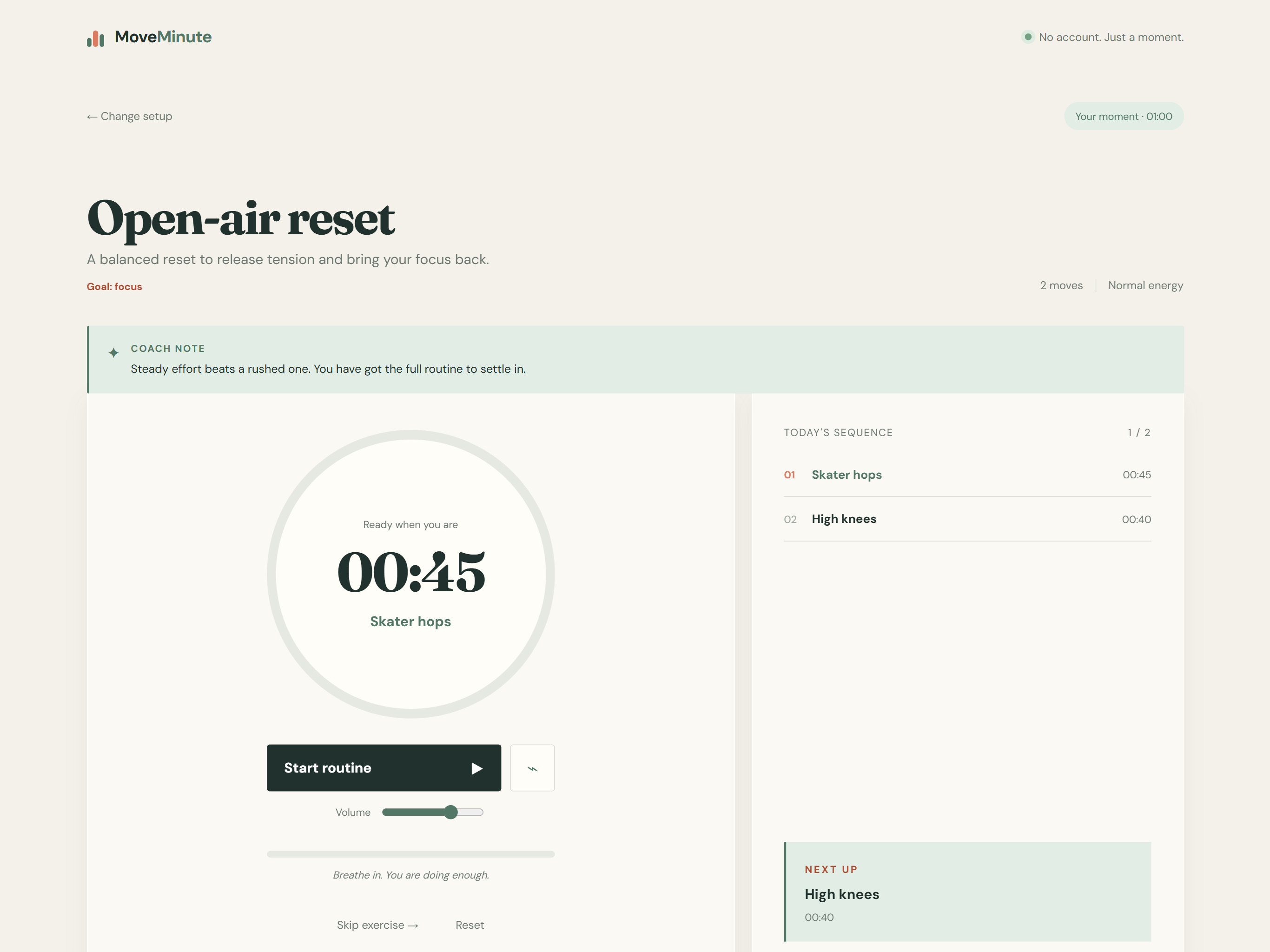
routine start
-
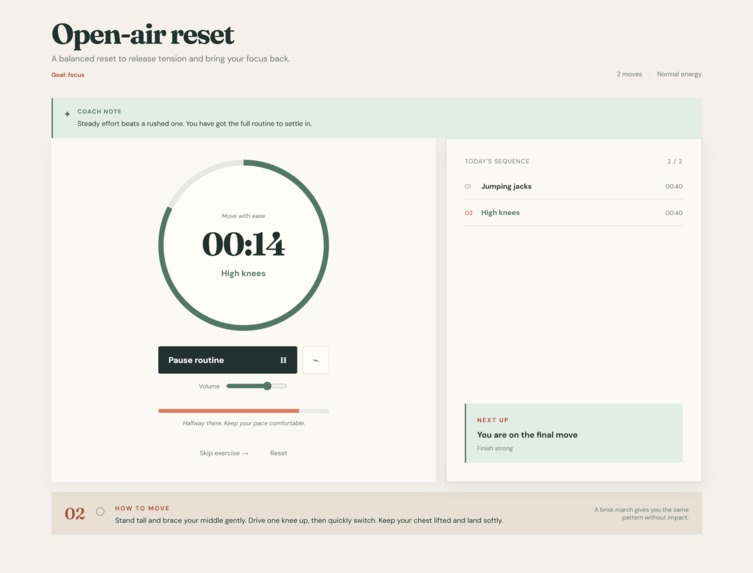
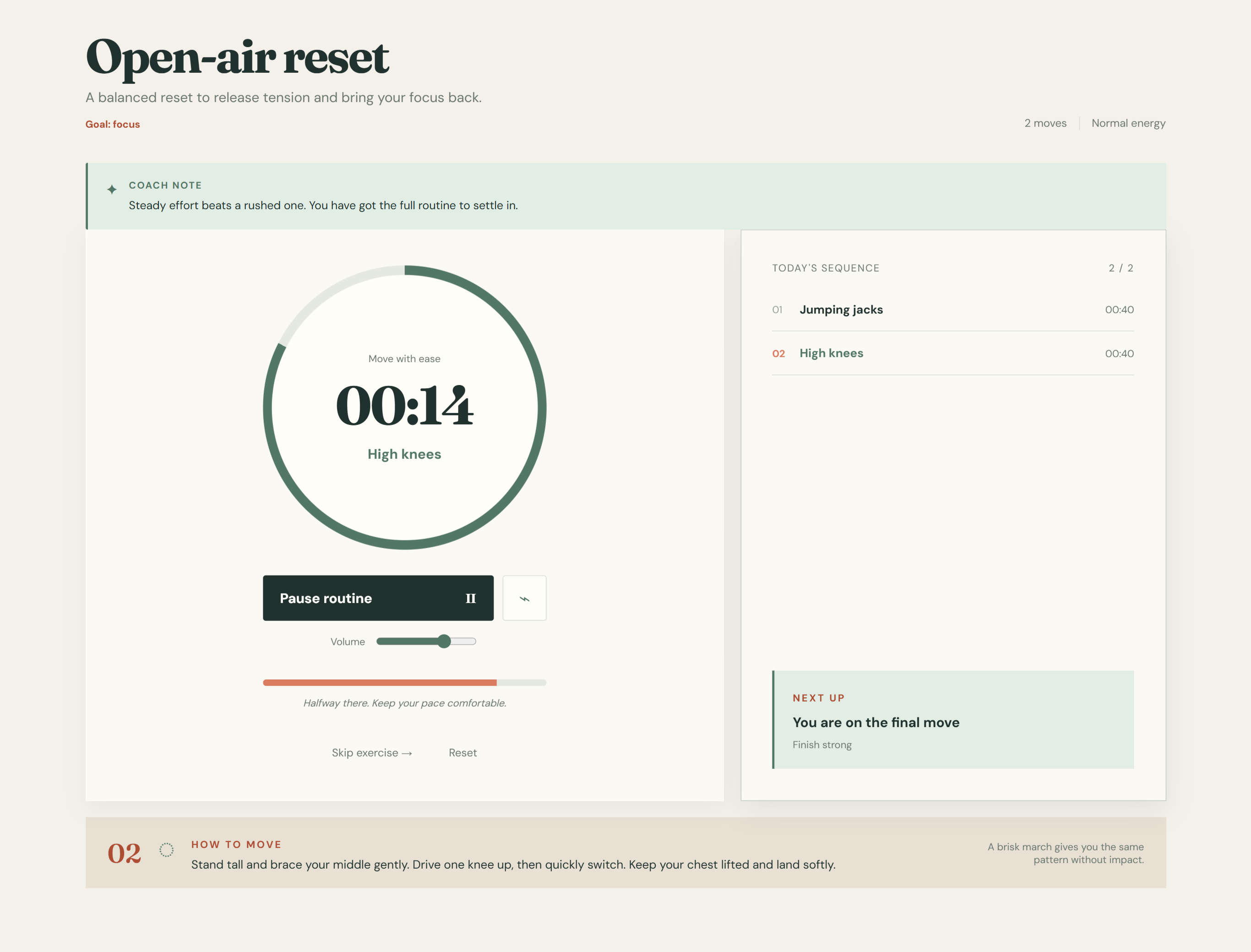
mid-routine
-
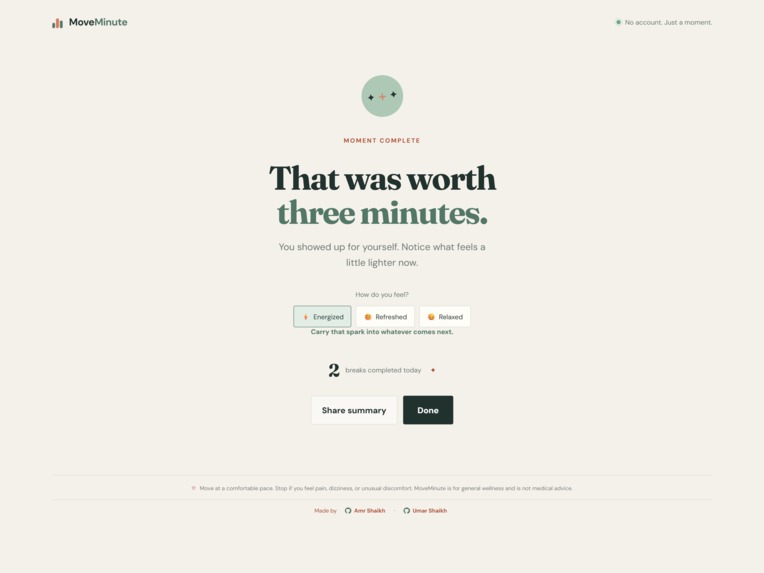
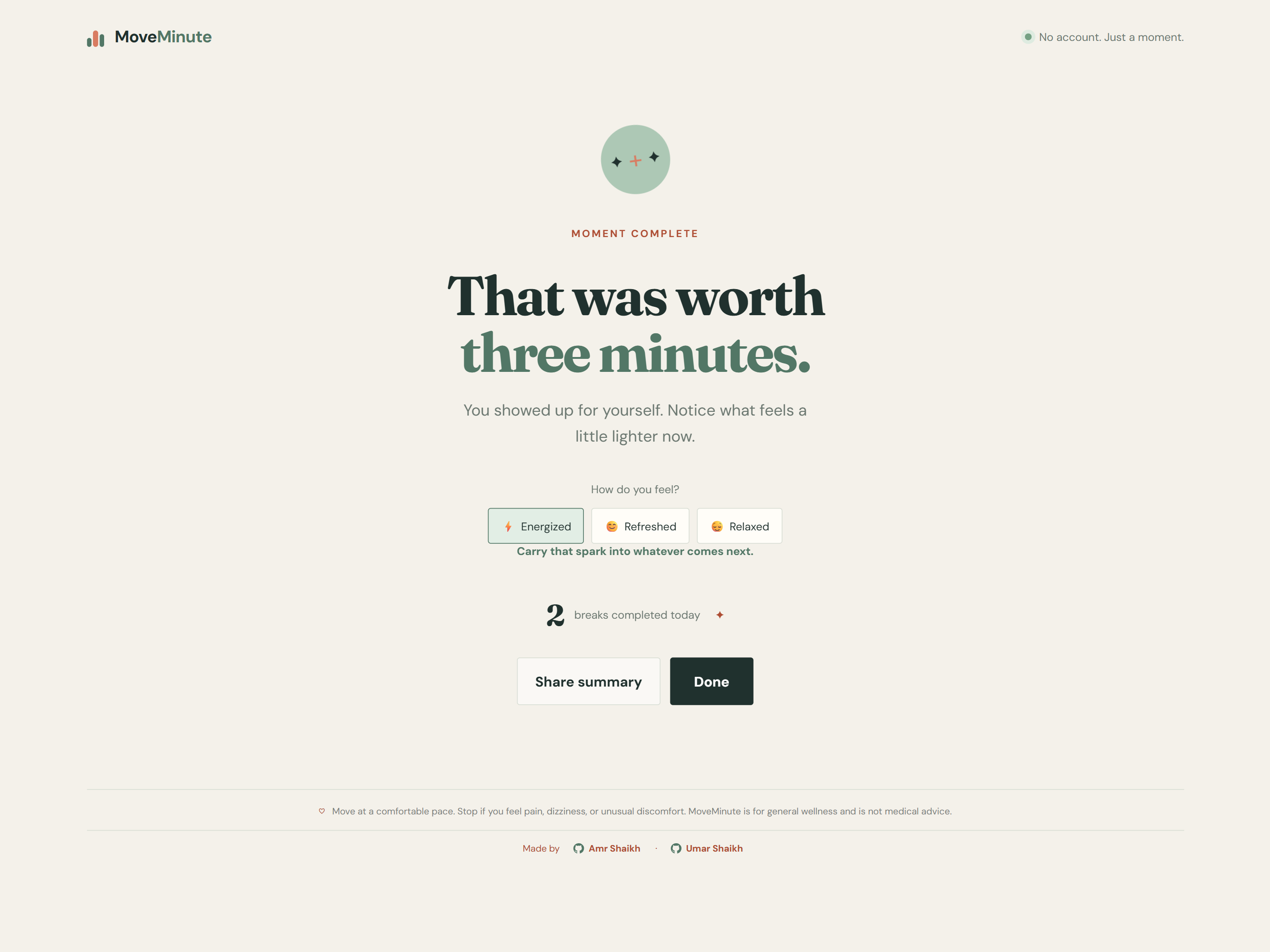
finish
Inspiration
We kept noticing the same pattern around us: students sit for hours studying, attending online classes, and staring at screens without moving. While everyone knows movement is vital, fitting a full 30-minute workout or gym session into a packed schedule is hard.
We noticed that even a brief pause made studying feel far less exhausting. The problem was that existing fitness apps target people who already have workout routines, equipment, and dedicated time. We wanted to build something much simpler: a way for anyone to take a quick break and move without any friction.
What it does
MoveMinute is a lightweight web app that generates tailored movement breaks based on a student’s exact situation. Instead of forcing a long or rigid workout program, it asks three quick questions:
Time: How much time do you have?
Energy: What is your current energy level?
Location: Where are you right now?
Based on those answers, MoveMinute delivers an immediate, step-by-step routine with an integrated live timer:
In a quiet library with low energy? Get gentle shoulder rolls, wrist stretches, and seated leg extensions in silent mode.
Outdoors with high energy? Get marching in place, bodyweight squats, or short cardio bursts.
The active timer guides users through each movement sequentially so they don't have to think about what comes next.
How we built it
We kept the tech stack lightweight, fast, and focused entirely on a smooth frontend user experience:
HTML5: Structured the core layout, welcome view, selector inputs, routine cards, and timer interface.
CSS3: Built a calm, encouraging aesthetic using soft color palettes, rounded cards, large interactive buttons, and a fully responsive mobile-first layout.
JavaScript: Engineered the core recommendation filtering logic Routine = f(Time, Energy, Location) and built the stateful countdown timer that automatically steps through exercises.
By avoiding backend databases and login barriers, we made the app instantly usable the second a student opens the page.
Challenges we ran into
Scope Management: The hardest part wasn't writing code, but deciding what not to build. It was tempting to add user accounts, AI coaching, or a social feed, but staying disciplined allowed us to polish a fully working core product.
Designing for Context: Creating exercises that work in silent, constrained environments (like a library or a shared desk) required carefully structuring exercise tags and offering low-impact alternatives.
Responsible Framing: We had to ensure our prompts provided general wellness recommendations safely, without crossing into medical or diagnostic claims.
Accomplishments that we're proud of
Zero-Friction UX: Built an intuitive flow where a user can select their parameters and start a guided break in under 5 seconds.
Fully Working Interactive Timer: Delivered an exercise sequence timer that seamlessly handles activity transitions, countdown logic, and UI updates.
Thoughtful Accessibility: Designed silent options, minimal-space movements, and gentle alternatives so anyone can participate regardless of their environment or mobility level.
What we learned
Focus on solving a single, real problem exceptionally well rather than shipping a bloated feature set.
How to combine vanilla HTML, CSS, and JavaScript into a complete, end-to-end interactive product.
The importance of mobile-first design and accessibility when building tools meant to be used on the fly.
How to communicate technical project decisions clearly and concisely without unnecessary jargon.
What's next for MoveMinute
Daily Progress Tracking: Save streaks and completed break goals locally without requiring an account.
Localization: Expand language support to reach more students, including Hindi and Telugu translations.
Hands-Free Mode: Add optional voice cues and audio prompts for users who can't watch their screen while moving.
Expanded Movement Library: Collaborate with physical health resource guidance to add more inclusive exercises for varied mobility needs.


Log in or sign up for Devpost to join the conversation.