-
-
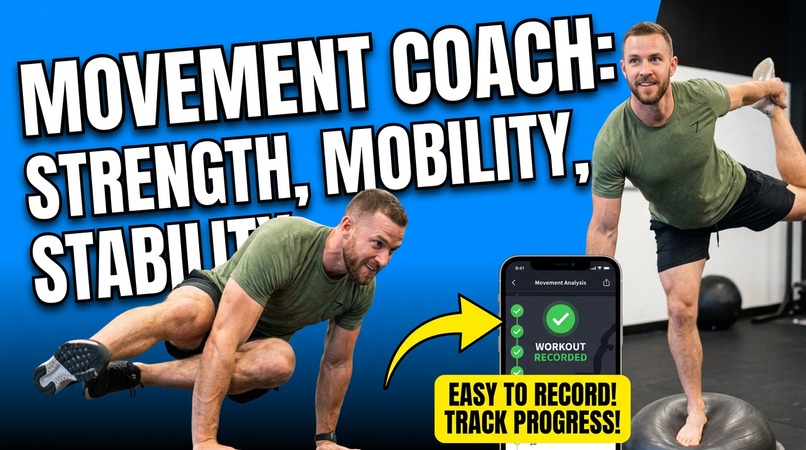
Movement Coach in your pocket
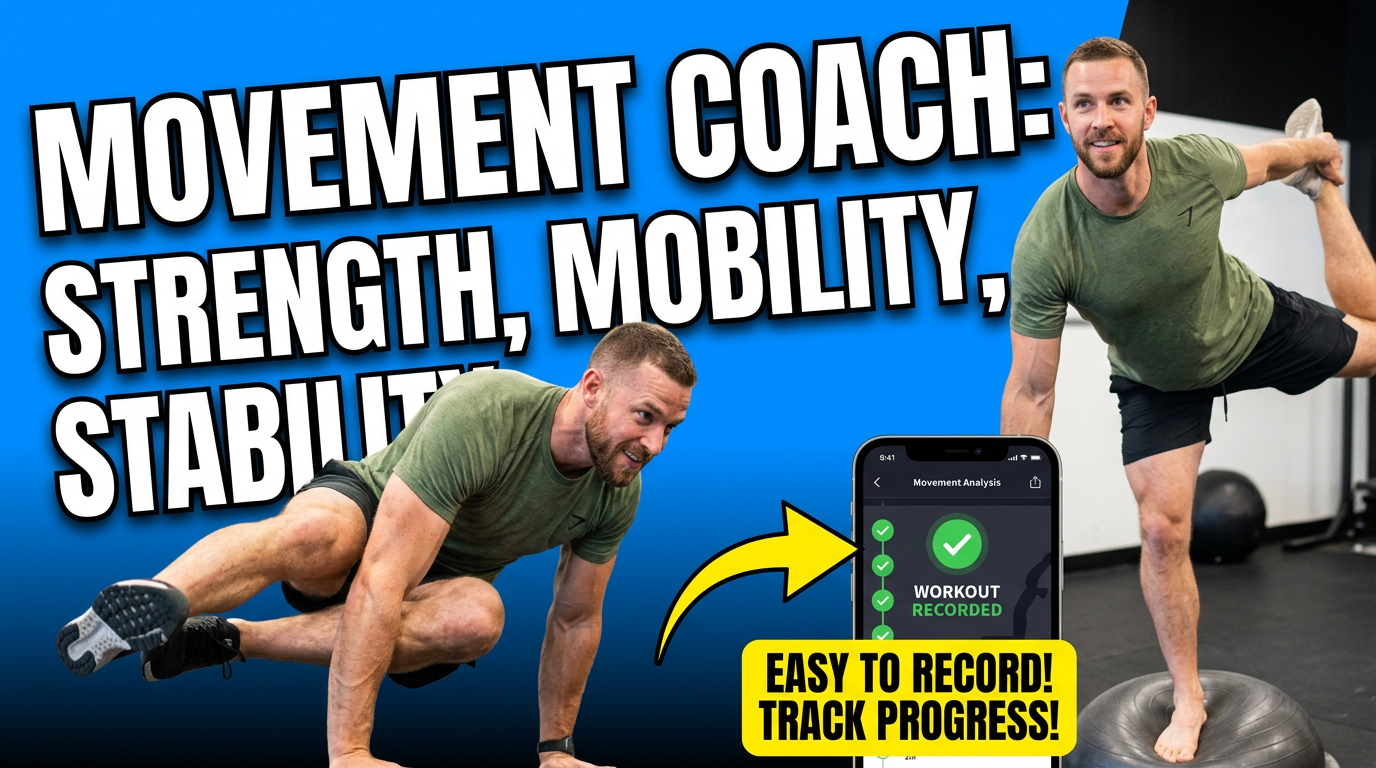
Inspiration
Movement Coach started as a practical app for getting back into bodyweight training without needing a gym or complicated workout plans. The goal is to make strength training feel approachable on a phone: open the app, choose a session, follow the movements, record what happened, and gradually build confidence. As the app collect workout history AI is used to optimise and track progress
The broader product direction is bodyweight training for strength, mobility, and stability. Calisthenics is an important lane, but the app is meant to welcome beginners, home exercisers, park/gym users, and anyone who wants to move better with minimal equipment.
What it does
Movement Coach is a phone-first workout companion for guided bodyweight routines. It currently supports:
- Workout A/B routines with warmups, exercise cues, targets, and movement-specific tracking
- Timed exercise tools for movements like dead hangs, active hangs, planks, and side planks
- Rep-based set recording for pull-ups, push-ups, rows, squats, split squats, dead bugs, and more
- Rest timers, extra sets, quality notes, and session summaries
- Local-first session storage so logging remains fast and reliable
- Supabase authentication and database sync through Netlify Functions
- An AI-ready workout context endpoint and database views that summarize user training history for future coaching
How we built it
The current working app is a lightweight PWA built with HTML, CSS, and JavaScript, deployed through Netlify. Supabase handles authentication and Postgres-backed workout history. Netlify Functions keep privileged sync logic off the client and expose a structured workout-context API designed for future AI coaching. There was a plan to build Expo React Native App but given the time constrains decided to progress with initially built PWA app.
Codex with GPT-5.6 was used throughout the build to turn a personal workout logger into a more complete product: shaping the app architecture, implementing session tracking flows, adding auth and cloud sync, refining the mobile-first UI, designing the data model, and exploring the broader product positioning around strength, mobility, and stability.
What makes it useful
A lot of fitness apps either feel too generic or too advanced. Movement Coach tries to sit in the middle: simple enough for someone returning to exercise, but structured enough to grow into calisthenics-style progressions. The logs are not just a history table; they are the foundation for future coaching that can notice plateaus, skipped movement patterns, inconsistent recovery, and realistic next steps.
Challenges
Thought of too many features and as I'm building the app I'll get new idea and struggled weather to include that or just work on core ideas. Ran out of Codex credits sooner than I thought and time too
What's next
The next stage is to connect the logged workout data to an OpenAI-powered coach that can suggest session adjustments, progression paths, recovery work, and weekly focus areas based on the user's actual training history. Planned additions include beginner onboarding, exercise categories by strength/mobility/stability, skill tracks such as pull-up and L-sit progressions, and an Expo mobile app that shares the same workout domain model.
Built With
- codex
- css
- gpt-5.6
- html
- javascript
- netlify
- netlify-functions
- progressive-web-app
- supabase-auth
- supabase-postgres

