-
-
MoveLoop app icon — 1024 × 1024, uncropped
-
About Moveloop
Inspiration
Choosing a workout should not mean guessing whether it fits your goals. We created Moveloop for people who want the direction and responsiveness of a personal trainer but cannot access one, cannot afford one, or simply prefer to train independently.
The idea was to make training feel personal and practical: a plan that fits the person following it, with guidance when it is time to do the work.
What it does
Moveloop is an AI-powered workout app that builds a personalised plan around a person’s goals, experience, schedule, equipment and training needs. Each session gives them a clear workout to follow, with exercise demonstrations, targets and form instructions.
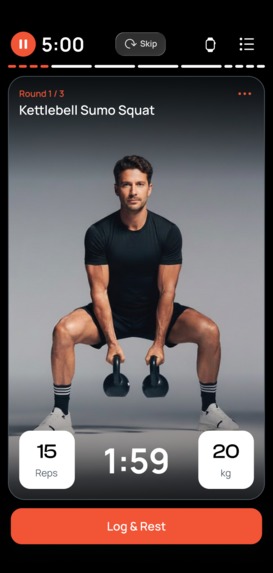
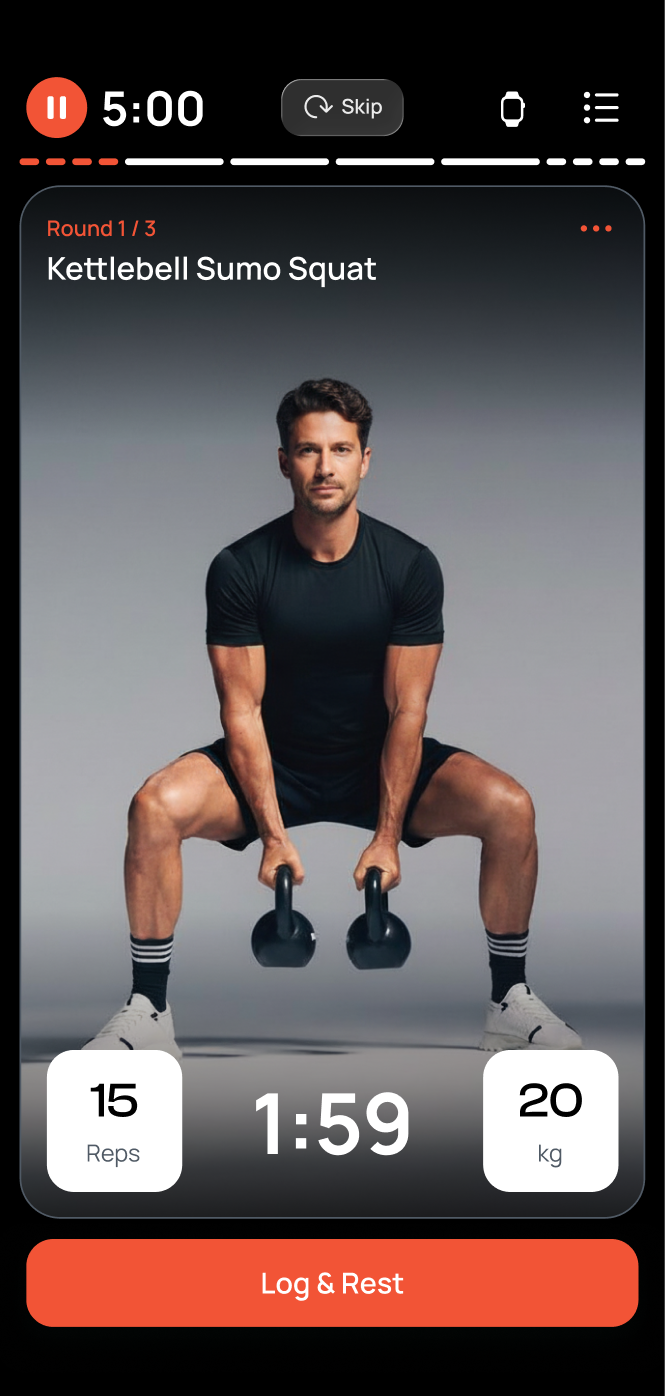
During a workout, Moveloop shows what matters for the activity: sets, reps, load and rest for strength; time, distance and pace for cardio; effort and recovery countdowns for intervals; and simple timers for mobility. Users can log sets, pause and resume sessions, and follow the current exercise on their phone, Lock Screen or Dynamic Island.People can adjust a workout when they need to. They can also review what they have completed, while their recorded training helps inform future plans.
How we built it
We built Moveloop around a repeating cycle: plan, train, log, learn and adapt. We mapped the journey from answering training questions to following a workout and reviewing completed sessions, so the information someone shares has a clear role in the plan they receive.
We used Figma to design a clear experience connecting personal planning, guided workouts and progress.The iOS app uses Swift 6, SwiftUI, and SwiftData. HealthKit, ActivityKit, and WatchConnectivity support Apple Health, Live Activities, and Apple Watch integration. Supabase Auth handles authentication, while PostgreSQL stores data and enforces row-level access policies. TypeScript functions running on Deno accept queued plan-generation requests and process them through server-side workers.
The subscription layer integrates RevenueCat and RevenueCatUI for customer identity, offerings, purchase and restore flows, entitlements and Customer Center. MoveLoop Pro is designed around monthly and annual subscriptions for unlimited saved routines and custom exercises, all-time analytics and advanced training insights.
Challenges we faced
Generating a trustworthy personal plan was the hardest technical challenge. The planning algorithm has to interpret each person’s information, select exercises that match their equipment and draw from a large, accurate library with reliable muscle mappings. An interrupted workout must also resume without losing logged work. Keeping workout state consistent across the iPhone, Live Activity and the upcoming Apple Watch experience adds another layer of coordination.
Adaptation needs clear boundaries. Future plans can change, but completed sessions must remain an accurate record. Current pain or an unclear restriction requires review rather than a guessed exercise prescription.
The design challenge was making all of this feel clean and intuitive. We kept edits to the current workout distinct from changes to future plans, and designed Progress to show recorded activity clearly without implying unmeasured strength gains, muscle growth or recovery.
Accomplishments that we’re proud of
- A complete training loop. We connected onboarding inputs and generated plans to a working workout flow and persistent history. The backend supports progression grounded in recorded training and automatically renews generated training blocks.
- Validation across the system. We checked the experience with native unit and UI tests, database access checks, backend contract tests and live runs using disposable accounts.
- Detailed muscle maps. We designed Progress screens that show front and back anatomy together, distinguish primary and secondary muscle involvement, and connect a selected muscle to contributing exercises and dated exercise history.
- Guidance during the workout. Exercise detail brings demonstrations, targets, muscle illustrations, correct-form steps, common mistakes and tips into one place.
- Custom set controls. We built controls that let people tap or swipe vertically to adjust reps and weight during a workout, without typing every change.
- Control within a plan. People can add, swap, remove, reorder or group exercises into circuits. The experience keeps changes to the current workout distinct from changes to future plans.
What we learned
Personalisation matters when people can see their goals in the plan and stay in control while training. Reliable fitness software must recover interrupted sessions, keep workout state clear and preserve accurate history so future recommendations can be explained. Native Apple features make the next useful action visible at a glance, helping people stay focused while moving.
What’s next
Our next step is to learn from real training experiences and use that feedback to keep improving how Moveloop generates workouts. We’re also designing Apple Watch support so people can follow and manage a workout from their wrist.
We want people to be able to bring their own workouts or training plans into Moveloop, visualise what each session involves, follow it through the app and keep a record of what they complete.
Built With
- activitykit
- deno
- figma
- healthkit
- postgresql
- revenuecat
- storekit
- supabase
- swift
- swiftui
- typescript

Log in or sign up for Devpost to join the conversation.