-
-
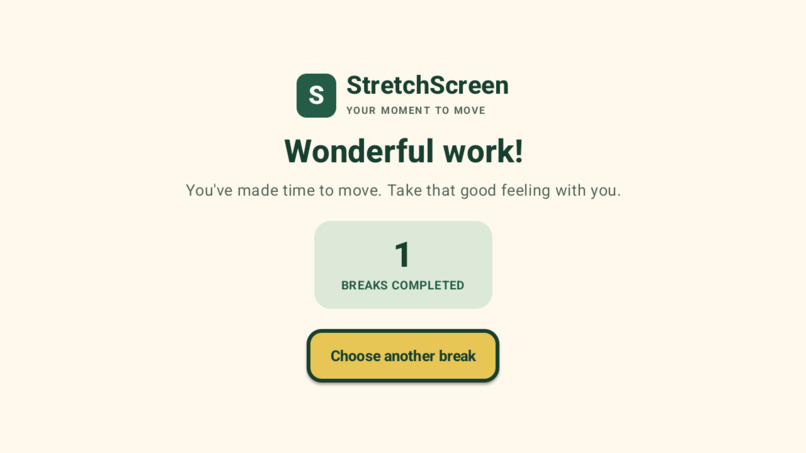
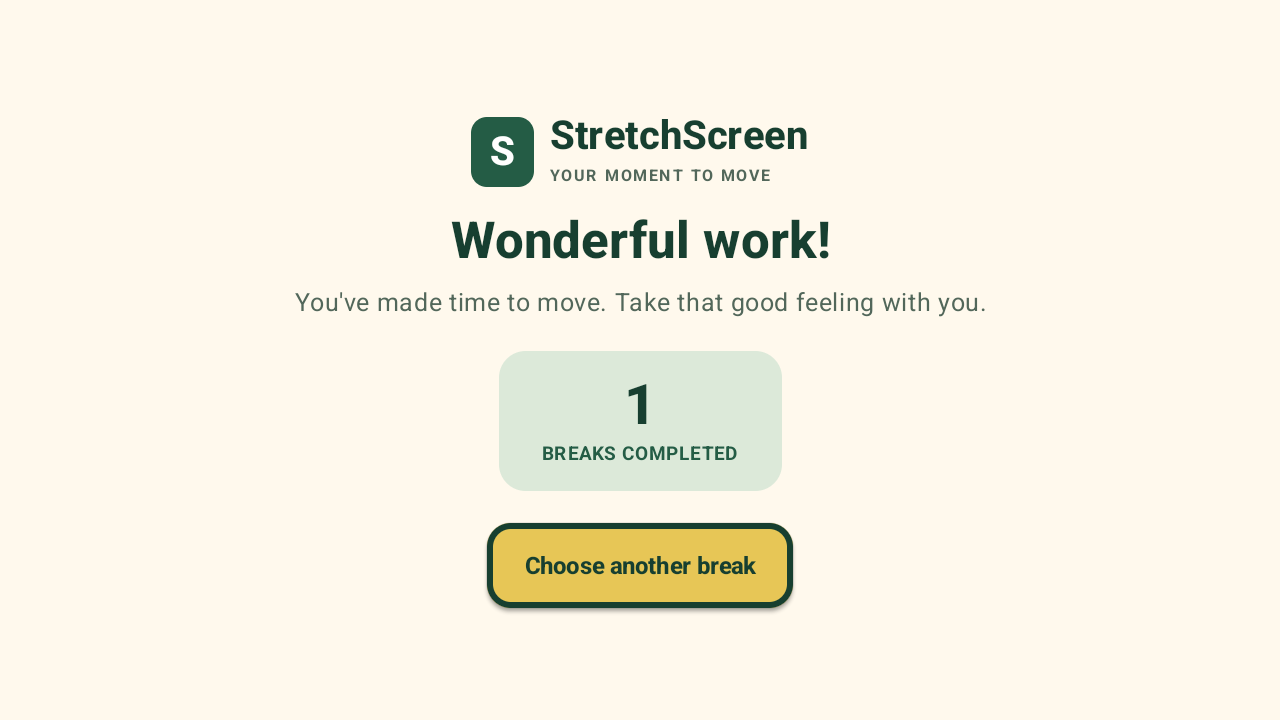
Session Completed — Celebrate finishing your movement break and get ready for the next one.
-
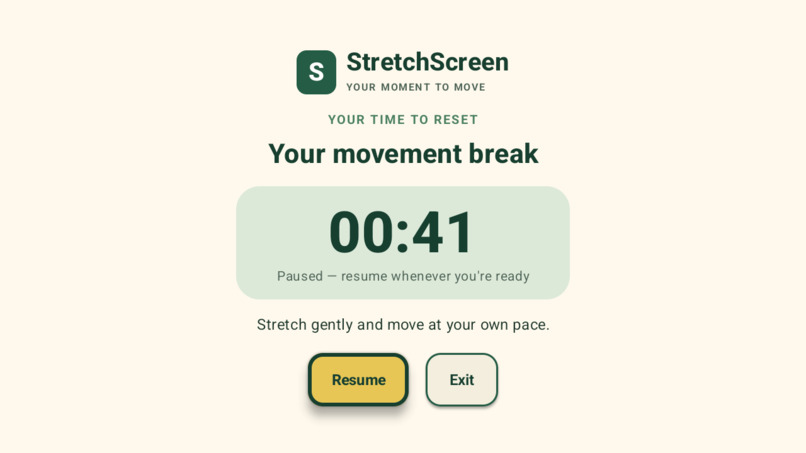
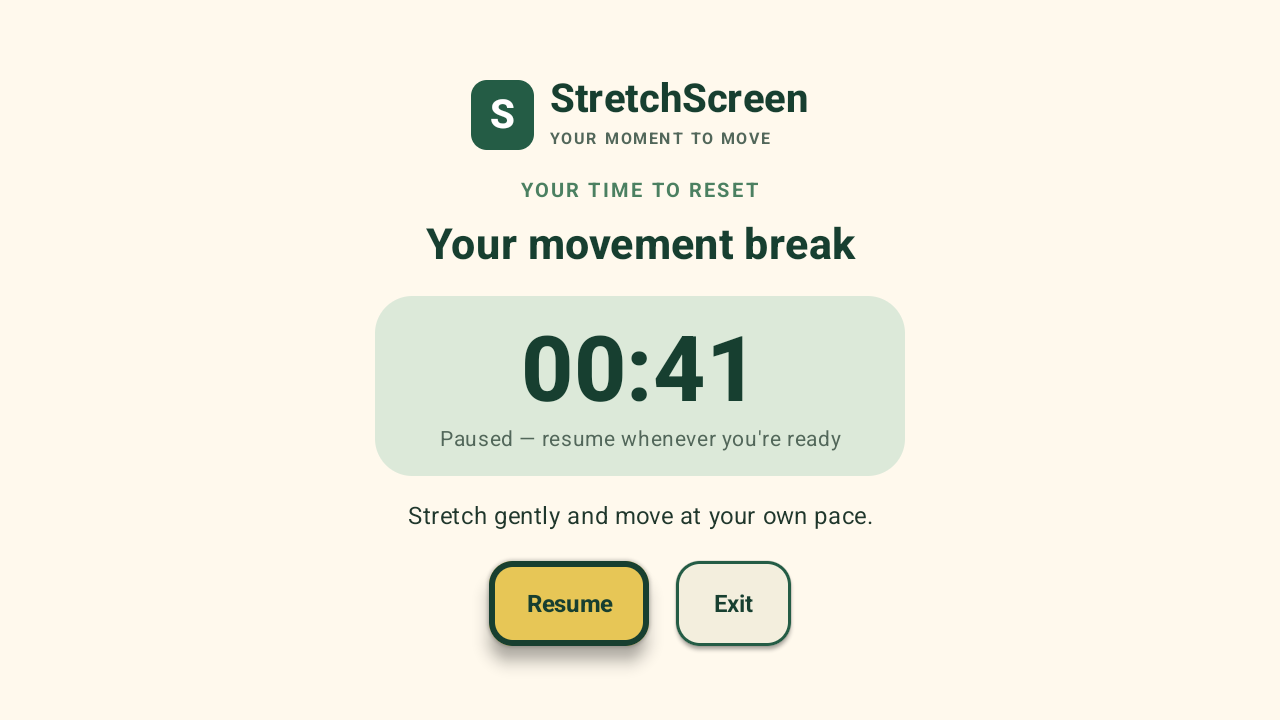
Pause and Resume — Pause a session whenever needed and resume when ready.
-
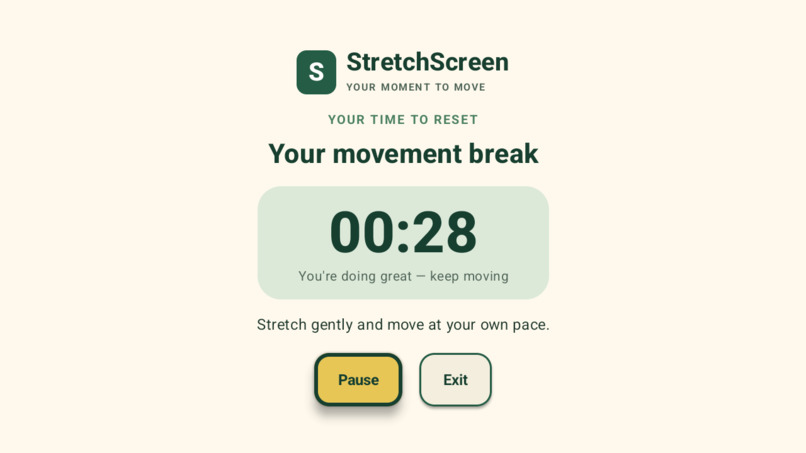
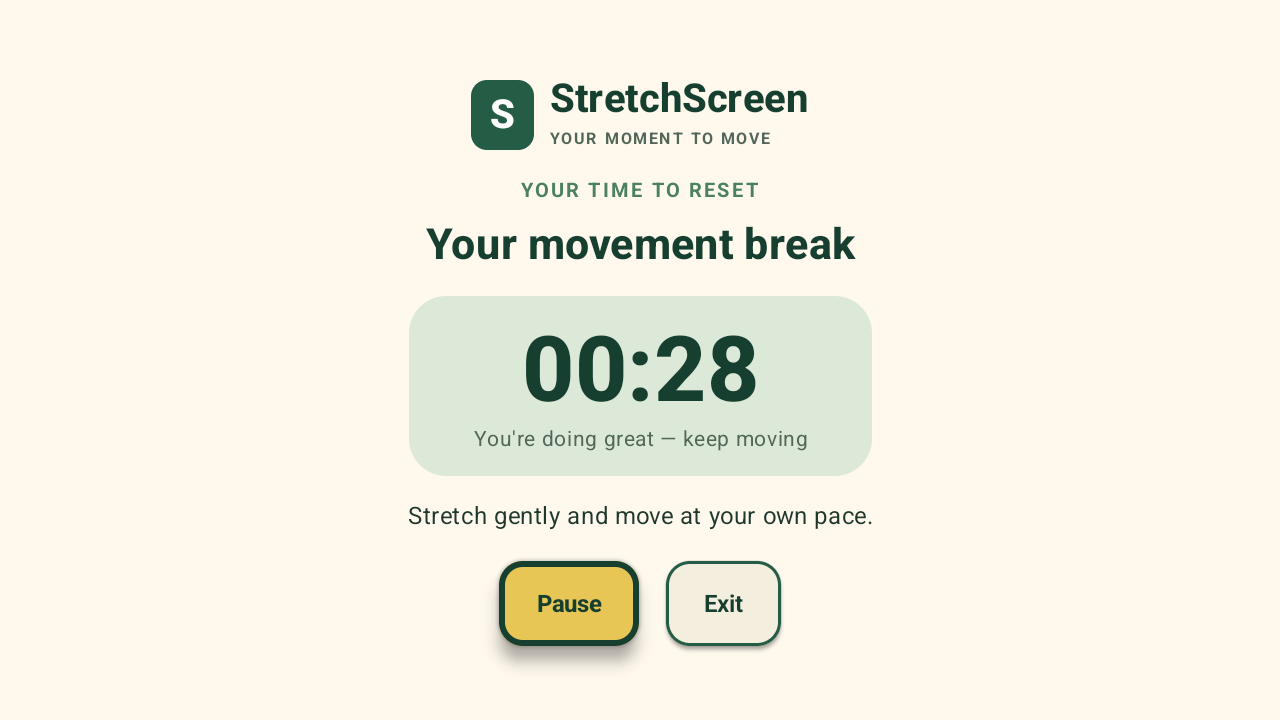
Active Session — Follow the countdown timer during a movement break.
-
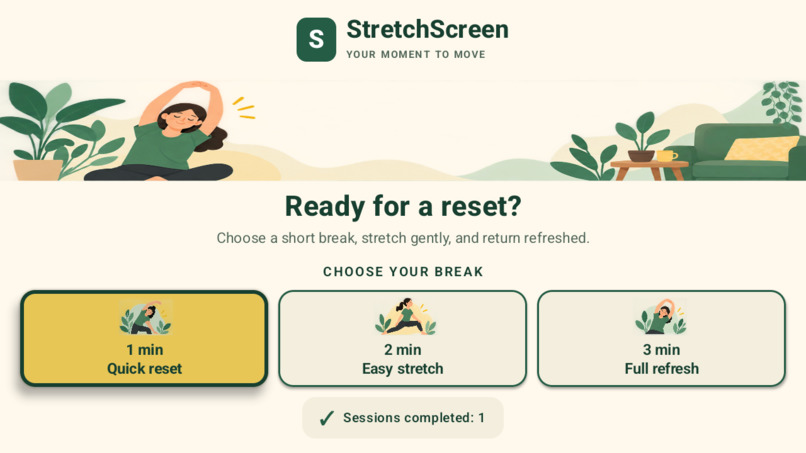
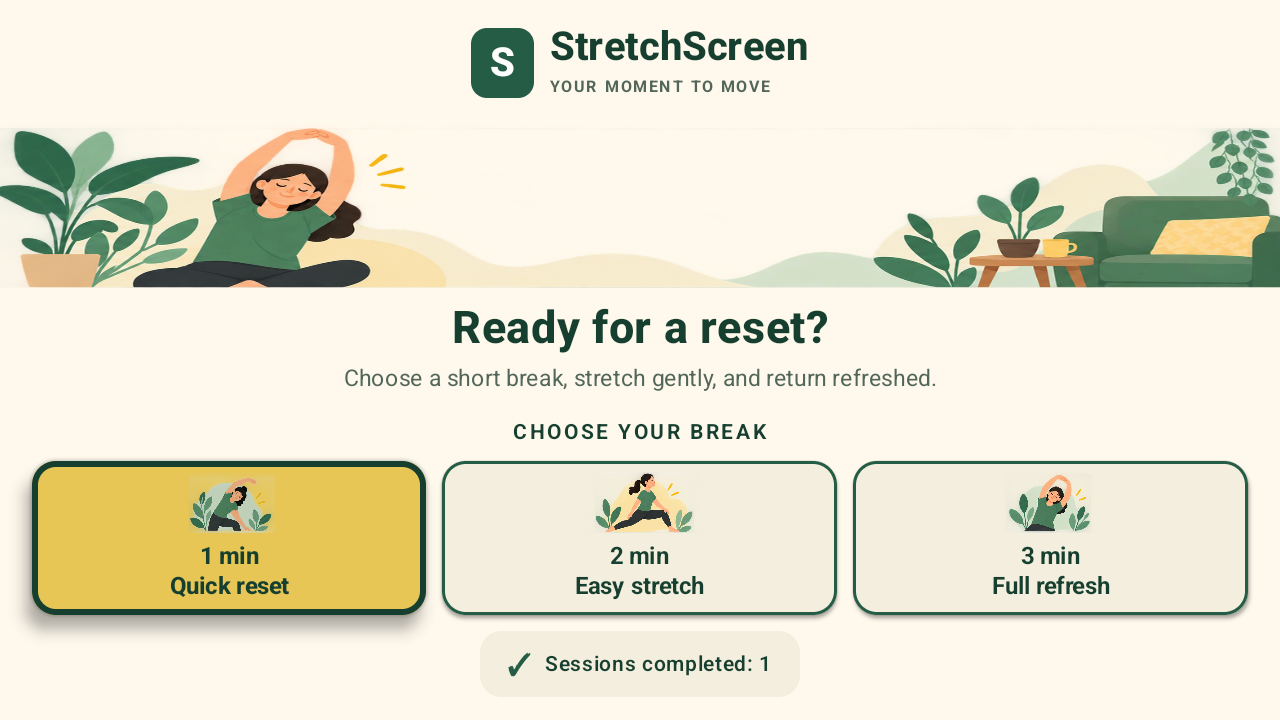
Home Screen — Choose from three short movement sessions designed for TV viewing.
StretchScreen — Little Breaks. A Healthier You.
Inspiration
Spending long periods sitting and looking at screens can make it easy to forget to move. We wanted to explore how a television could become more than a source of entertainment and instead encourage people to take short, refreshing movement breaks.
That idea inspired StretchScreen, a TV-friendly wellness app designed to make movement breaks simple, accessible, and easy to fit into a busy day.
What it does
StretchScreen offers three short movement sessions:
- 1-minute Quick Reset — a brief movement break.
- 2-minute Easy Stretch — a little more time to stretch.
- 3-minute Full Refresh — a longer break to get moving.
Users can select a session, follow the countdown timer, pause or resume when needed, exit a session, and see a completion screen when the session finishes.
The interface uses a calming green-and-cream colour palette, clear session cards, and large controls designed with TV navigation in mind.
How we built it
We built StretchScreen as an Android TV application using Kotlin and Jetpack Compose in Android Studio. We used an Android TV emulator to develop and test the experience without requiring a physical TV device.
The application includes session selection, timer controls, screen transitions, custom illustrations, and a wellness-inspired user interface. We also used Git and GitHub to maintain and share the source code.
Challenges we faced
One of our biggest challenges was getting the app to work reliably in the Android TV emulator. We encountered manifest configuration errors and emulator startup issues, which required troubleshooting and careful testing.
We also worked on making the controls easier to navigate using a keyboard or TV remote, with visible focus states and a layout suitable for a television screen.
These challenges helped us understand Android app configuration, debugging, emulator testing, and source-code version control.
What we learned
Building StretchScreen gave us practical experience in Android development, Kotlin, Jetpack Compose, UI design, and GitHub. It also taught us the importance of testing on the target form factor rather than designing only for a phone screen.
What's next
We want to continue improving StretchScreen's TV experience, refining its branding, and exploring ways to make short movement breaks a more engaging part of everyday screen time.
StretchScreen: Your screen. Your stretch. Your wellbeing.
Built With
- android-studio
- androidtv
- github
- gradle
- jetpackcompose
- kotlin


Log in or sign up for Devpost to join the conversation.