Inspiration
After watching friends struggle with cross-country moves—missed address changes, untrustworthy movers, chaotic packing—I knew there had to be a better way. As someone who’s moved across states twice, the stress of juggling endless tasks felt avoidable. I wanted to build a platform that centralizes every moving need, making it as intuitive as possible for renters and homeowners alike.
What it does
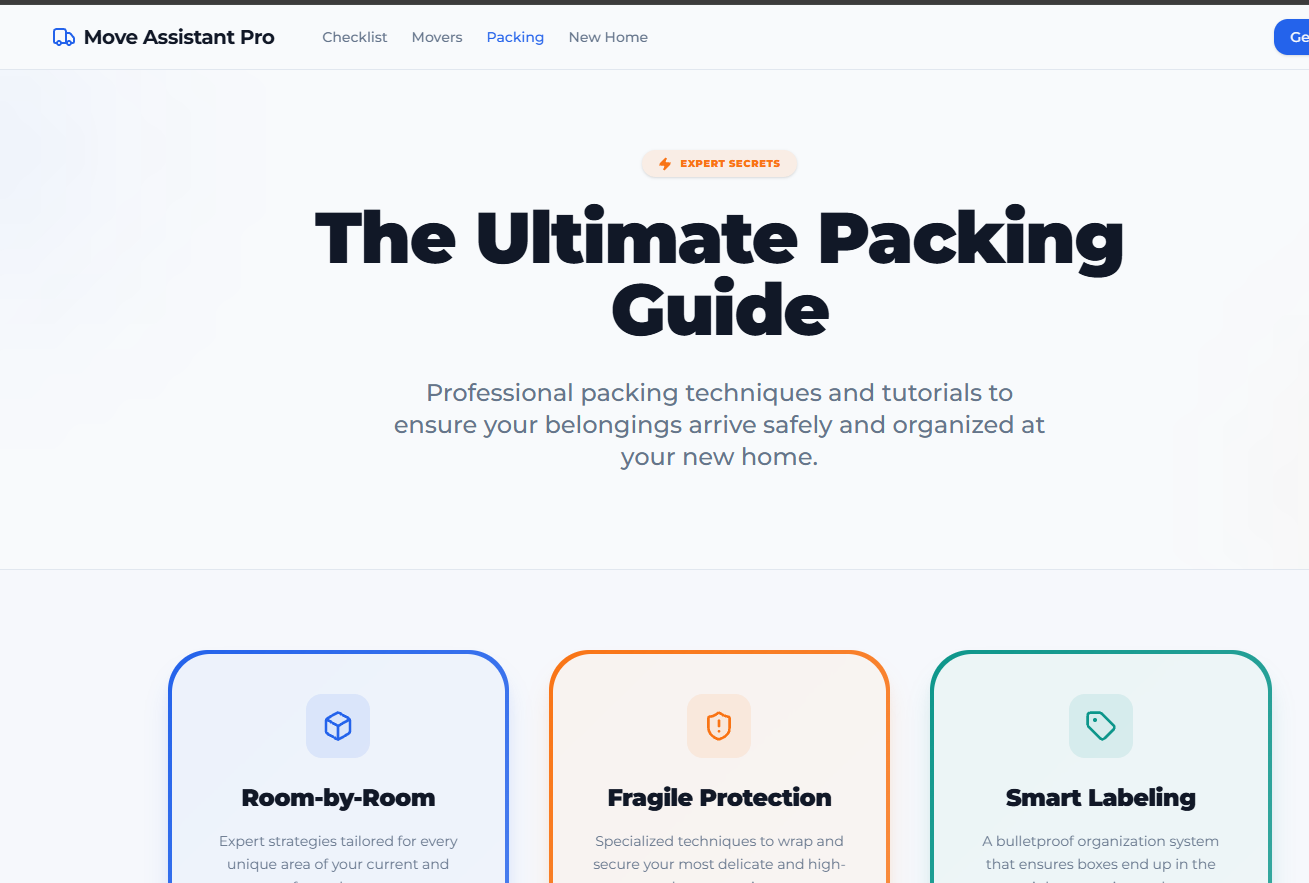
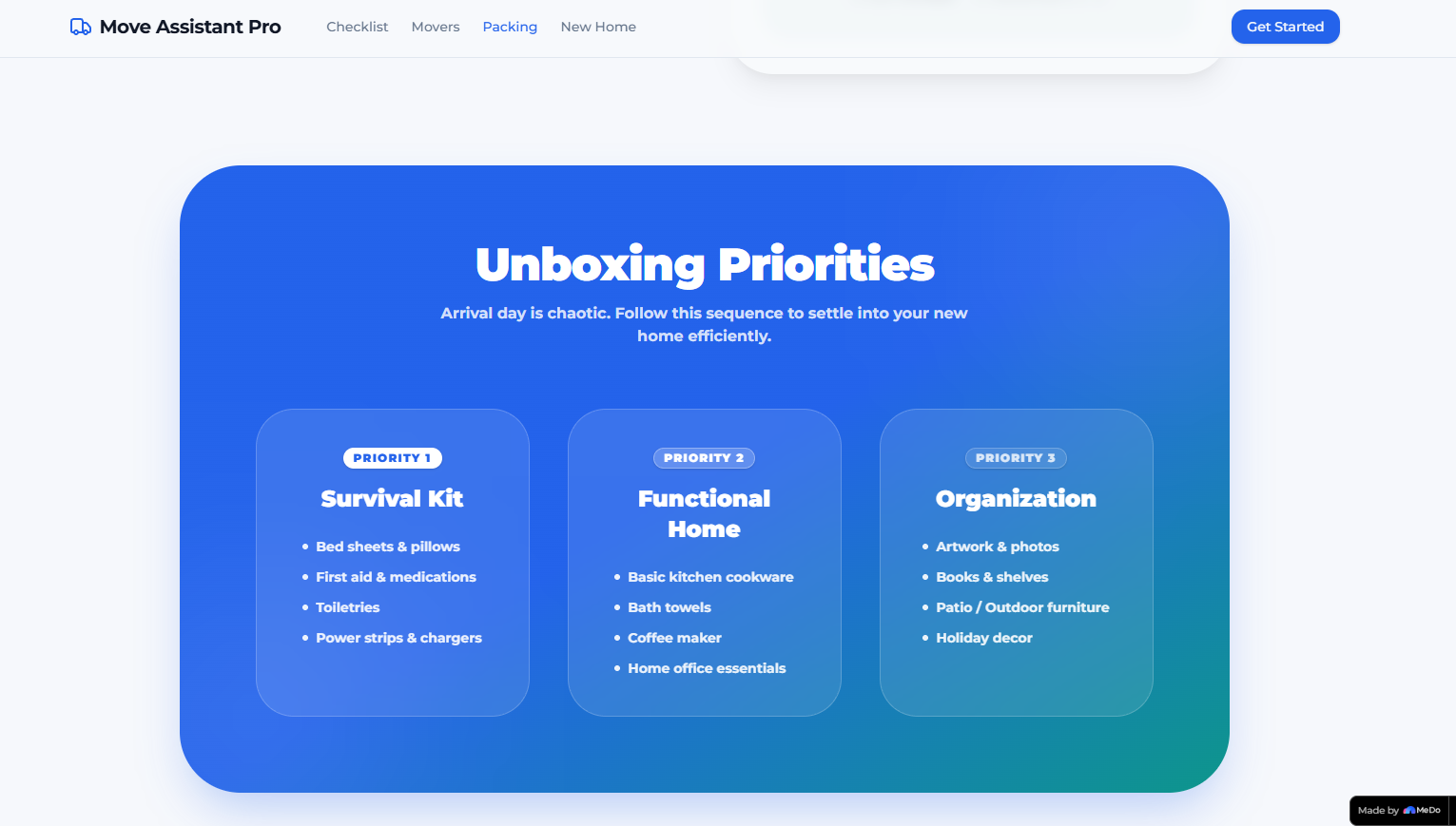
Move Assistant Pro is an all-in-one hub for residential movers. It creates personalized moving checklists with timeline tracking, lets users compare mover quotes and book services, offers room-by-room packing guides (including fragile item handling), and walks users through setting up utilities/internet at their new home—all with a sleek, intuitive interface.
How we built it
I started with wireframing core user flows in Figma, focusing on glassmorphism and smooth animations to keep the UI modern and calming. Using React and Tailwind CSS, I built responsive layouts (desktop/mobile) with Framer Motion for scroll-triggered animations. I structured the platform into modular sections (Checklist, Movers, Packing, New Home) to keep navigation intuitive, and prioritized locale-aware date/address formatting for US/EU users.
Challenges we ran into
The biggest hurdle was balancing animation smoothness with performance—too many animations caused layout shifts on mobile. I also struggled to design a countdown timeline that dynamically adjusts task due dates relative to the move date, requiring careful logic to avoid off-by-one errors. Mobile glassmorphism styling (backdrop-filter) also had cross-browser compatibility issues that needed targeted fixes.
Accomplishments that we're proud of
We created a fully responsive UI that feels cohesive across devices, with animations that enhance (not distract from) the user experience. The packing progress tracker—with confetti animations at 100% completion—adds joy to a stressful process, and the mover comparison grid makes price/review comparison effortless for users on tight budgets.
What we learned
I deepened my understanding of scroll-triggered animations and responsive glassmorphism design, and learned to prioritize user-centric logic (like locale formatting) early in the build. Most importantly, I realized how small, intentional design choices (e.g., color-coded task statuses) make complex workflows feel manageable for users under stress.
What's next for this project
Next, I plan to add integration with local utility providers to auto-populate setup steps, expand the mover comparison tool to include user-submitted reviews, and add a furniture inventory feature with photo uploads. I also want to refine the EU locale support to match regional moving norms (e.g., different address change requirements).
Built With
- css
- html
- javascript
- react
- tailwind-css

Log in or sign up for Devpost to join the conversation.