Problem
Racing teams struggle to balance tire longevity with performance, as pit timing decisions depend on complex, interacting factors like tire age, track temperature, and environmental conditions.
Methodology
Leveraging multi-event Toyota telemetry datasets, this project uses Advanced Analytical modeling to estimate tire failure risk and quantify environmental and mechanical impacts on lap performance. Interactive visualizations are used to interpret and communicate these insights effectively.
What it does / Results
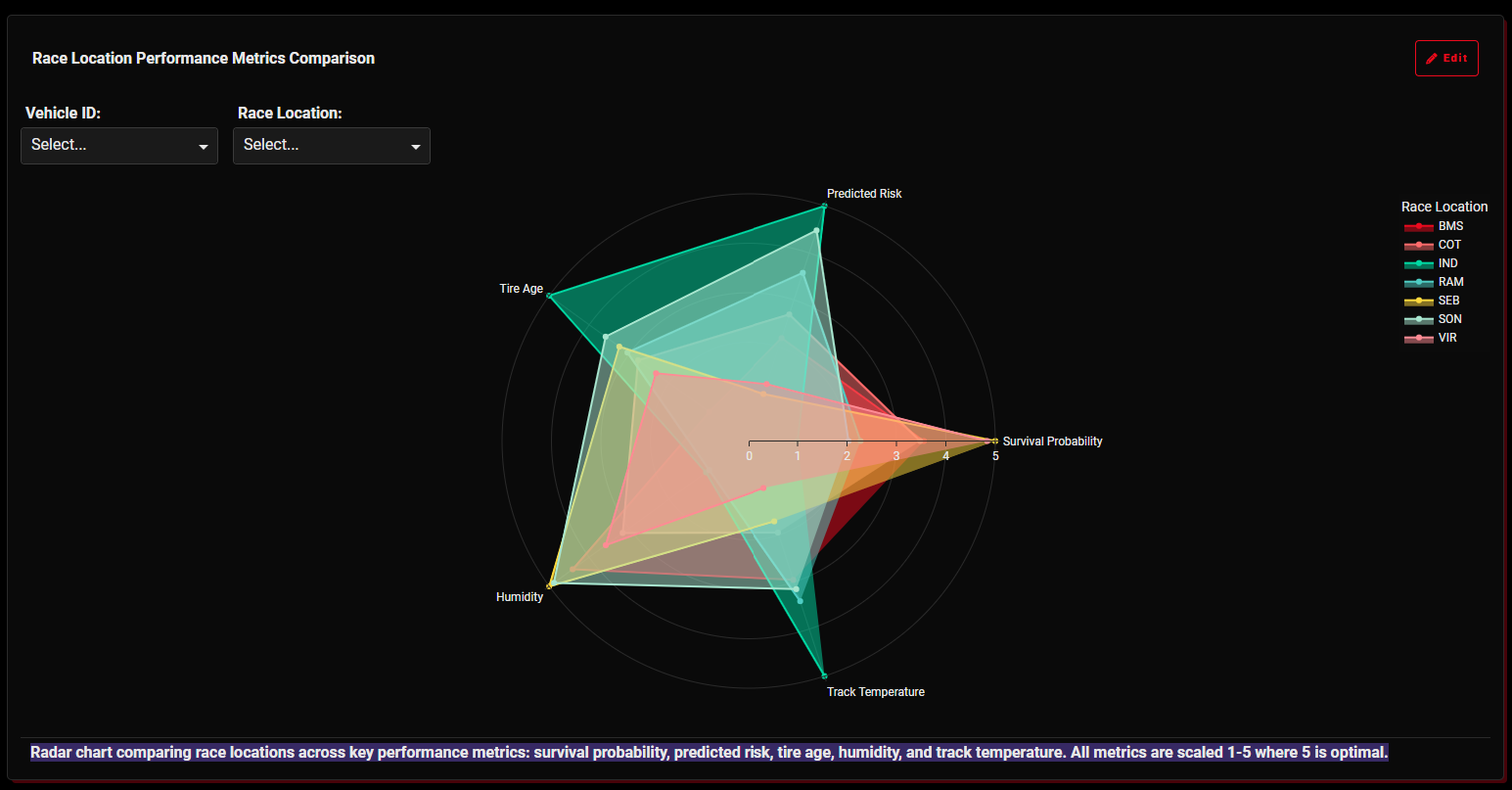
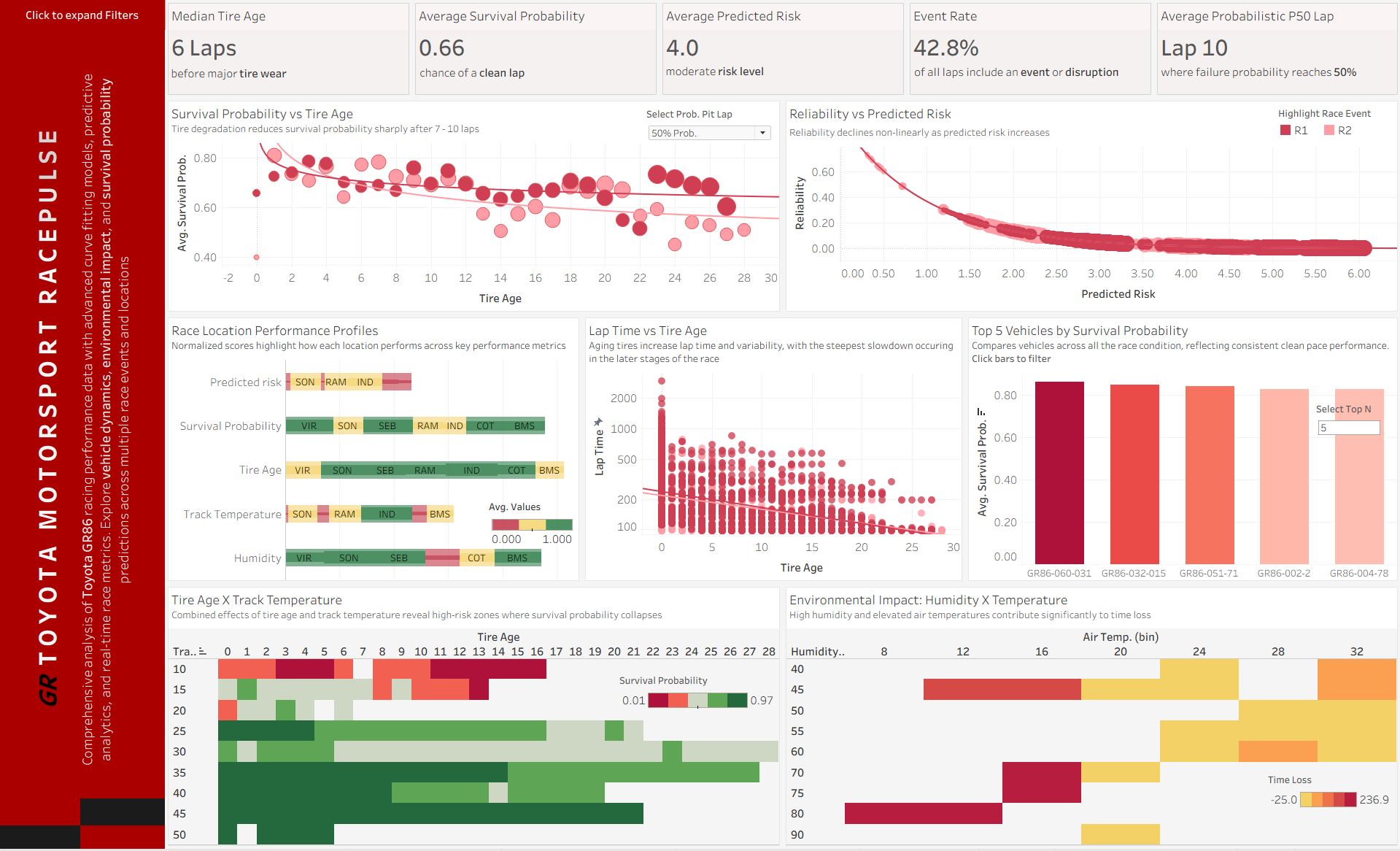
The resulting RacePulse dashboard provides a data-driven insights for pit strategy optimization, offering indicators of tire reliability, risk thresholds, and environmental sensitivities. This enables racing engineers and drivers to make faster, evidence-based pit decisions, reducing time loss and enhancing race outcomes.
| Visualization | Insight Provided |
|---|---|
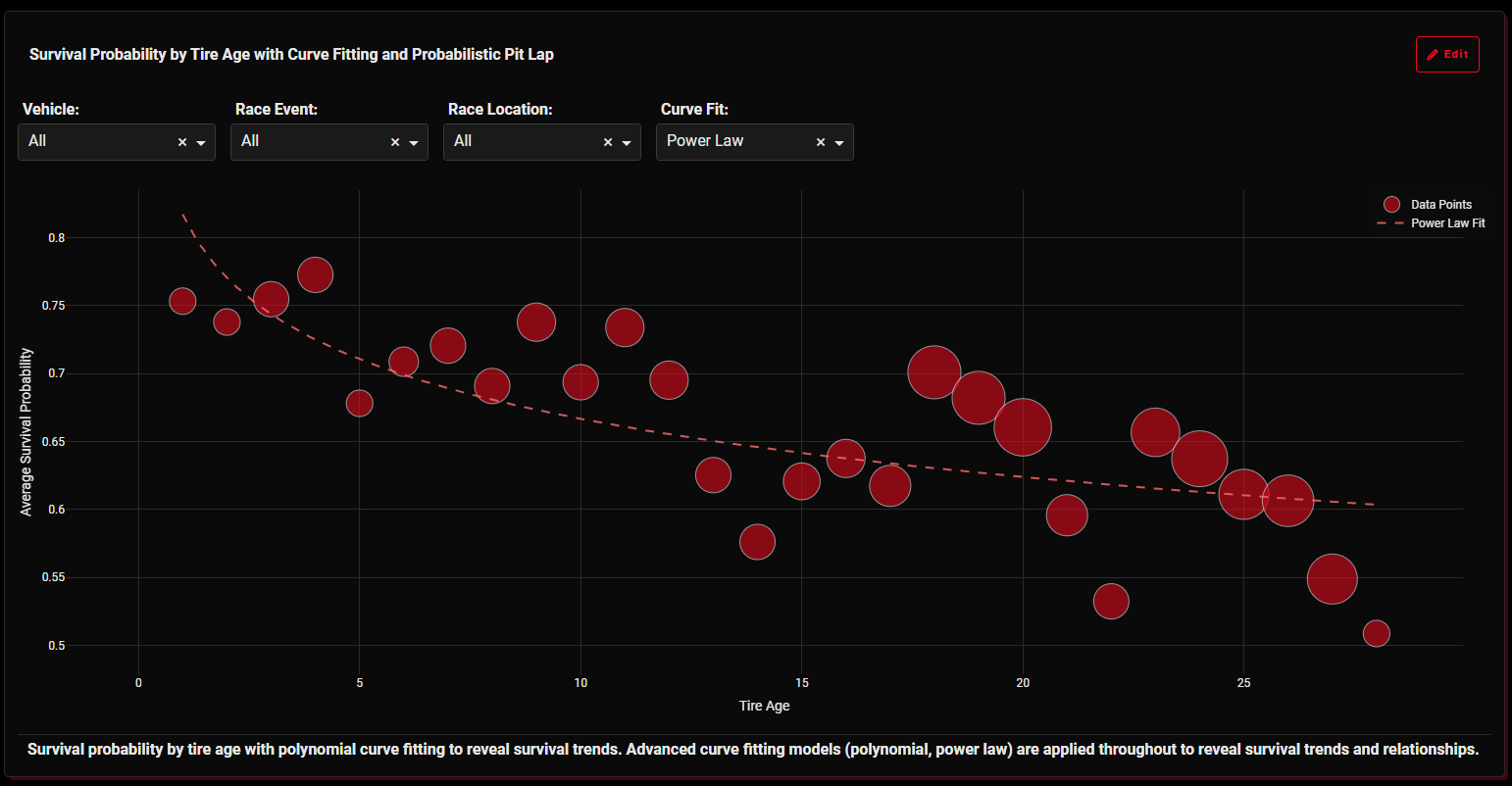
| 1. Survival Probability by Tire Age with Curve Fitting and Probabilistic Pit Lap | Identifies optimal pit stop windows (e.g., 50% survival threshold), enabling proactive pit decisions before performance drops. |
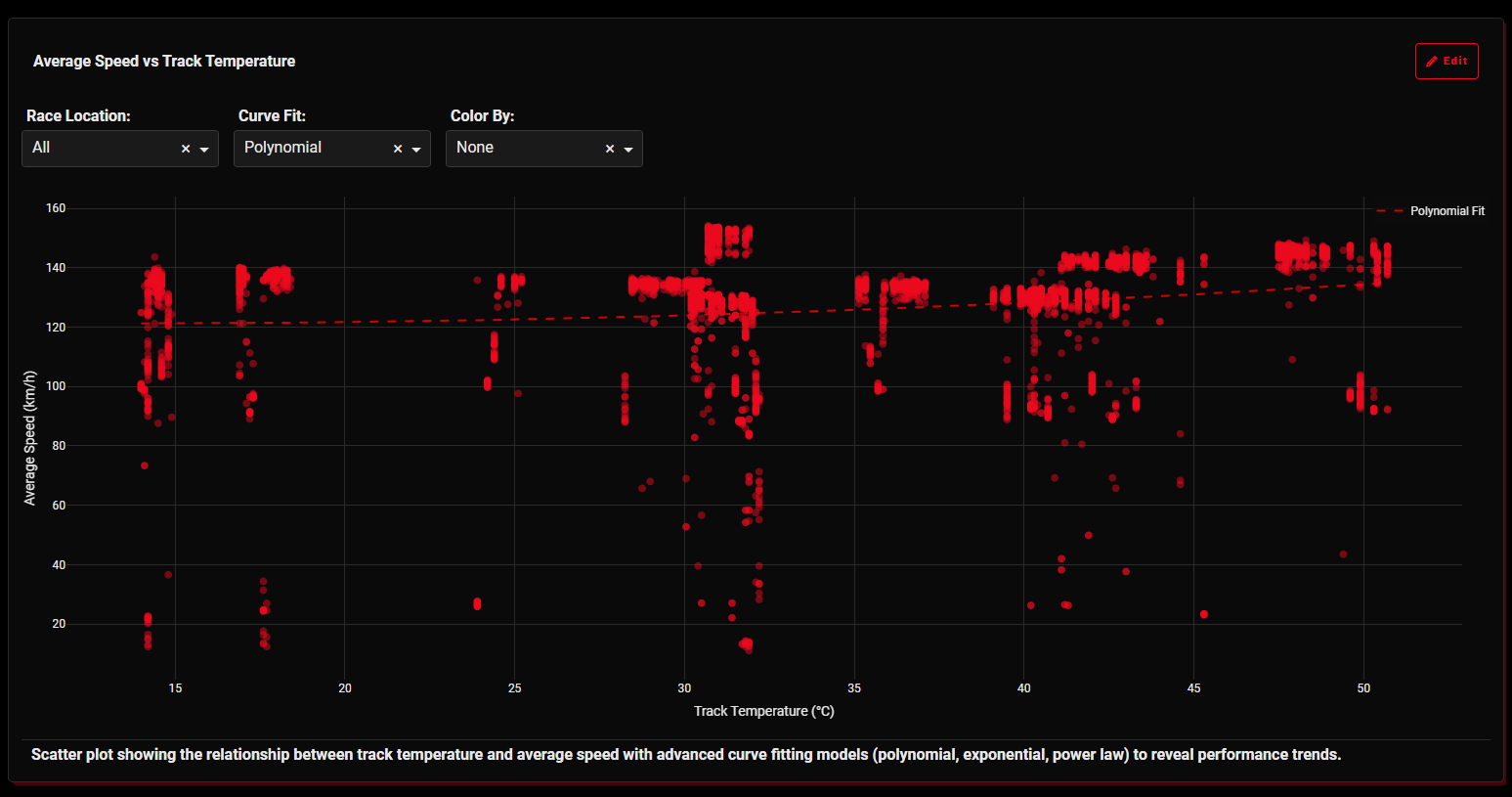
| 2. Average Speed vs Track Temperature | Shows how higher track temperatures correlate with reduced vehicle speed, informing tire and cooling strategies. |
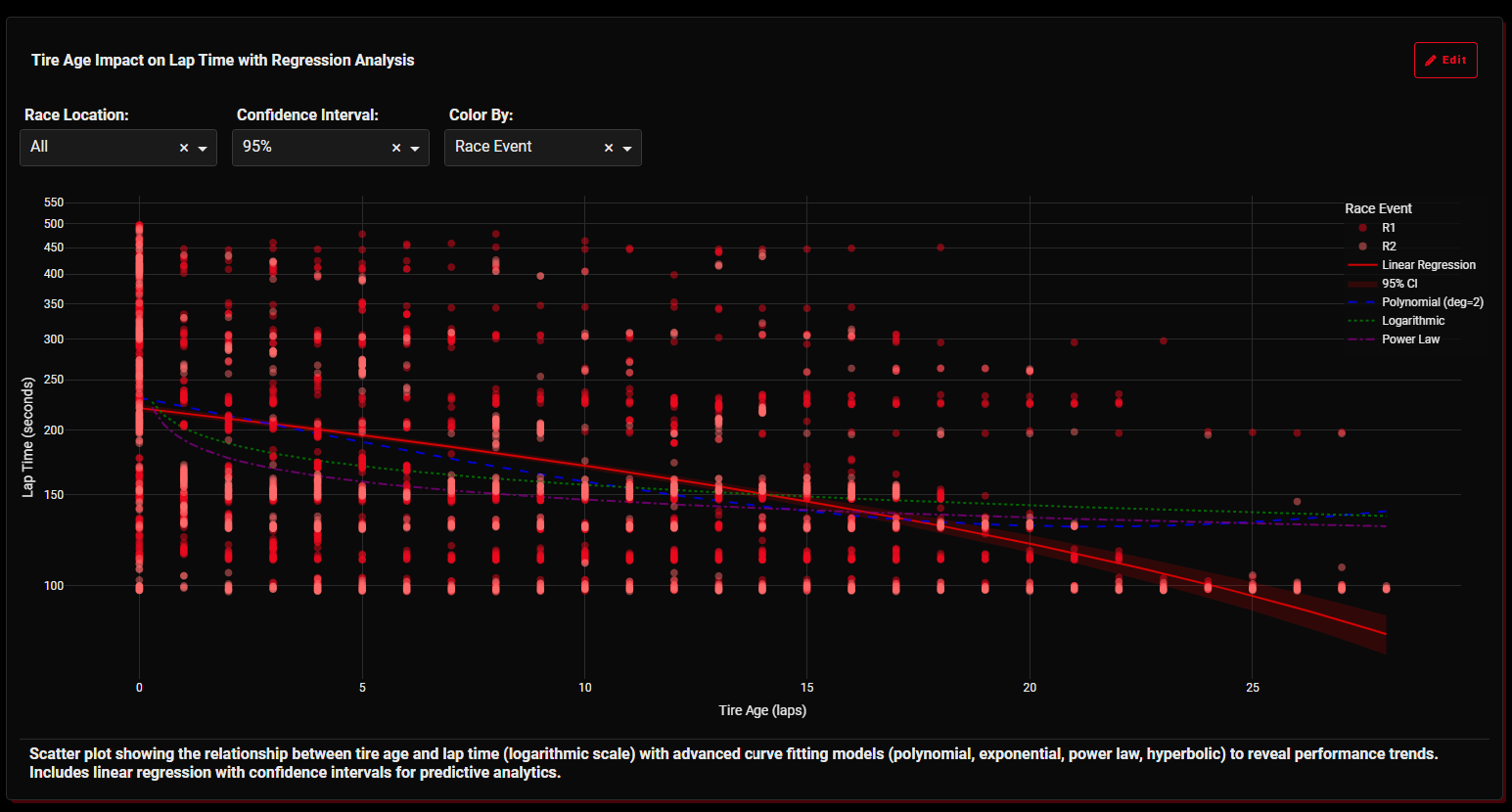
| 3. Tire Age Impact on Lap Time (Regression Analysis) | Quantifies performance loss per additional lap on aging tires. Supports driver training and tire management. |
| 4. Survival Probability Distribution by Vehicle | Highlights inter-vehicle variation in tire endurance, which is useful for comparative performance tuning. |
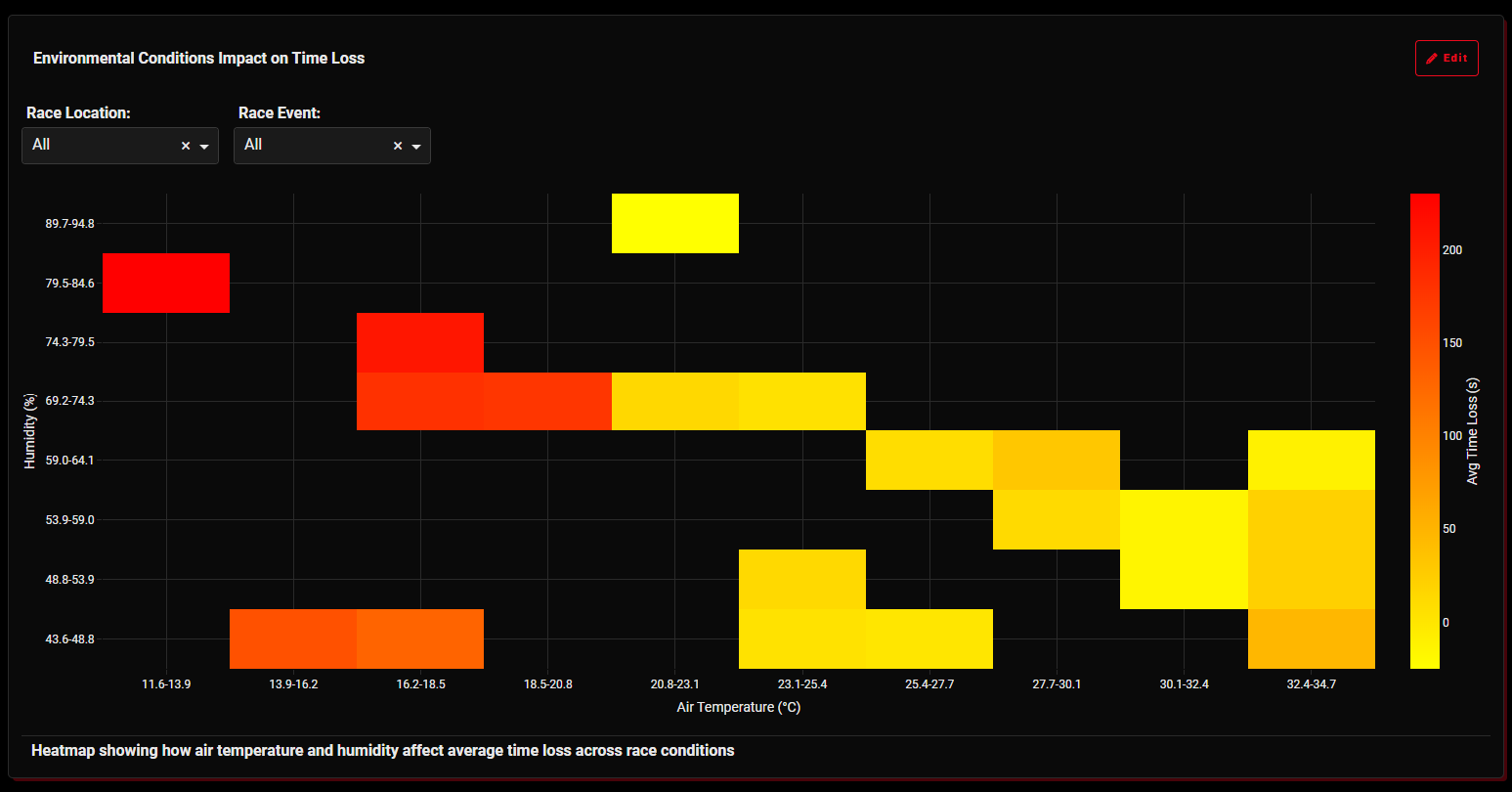
| 5. Environmental Conditions (Humidity & Air Temp) vs Time Loss | Demonstrates how ambient conditions amplify degradation, enabling adaptive race strategies. |
| 6. Predicted Risk vs Reliability Analysis | Translates model output into interpretable risk metrics, supporting real-time decision-making. |
| 7. Track Temperature vs Tire Age Survival Probability Heatmap | Visualizes where degradation risk intensifies, helping engineers predict failure zones under given thermal conditions. |
What's next for Motor Sport Race Pulse
With more time, the solution could be extended to use optimization algorithms to improve pit stop lap choice by identifying the ideal lap that minimizes the total lap time while adhering to risk, tire survival thresholds and environmental constraints


Log in or sign up for Devpost to join the conversation.