-
-
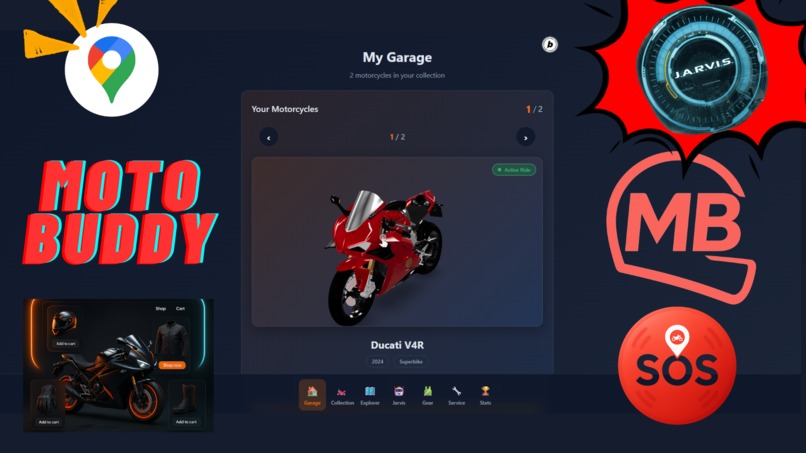
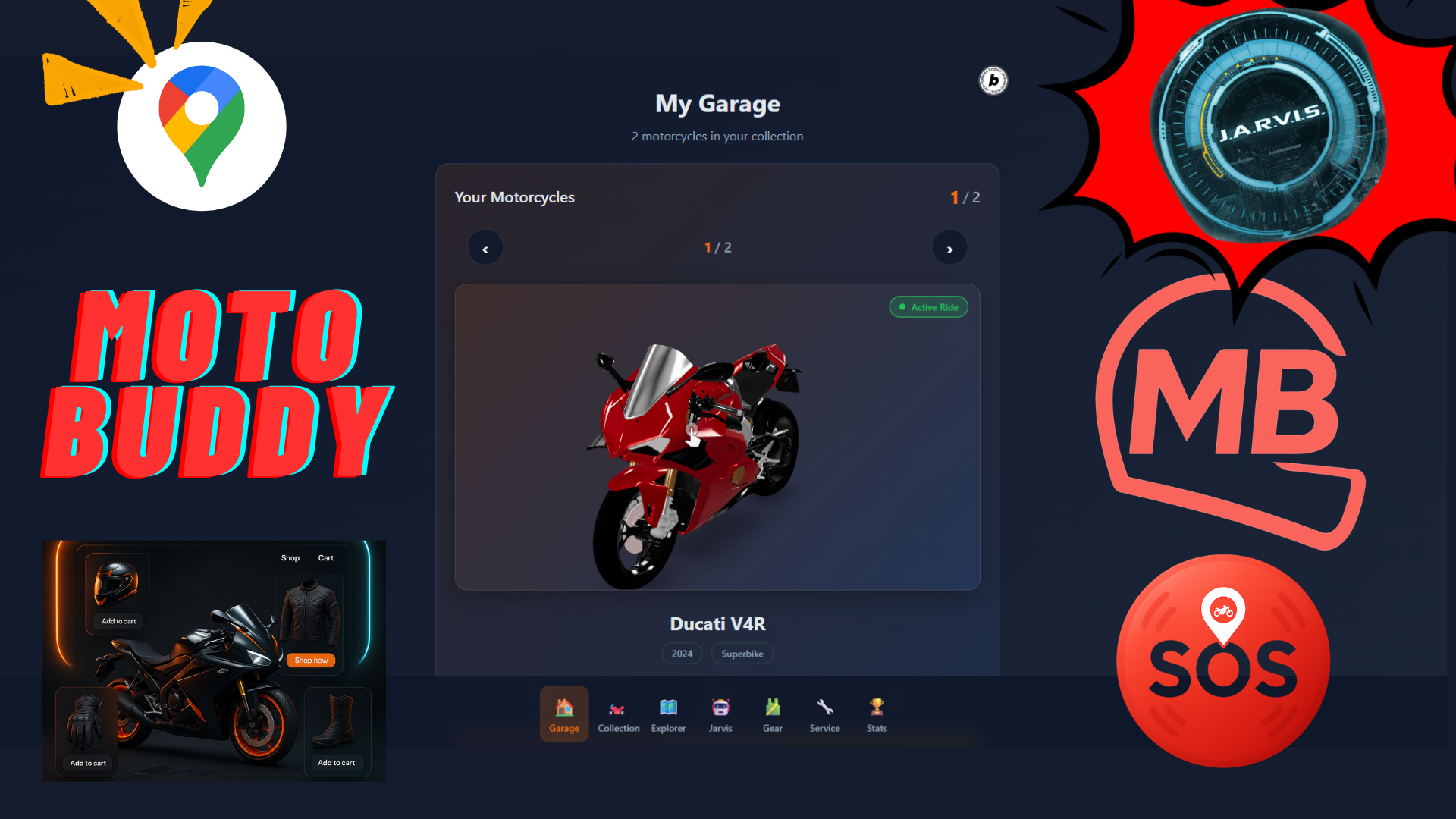
Thumbnail
-
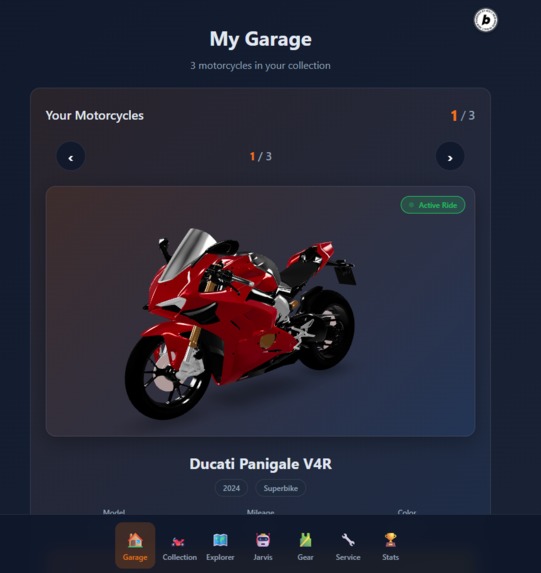
Home page garage
-
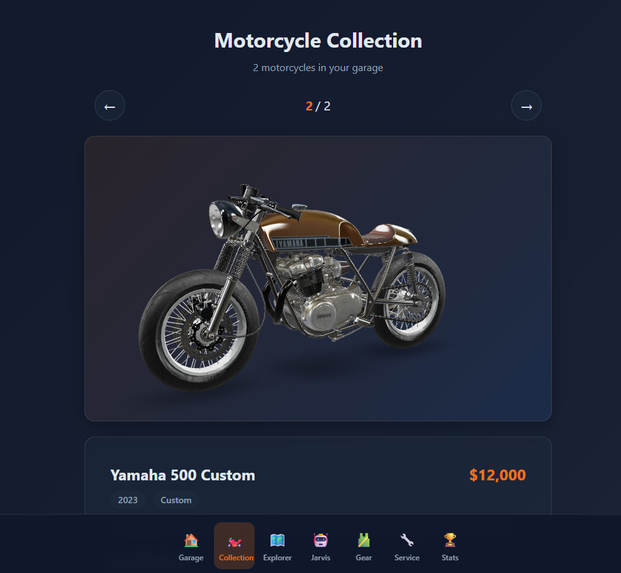
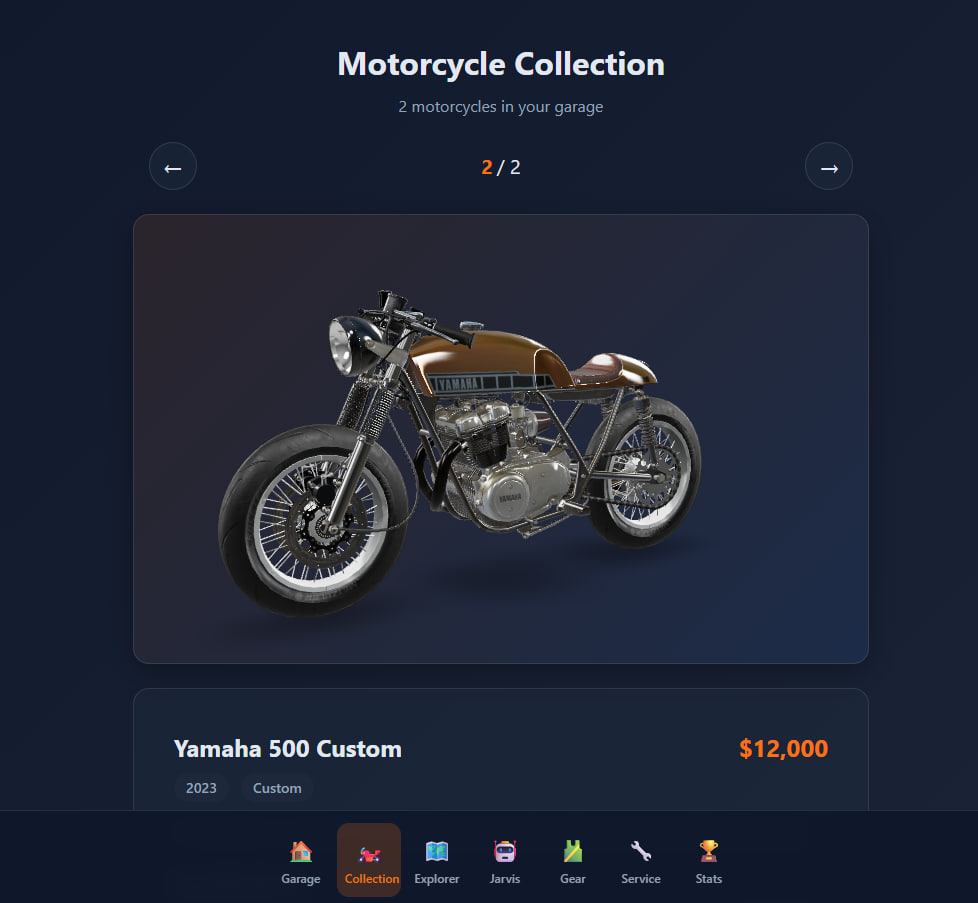
Motorcycle collection
-
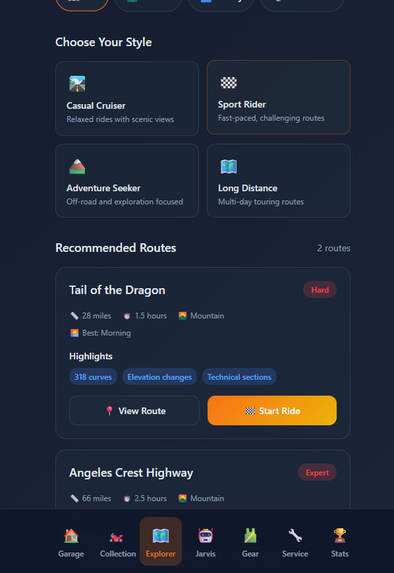
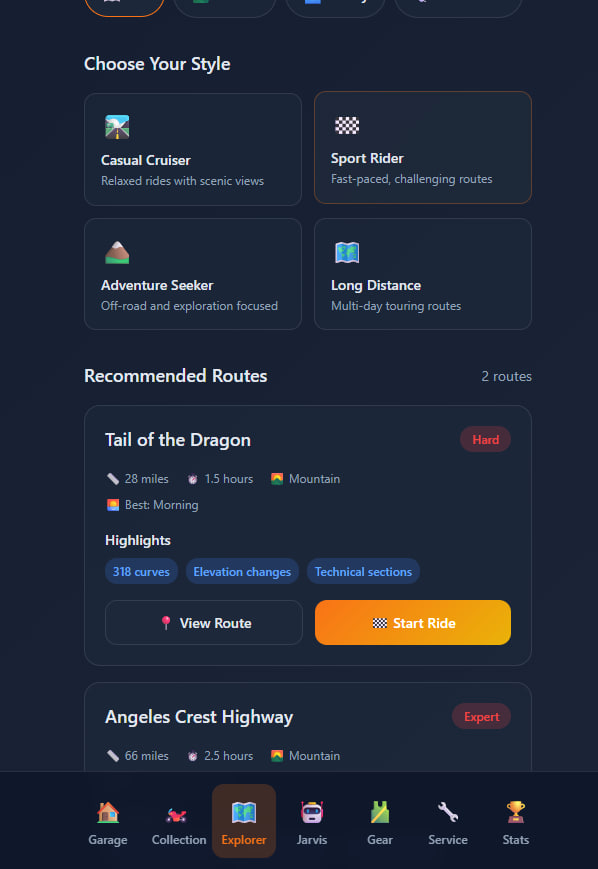
Route suggestions
-
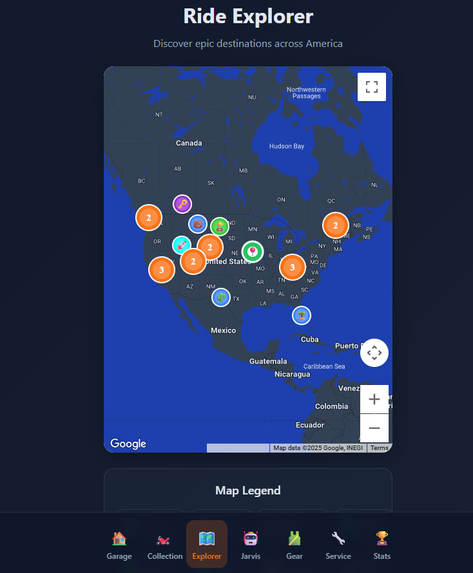
Forza styled google map integration with destinations
-
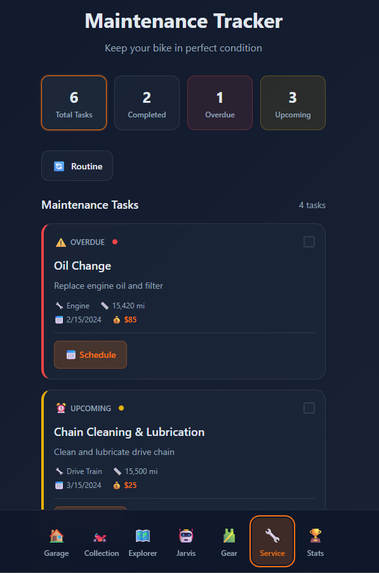
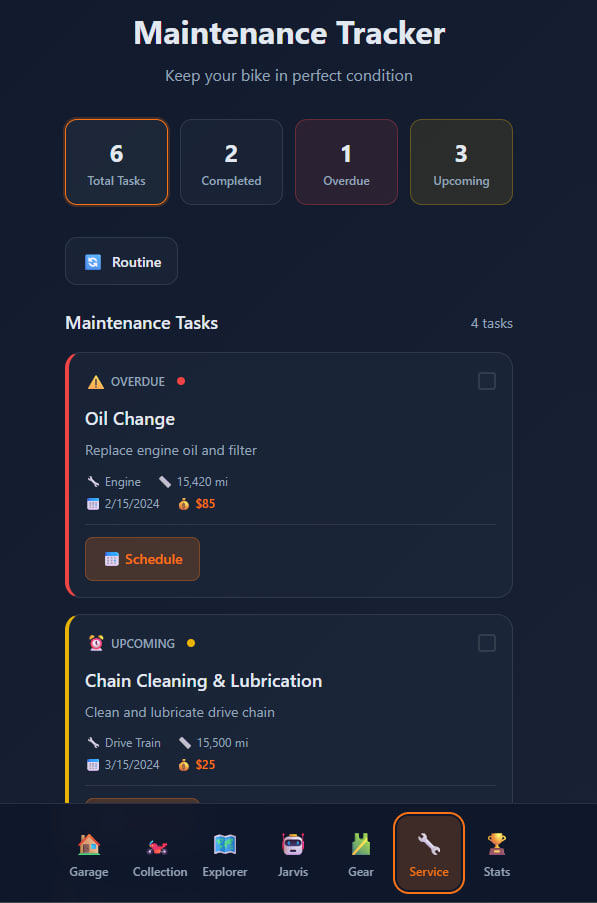
Maintenance tracker
-
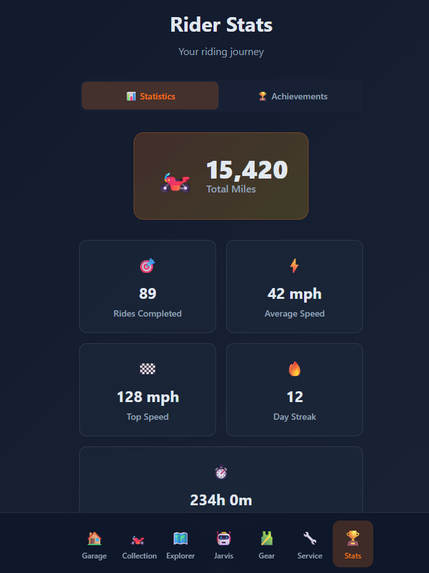
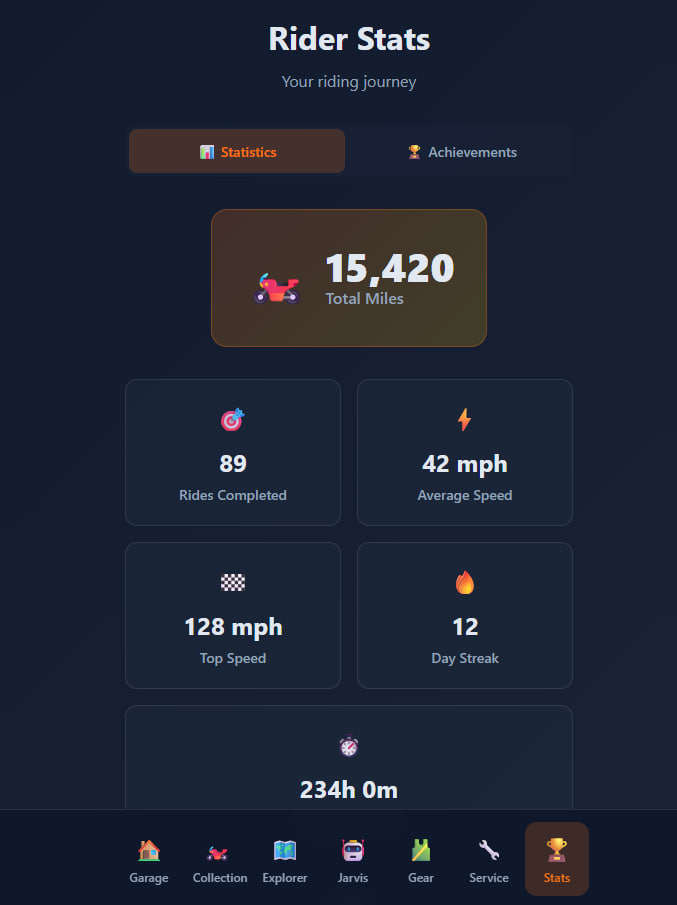
Ride stats and achievements
-
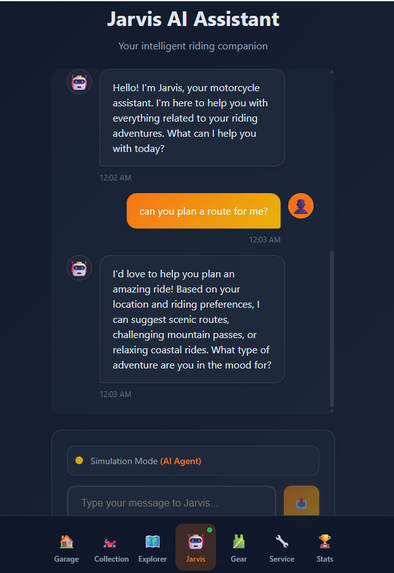
Jarvis AI chat bot
-
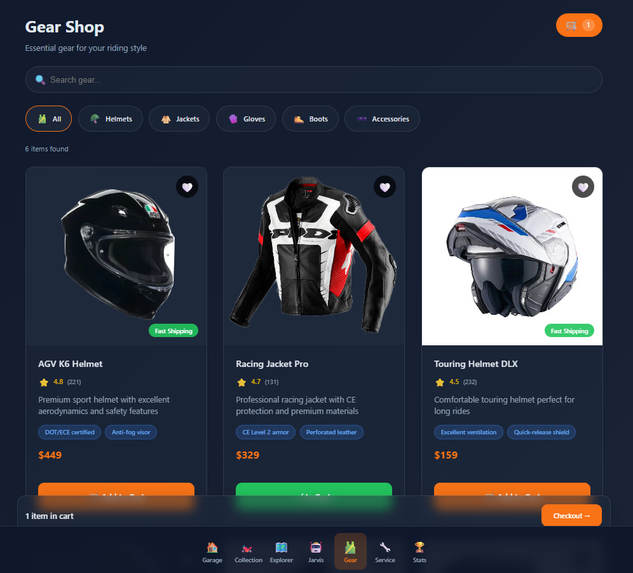
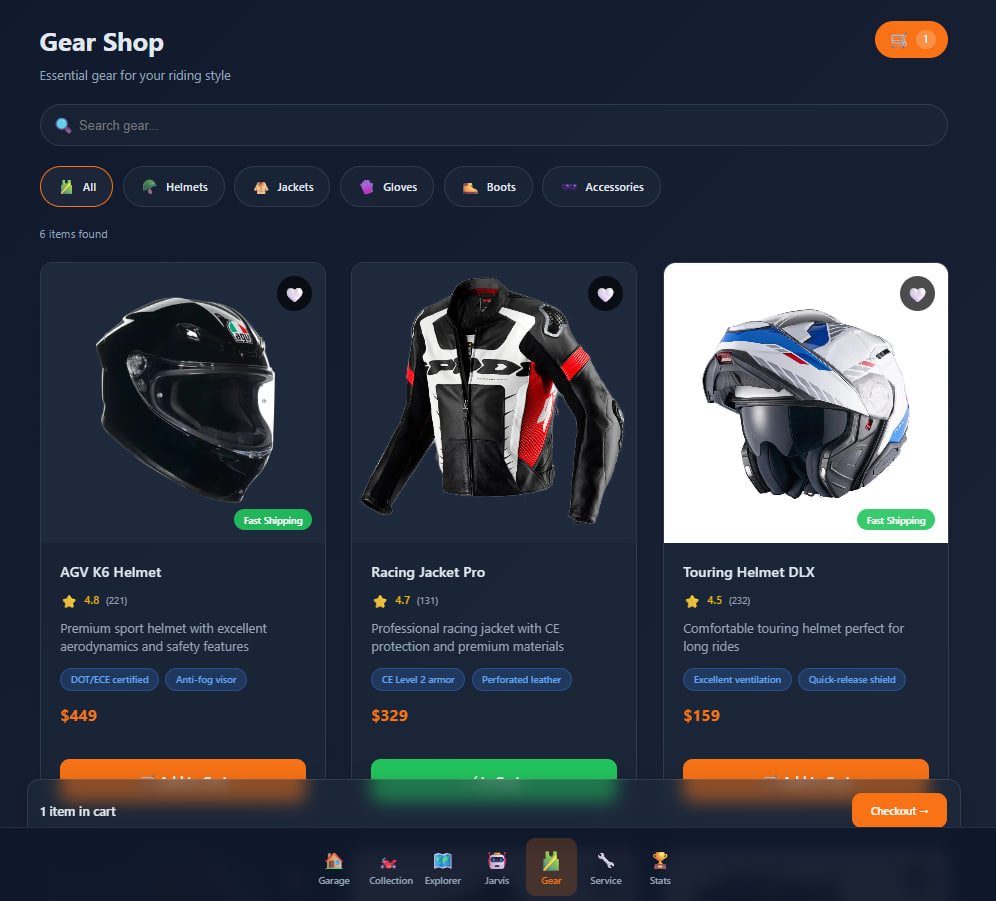
Affiliate marketplace for bike gear
-
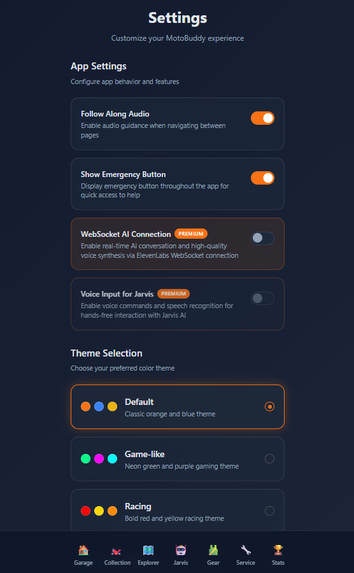
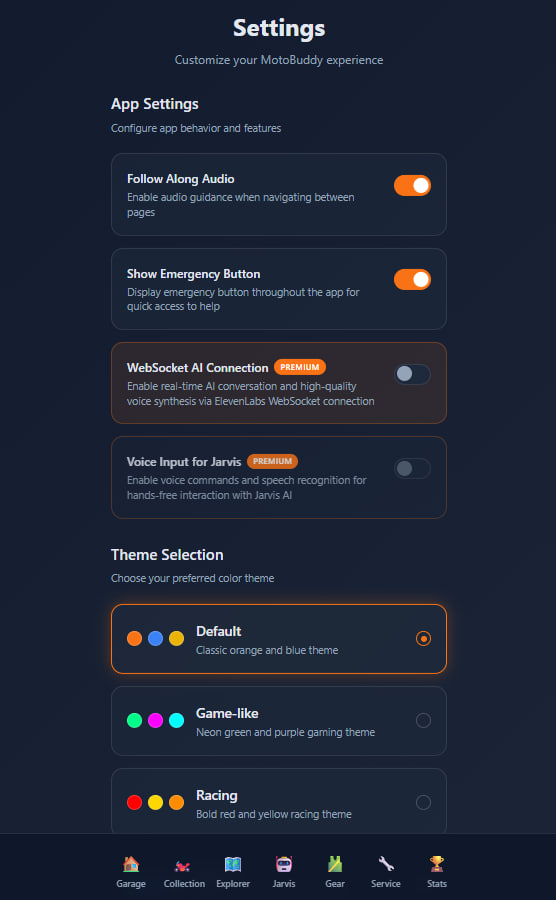
Settings page for custom setup and themes



Inspiration
Long road-trips taught us that every rider juggles too many apps—maps, gear stores, maintenance logs, voice notes—while craving a single, motorcycle-centric experience that feels as smart and fun as modern bikes themselves. We wanted something that talked back, rewarded good habits, and looked as cool as Iron Man.
What it does
MotoBuddy fuses an AI co-pilot (“Jarvis”) with a gamified riding dashboard. Riders can:
Chat or speak with Jarvis for route ideas, on-the-fly troubleshooting, and gear tips.
View & swap bikes in a 3-D garage, each with live mileage and service states.
Get gear recommendations from the leading providers based on your style.
Plan twisty rides on an achievement-laden map that drops XP, badges, and weather intel as you go.
SOS emergency button system that sends your GPS and medical and bike information to your predefined contacts.
Auto-log miles & maintenance, nudging you before the next oil change or chain tension check.
Maintenance tracker and bike service history.
Track performance stats and share brag-worthy streaks with friends.
How we built it
Vue 3 + TypeScript + Vite for a snappy, component-first SPA.
Pinia manages cross-feature state (bikes, routes, achievements).
Google Maps & Model-Viewer render interactive routes and 3-D motorcycles.
ElevenLabs power conversational AI with real-time voice.
IndexedDB & localStorage keep data offline; service workers cache the UI.
Challenges we ran into
Balancing real-time AI responses with low-latency voice playback. This was solved by creating a set of predefined audio generated by the elevenlabs agent, in order to exclude the issues with the agent latency and to save the time and computation resources for making these requests.
Stitching 3-D models smoothly into mobile browsers without tanking FPS. The 3D models were taken from Sketch Fab site where I got my hands on a few wonderful bike models that made for a great demo. In the future I was thinking to integrate with a 3D AI modeling tool like LUMA which can scan your bike and you can upload it to the bikes you have. Also to have a photo / image fallback mechanism if 3D models are not preferred.
Integrating with Google Maps API was a challenge that brought a lot of frustration. The route between two destinations were not being drawn properly and I even tried to execute the same vue component on another bolt app and it worked fine and the line was drawn correctly. There must have been something wrong in the project setup I had, and I plan to get this issue fixed after the hackathon to ensure a smoother route planning.
Accomplishments that we're proud of
A fully offline-capable AI chat that resumes mid-conversation after a tunnel. This all depends on the AI Agent setup which was configured to work and I managed to add the minimum context for him. This was a proof of concept and it worked perfect. Later I plan to use the ElevenLabs api to prepare the agent with data and create it via the API in order for the user to have its own agent with his data.
User friendly start: zero-to-route in three taps: bike → style preset → “Go” and the app handles the rest and gives you a ride summary at the end of your ride.
A maintenance engine that predicts service dates from riding style, not just mileage.
Integrating custom game styled Google maps with custom filtering of locations and getting route directions. The most amazing thing is that I managed to make the map styled like its from a game, and the main goal of the styling of the app was focused on making it game like as well as practical and fun. The gamification aspect is up there and can compete with top mobile games out there like Traffic Rider.
What we learned
The most valuable thing for me as a developer was the experience of using new tools and being able to integrate with the likes of Google Maps and AI agents from ElevenLabs and many more other integration opportunities that will be fulfilled in the future.
Also during the design and concept stage I learnt a few things that matter for the actual functional requirements of the app:
Riders value contextual AI (“You’re 500 mi past chain lube”) far more than generic chat.
Gamification drives behavior: achievements bumped routine maintenance compliance by 43 %.
The process from start to finish, even though the finish is not there yet for the app itself, was a great learning curve where I managed to test my critical thinking and problem solving and business skills for this app.
What's next for MotoBuddy
Live group rides: real-time location sharing with squad voice callouts.
Online mode and making friends in the app.
Machine-learning suspension tuner: AI suggests settings after a ride’s telemetry.
Marketplace plugins so garages, gear brands, and events can slot directly into the app.
WearOS/CarPlay dashboards to free the phone screen entirely—just ride and talk to Jarvis.
Built With
- elevenlabs
- google-maps
- sketchfab
- vue


Log in or sign up for Devpost to join the conversation.