-
-
Landing Page
-
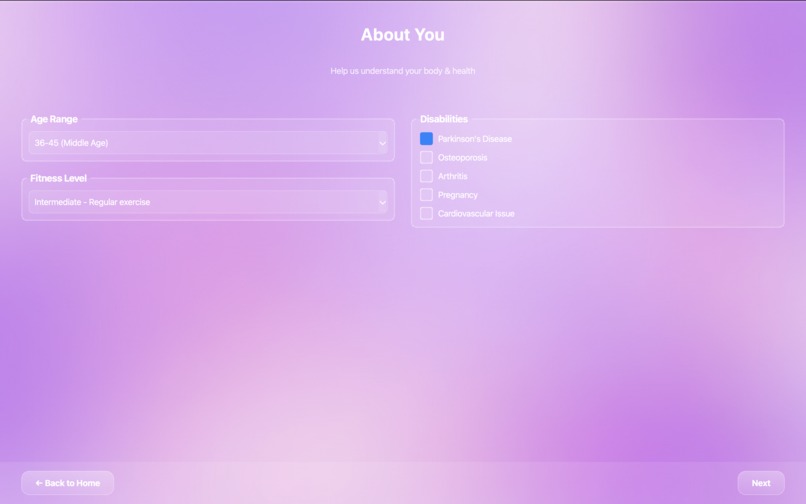
About You Details Page
-
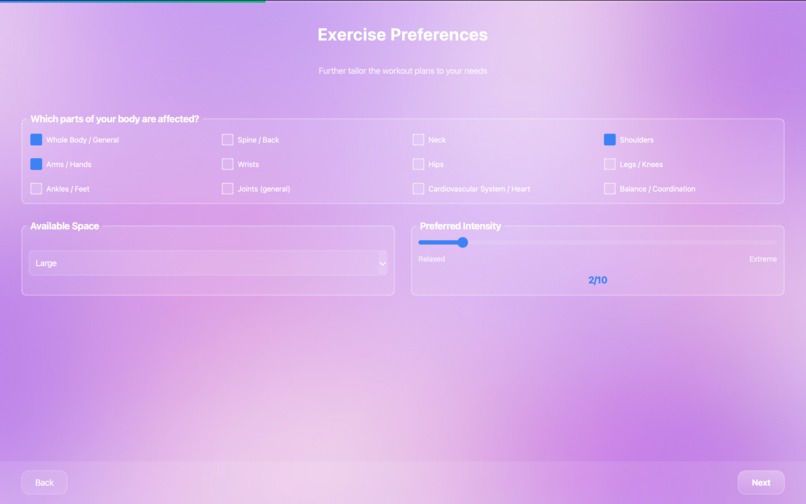
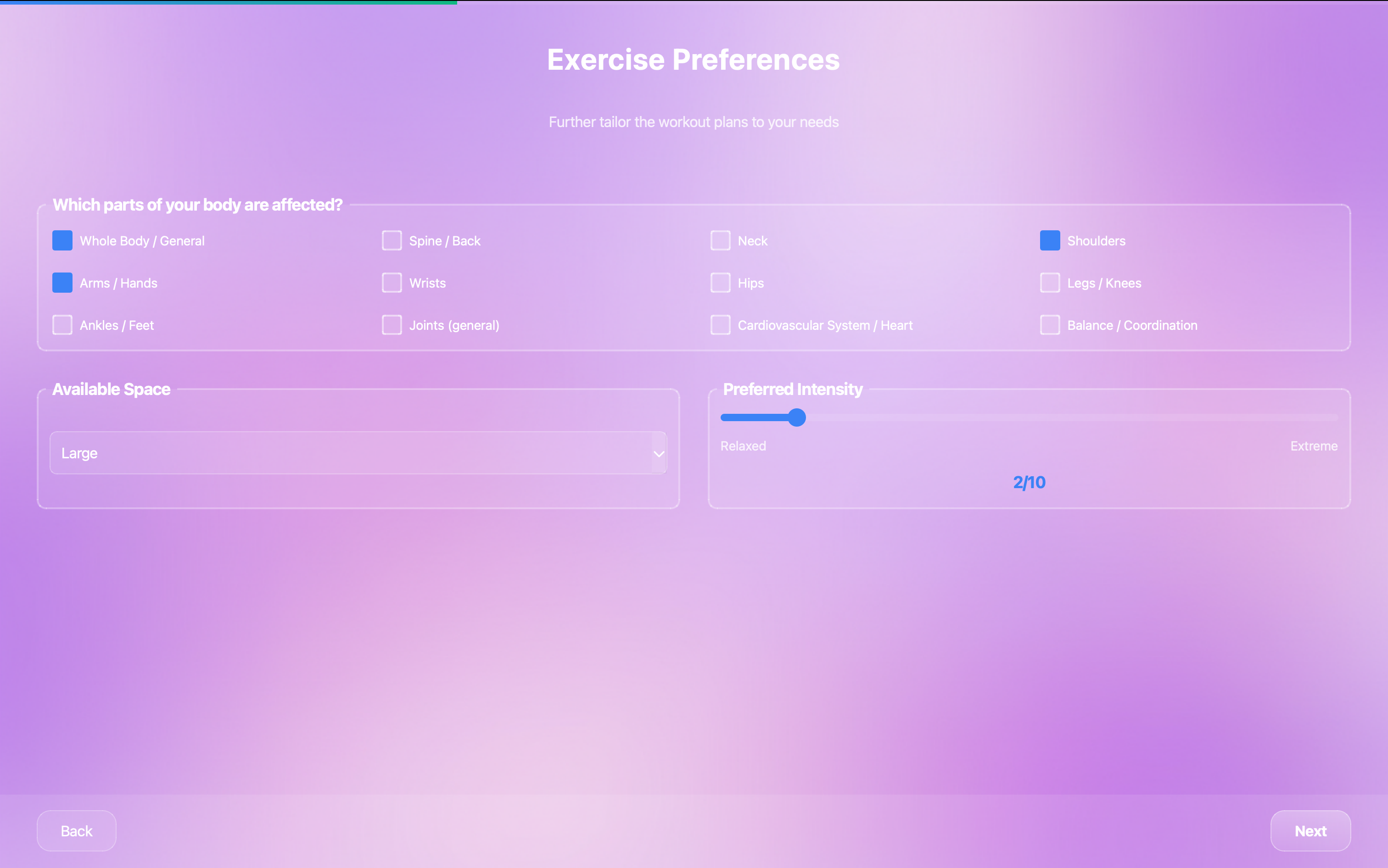
Exercise Preferences Page
-
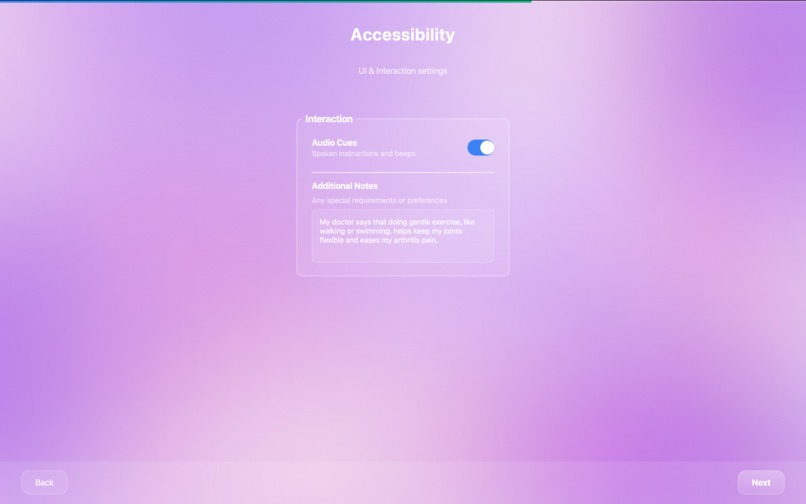
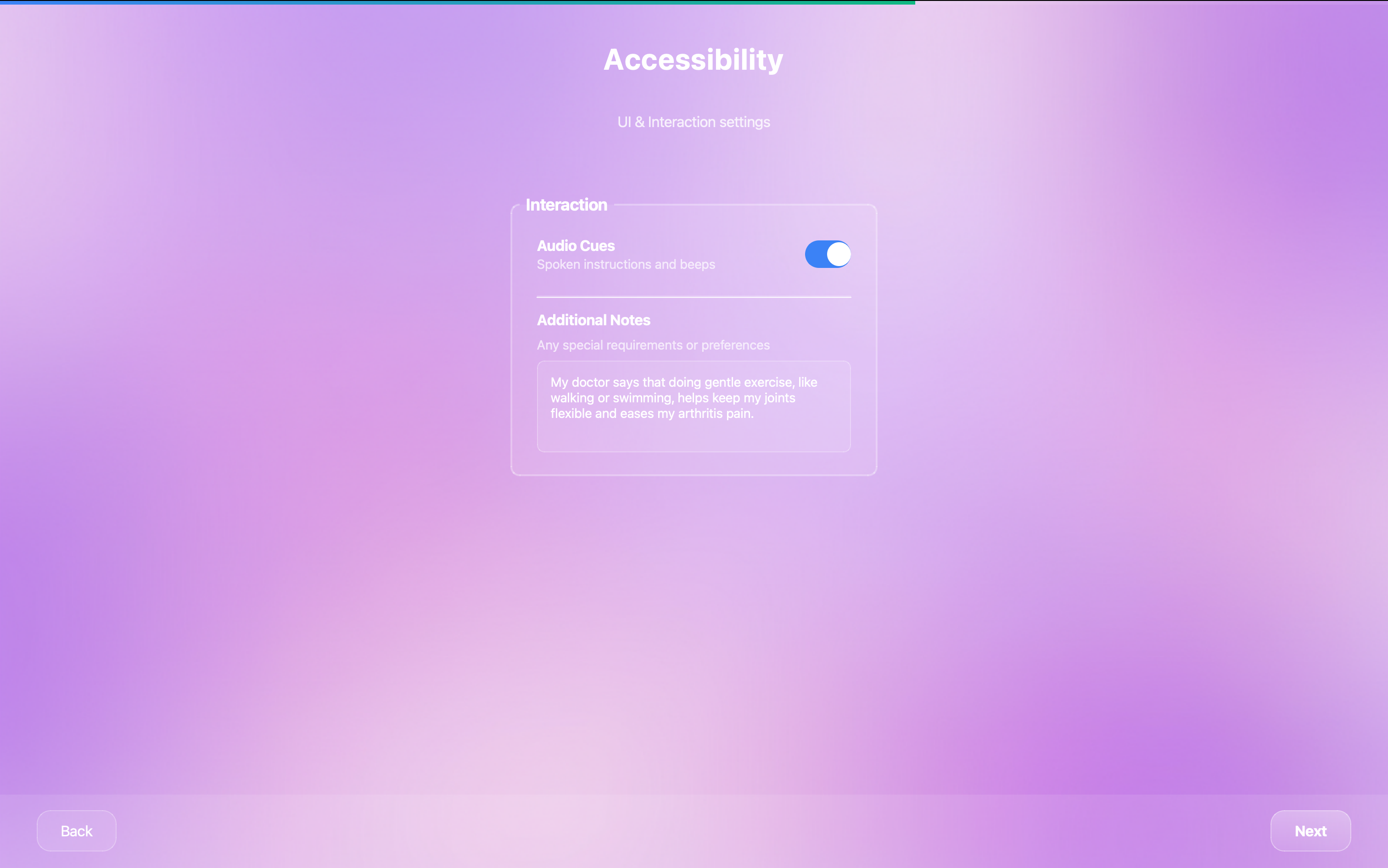
Accessibility Options & Extra Details Page
-
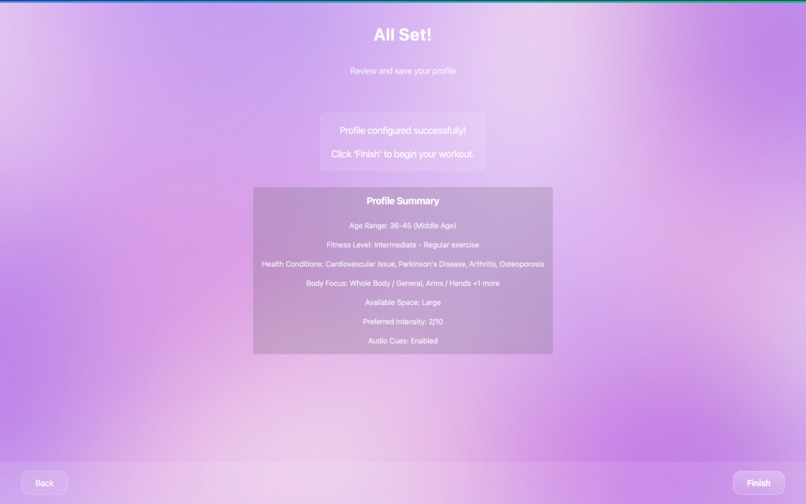
Summary Page



MotionMate+ was inspired by the gap between traditional fitness apps and the needs of beginners, seniors, and people with mobility challenges. Many existing tools assume able-bodied users with a full range of motion, leaving others without safe guidance online. Others are suggested to seek professional physiotherapy, which can potentially cause accessibility issues for people that cannot afford to use those services. MotionMate+ addresses this by combining computer vision and generative AI to deliver adaptive exercise coaching that meets users where they are. Through pose estimation and accessibility-focused design, the app helps users perform movements safely while offering encouraging and easy-to-understand feedback.
We built MotionMate+ using MediaPipe and OpenCV for real-time pose tracking, PyQt5 for a clean and accessible interface, and the Gemini API for coaching, form explanations, adaptive alternatives, and session summaries. One of our biggest challenges was designing feedback that was both technically accurate and emotionally supportive, especially for users with limited mobility. We’re proud of achieving reliable pose detection across a wide range of bodies and abilities, and for creating an experience that feels more like a compassionate coach than a strict instructor.
Throughout development, we learned how to fine-tune computer vision tolerance to avoid punishing imperfect movement and how to craft Gemini prompts that emphasize safety and accessibility. Next, we plan to expand MotionMate+ with personalized programs, voice-only navigation, a multi-exercise “flow” mode, and deeper analytics using Presage. Our vision is to make safe, adaptive exercise accessible to everyone—no gym, trainer, or full mobility required.


Log in or sign up for Devpost to join the conversation.