Inspiration
I wanted to make a puzzle game, but not a typical one. I wanted a casual game that people can play just to relax and have fun.
My first draft was a maze where you guide a mouse to the cheese. It worked, but it wasn't unique. Then I turned the mouse into a wind-up toy with a key. That was closer, but it still didn't have the spark and fun I was looking for.
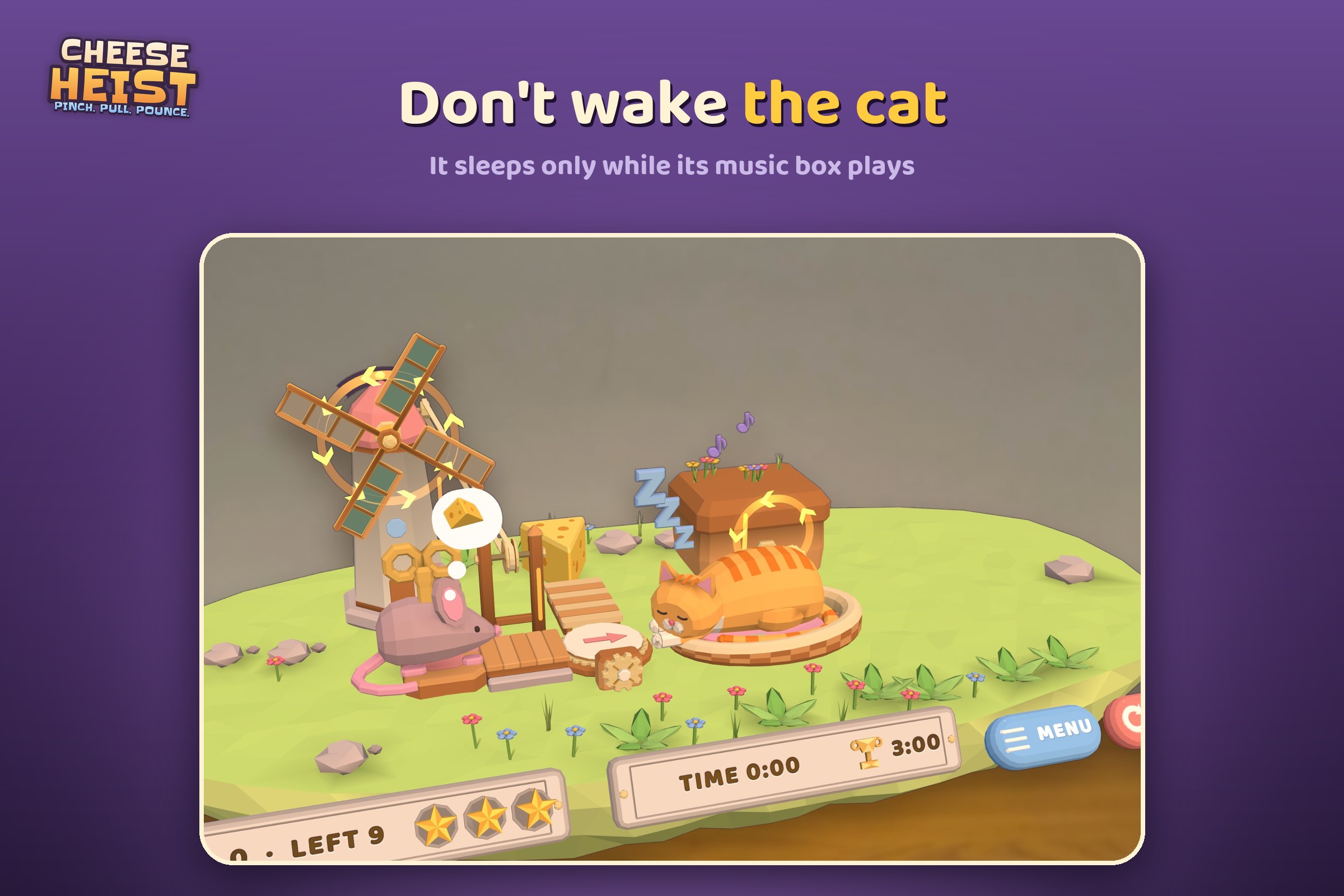
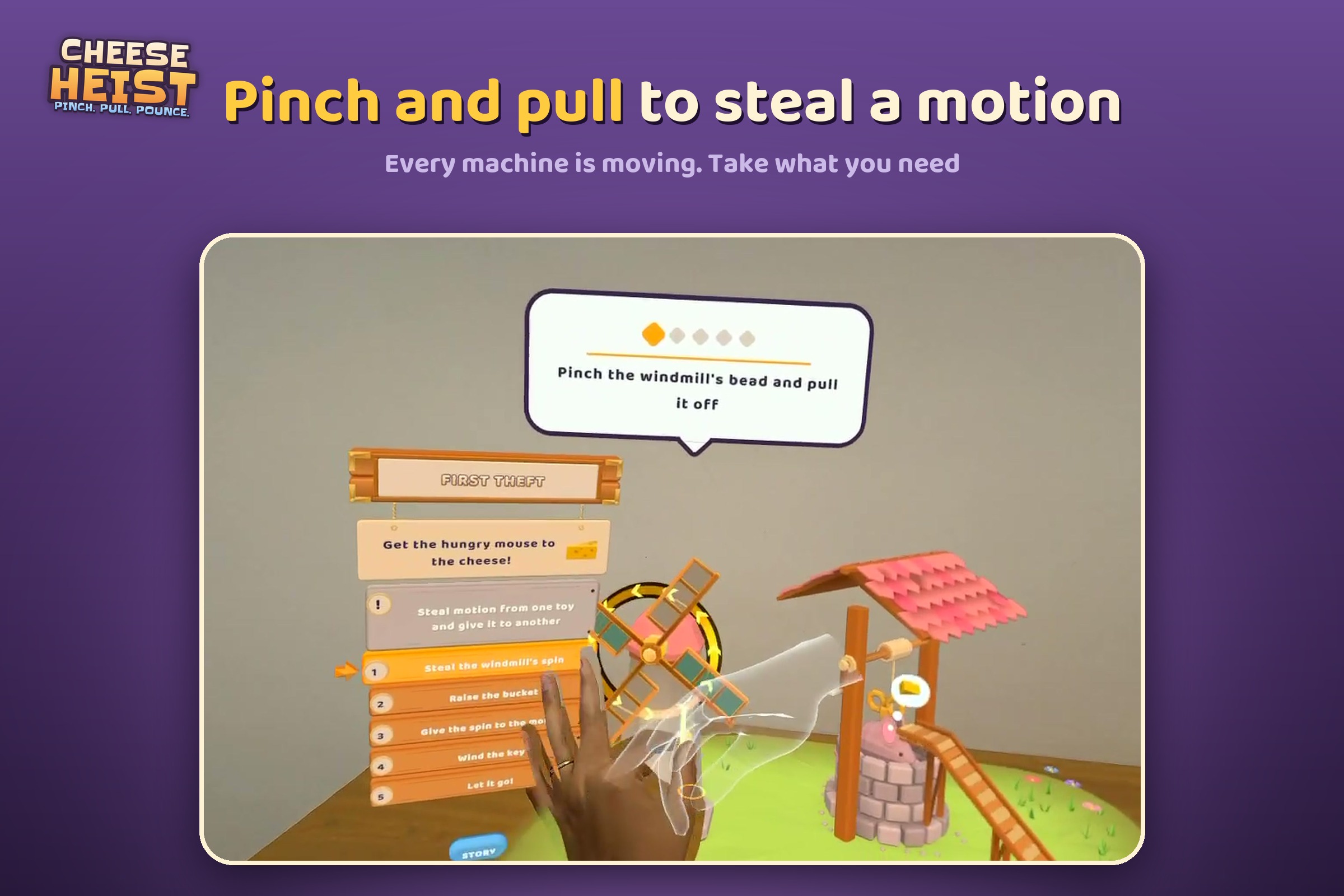
The idea came while I was looking at the little machines I'd made for the island: a windmill, a music box, a clock. What if you didn't wind the key by hand? What if you took the real movement out of those machines and used it to wind the mouse?
That made the key strategic. When you take a machine's motion, that machine stops, and the mouse walks exactly as far as you wind it. So every level comes down to choosing which movement to take and when to let go.
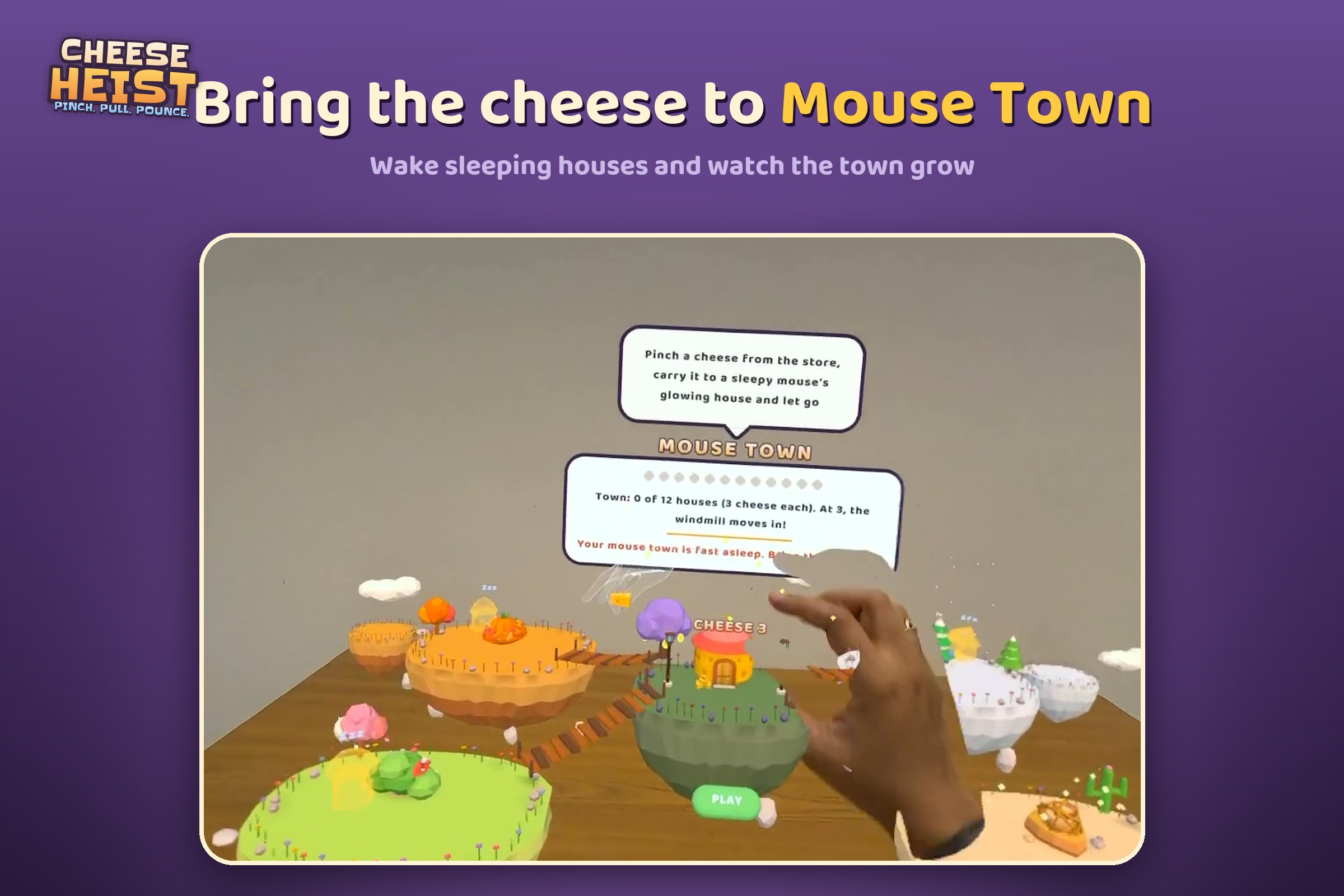
When I talked about the game with a friend, he pointed out that finishing puzzles alone wouldn't keep players coming back. They needed a second goal. That's where the mouse town came from. Every cheese you win goes home to feed the sleepy mice, and each cheese builds part of their houses. The mice get hungry again over time, and the machines you stole from move into town.
What it does
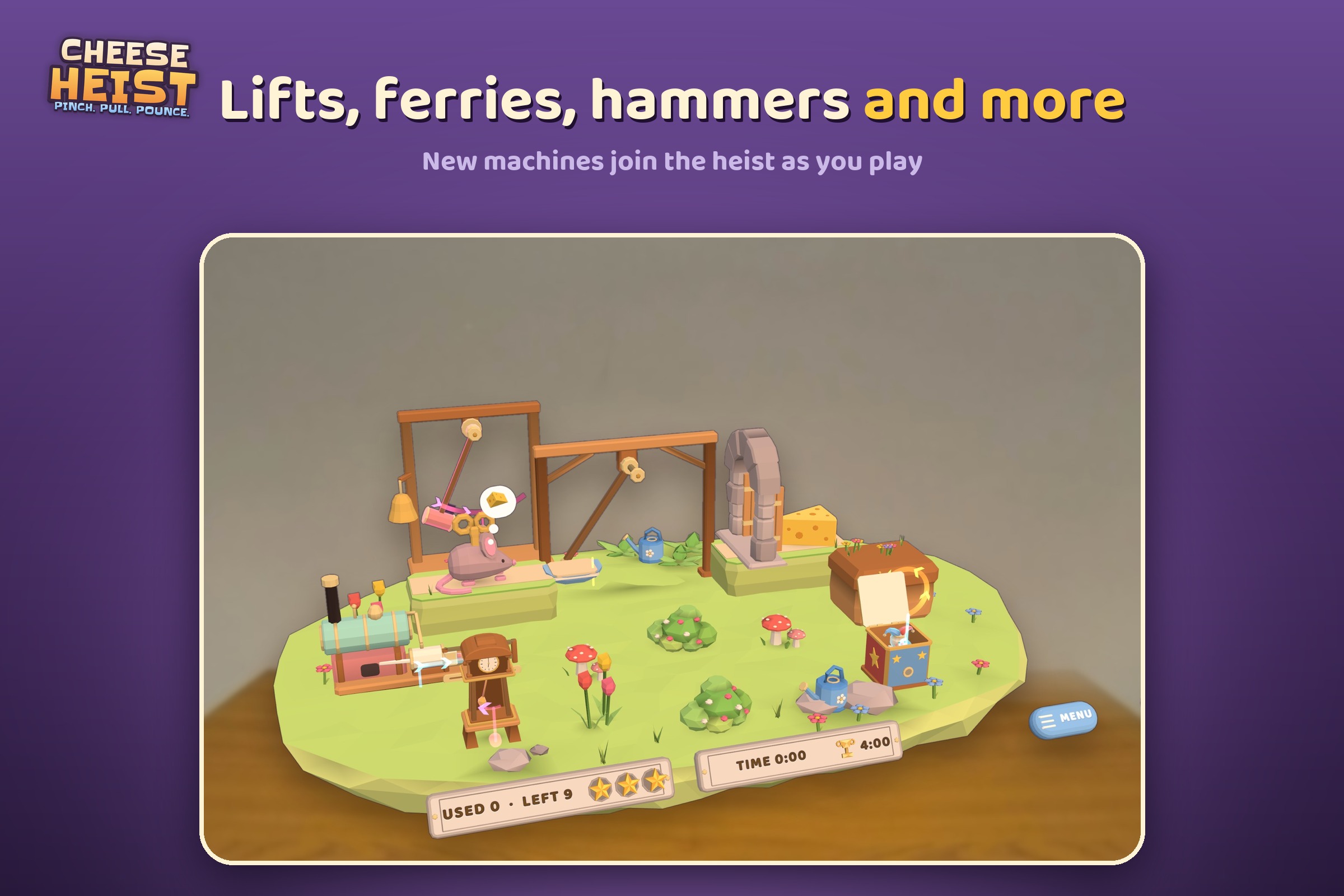
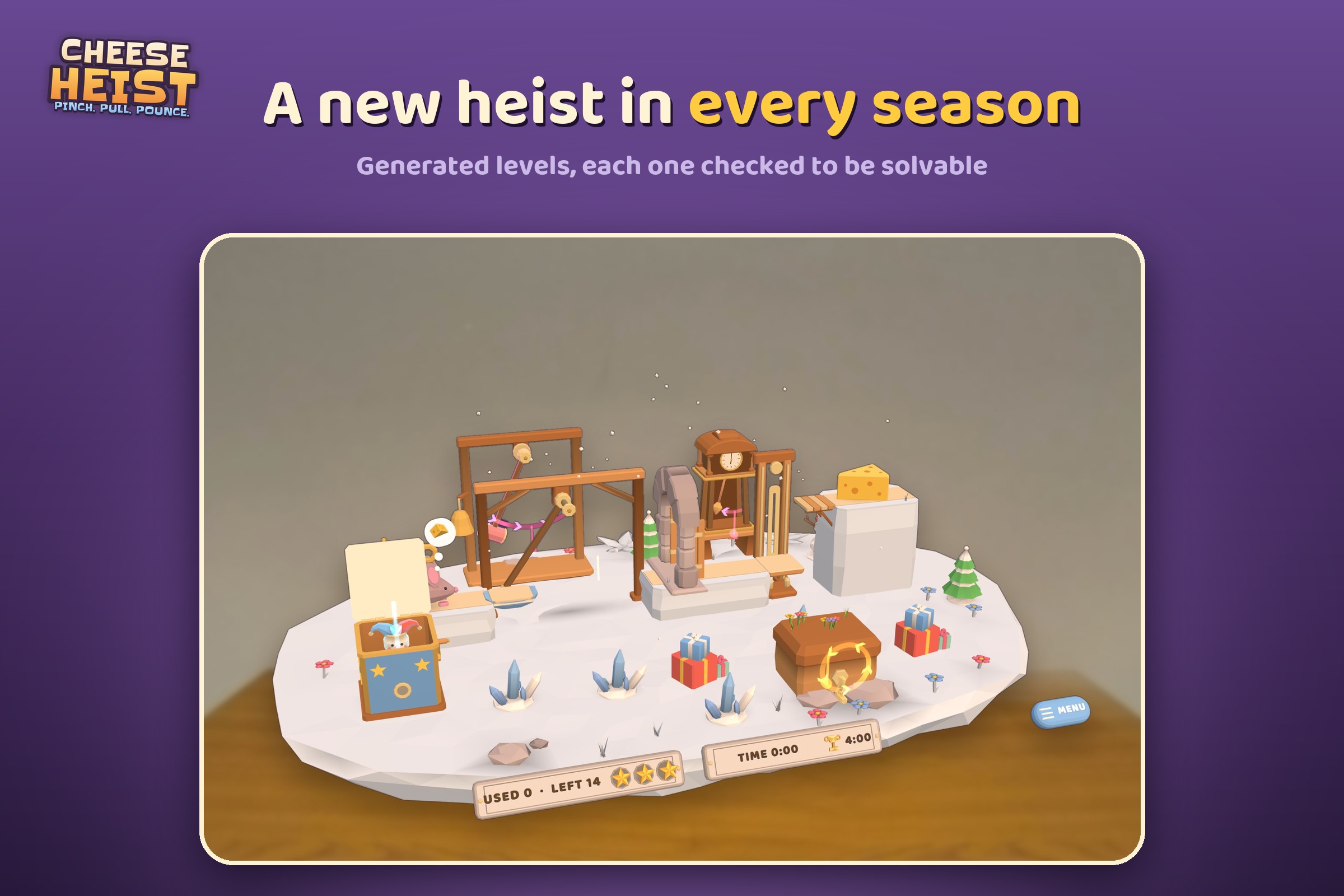
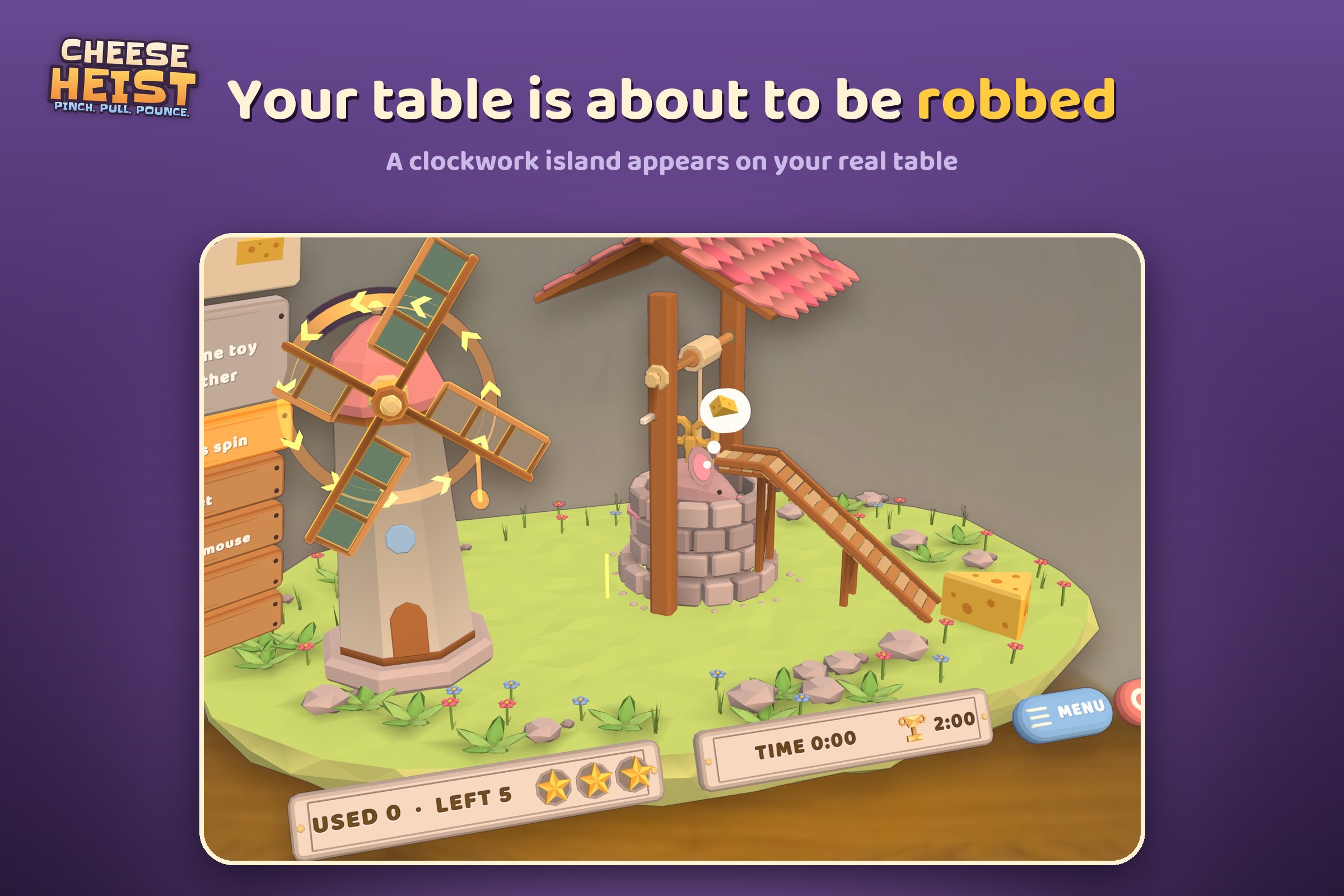
Cheese Heist is a hands-only mixed reality puzzle game for Meta Quest. A small toy puzzle appears on your real table, or on a floating island if there's no table. Each level has a wind-up mouse, a piece of cheese and a few toy machines, like a windmill, a music box or a clock.
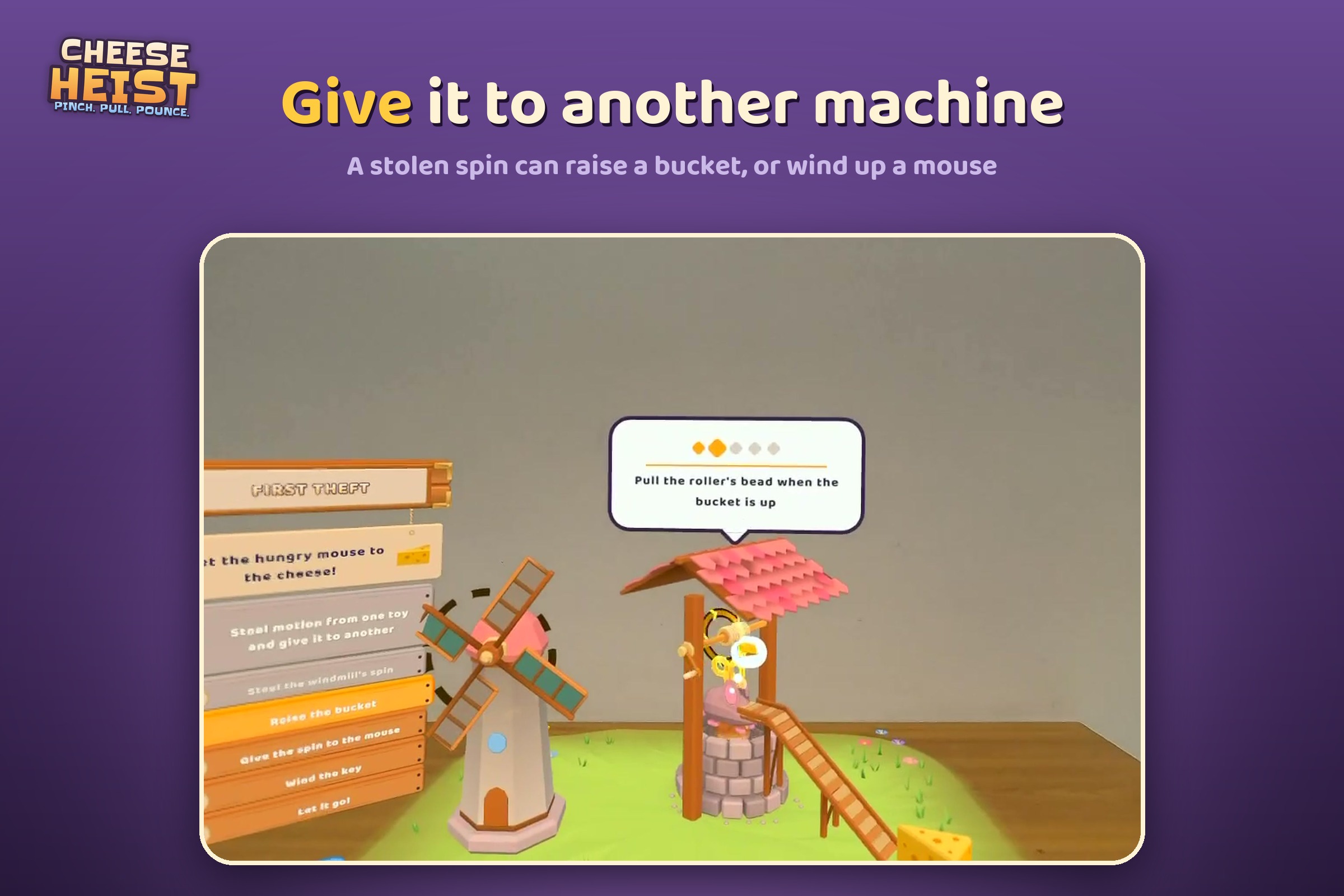
- Steal. Every machine has a loose thread of motion hanging off it. Pinch the thread and pull, and the motion comes out in your hand. The machine freezes, and the motion wraps around your wrist. You can carry two at a time.
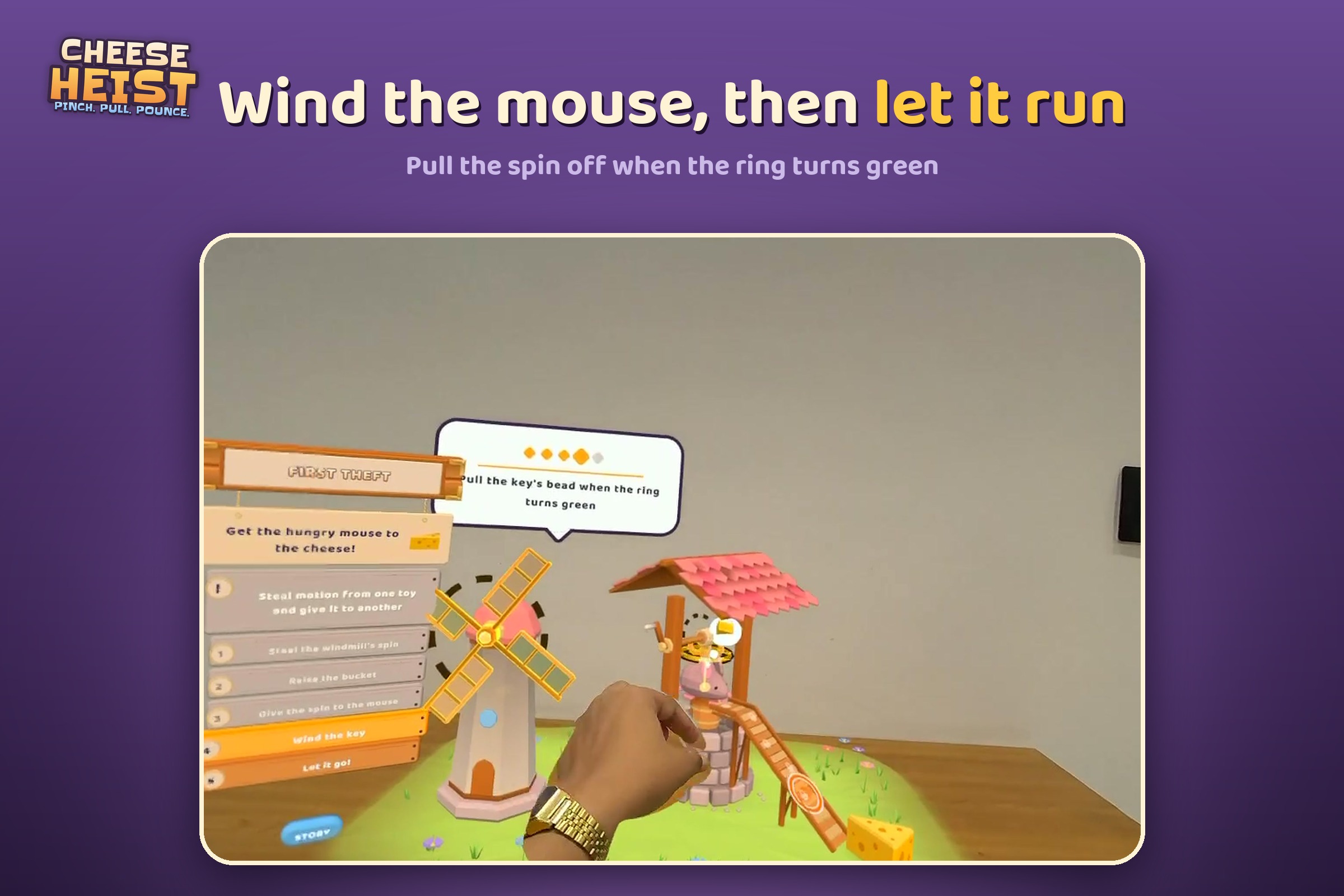
- Wind. Give a spin to the mouse's key and it starts winding. Each click adds a pawprint that shows where the mouse will stop.
- Walk. Take the spin back and the mouse walks exactly that far.
You can also give motions to other machines to turn a bridge, lift a platform or swing a ferry. If the mouse walks off the edge, its springs pop out and it puts itself back together, so you never lose.
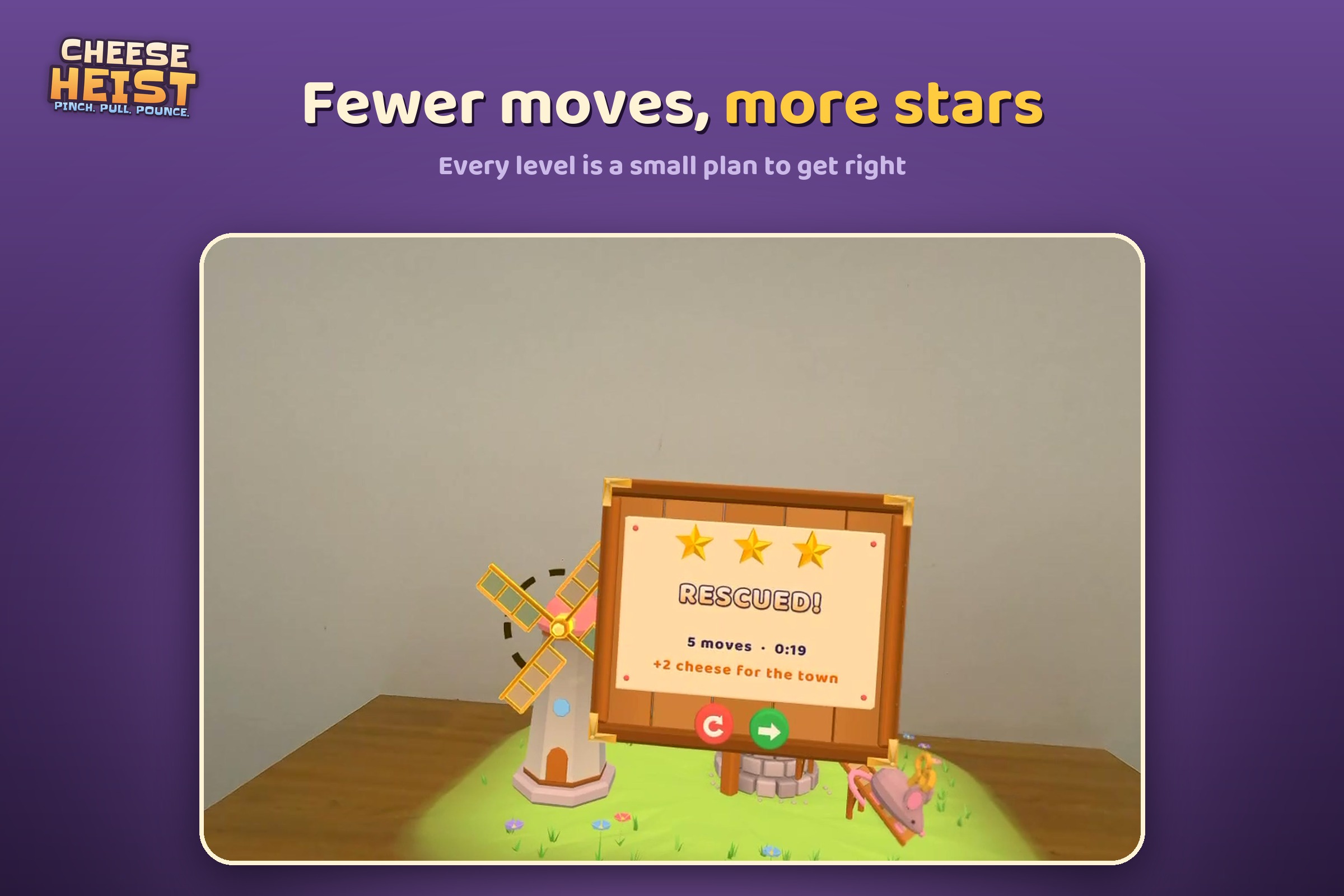
Solve a level in fewer moves to earn more stars. Then take your cheese home to the mouse town.
How I built it
- Engine: Unity 6 with URP and the Meta XR SDK (v207), targeting Quest 3.
- Hands: hand tracking drives everything. A pinch on a thread, a machine, a button, the mouse or a piece of cheese is the only input.
- Mixed reality: passthrough with table detection, and a floating island as the fallback.
- Levels: four tutorial levels are hand made. The rest are generated from a set of machines and layouts, and a solver checks that each generated level can be finished before it is shown.
- Rules as plain code: the mouse's walk, the machines and the scoring are written as logic that runs without the headset, which let me cover them with 284 automated tests.
- Art: low-poly models made in Blender, coloured from one shared pastel palette.
I built it solo with Claude Code as my coding partner, writing the Unity scripts and building the Blender models with me.
Challenges I ran into
Art style. Finding the art style took weeks. My first models were shiny metal tin toys, and they looked bad. Once the fan, music box and mouse looked right, Claude Code helped me make the rest faster.
Playtesting. People new to Quest found the motions I was most proud of unnatural. They tapped with one finger instead of pinching, so now the whole game works with a pinch. They also couldn't work out how to send a motion to their wrist and give it back, so now you just pinch the glowing part you want to give it to. The town didn't make sense to them at first either.
My 14-year-old nephew played the whole game and gave the most critical feedback 😅. The pawprints stayed flat on slopes, the mouse sometimes stopped half inside the turntable, and its fall wasn't fun. I fixed all three.
Memory. The game used 990 MB of GPU memory, and it doubled after every pause. Turning on Vulkan's Optimize Buffer Discards cut it to 85 MB:
$$990\ \text{MB} \rightarrow 85\ \text{MB}$$
What I learned
Test early with people who have never used a headset. The gestures I was most proud of were the ones I had to simplify. Players don't read long instructions, so every action has to explain itself. And a good puzzle isn't enough; players need a reason to come back.
On the technical side:
- Never treat lost hand tracking as letting go.
- Keep previews and real motion on one shared clock.
- Make small parts easy to pinch.
- Place the puzzle again when the player recentres.
- Test on the real headset, because some bugs only show up there.
What's next for Cheese Heist
- A polished town. I want to polish the interface, especially in the mouse town. The town came late in the project, so its UI hasn't had the care the puzzles got.
- Machines with jobs. The machines that move into town will do real jobs there, instead of just standing as decorations. They'll also give players a reason to come back: if you don't open the game for a few days, the machines start to break down, and the way to fix them is to play more heists.
- New worlds. The mouse lives in an earthy world right now. I want to open up new worlds beyond it.
I'm aiming to launch on the Meta Horizon Store in January 2027.


