Inspiration
Notion for content authoring, Next.js/React for infinite extensibility.
What it does
It brings together 3 things:
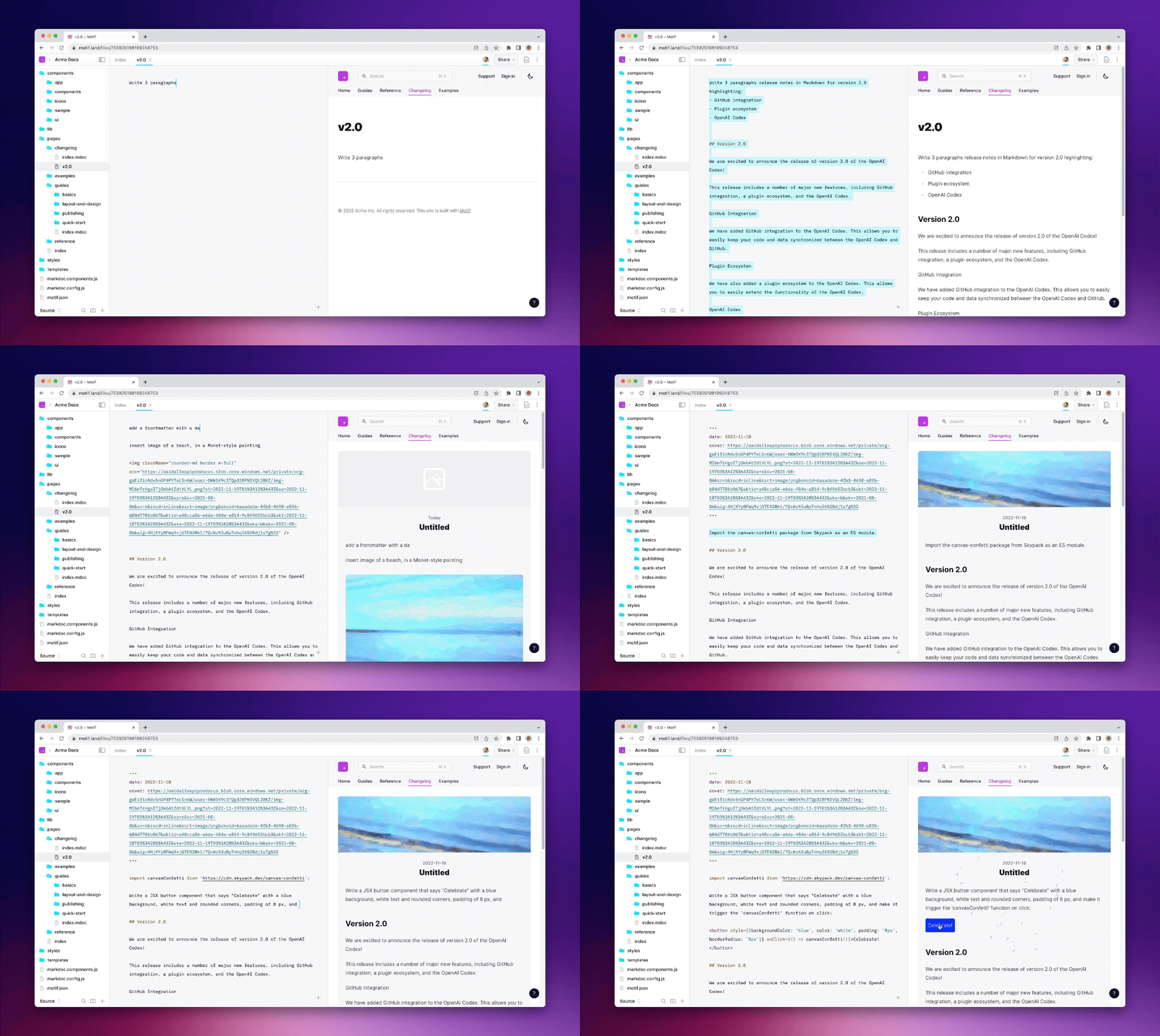
- A collaborative, browser-based content/code editor, extensible with plugins such as AI-assisted writing and coding, and image generation
- A full in-browser JavaScript runtime (replacing Node + localhost, no setup required)
- A hosting platform, for instant publication to your custom domain
How we built it
Our OpenAI Codex plugin is built on top of our JavaScript runtime and runs instantly in the browser. Our editor is based on VS Code, and enables a seamless prompt interface triggered by selecting your sentence, and completing it using Command + Enter.
Challenges we ran into
The Codex plugin was smooth to integrate. That's because we already had the foundation of a highly capable JavaScript runtime. The main challenges have been to build a fast and feature-complete JavaScript runtime that runs in the browser, making the editing experience fully collaborative (in particular, cloud storage of CRDTs), and building a robust platform ready to host high-traffic websites.
Accomplishments that we're proud of
We are super happy with the fluidity of the Codex integration. Since our primary interface is a text interface, adding a prompt layer to it felt like a natural extension of its current abilities (WYSIWYG, point-and-click, IntelliSense, drag-and-drop).
What we learned
We learned that it's important that the user feels in control, despite being interacting with an AI "black box". Being able to easily undo, fine-tune, correct, and keep the context of the prompt is important for the user to feel that this is an augmentation of their creative capabilities rather than a replacement.
What's next for Motif
The next step for us is to bring the Codex integration to production as part of our general-purpose plugins ecosystem.
Built With
- codex
- markdoc
- mdx
- next.js
- react
- replicache
- tailwind
- vercel
- yjs

Log in or sign up for Devpost to join the conversation.