-
-
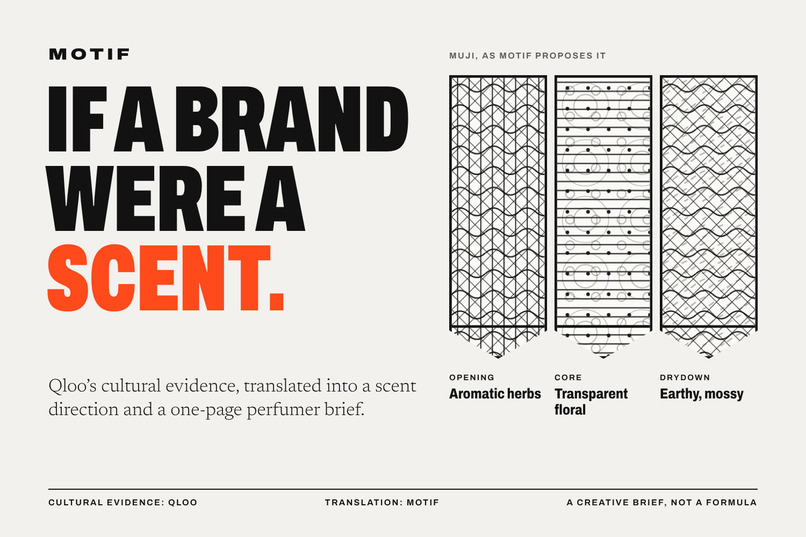
If a brand were a scent. Turn cultural identity into a creative scent direction with MOTIF.
-
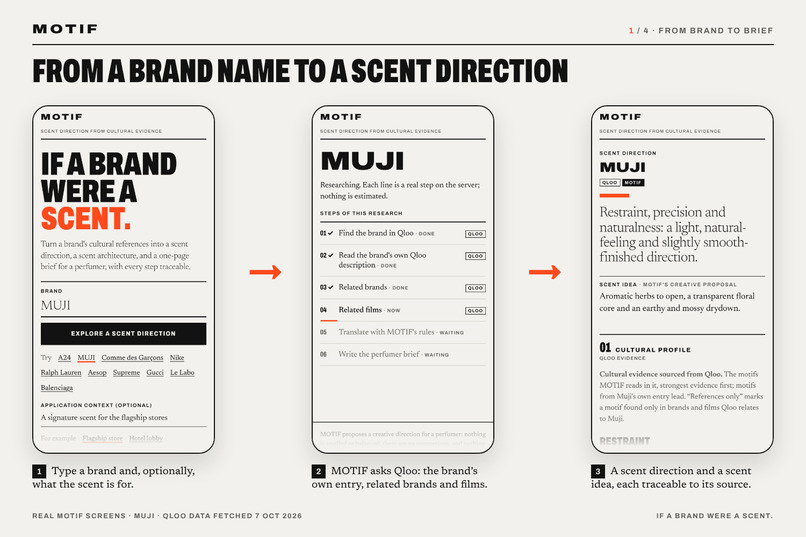
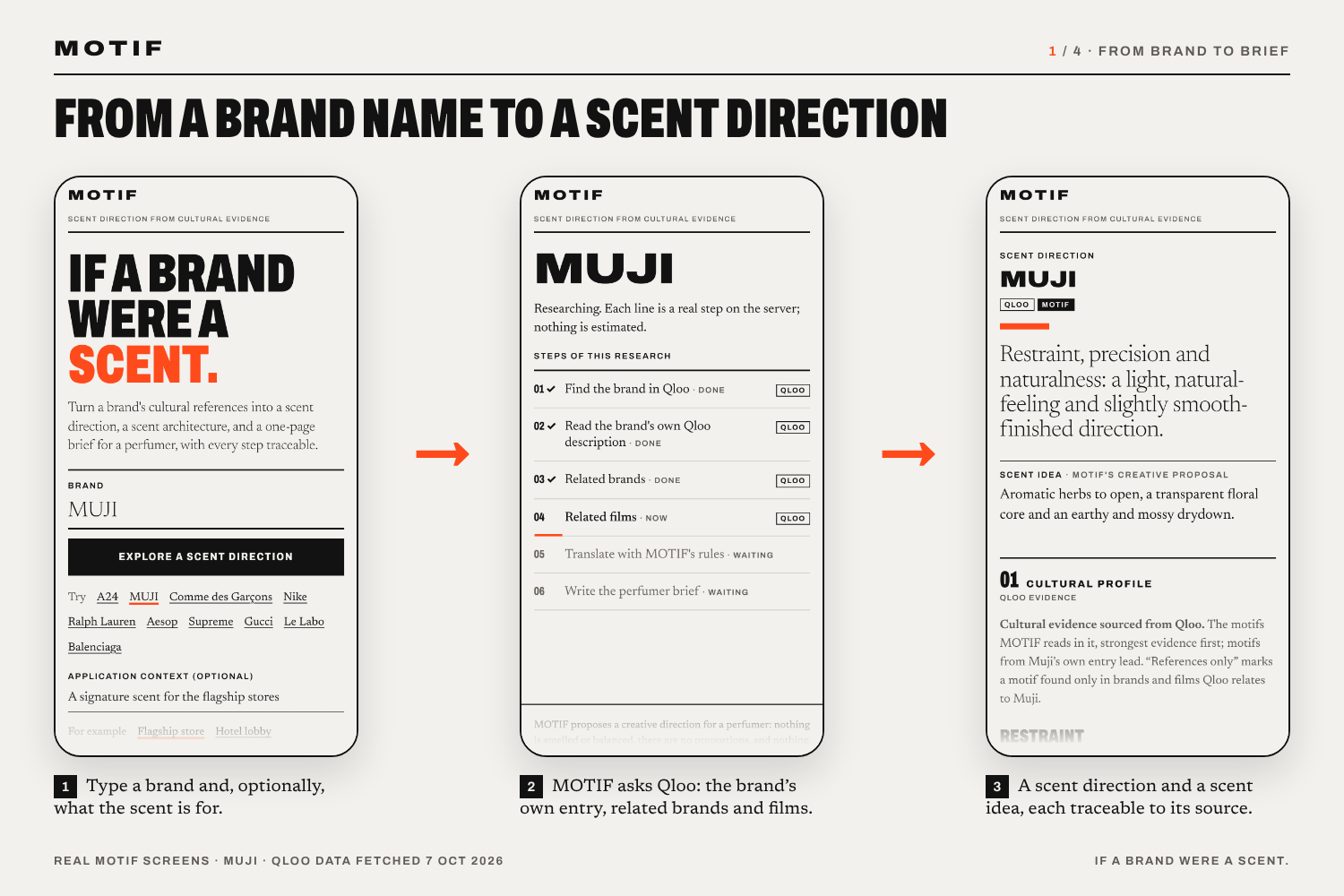
Enter a brand. Follow its cultural connections. Discover a scent direction.
-
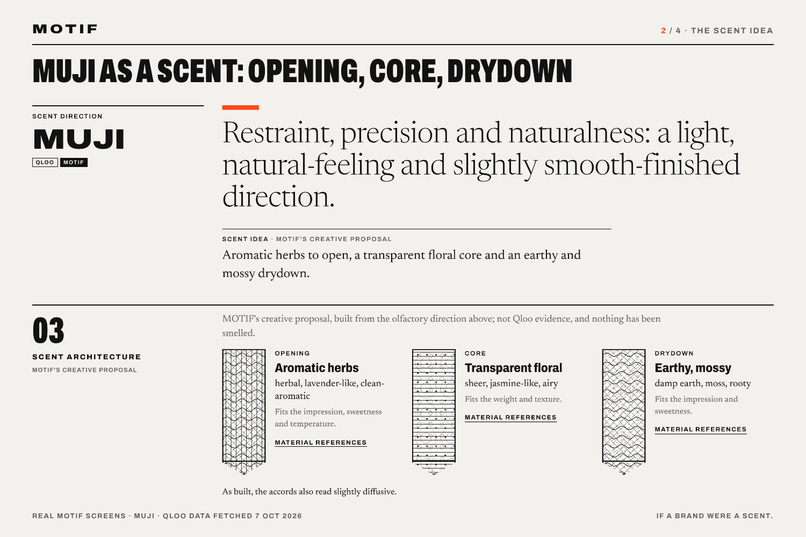
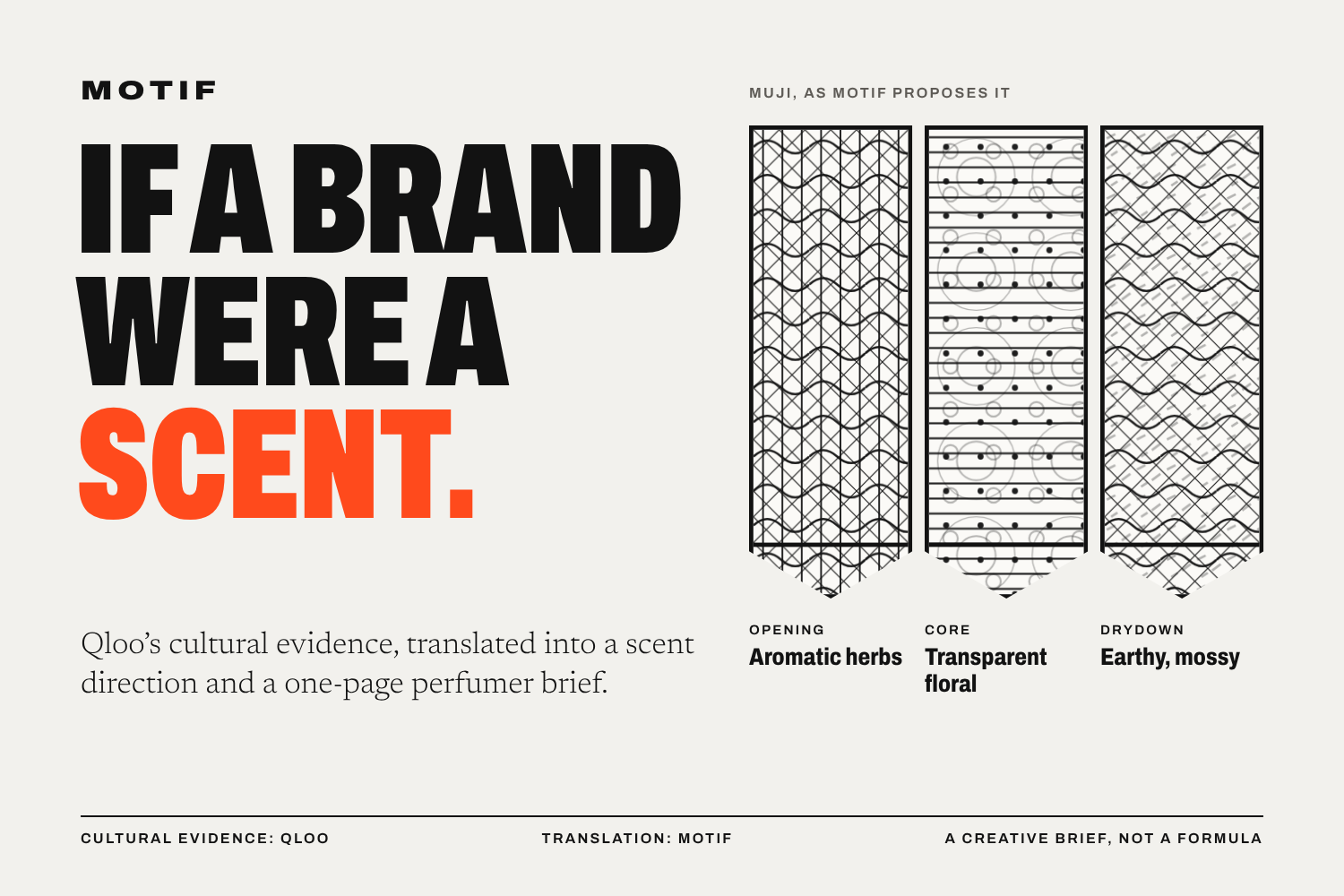
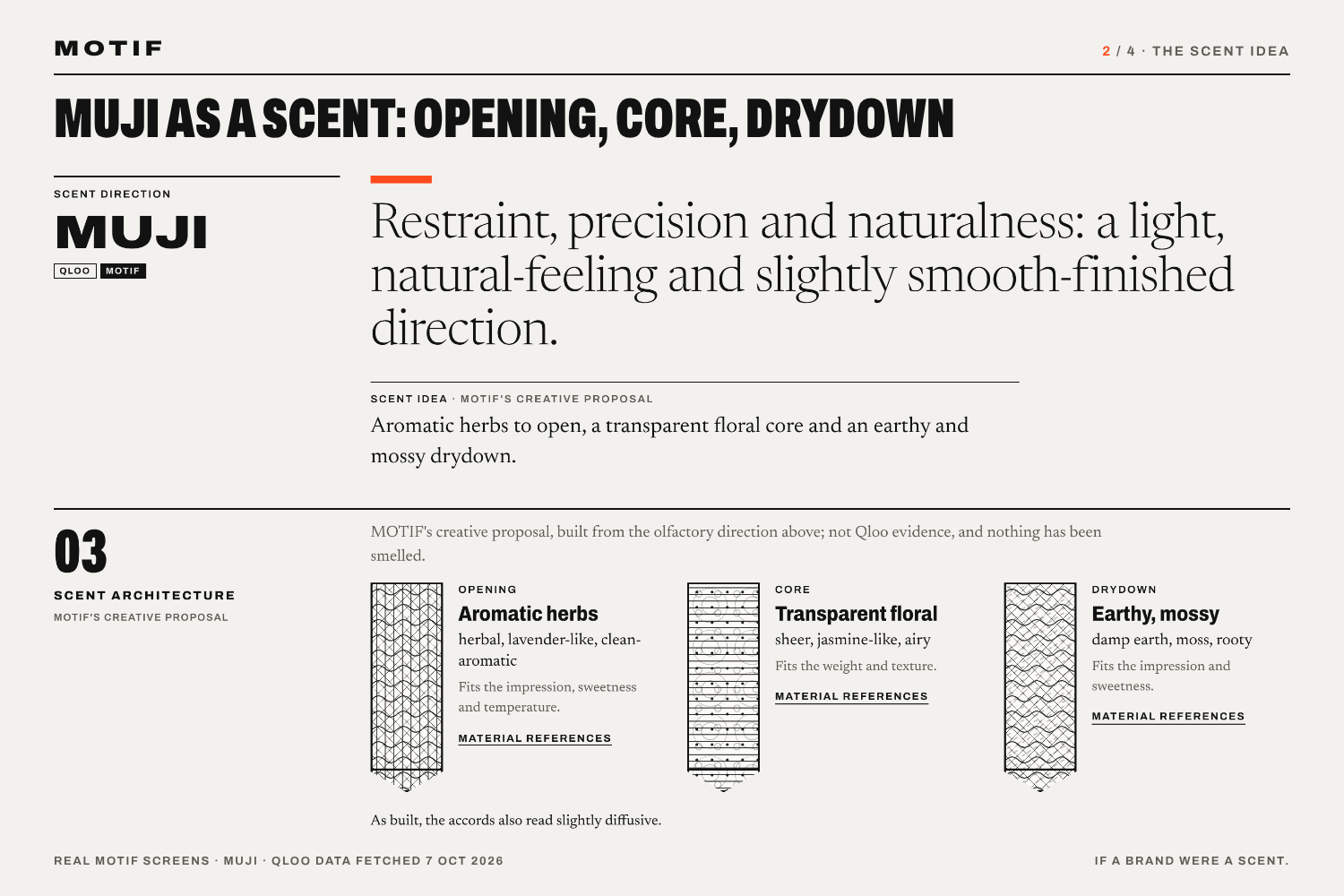
MUJI reimagined through an aromatic opening, floral core and earthy drydown.
-
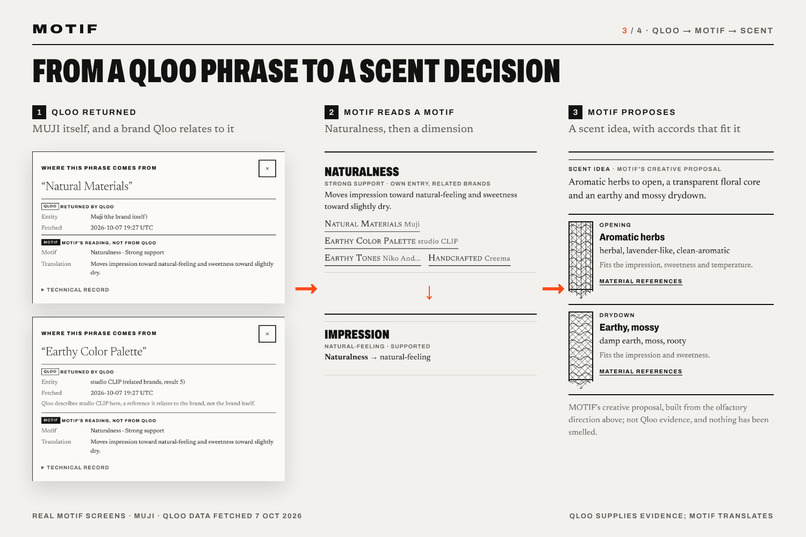
See how Qloo's cultural references inform MOTIF's motifs and scent choices.
-
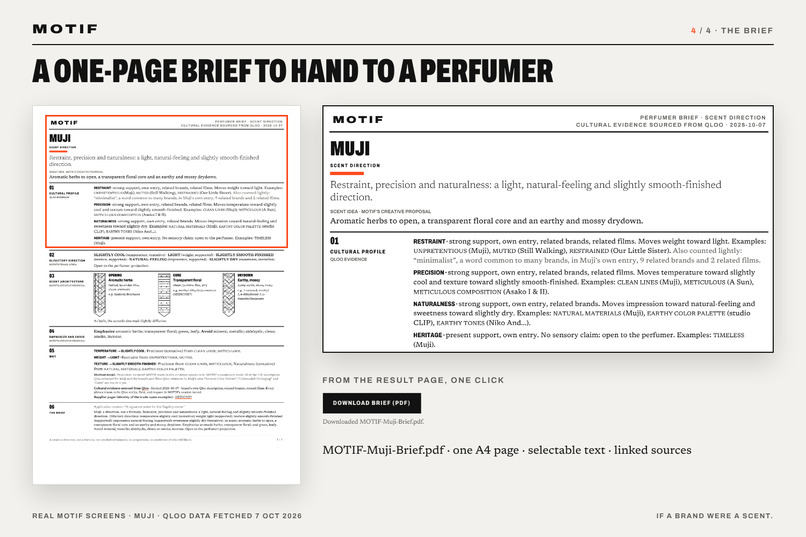
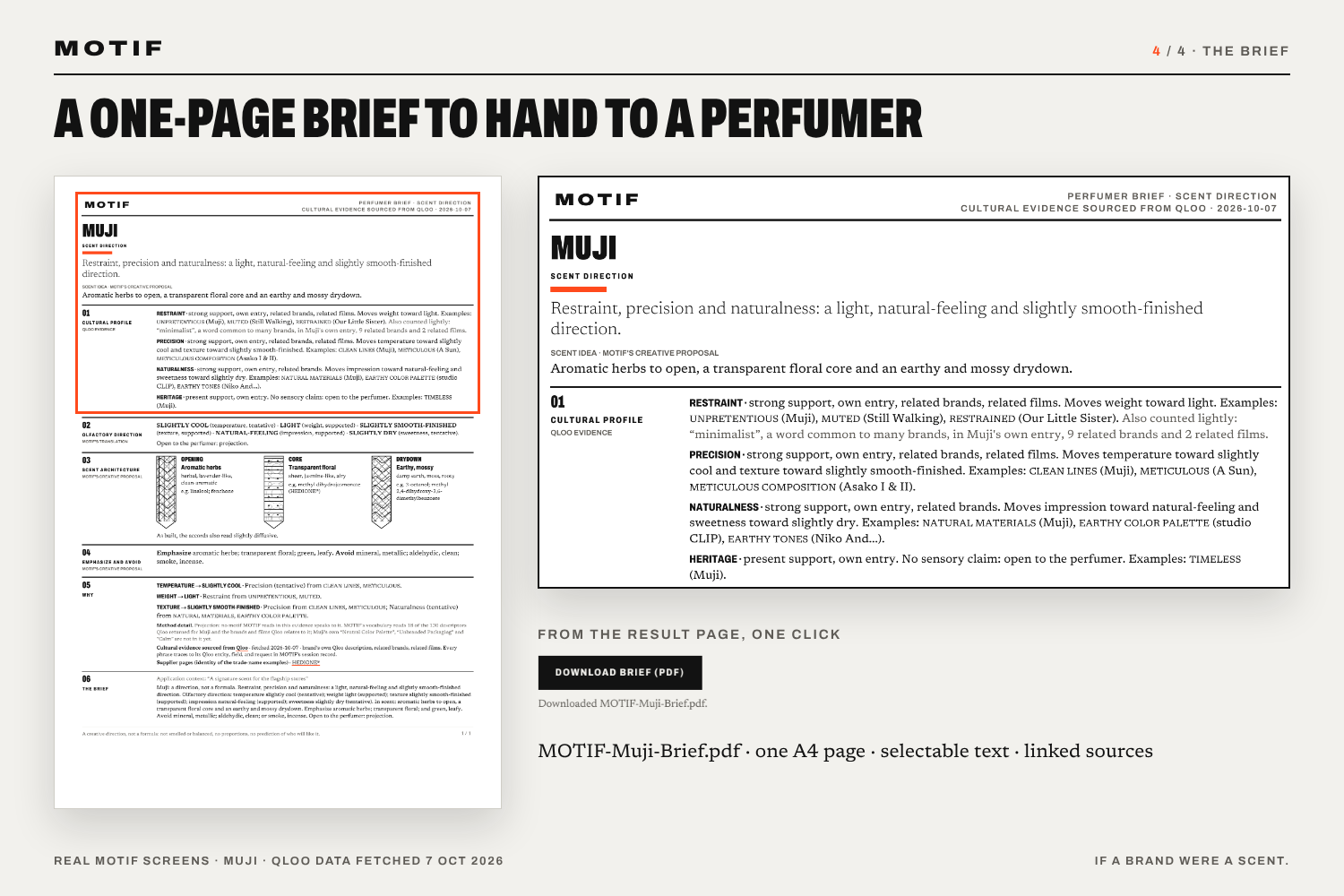
A one-page brief with the scent concept, material references and creative direction, ready for a perfumer.
Inspiration
If a brand were a scent, what would it be? Brand and creative teams developing a scent for stores, a launch or a first fragrance often start from mood boards and adjectives. MOTIF turns that starting point into a brief they can discuss with a perfumer: type a brand and get a reasoned scent direction, a scent idea (opening, core, drydown) and a one-page brief showing where each choice comes from.
What it does
Take MUJI. Type the name and, optionally, what the scent is for ("a signature scent for the flagship stores"). MOTIF finds MUJI in Qloo, reads its own entry and the brands and films Qloo relates to it, and shows each research step as it runs.
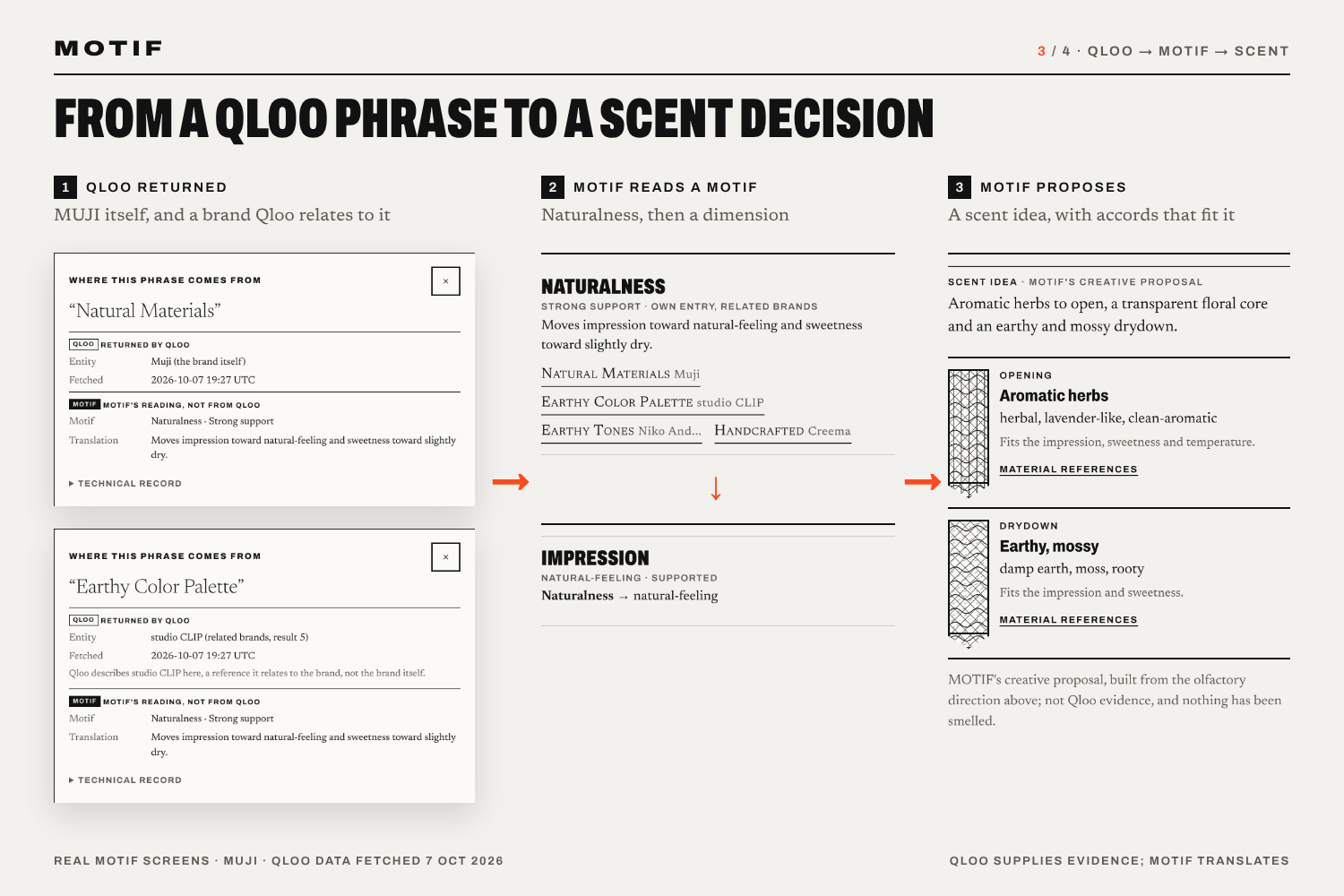
Qloo returns MUJI's own descriptors ("Unpretentious", "Clean Lines", "Natural Materials") and those of related references ("Muted" on the film Still Walking, "Earthy Color Palette" on the brand studio CLIP). MOTIF turns them into three motifs: restraint, precision and naturalness. Naturalness rests on MUJI's own "Natural Materials" and the earthy palettes of related brands. MOTIF translates this into a natural-feeling direction, with aromatic herbs in the opening and an earthy, mossy drydown. Restraint translates into lightness and precision into a smooth texture, informing the transparent floral core. What the evidence does not decide, such as projection, is left to the perfumer.
One click saves a one-page PDF brief: the direction, scent architecture with material references, what to emphasize and avoid, and why. It is a creative starting brief for the perfumer to develop.
How we built it
A deterministic research controller uses up to four Qloo calls per brand (/search, /entities, and /v2/insights for related brands and films), asks you to choose when a name is ambiguous, and stops cleanly if a request fails. MOTIF's versioned Python engine weighs descriptors into motifs (the brand's own entry counts most), maps motifs to six sensory dimensions with a model partly built on open odor data, and picks the best-fitting opening, core and drydown from 23 accord types. Claude writes the brief's prose from the finished result; MOTIF checks it before showing it. Claude narrates; MOTIF decides.
Challenges we ran into
Qloo describes culture, not smell, so the bridge from culture to scent had to be ours, and had to know when to stay silent. Our first rule engine gave 13 brands only three distinct results, so we rebuilt it as a continuous model.
Accomplishments that we're proud of
A brief you can audit: every Qloo phrase opens its source entity and fetch date, and every dimension names its motifs. The brand's own words lead; references add weight, labelled as references.
What we learned
Qloo's strongest contribution is context. A brand's own descriptors and the brands and films Qloo relates to it give MOTIF far more than a name. Keeping those sources visible makes the reasoning available for discussion with a perfumer.
What's next for MOTIF
Reviews of real briefs with perfumers, a wider vocabulary, and new test brands for every model change.
Brands appear as examples run on Qloo data; none is affiliated with MOTIF.
Built With
- anthropic
- claude
- css3
- fpdf2
- html5
- javascript
- node.js
- playwright
- pyrfume
- python
- qloo
- render

Log in or sign up for Devpost to join the conversation.